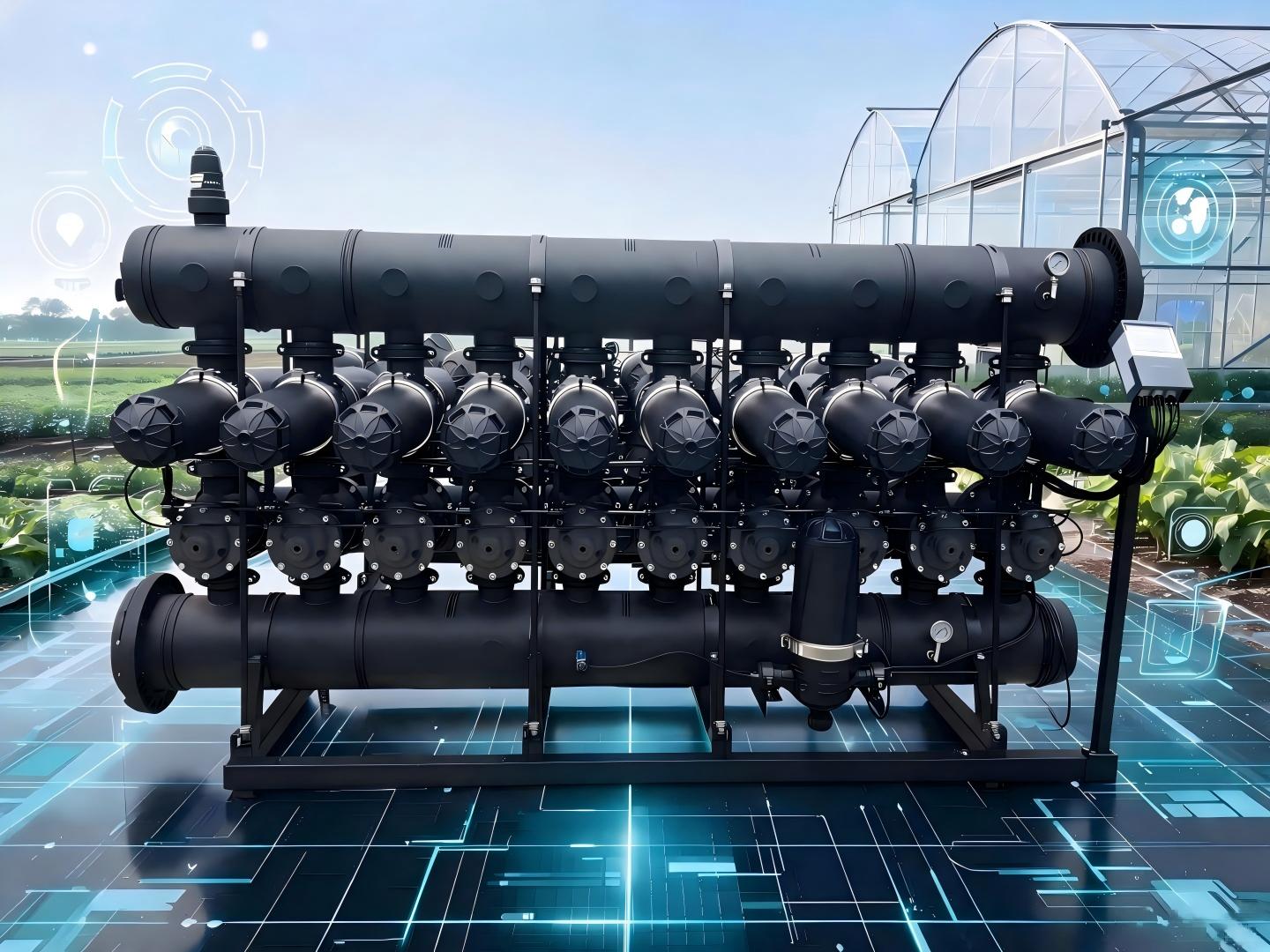
Automatic backwash filters are core equipment in modern agricultural irrigation systems, and their stable operation directly affects the efficiency and service life of the entire irrigation system. Correct maintenance can not only ensure filtration performance, but also extend equipment service life and reduce operating costs. This article will comprehensively introduce the maintenance methods for automatic backwash filters.
1. Daily Inspection (Per Day)
1.1 System Pressure Check
After starting up the system every day, first check whether the inlet pressure and outlet pressure of the system are normal:
- Normal inlet pressure: 2-8 Bar
- Normal outlet pressure: 0.1-0.3 Bar lower than inlet pressure
- If the pressure is abnormal, stop the machine immediately for inspection
1.2 Differential Pressure Monitoring
The differential pressure between the inlet and outlet of the automatic backwash filter is an important indicator to judge whether the filter element needs backwashing:
- Normal operating differential pressure: 0.1-0.3 Bar
- Backwash trigger differential pressure: 0.5 Bar (adjustable as needed)
- If the differential pressure remains higher than 0.5 Bar but automatic backwash does not start, check the control system
1.3 Backwash Status Check
Observe whether the backwash of the filter works normally:
- During backwashing, water should flow out of the sewage discharge pipe
- Backwash duration is generally 10-30 seconds per group
- Backwash frequency depends on water quality, generally 1-5 times per day
- If backwashing occurs too frequently, it indicates poor water quality or that the filter element needs cleaning
1.4 Leakage Check
Check for water leakage at each connection part of the filter:
- Inlet and outlet flange connections
- Sewage valve connections
- Sealing part of the filter element end cover
- Solenoid valve connections
- If leakage occurs, stop the machine promptly for handling
2. Weekly Maintenance
2.1 Clean the Water Intake Screen
If the system is equipped with a screen at the water intake, clean it once a week:
- Close the water intake valve
- Take out the screen
- Rinse off debris on the screen surface with clean water
- Check the screen for damage, and replace it promptly if any
- Reinstall the screen
2.2 Check Solenoid Valves
Solenoid valves are key components of automatic backwash filters, and should be checked weekly:
- Listen for the normal "click" sound when the solenoid valve operates
- Check whether the solenoid valve coil is overheated (normal temperature does not exceed 60℃)
- Check whether the solenoid valve wiring is firm
- Manually test whether the solenoid valve can open and close normally
2.3 Check Pressure Gauges
Check whether pressure gauges work normally:
- Compare whether the readings of the two pressure gauges are reasonable
- Check whether the pressure gauge pointer jitters
- If a pressure gauge is damaged, replace it promptly
3. Monthly Maintenance
3.1 Filter Element Inspection and Cleaning
Inspect and clean the filter elements of the filter once a month:
- Close the inlet and outlet valves of the filter, and drain the water inside the filter
- Open the filter element end cover and take out the disc filter elements
- Check whether the discs are damaged, deformed or severely worn
- Rinse off impurities on the disc surface with clean water
- For stubborn stains, gently scrub with a soft brush
- Check whether the filter element sealing ring is aged, and replace it promptly if any
- Reinstall the filter elements, paying attention to the installation direction
3.2 Sewage Valve Check
Check whether the sewage valve works normally:
- Manually open the sewage valve and check whether drainage is smooth
- Check for water leakage after the sewage valve is closed
- Clean impurities inside the sewage valve
- Check whether the sewage discharge pipe is blocked
3.3 Control System Check
Check the automatic backwash control system:
- Check whether the controller display is normal
- Check whether backwash parameter settings are reasonable (differential pressure threshold, backwash duration, backwash interval)
- Test whether the manual backwash function works normally
- Check whether sensor wiring is firm
- Clean the controller shell and maintain good ventilation
4. Quarterly Maintenance (Every 3 Months)
4.1 Comprehensive Cleaning
Conduct a comprehensive cleaning of the filter once every quarter:
- Take out all filter elements and rinse them thoroughly with clean water
- For situations with high organic impurity content, soak the elements in dilute hydrochloric acid (concentration not exceeding 5%) for 30 minutes, then rinse thoroughly with clean water
- Clean the inner wall of the filter shell
- Check for corrosion or scaling inside the shell
4.2 Sealing Component Check
Check the condition of all sealing components:
- Filter element end cover sealing rings
- Inlet and outlet flange gaskets
- Sewage valve sealing rings
- Solenoid valve sealing rings
- If any are aged, deformed or damaged, replace them promptly
4.3 Electrical System Check
- Check whether all electrical wiring is firm and free of oxidation
- Check whether cables are damaged
- Check whether grounding is in good condition
- Test whether the leakage protection function works normally
- Clean dust inside the electrical cabinet
5. Annual Maintenance (Every Year)
5.1 Comprehensive Overhaul
Conduct a comprehensive overhaul of the filter once a year:
- Disassemble all components for thorough cleaning and inspection
- Check the shell for cracks, corrosion or deformation
- Check the tightness of all bolts and nuts
- Replace all aged sealing components
- Check the service life of filter elements, and replace them if necessary
5.2 Filter Element Replacement
The service life of disc filter elements is generally 3-5 years, depending on water quality and usage conditions. Replace the filter elements when the following situations occur:
- Obvious wear or deformation of discs
- Significant decline in filtration performance, with increased effluent turbidity
- Differential pressure remains high after backwashing
- Discs become brittle or cracked
- Service time exceeds 5 years
5.3 Control System Upgrade
- Check the firmware version of the controller, and upgrade if necessary
- Calibrate pressure sensors
- Check the backup battery (if equipped)
- Back up system parameter settings
6. Common Fault Troubleshooting
6.1 Backwash Fails to Start
Possible causes:
- Differential pressure sensor fault or loose wiring → Check the sensor and rewire
- Incorrect controller parameter settings → Check the backwash trigger differential pressure setting
- Solenoid valve fault → Manually test the solenoid valve, and replace if necessary
- Power supply fault → Check the power supply and fuse
6.2 Backwash Does Not Stop
Possible causes:
- Differential pressure sensor fault, with consistently high readings → Replace the sensor
- Solenoid valve stuck and unable to close → Clean or replace the solenoid valve
- Controller fault → Restart the controller, and replace if necessary
6.3 Deteriorated Effluent Water Quality
Possible causes:
- Damaged filter element → Inspect and replace damaged discs
- Improper filter element installation causing bypass → Reinstall the filter elements correctly
- Improper selection of filtration precision → Select appropriate precision according to water quality and irrigation requirements
- Scaling inside the filter shell → Clean the inside of the shell
6.4 System Pressure Drop
Possible causes:
- Severe filter element clogging → Perform backwashing or manual cleaning
- Clogged water intake screen → Clean the water intake screen
- Water pump fault → Check the operating status of the water pump
- Pipeline leakage → Check pipeline connections
6.5 Excessive Backwash Water Consumption
Possible causes:
- Overlong backwash time setting → Adjust the backwash time parameter
- Too low backwash trigger differential pressure setting → Appropriately increase the trigger differential pressure
- Extremely poor water quality causing overly frequent backwashing → Consider adding a primary pretreatment stage
- Sewage valve leakage → Inspect and repair the sewage valve
7. Maintenance Records and Spare Parts Management
7.1 Maintenance Records
It is recommended to establish a sound maintenance record system to record the following contents:
- Daily inspection records (pressure, differential pressure, backwash frequency)
- Weekly maintenance records
- Monthly maintenance records
- Fault records and handling measures
- Component replacement records
- Annual overhaul records
Sound maintenance records help analyze equipment operating status and identify potential problems in advance.
7.2 Common Spare Parts
It is recommended to stock the following common spare parts for timely replacement:
- Disc filter elements (1-2 groups as backup)
- Sealing rings of various specifications
- Solenoid valve coils (1-2 pieces as backup)
- Pressure gauges (1-2 pieces as backup)
- Pressure sensors (1 piece as backup)
- Flange gaskets
- Fasteners such as bolts and nuts
8. Summary
Maintenance of automatic backwash filters is the key to ensuring long-term stable operation of the system. Through the graded maintenance system covering daily inspection, weekly maintenance, monthly maintenance, quarterly maintenance and annual maintenance, potential problems can be identified and handled in a timely manner, extending equipment service life and reducing operating costs.
The LZHS series automatic backwash filters of Henan Haojun Agricultural Technology Co., Ltd. are made of high-quality materials with advanced design, featuring stable operation, simple maintenance and long service life. The company provides comprehensive technical support and after-sales service to help users give full play to equipment performance and safeguard agricultural production.
Remember: Correct maintenance is an investment, not a cost. A well-maintained filter can save you a large amount of repair costs and downtime losses.