Wheat Irrigation Management in Arid Climates
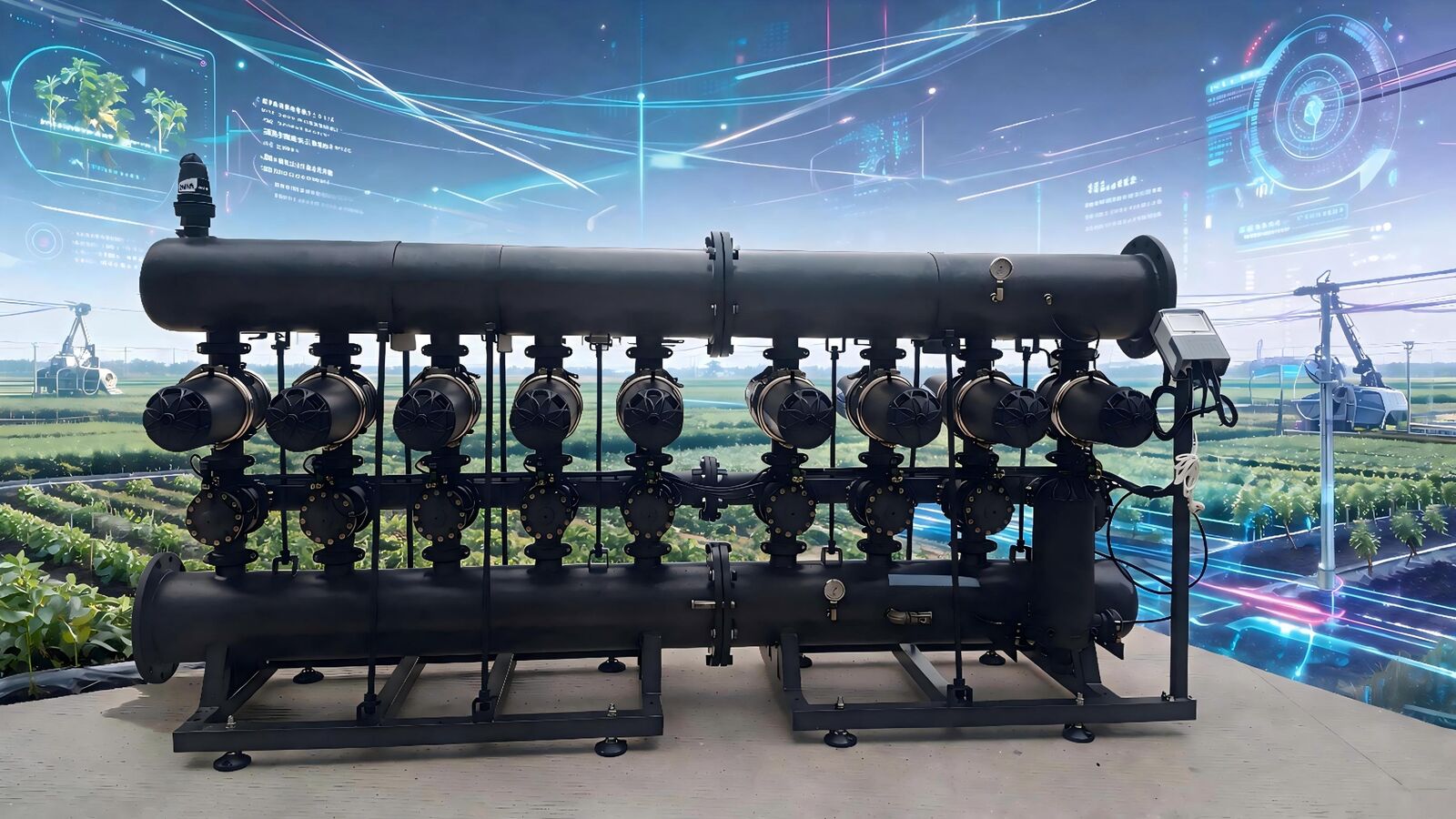
In modern agricultural production, Wheat Irrigation Management in Arid Climates has become a key factor in increasing crop yields and conserving water resources. Against the backdrop of global climate change and
In modern agricultural production, Wheat Irrigation Management in Arid Climates has become a key factor in increasing crop yields and conserving water resources, supporting sustainable agricultural development.
## Technical Principles and Working Mechanisms
The core principle of Wheat Irrigation Management in Arid Climates lies in precise water regulation to meet crop water requirements at different growth stages, while avoiding issues such as soil compaction.
From the perspective of working mechanisms, a complete irrigation system typically includes four main components: water source works, main hub structures, distribution pipe networks, and field emitters. The main hub structures include pumps, filters, fertilization devices, pressure regulators, and control equipment.
## Application Advantages and Benefit Analysis
The application of Wheat Irrigation Management in Arid Climates technology can bring significant benefits to agricultural production across multiple aspects, most notably in improving water resource utilization efficiency.
Practices show that crop yields with modern irrigation technology can usually increase by 15% to 40%, while product quality also improves significantly.
Thirdly, it reduces costs and improves efficiency: precision irrigation reduces the use of fertilizers and pesticides, lowering production costs. Modern irrigation systems usually achieve payback within 2 to 5 years, delivering considerable long-term economic benefits.
## Implementation Key Points and Technical Specifications
Successful implementation of Wheat Irrigation Management in Arid Climates requires attention to the following key aspects: determination of irrigation schedules, system flow calculation, pipe hydraulic calculation, selection and layout of emitters, etc.
Secondly, equipment selection: irrigation equipment with reliable quality and stable performance must be selected. Key equipment includes pumps, filters, control valves, pressure regulators, flow sensors, and controllers. Depending on water source quality, disc filters, screen filters, sand media filters, or centrifugal filters can be selected, or a multi-stage filtration combination can be adopted.
Thirdly, installation and construction: construction must be carried out strictly in accordance with design drawings and technical specifications.
Fourthly, operation management: establish scientific irrigation schedules and operating procedures, and reasonably arrange irrigation timing and volume.
## Development Trends and Future Projections
With continuous technological advancement, Wheat Irrigation Management in Arid Climates technology is rapidly developing towards intelligence, precision, and automation. By deploying soil moisture sensors, weather stations, and crop growth monitoring equipment in the field, the system can obtain real-time data on crop growth environments and automatically optimize irrigation decisions based on artificial intelligence algorithms.
The development of big data and cloud computing technologies provides new tools and platforms for irrigation management, enabling remote on/off control and adjustment of irrigation systems. Cloud-based data analysis platforms can integrate multi-source data such as weather forecasts, soil data, and crop models to provide precise irrigation recommendations and decision support for farmers.
With the development of 5G communication, artificial intelligence, robotics, and drone technology, irrigation systems will achieve more precise variable irrigation, autonomous decision-making, and unmanned operation, further promoting the development of green sustainable agriculture.
For farmers and agricultural enterprises, it is important to actively pay attention to and adopt advanced irrigation technologies, and carry out system upgrades and modifications based on their actual conditions. At the same time, strengthen technical training and talent development, improve the operation and management level of irrigation systems, give full play to the yield-increasing and efficiency-improving role of modern irrigation technology, and contribute to the development of high-quality agriculture.
## Conclusion
In summary, Wheat Irrigation Management in Arid Climates, as an important technology in the field of modern agricultural irrigation, has significant effects on water conservation, yield increase, and cost reduction. Through scientific design, strict construction in accordance with standards, and meticulous management and operation, the advantages of modern irrigation technology can be fully utilized, bringing considerable economic and social benefits to agricultural production.
Farmers and agricultural enterprises should actively embrace technological changes, accelerate the upgrading of irrigation systems, improve water resource utilization efficiency, and contribute to ensuring national food security and promoting high-quality agricultural development.
For more technical information or system solutions about Wheat Irrigation Management in Arid Climates, welcome to contact us.