How to Use Sand Filters and Disc Filters in Combination for Higher Efficiency
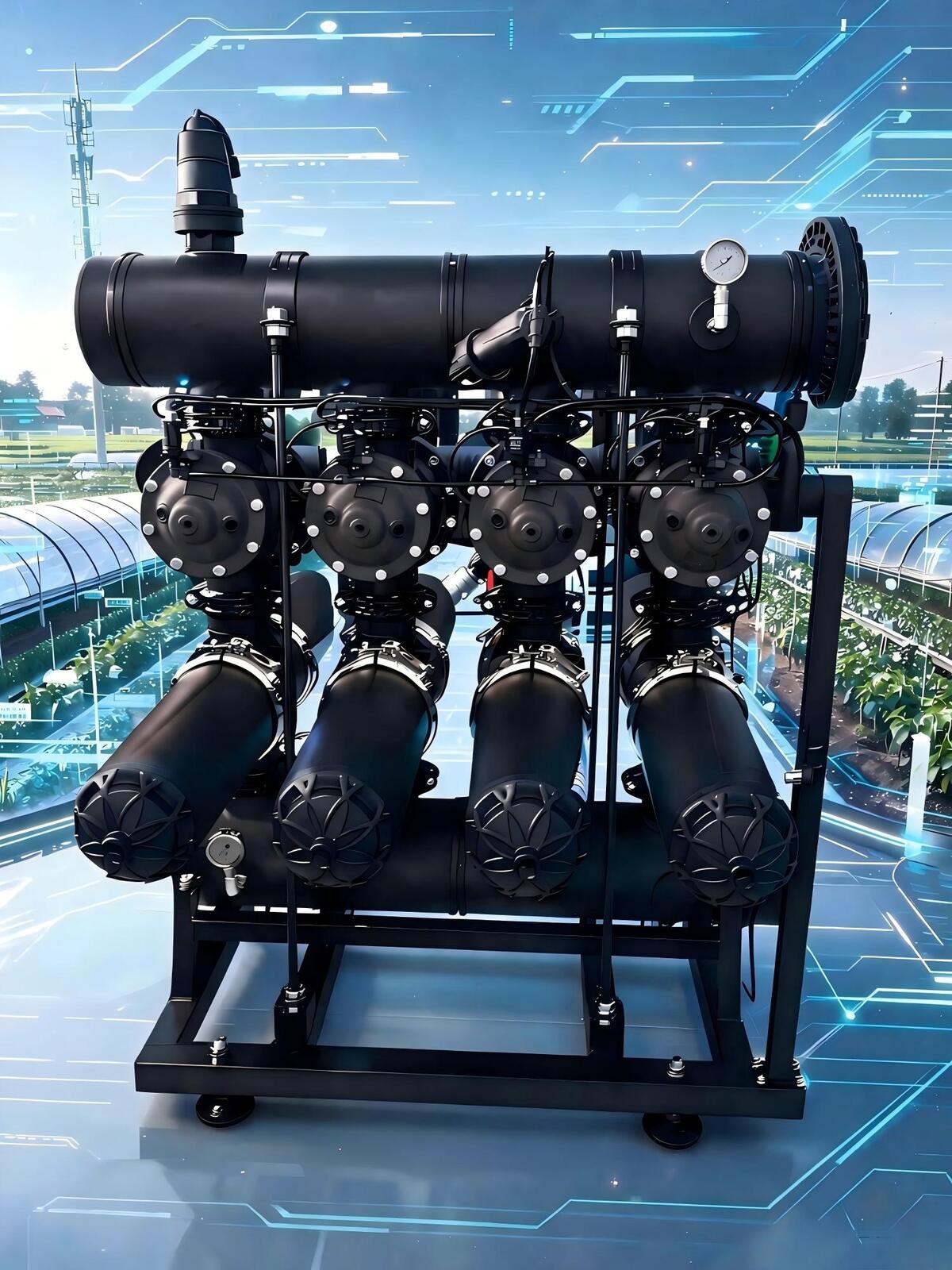
Sand filters are responsible for removing organic matter and suspended solids, while disc filters take charge of fine filtration. The combination of the two forms a multi-stage filtration system of coarse filtration + fine filtration, which is a recommended solution for river water source irrigation systems.
In agricultural irrigation filtration systems, a single filter often fails to meet the filtration requirements under all water quality conditions, and multi-stage filtration combination is a reliable solution recognized by the industry. The combination of a sand filter and a disc filter is a typical configuration of coarse filtration + fine filtration.
Sand filters use quartz sand as the medium, and remove sediment, algae, organic matter and suspended solids in water through deep filtration of the sand bed. With large dirt holding capacity and large filtration area, they are suitable for treating river water and reservoir water with poor water quality; disc filters have high filtration precision, which can effectively intercept fine particles and protect end equipment such as drip irrigation and micro-sprinkler irrigation. When the two are used in series, the sand filter first treats large particles and organic impurities, reducing the burden on the disc filter and extending its backwashing cycle and filter element life; the disc filter then ensures the final effluent precision, and the two complement each other's advantages.
Matching suggestions: For well water with high sand content, a centrifugal filter can be installed first to remove sand particles before the water enters the sand filter and disc filter; for water sources with good water quality, disc filters or screen filters can be used directly. The specific configuration should be calculated and selected by professionals according to water source test data, system flow and irrigation methods, so as to avoid insufficient filtration capacity or excessive configuration.