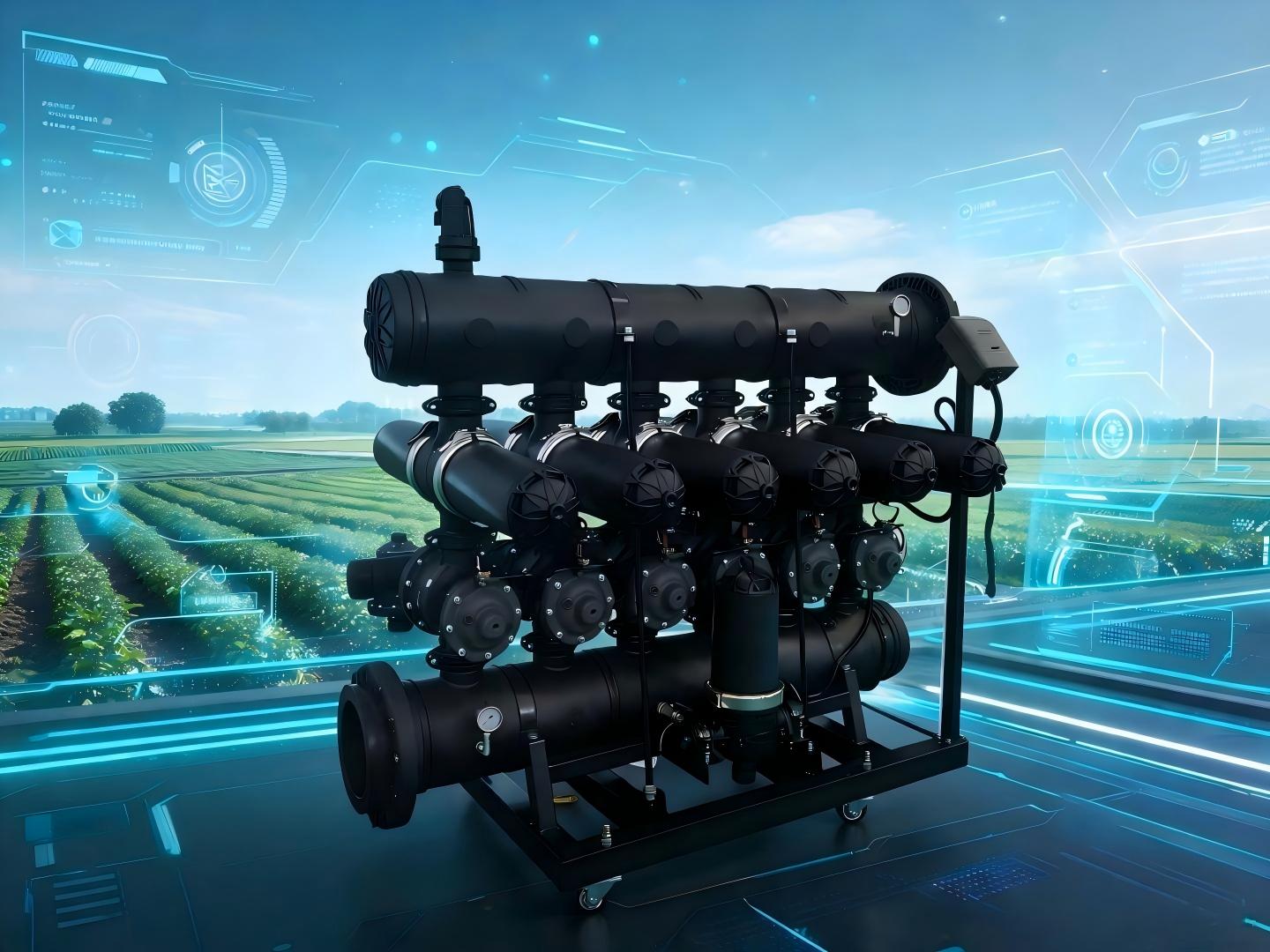
Disc filters (also known as disc-type filters) are precision filtration equipment widely used in agricultural irrigation systems. Their core component is plastic discs with micron-level grooves; under the action of spring force and water pressure, the discs are pressed tightly to form a filter element with deep filtration capability. When water flows through the grooves between the discs, impurity particles are trapped at the intersection points of the discs, realizing the filtration effect.
The filtration precision of disc filters usually ranges from 20-600 microns, and can be selected according to the water quality requirements of different irrigation methods such as drip irrigation and micro-sprinkler irrigation: drip irrigation systems generally require filtration precision of 120 mesh (about 130 microns) or above, while micro-sprinkler systems can choose 75-120 mesh. Compared with screen filters, disc filters have a larger dirt holding capacity and are less prone to clogging. During cleaning, the discs can be removed for direct rinsing and reused repeatedly.
Key points for selection: First, determine the filtration grade according to the type of water source. For sand-containing water sources, it is recommended to install a centrifugal filter or sand filter before the disc filter; second, determine the filter specification and number of parallel units according to the system design flow rate to ensure sufficient flow capacity; third, select manual cleaning or automatic backwashing according to project conditions. Automatic backwashing is recommended for large-scale projects to reduce manual maintenance costs.