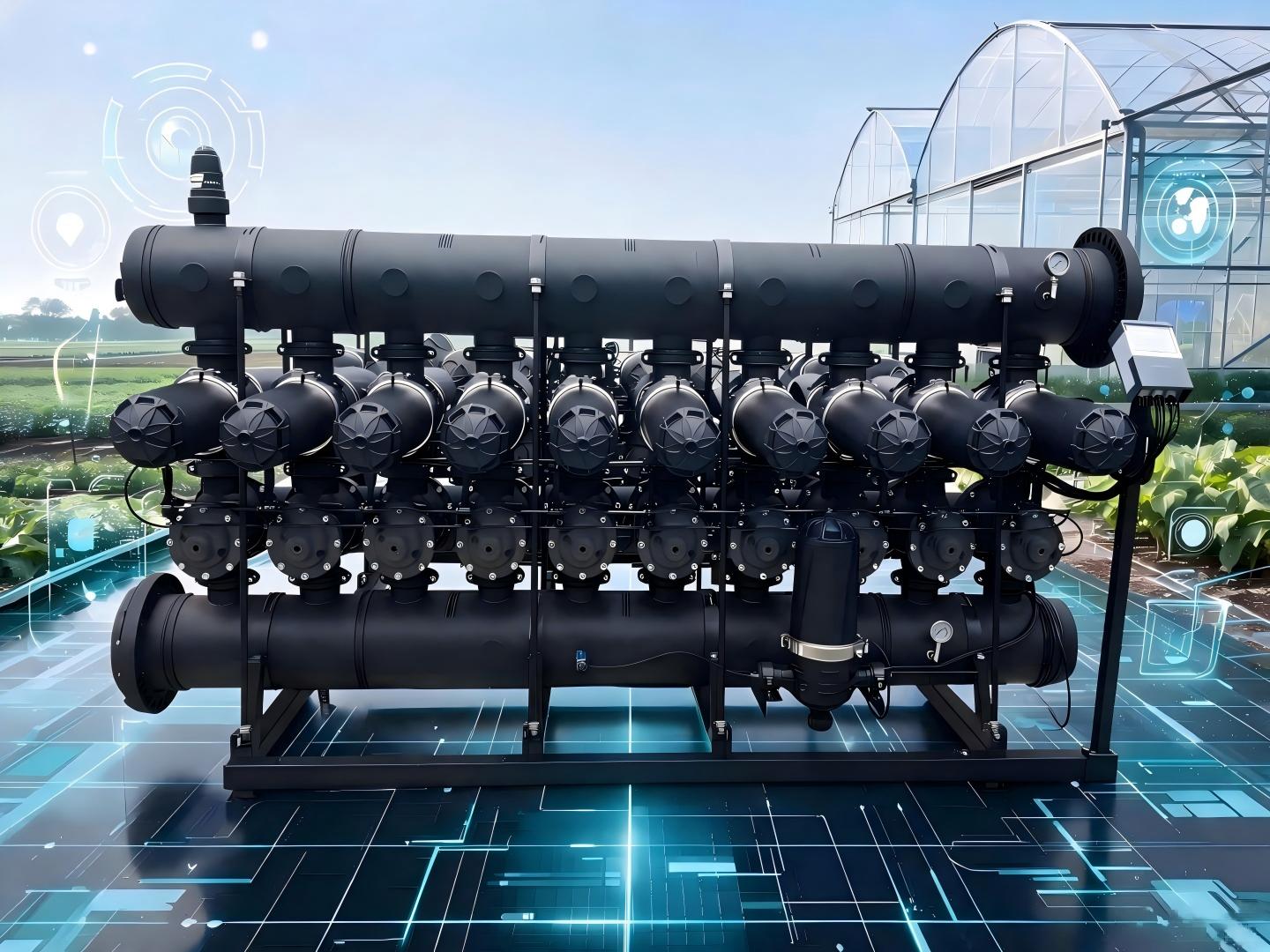
China is a country facing water resource shortages, with agricultural water use accounting for more than 60% of the country's total water consumption. Improving agricultural water use efficiency is an important approach to achieving sustainable utilization of water resources. In recent years, as the National Water Conservation Action continues to advance, agricultural water conservation is shifting from purely engineering-based water saving to multi-dimensional integrated water saving covering engineering, agronomy, management and technology.
From the perspective of technical pathways, high-efficiency water-saving irrigation is the core means to improve agricultural water use efficiency. Compared with flood irrigation, high-efficiency irrigation methods such as drip irrigation and micro-sprinkler irrigation can save more than 50% of water. However, such precision irrigation methods have extremely high requirements for water quality, and the reliability of the filtration system directly affects the promotion effect of water-saving irrigation. A large number of practical cases show that it is not uncommon for drip tapes to be clogged and systems to be scrapped ahead of schedule due to inadequate filtration, and the importance of the filtration link is often overlooked.
Therefore, to promote high-efficiency water-saving irrigation, reliable filtration head units must be equipped simultaneously. Selecting a full range of filtration products from regular manufacturers, rationally configuring multi-stage filtration systems, and establishing a regular maintenance system are the keys to ensuring the long-term operation of water-saving irrigation projects and truly realizing water saving and efficiency improvement.