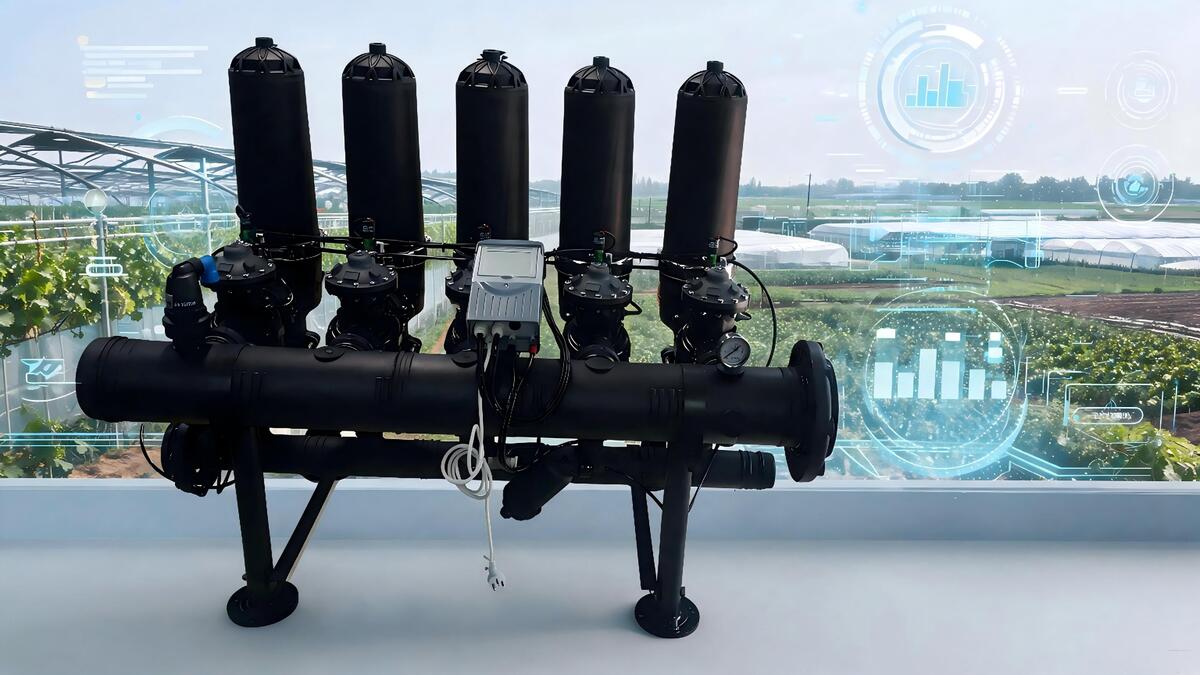
As the country continuously raises requirements for food security and agricultural water resource utilization efficiency, the water-saving irrigation industry will maintain a rapid development momentum in 2026. From the policy perspective, the continuous advancement of policies such as high-standard farmland construction and comprehensive reform of agricultural water prices has created stable market demand for water-saving irrigation equipment; from the technical perspective, irrigation systems are transforming from single water-saving functionality to integrated intelligent management covering water saving, fertilizer saving, pesticide saving and smart operation.
Against this trend, the importance of irrigation filtration equipment has become increasingly prominent. On the one hand, precision irrigation methods such as drip irrigation and micro-sprinkler irrigation have high requirements for water quality, making filtration systems an essential link to guarantee the stable operation of the entire irrigation system; on the other hand, the popularization of water-fertilizer integration technology has driven rapid growth in demand for head-end equipment including Venturi fertilizer injectors and automatic backwash filters.
In terms of industry competition, the market is shifting from low-quality, low-price competition to comprehensive competition focusing on product quality and services, where source factories with full product lines and the capability to provide overall solutions hold obvious advantages. It is expected that in the coming years, intelligent filtration control (differential pressure sensing automatic backwashing, remote monitoring) will become the mainstream direction of product upgrading.