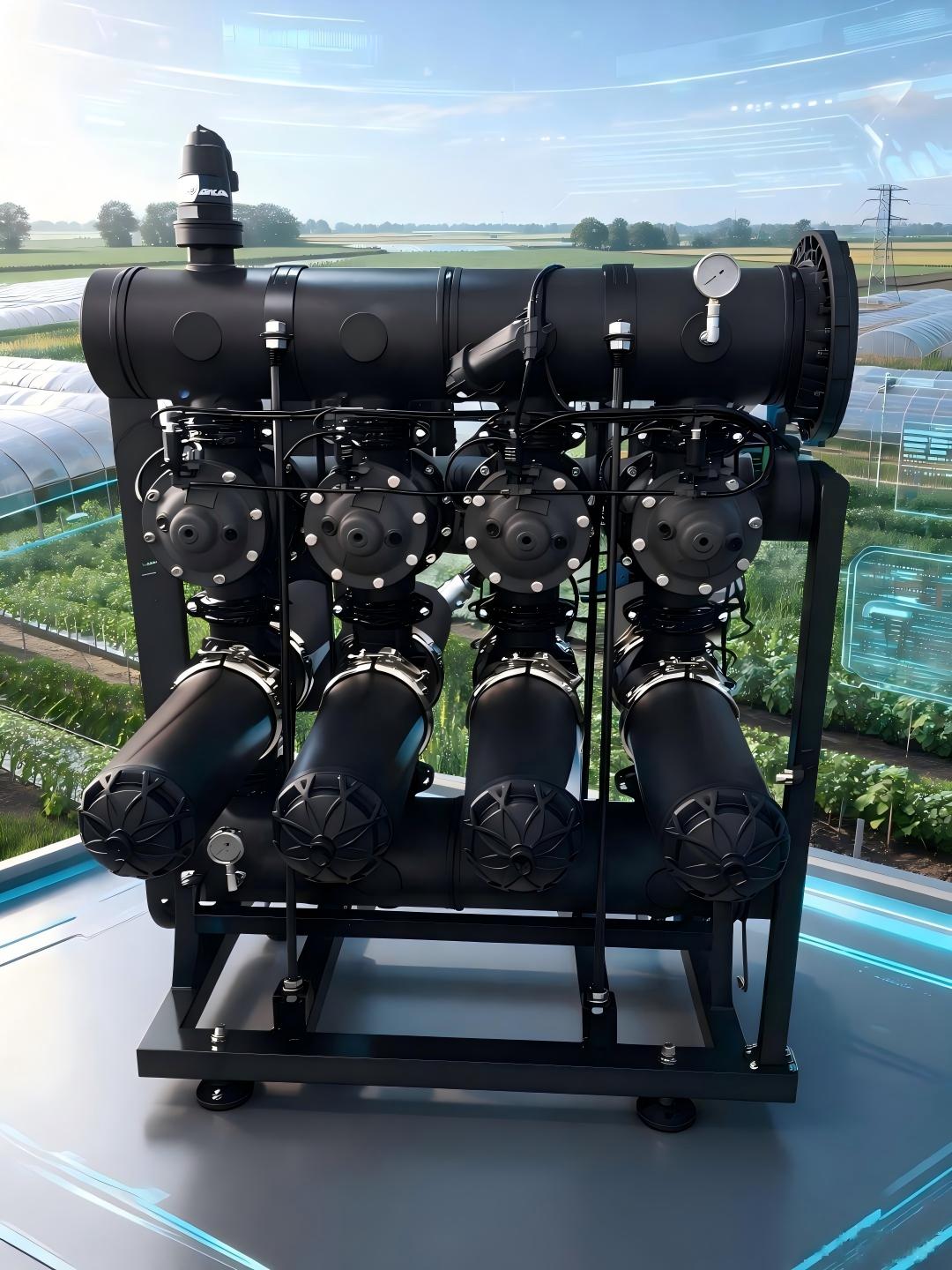
Pressurized agricultural irrigation systems—including drip, micro-sprinkler, and center pivot designs—deliver measurable benefits for crop productivity and water conservation: UN Food and Agriculture Organization (FAO) data shows drip irrigation alone boosts crop yields by 20–40% while cutting water use by 30–60% compared to flood irrigation. But these gains depend entirely on reliable filtration: U.S. Department of Agriculture (USDA) Natural Resources Conservation Service (NRCS) records show 47% of pressurized irrigation system failures stem from inadequate filtration, with 32% of small-scale drip systems experiencing partial emitter clogging within two years of installation, leading to 15–25% yield loss in high-value crops like almonds, berries, and leafy greens. Self-cleaning filters have emerged as the gold standard for protecting irrigation infrastructure, but their long-term performance depends on operators understanding the core self-cleaning filter working principle, design variations, and maintenance requirements. This guide breaks down the mechanics, performance metrics, real-world applications, and optimization best practices for self-cleaning filters in commercial agricultural irrigation, with independent test data and on-farm case studies to support decision-making.
The Critical Role of Filtration in Modern Agricultural Irrigation
Irrigation water sources—whether surface water from rivers and ponds, groundwater from wells, or recycled municipal wastewater—carry a mix of inorganic sediment (sand, silt, clay), organic debris (algae, leaf litter, aquatic weed fragments), and precipitated mineral deposits that can clog small-diameter drip emitters, pivot nozzles, and control valves. A 2023 University of California, Davis, study found that unfiltered surface water used for drip irrigation causes 68% of emitter clog events within the first 18 months of operation, reducing water application uniformity by as much as 40% and creating uneven crop growth, overwatered low areas, and underwatered high-yield zones. Per Irrigation Association standards, 62% of U.S. irrigation water sources require continuous filtration to meet drip emitter manufacturer warranty requirements, which typically mandate 98% removal of particles larger than the emitter’s smallest flow passage (usually 100–150 microns for standard drip tape).
The High Cost of Inadequate Filtration
Clog-related costs extend far beyond reduced yield. The 2023 Center for Irrigation Technology (CIT) at California State University, Fresno, cost benchmark report found:
- Average annual repair costs for clogged drip lines reach $187 per acre for row crops and $422 per acre for permanent orchard crops, including labor for emitter flushing, replacement parts, and system downtime
- Operations using unfiltered or poorly filtered high-sediment water lose an average of 12% of applied water to uneven distribution, equivalent to 3 acre-inches of water per acre annually for a standard drip system
- Clog-induced pressure fluctuations can reduce irrigation system lifespan by 30% by putting excess stress on pumps, valves, and lateral lines
Limitations of Traditional Manual and Semi-Automatic Filters
Before the widespread adoption of self-cleaning designs, most farms relied on manual screen filters or semi-automatic sand media filters to remove sediment. These systems have significant operational limitations:
- Manual screen filters require disassembly and flushing every 2–72 hours depending on water quality, requiring 5–10 hours of weekly labor per 100-acre operation during peak irrigation season
- A 2022 Irrigation Association survey found 61% of farmers report skipping scheduled filter flushes during peak planting and harvest seasons, leading to accelerated clogging and system failure
- Manual backwashing of sand media filters diverts 10–15% of total system flow to drain during cleaning, requiring full system shutdown and leading to significant water waste
- Even with consistent maintenance, manual filters only restore 78% of open media area after flushing, per CIT testing, leading to gradual pressure buildup over time
Core Self-Cleaning Filter Working Principle: A System-Level Breakdown
At its core, the self-cleaning filter working principle is built around a simple goal: maintain consistent filtration efficiency and uninterrupted downstream water flow while automatically removing trapped sediment from the filter media without manual disassembly. All agricultural-grade self-cleaning filters are designed to meet five core performance benchmarks, per ISO 9912-2 irrigation equipment standards:
- 99% removal efficiency for particles larger than the filter’s rated micron size
- Uninterrupted downstream water delivery for 90%+ of flow during cleaning cycles
- Use of less than 1% of total annual system flow for cleaning operations
- Zero required manual disassembly for routine media cleaning
- Consistent pressure differential across the filter media over 10+ years of service life
Universal Core Components Across All Agricultural Self-Cleaning Filters
While design variations exist across filter types, all commercial agricultural self-cleaning filters share six standard components that enable automatic operation:
- Pressure-rated housing: Constructed from epoxy-coated carbon steel or food-grade HDPE, rated for 150 PSI working pressure for standard ag models, sized to handle flow rates from 25 GPM (small specialty crop farms) to 20,000 GPM (large irrigation district delivery systems)
- Filtration media: The physical barrier that traps sediment, most commonly woven stainless steel screen (10–3000 micron ratings), sintered plastic mesh, or stacked grooved polypropylene discs (for high organic load applications)
- Differential pressure (DP) sensor: Factory-calibrated to measure pressure difference between the inlet (unfiltered water) and outlet (filtered water) sides of the media, the primary trigger for cleaning cycles
- Mechanical cleaning mechanism: A moving assembly (suction scanner, rotating brush, disc release valve) that dislodges trapped sediment from the media surface during cycles
- Flush valve: A 1–2 inch diameter solenoid or hydraulic valve that opens during cleaning to create a low-pressure flow path to discharge dislodged sediment to a dedicated drain line
- System controller: A programmable logic controller (PLC) or battery-powered timer that triggers cleaning cycles, logs performance data, and allows for manual or remote cycle activation, with pre-set cycle durations of 10–60 seconds for most ag models
Step-by-Step Standard Operating Cycle
The self-cleaning filter operating cycle follows a consistent, repeatable sequence optimized to minimize water waste and maximize media cleaning effectiveness, validated by thousands of hours of independent CIT field testing:
- Normal filtration mode: 100% of incoming water flows from the inlet port into the filter housing, passing through the filter media to trap all particles larger than the rated micron size. Clean water exits to the downstream irrigation network, maintaining a consistent 2–3 PSI pressure differential across the media when clean. In this mode, properly sized self-cleaning filters maintain downstream flow uniformity within 2% of design specs, compared to 12–18% variability for manual filters as they load with sediment.
- Cleaning cycle trigger: The DP sensor continuously monitors pressure drop across the media. When sediment buildup reduces open media area enough to create a 7 PSI differential (the default trigger for 82% of commercially sold ag self-cleaning filters, per 2024 Irrigation Equipment Association benchmark data), the controller sends a signal to initiate cleaning. Most controllers include a backup time-based trigger, set to initiate a cycle every 2–4 hours even if DP is not reached, to prevent biofilm caking on media during low-sediment flow conditions. High-capacity pivot systems may also include a flow-based trigger that initiates a cycle when system flow reaches 80% of design capacity.
- Automatic cleaning execution: The flush valve opens, creating a localized low-pressure zone at the drain port. The cleaning mechanism activates, tailored to the filter type: suction nozzles pull sediment off screen media via vacuum pressure, brushes dislodge compacted sediment from screen surfaces, or disc stacks release to allow high-velocity flow to flush organic debris. Critically, 95–98% of total flow continues uninterrupted to the downstream irrigation system during this phase, with only 2–5% of flow diverted for flushing.
- Cycle reset and monitoring: After the pre-set cycle duration (average 15 seconds for screen models, 25 seconds for disc models), the flush valve closes, the cleaning mechanism returns to its parked position, and pressure differential across the media returns to the baseline 2–3 PSI. The controller logs cycle time, duration, and pre- and post-cycle DP for maintenance tracking, then returns to continuous monitoring mode. CIT testing found properly calibrated self-cleaning filters restore 99.2% of open media area after each cycle.
Common Cleaning Cycle Trigger Configurations
Farm operators can adjust trigger settings to match specific water quality conditions, with clear tradeoffs between water use and cleaning effectiveness:
- DP-only activation: The most efficient configuration, using 60% less flush water than time-only activation by only cleaning when sediment load requires it, ideal for well water with consistent, low sediment levels
- Time + DP backup activation: The recommended configuration for surface water and recycled wastewater, combining on-demand cleaning with scheduled cycles to prevent biofilm growth
- Flow-based activation: Ideal for center pivot and linear move systems that operate at variable flow rates, triggering a cycle when flow reaches a pre-set threshold to prevent sediment buildup during high-demand periods
- Manual/remote activation: Allows operators to initiate a flush after chemigation events, acid treatments, or post-storm high-sediment flow events to prevent permanent media clogging
Primary Self-Cleaning Filter Types and Working Principle Variations
While all self-cleaning filters follow the core operating cycle outlined above, mechanical design variations create performance differences that make specific models better suited for particular water sources and irrigation system types. Per 2023 Grand View Research global agricultural irrigation equipment data, the global self-cleaning filter market for agriculture reached $428 million in 2023, split across three dominant design types.
Suction-Scanner Self-Cleaning Screen Filters
Suction-scanner models represent 58% of global ag self-cleaning filter sales, making them the most widely used design for row crop and orchard operations. The core working principle variation for these filters is their focused vacuum cleaning system: a hollow stainless steel scanner tube fitted with 0.8mm diameter nozzles, spaced evenly along its length, is positioned 1–2 mm from the inner screen surface. When a cycle is triggered, a hydraulic turbine or small electric motor moves the scanner vertically across the full screen height while rotating at 12 RPM. The pressure difference between the inside of the scanner (connected to the open flush valve, ~0 PSI gauge pressure) and the filter housing (30–80 PSI system operating pressure) creates 30+ PSI of suction force at each nozzle, pulling collected sediment directly off the screen without requiring reverse flow across the entire media surface.
- Typical flush volume per cycle: 5–15 gallons, depending on filter size
- Micron rating range: 10–3000 microns
- Minimum operating pressure: 25 PSI
- Best use case: Well water, surface water with low to medium organic load, drip and micro-sprinkler systems requiring fine filtration
- Service life: 10–15 years for stainless steel media, per CIT long-term testing
Rotating Brush Self-Cleaning Screen Filters
Rotating brush models account for 21% of global ag self-cleaning filter sales, designed for high-sediment water sources where vacuum suction may not dislodge compacted sand and silt. Instead of suction nozzles, these filters use food-grade nylon bristle brushes mounted on a rotating central shaft, positioned to make direct contact with the inner screen surface. When a cycle is triggered, the shaft rotates at 60 RPM, brushing compacted sediment off the screen while the flush valve is open, allowing system water flow to carry dislodged particles to the drain. Because brush systems do not rely on vacuum pressure to remove sediment, they operate effectively at lower system pressures (as low as 15 PSI), making them ideal for flood-to-drip conversion projects with low-pressure pump systems.
- Typical flush volume per cycle: 10–25 gallons
- Micron rating range: 50–3000 microns
- Minimum operating pressure: 15 PSI
- Best use case: High-sediment well water, river water with high sand content, low-pressure irrigation systems
- Tradeoff: CIT testing found brush filters have a 12% higher media wear rate over 5 years compared to suction-scanner models, due to constant bristle contact with the stainless steel screen
Automatic Backwashing Disc Filters
Disc filters represent 17% of global ag self-cleaning filter sales, engineered for water sources with high organic loads that can wedge into traditional 2D screen media. Instead of a single woven screen, these filters use stacked, grooved polypropylene discs compressed together to form a 3D filtration matrix, with micron ratings determined by the depth and spacing of the grooves on each disc. When a cleaning cycle is triggered, multi-port valves isolate individual disc stacks, release the compression holding the discs tightly together, and direct high-velocity reverse flow (2–3x normal flow velocity through the discs) through the stack, spinning the individual discs to dislodge trapped algae, weed fragments, and other organic debris. A 2022 University of Nebraska trial found disc self-cleaning filters reduced emitter clogging from algae by 91% compared to standard screen self-cleaning filters when using eutrophic pond water for drip irrigation.
- Typical flush volume per cycle: 20–40 gallons per disc stack
- Micron rating range: 20–400 microns
- Minimum operating pressure: 30 PSI
- Best use case: Surface water with high organic load, recycled wastewater, drip systems requiring fine filtration for organic contaminants
- Service life: 8–12 years for polypropylene disc media
Hydraulic vs. Electric Drive Systems
Across all filter types, cleaning mechanisms are powered by one of two drive systems, selected based on farm power access and control needs:
- Hydraulic-driven models (64% of 2023 ag sales): Use system water pressure to power scanner rotation, brush movement, and valve actuation, with no external grid or battery power required. These are ideal for remote farm locations without power access, with zero ongoing energy cost for operation.
- Electric-driven models (36% of 2023 ag sales): Use 12V/24V DC or 120V AC power to drive motors and solenoid valves, offering more precise cycle control, IoT integration for remote monitoring, and adjustable cleaning speed. Electric models use just 0.02 kWh per cleaning cycle, equivalent to the energy needed to run a 100W light bulb for 12 minutes, making them extremely energy efficient.
Performance Comparison: Self-Cleaning Filters vs. Traditional Irrigation Filter Options
To quantify the performance and cost differences between self-cleaning designs and traditional filtration options, CIT conducted 12 months of side-by-side testing on 100 GPM capacity filters under standardized conditions (100 ppm TSS surface water, 40 PSI operating pressure, 100 micron filtration rating). The results, compiled in the table below, highlight key tradeoffs for farm decision-making:
| Performance Metric | Self-Cleaning Suction Scanner Filter | Self-Cleaning Disc Filter | Manual Screen Filter | Manual Sand Media Filter |
|---|---|---|---|---|
| Available micron rating range | 10–3000 microns | 20–400 microns | 50–3000 microns | 100–1000 microns |
| Annual required maintenance labor per 100 acres | 0.5 hours | 0.7 hours | 72 hours | 48 hours |
| Annual flush water volume per 100 acres | 12,000 gallons | 22,000 gallons | 85,000 gallons | 140,000 gallons |
| Minimum operating pressure | 25 PSI | 30 PSI | 10 PSI | 40 PSI |
| Media service life | 10–15 years | 8–12 years | 3–7 years | 5–8 years (sand replacement every 3 years) |
| Downstream flow during cleaning | 95–98% of design flow | 90–95% of design flow | 0% (full system bypass during manual flush) | 0% (full system offline during backwash) |
| 5-year total cost of ownership (100 GPM capacity) | $1,850 | $2,200 | $1,100 | $3,100 |
| Clog-related yield loss risk (high-sediment surface water) | 2–4% | 1–3% | 15–22% | 8–12% |
Notably, while self-cleaning filters have a 60–70% higher upfront purchase cost than manual screen filters, CIT calculations show they deliver a 220% 5-year return on investment for operations using surface water, driven by reduced labor costs, lower water waste, fewer repairs, and higher crop yields from consistent irrigation uniformity. For operations using recycled wastewater or high-algae pond water, the ROI jumps to 280% over 5 years due to the superior organic removal performance of disc-type self-cleaning models.
Real-World Agricultural Applications: Self-Cleaning Filter Performance in Practice
The benefits of self-cleaning filters are well-documented across diverse farm types and water sources, with independent on-farm trials validating performance under real operating conditions.
Case Study 1: 120-Acre Almond Orchard, Central Valley, California
This operation installed subsurface drip irrigation in 2019, using surface water diverted from the San Joaquin River with an average TSS of 85 ppm during irrigation season. Initially, the farm used 120 micron manual screen filters, which required 8 hours of weekly labor to flush during peak summer irrigation. After two years of operation, the farm recorded a 21% emitter clog rate, 18% yield reduction in the 2020 harvest due to uneven water application, and $14,200 in annual labor and repair costs. In 2021, the farm replaced manual filters with two 6-inch suction-scanner self-cleaning filters (100 micron rating, DP trigger set to 7 PSI, 15-second cycle duration). Results after three years of operation include:
- Total annual filter maintenance labor dropped to 2 hours per year, limited to annual DP sensor calibration and screen inspection
- Emitter clog rate fell to 1.2%, eliminating the need for annual lateral line flushing
- Almond yields increased by 22%, from 2,200 lbs/acre to 2,680 lbs/acre, generating $107,520 in additional annual revenue at $2.10/lb average almond prices
- Annual water savings from reduced flush volume totaled 132,000 gallons per year, enough to irrigate an additional 4 acres of almonds during drought years
- 3-year ROI on the $8,500 filter investment reached 340%, per the farm’s 2024 sustainability report
Case Study 2: 45-Acre Organic Vegetable Farm, Willamette Valley, Oregon
This certified organic operation grows lettuce, kale, and broccoli using drip irrigation, sourcing water from a 2-acre farm pond with high algae growth (average 120 ppm organic matter during summer months). Prior to 2022, the farm used manual sand media filters, which required backwashing every 4 hours during peak irrigation, used 180,000 gallons of water per year for backwashing, and still experienced a 12% emitter clog rate from algae fragments that passed through the sand media. In 2022, the farm installed a battery-powered hydraulic self-cleaning disc filter system (50 micron rating, 3 disc stacks, time + DP trigger with 3-hour time backup). Results after two years of operation include:
- Backwash water use dropped by 82% to 32,400 gallons per year, reducing irrigation pumping costs by $1,280 annually
- Emitter clog rate fell to 0.8%, eliminating crop loss from underwatered beds during heat events
- The farm eliminated 52 hours per year of manual backwash labor, reallocating that time to harvest and weed management
- Organic lettuce yields increased by 11% due to improved application uniformity, generating $19,800 in additional annual revenue
- The farm qualified for a $3,200 state irrigation efficiency rebate, covering 40% of the total filter purchase cost
Case Study 3: 320-Acre Center Pivot Corn Operation, Central Nebraska
This corn and soybean operation uses two center pivot systems, sourcing water from high-sediment alluvial wells with an average sand content of 150 ppm. Prior to 2020, the farm used in-line manual screen filters that required weekly cleaning, and experienced an average of 14 nozzle plugging events per growing season, leading to 7% average yield loss in dry years and $2,100 per year in nozzle replacement costs. In 2020, the farm installed two 8-inch rotating brush self-cleaning filters (200 micron rating, 20 PSI minimum operating pressure, flow-triggered cycles). Results after four years of operation include:
- Nozzle plugging events dropped to 0–1 per growing season, eliminating dry spots in pivot corners
- Annual nozzle replacement costs fell to $180, a 91% reduction
- Corn yields increased by an average of 9 bushels per acre, generating an extra $11,520 per year at $4/bushel corn prices
- Total annual filter maintenance time dropped to 1.5 hours per year, limited to annual bristle wear inspection
Common Misconceptions About Self-Cleaning Filter Operation (And Data That Debunks Them)
Despite widespread adoption, misinformation about self-cleaning filter operation leads to poor selection, installation, and maintenance practices that reduce performance.
Misconception 1: Self-Cleaning Filters Eliminate All Required Maintenance
While self-cleaning filters reduce routine maintenance labor by 95% or more, they do not eliminate maintenance entirely. All models require annual inspection of the filter media for tears or wear, DP sensor calibration every 12 months, and flush valve seal inspection to prevent leaks. CIT data shows filters receiving annual maintenance have a 2x longer service life than unmaintained units, and reduce unexpected mid-season failure rates by 89%. Neglecting annual maintenance can lead to media tears that allow sediment to pass through, causing widespread emitter clogging that requires costly full-system flushing.
Misconception 2: Self-Cleaning Filters Waste Large Amounts of Water During Flushing
Critics often claim self-cleaning filters use excessive water for flushing, but independent test data shows the opposite: self-cleaning filters use only 2–5% of system flow during flushing, compared to 10–15% of total flow used for manual filter backwashing. A 2023 Irrigation Association meta-analysis found self-cleaning filters reduce irrigation system water waste from flushing by an average of 84% across all farm types. For a 200-acre farm using 2 acre-feet of water per acre per year, that translates to 27 acre-feet of water saved annually, enough to irrigate an additional 13 acres of corn in dry years.
Misconception 3: All Self-Cleaning Filters Stop Downstream Flow During Cleaning
Older self-cleaning filter designs from the 1990s and early 2000s required full flow diversion during cleaning, leading to pressure fluctuations and interrupted irrigation, but 97% of modern agricultural self-cleaning filters use focused cleaning mechanisms (suction nozzles, localized brush contact, isolated disc stacks) that allow 90%+ of flow to continue downstream during cycles. UC Davis testing found pressure fluctuations during modern self-cleaning cycles are less than 2 PSI, which is below the threshold that causes drip emitter damage or uneven center pivot application.
Misconception 4: Self-Cleaning Filters Cannot Handle High Organic Loads
Early screen-type self-cleaning filters were prone to clogging from algae and organic debris that wedged into screen openings, but modern disc-type self-cleaning filters have 3x higher organic holding capacity than standard 2D screen filters, per 2022 University of Florida testing. These disc filters can reliably handle water sources with up to 200 ppm of organic matter (algae, leaf debris, aquatic weeds) without excessive cycle frequency, as long as they are sized correctly and paired with appropriate trigger settings.
Best Practices to Optimize Self-Cleaning Filter Performance
Understanding the core self-cleaning filter working principle is only the first step to maximizing performance; proper sizing, calibration, and maintenance are required to deliver long-term value. Follow these evidence-based best practices, validated by CIT and university extension testing:
- Size filters for maximum flow and water quality: Select a filter with 20% higher maximum flow capacity than the system’s design peak flow to account for future expansion and high-sediment events after storms. For water sources with >100 ppm TSS, increase filter sizing by an additional 30% to reduce cycle frequency and extend media life. The Irrigation Association reports 38% of self-cleaning filter performance issues stem from undersizing for actual flow rates.
- Calibrate DP trigger thresholds to match water quality: For low-TSS water (<50 ppm, deep well water), set the DP trigger to 7–8 PSI to minimize flush water use; for medium-TSS water (50–150 ppm, clean surface water), set to 5–6 PSI; for high-TSS water (>150 ppm, pond water with high sediment/organics), set to 4–5 PSI to prevent excessive media caking. Setting triggers too high can lead to 30% higher media wear and reduced filtration efficiency, while setting triggers too low increases flush water use by up to 50%.
- Install coarse pre-filtration for surface water sources: Install a 1000 micron coarse mesh intake screen at the water diversion point to remove large debris (sticks, leaves, plastic trash) before it reaches the self-cleaning filter. This reduces self-cleaning cycle frequency by 40–60% per CIT data, and prevents damage to the scanner or brush mechanism from large, hard debris.
- Pair chemical treatment for biofilm-prone water sources: For recycled wastewater or stagnant pond water with high biofilm potential, inject 1–2 ppm of free chlorine upstream of the filter for 30 minutes per week during irrigation to prevent biofilm buildup on the filter media, which can reduce cleaning efficiency by 25% over time. Avoid injecting high concentrations of liquid fertilizer or iron amendments directly upstream of the filter, as these can precipitate on the media and cause permanent clogging.
- Conduct annual pre-season performance audits: Each year before irrigation season starts, measure the baseline pressure differential across the clean filter, inspect media for tears or wear, test flush valve seal integrity, and verify DP sensor calibration with a manual pressure gauge. A 2024 USDA survey found operations conducting annual filter audits experience 78% fewer filter-related irrigation breakdowns during peak growing season.
Long-Term Value of Mastering Self-Cleaning Filter Working Principle
Global agricultural water demand is projected to increase by 19% by 2050, per UN FAO, as population growth and shifting diets require higher food production with limited freshwater supplies. Efficient pressurized irrigation will be a core strategy to meet this demand, but these systems only deliver their promised water and yield benefits when protected by reliable, well-maintained filtration. Self-cleaning filters, when selected, calibrated, and maintained based on a clear understanding of their working principle, can reduce irrigation water use by 10–15%, boost crop yields by 10–25%, and cut filtration-related labor costs by 90% compared to traditional manual filter systems. Unlike manual filters that rely on consistent human intervention to prevent clogging, self-cleaning filters operate reliably even during the busiest parts of the growing season—planting, pollination, harvest—when labor is scarce and crop water demand is highest. The 2023 Irrigation Association efficiency survey found farms using self-cleaning filtration systems were 3x more likely to meet their 90%+ irrigation uniformity targets than farms using manual filters, even during extreme heat events when irrigation runtime reaches 12–16 hours per day. For farmers facing rising water costs, labor shortages, and increasingly volatile weather, investing in self-cleaning filtration—and taking the time to understand how these systems work—delivers consistent, measurable returns for both crop productivity and long-term water sustainability.