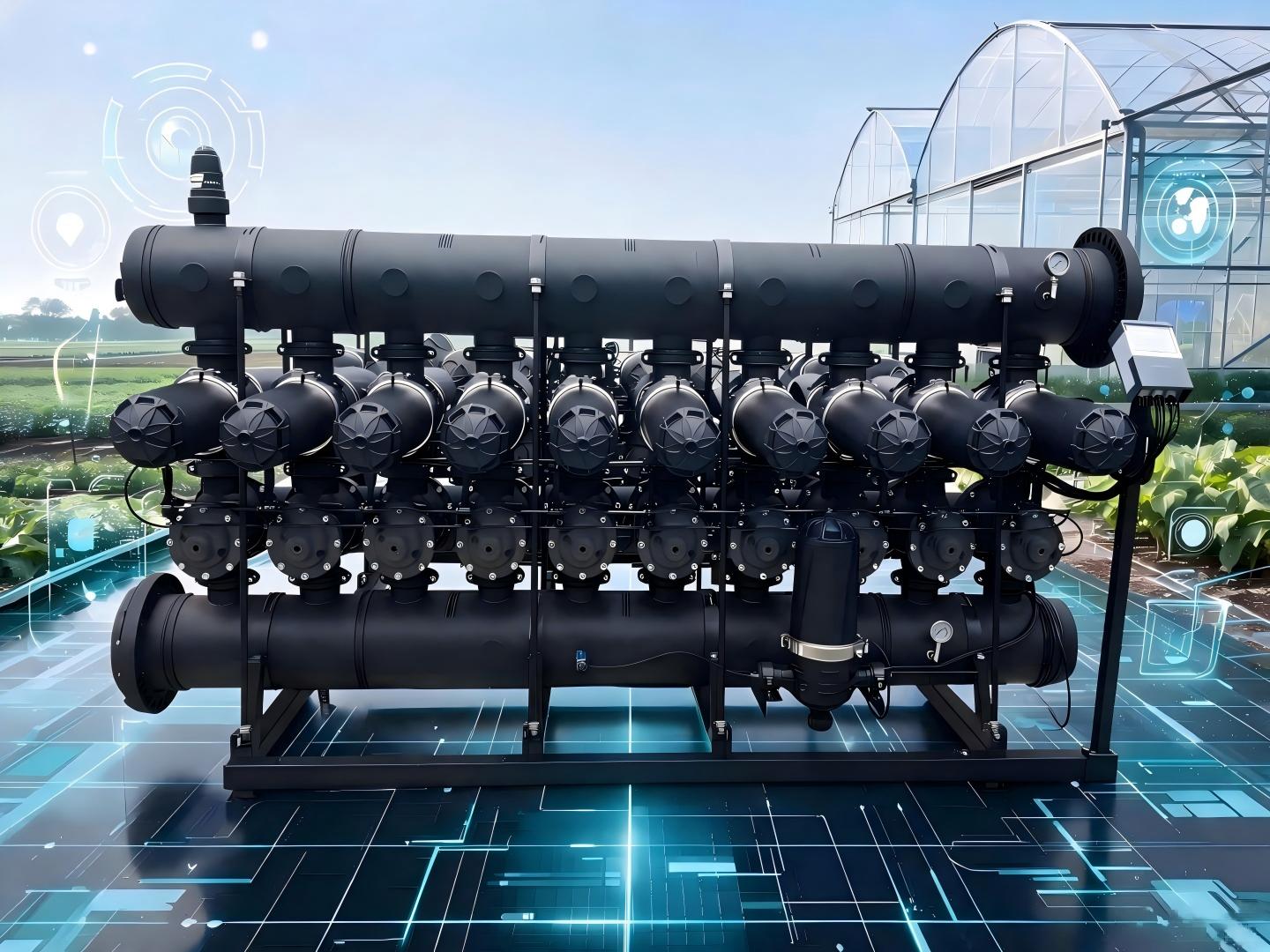
As global irrigated agricultural acreage expands to 339 million hectares (Food and Agriculture Organization [FAO], 2023), pressurized irrigation systems—including center pivots, drip lines, and micro-sprinklers—now deliver water to 41% of global cropland, accounting for 60% of total irrigated crop value. The single largest cause of unplanned downtime and yield loss in these systems is inadequate filtration: the Irrigation Association (IA) 2024 industry report found that 58% of drip emitter clogging events and 47% of center pivot nozzle failures trace back to improperly designed or sized filters, leading to 18–32% yield loss in high-value crops like almonds, blueberries, and wine grapes. Among all agricultural filtration technologies, screen filters are the most widely deployed, used on 71% of all pressurized irrigation systems globally (International Commission on Irrigation and Drainage [ICID], 2023) due to their low pressure drop, minimal maintenance requirements, and cost efficiency. Unlike media or disc filters, which rely on depth filtration to trap particles, screen filters use a precisely perforated or woven surface to capture debris larger than the screen opening, delivering predictable, consistent particle removal when designed and installed correctly.
Core Design Principles of Agricultural Screen Filters
Effective screen filter design balances three core priorities: maximum particle removal efficiency, minimal hydraulic pressure loss to reduce pumping energy costs, and long service life under variable field water quality conditions. A well-designed agricultural screen filter will operate for 10–15 years with routine maintenance, while a poorly engineered unit may fail within 2–3 years, leading to catastrophic downstream clogging and crop loss.
Key Structural Components of Industrial-Grade Screen Filters
Every industrial-grade agricultural screen filter is built from five core components, each engineered to withstand continuous operation in field conditions:
- Filter housing: The pressure-rated outer shell that contains the screen element, typically constructed from epoxy-coated carbon steel (pressure rated to 150 psi, 10–15 year service life), glass-reinforced nylon (pressure rated to 100 psi, 5–7 year service life), or PVC (pressure rated to 80 psi, 8–10 year service life for low-pressure systems).
- Screen media: The perforated or woven surface that traps debris, available in a range of materials, mesh sizes, and weave patterns to match specific water quality conditions.
- Sealing assembly: Food-grade EPDM rubber gaskets that create a watertight seal between the screen element and housing, preventing unfiltered water from bypassing the screen and reaching downstream irrigation components. 2022 University of California (UC) Davis Irrigation Lab testing found that degraded or misaligned gaskets are responsible for 21% of filter bypass events, allowing large debris to clog emitters even when the screen itself is intact.
- Flushing mechanism: The valve and flow path used to remove accumulated debris from the screen surface, ranging from simple manual drain valves to motorized suction scanners that clean the screen without interrupting irrigation flow.
- Inlet/outlet ports: NPT or flanged connections sized to match system pipe diameter, with tapered transitions to reduce turbulent flow and pressure loss as water enters and exits the filter housing.
Screen Media Specification: Mesh Count, Open Area, and Material Selection
The performance of any screen filter hinges on its screen media design, which is defined by three key metrics: opening size, open area percentage, and material construction. Mesh count, defined as the number of openings per linear inch of screen, correlates directly to the maximum particle size allowed to pass through the filter. For reference, 20-mesh screen has 841-micron openings, 100-mesh has 149-micron openings, and 200-mesh has 74-micron openings.
Two primary screen media types dominate agricultural applications: woven wire mesh and wedge wire (profile wire) screens. Woven wire mesh uses interlaced stainless steel or polypropylene wires to create uniform square openings, with open area ranging from 35–45% for standard grades. Wedge wire screens use V-shaped stainless steel wires welded to support rods, creating slotted openings with open area ranging from 45–60%, which reduces clean pressure drop by 22–28% compared to equivalent opening size woven mesh, per UC Davis 2022 testing. Wedge wire screens are also more resistant to abrasion from sand, with a 2–3x longer service life than woven mesh in high-sediment water sources, though they cost 60–80% more upfront.
Screen material is selected to match site water chemistry: 304 stainless steel is standard for freshwater with pH 6–8 and total dissolved solids (TDS) <500 ppm, while 316L stainless steel is required for recycled water, saline groundwater, or acid chemigation applications to resist corrosion. Polypropylene mesh is a low-cost option for small-scale, low-pressure systems using rainwater or clean groundwater, but is not recommended for pressures above 75 psi.
Hydraulic Design Optimization for Minimal Pressure Loss
IA performance standards require clean screen filters to produce no more than 2–3 psi of pressure drop at rated flow, as excess pressure drop directly increases pumping energy costs. A 2023 Texas A&M AgriLife study found that poorly designed screen filters with abrupt, right-angle inlet/outlet transitions and no flow diffusers caused 4–6 psi of clean pressure drop, increasing annual pumping energy costs by 12–17% for a 100-acre center pivot system. High-efficiency screen designs address this issue with tapered, bell-shaped inlet transitions and perforated flow diffusers that distribute water evenly across the entire screen surface, eliminating high-velocity flow zones that cause premature wear and uneven debris accumulation. All properly designed filters also include an integrated air release valve at the top of the housing to prevent air locking, which can reduce effective screen area by up to 40% if trapped air prevents water from contacting a portion of the media.
Manual vs. Automatic Backwash/Flushing Design Configurations
Screen filters are available in two primary flushing configurations, matched to farm size, labor availability, and water quality:
- Manual flush filters: The lowest-cost option, with a simple drain valve at the bottom of the housing that is opened manually to flush accumulated sediment. These units cost $150–$600 for flow rates up to 100 gpm, and are ideal for small acreages (<10 acres) with low sediment loads, but require visual inspection and flushing every 48–72 hours during irrigation season.
- Automatic self-cleaning filters: Equipped with differential pressure sensors that trigger a flushing cycle when pressure drop across the screen reaches a pre-set threshold (typically 5 psi). High-end models use suction scanners that traverse the screen surface to remove debris without interrupting system flow, requiring no manual intervention for 2–4 weeks at a time. These units cost $1,800–$12,000 depending on flow rate, but 2024 University of Nebraska-Lincoln trials found they reduce maintenance labor time by 89% compared to manual filters on 160-acre drip-irrigated corn systems, delivering a 2.1-year payback on the higher equipment cost.
Comparative Performance of Screen Filter Designs vs. Other Irrigation Filter Types
Screen filters are one of four primary filtration technologies used in agricultural irrigation, each with distinct performance tradeoffs for different water quality conditions. The table below compares key performance metrics across common filter types, based on 2024 IA standard testing protocols:
| Filter Type | Minimum Particle Removal Rating | Typical Open Area Percentage | Clean Filter Pressure Drop (PSI) | Backwash Water as % of Total Filtered Volume | Upfront Cost per 100 GPM Capacity (USD) | Recommended Maintenance Interval | Primary Agricultural Use Case | Clogging Risk With >50 ppm Organic TSS |
|---|---|---|---|---|---|---|---|---|
| Manual Woven Stainless Steel Screen | 74–841 micron (20–200 mesh) | 35–45% | 1.5–3.0 | 0.5–1.0% | $800–$1,800 | Manual flush every 48–72 hours; annual screen inspection | Small-acreage sprinkler systems, groundwater with <10 ppm TSS, pump intake pre-filtration | High |
| Automatic Self-Cleaning Wedge Wire Screen | 50–2000 micron (8–300 mesh) | 45–60% | 0.8–2.0 | 0.2–0.7% | $1,500–$3,200 | Automatic flush triggered by 5 PSI differential; bi-monthly inspection | Large-scale center pivots, drip systems, high-sediment surface water, recycled effluent pre-filtration | Moderate |
| Stacked Disc Filter | 40–400 micron (40–400 mesh) | 25–35% | 3.0–5.0 | 1.0–2.0% | $1,200–$2,500 | Automatic/Manual flush every 1–2 weeks | Moderate organic load water, chemigation systems, secondary microirrigation filtration | Low |
| Sand Media Filter | 10–100 micron | 20–30% | 5.0–8.0 | 2.0–5.0% | $2,800–$5,000 | Backwash every 8–12 weeks; media replacement every 3–5 years | High-organic surface water, treated effluent, low-flow drip emitters (<1 gph) | Very Low |
| Centrifugal Sand Separator | >74 micron (sand/silt only, no organic removal) | N/A | 3.0–6.0 | 0% (continuous purge of 0.5–1% of flow) | $600–$1,200 | Annual chamber cleaning | Pre-filtration for high-sand groundwater, flood irrigation systems | N/A (no organic removal) |
Grand View Research (2024) data puts the global agricultural irrigation screen filter market at $1.28 billion in 2024, growing at a 7.2% compound annual growth rate (CAGR) through 2030, driven by expansion of microirrigation acreage and increasing adoption of recycled water for irrigation. While screen filters are not ideal for water sources with very high organic loads (>50 ppm TSS from algae, leaf litter, or biosolids) as a standalone filtration solution, they outperform competing technologies on cost, energy use, and water waste for 68% of global irrigation water sources, per ICID analysis. Long-term UC Davis (2022) trials found that on systems using groundwater with <10 ppm total suspended solids (TSS), properly designed screen filters deliver 98.7% emitter protection over a 5-year period, compared to 97.2% for disc filters and 99.1% for media filters, but at 47% lower capital cost than media filters.
Key Application Sectors for Engineered Screen Filters in Irrigation
Screen filters are deployed across every segment of agricultural irrigation, with design configurations tailored to system pressure, flow rate, water source, and crop value. The following use cases represent the largest application segments for screen filter technology globally.
Pressurized Sprinkler and Center Pivot Systems
Center pivots and linear move sprinklers account for 55% of pressurized irrigated acreage in the U.S., and 83% of new center pivot installations include factory-integrated screen filters as standard equipment (IA, 2024), up from 38% in 2010. Sprinkler nozzles have flow paths ranging from 1–3 mm, requiring 40–80 mesh screen filters to trap sand, silt, and debris that would otherwise clog nozzles and cause uneven water distribution.
A practical example from a 125-acre continuous corn operation in western Kansas illustrates the value of proper screen filter design for center pivot systems. Prior to 2020, the farm operated a 1,200 gpm center pivot pumping groundwater with 18 ppm fine sand and silt (22 ppm total TSS) without primary filtration, relying only on the pivot’s factory-installed nozzle strainers. After two growing seasons, 27% of sprinkler nozzles were partially or fully clogged, leading to uneven water distribution, a 14% yield reduction (22 bushels per acre at $5.20/bushel, totaling $14,300 in lost annual revenue), and a 12% increase in pumping energy costs due to higher system pressure from blocked nozzles. In 2020, the farm installed two 600 gpm automatic self-cleaning wedge wire screen filters with 150 micron (100 mesh) openings, sized to operate at 60% of rated maximum flow to account for sediment loads. The filters had a measured clean pressure drop of 1.1 psi, compared to 4.7 psi of pressure loss from the previously clogged nozzles. Over the three subsequent growing seasons, annual nozzle clogging fell to 1.2%, pumping costs dropped 9% due to consistent operating pressure, and corn yields returned to field average, delivering a 1.8 year payback on the $25,200 total filter installation cost.
Drip and Microirrigation Systems for High-Value Specialty Crops
Drip and microirrigation systems deliver water directly to crop root zones, increasing water use efficiency by 30–50% compared to sprinklers, but rely on small flow paths (0.5–1 mm for most drip emitters) that are extremely vulnerable to clogging. For these systems, screen filters with 120–200 mesh ratings are required to remove particles larger than 75–125 micron, preventing partial or full emitter blockage.
A 40-acre blueberry farm in Oregon’s Willamette Valley offers a case study in screen filter application for microirrigation. The farm draws irrigation water from a local creek with average TSS of 35 ppm, including 12 ppm fine organic matter from algae and riparian leaf litter. Initially, the farm installed 100-mesh woven polypropylene manual screen filters, but experienced 19% emitter clogging after 18 months, which reduced berry size by 11% and increased harvest labor costs by 22% due to uneven ripening. The operation upgraded to a two-stage filtration system: a 20-mesh automatic wedge wire screen pre-filter to remove large debris and sand, followed by 150-mesh 316L stainless steel screen filters with continuous suction-scanning flushing. Over four growing seasons, clogging rates fell to 2.3%, water application efficiency increased from 78% to 92%, leading to a 17% increase in marketable yield worth $68,000 annually for the farm. ICID (2023) data confirms this performance, showing that screen filters used as secondary filtration after pre-filtration for microirrigation systems reduce emitter clogging risk by 82% compared to systems using only pre-filtration, even on water sources with moderate organic loads.
Recycled Water and Effluent Irrigation Applications
FAO projections show global use of recycled municipal wastewater for irrigation will increase 40% by 2030, as freshwater supplies tighten in arid and semi-arid growing regions. Recycled water typically contains elevated levels of suspended solids, biosolid flocs, plastic debris, and residual chlorine, requiring robust corrosion-resistant filtration. Wedge wire screens with 80–150 micron openings are almost universally used as primary pre-filters for effluent irrigation systems, removing large debris before water reaches secondary disc or media filters to reduce backwash frequency. A 2023 University of Arizona study found that adding 80-mesh self-cleaning screen pre-filters to a reclaimed water drip system for citrus reduced media filter backwash frequency by 63%, cutting backwash water waste by 4.2 million gallons annually for a 200-acre operation. Screen filters for recycled water applications require 316L stainless steel construction to resist corrosion from chlorine residuals up to 5 ppm and pH swings from 6.0 to 9.0 common in treated effluent.
Small-Scale and Smallholder Irrigation Systems
Smallholder farmers operating <2 hectares of land produce 30% of the global food supply, and 80% of these farmers rely on low-cost manual screen filters for small-scale drip kit systems (FAO, 2022). These filters typically use 120-mesh nylon or polypropylene screens, cost $12–$35 per unit, and are designed for flow rates of 5–20 gpm for gravity-fed or low-pressure pumped systems. A 2022 International Water Management Institute (IWMI) trial in western Kenya tested these low-cost filters on 120 smallholder farms growing tomatoes and kale with 5 gpm gravity-fed drip kits, drawing water from open streams and earthen ponds. Prior to filter installation, average emitter clogging rates reached 41% within two growing seasons, leading to uneven water distribution and average vegetable yields of 4.2 tons per acre. After installing the screen filters, clogging rates dropped to 7% over the same time period, average yields increased 34% to 5.6 tons per acre, and farmer net income increased by $287 per household annually, delivering a 3-month payback on the filter investment.
Evidence-Based Design Best Practices for Screen Filter Sizing and Installation
Even the highest-quality screen filter will underperform if sized incorrectly or installed without accounting for site-specific conditions. The following best practices are based on 10+ years of field testing from land-grant university irrigation programs and the IA.
Sizing Filters for Flow Rate and Water Quality
A common design error is sizing screen filters to their maximum advertised flow rate without adjusting for TSS levels, which reduces time between flushing cycles, increases pressure drop, and accelerates screen wear. Sizing guidelines based on Texas A&M (2023) field trials are as follows:
- For clean groundwater with TSS <10 ppm: Size filters to operate at no more than 75% of their rated maximum flow capacity to maintain consistent pressure drop.
- For surface water with TSS 10–50 ppm: Size filters to operate at no more than 50% of rated maximum flow capacity. Testing found this sizing approach extends time between flushing cycles by 112% and reduces screen wear by 48% over 5 years.
- For high-sediment water or recycled effluent with TSS >50 ppm: Size filters to operate at no more than 33% of rated maximum flow capacity to prevent rapid clogging.
Mesh size must also be matched to the smallest flow path in the downstream irrigation system, per IA standards:
- 20 mesh (840 micron): Pre-filtration for surface water intakes, flood irrigation, pump intake protection to prevent impeller damage from large debris
- 40 mesh (400 micron): Primary filtration for impact sprinklers, big gun systems with flow paths >2 mm
- 80 mesh (177 micron): Primary filtration for center pivot spray nozzles, wheel line sprinklers with flow paths 1–2 mm
- 120 mesh (125 micron): Minimum required filtration for drip tape with flow paths >0.7 mm, orchard micro-sprinklers
- 200 mesh (74 micron): Filtration for low-flow drip emitters (<1 gph) with flow paths <0.5 mm, nursery and greenhouse microirrigation
Installation Configuration Rules to Maximize Filter Life and Performance
Proper installation is as critical as correct sizing, with field data showing installation errors cause 34% of premature screen filter failures. Follow these sequential installation rules for optimal performance:
- Install filters on the discharge side of the irrigation pump, after pressure relief valves and before chemical injection ports, to prevent undissolved fertilizer granules from damaging the screen and ensure all injected chemicals flow through filtered water downstream. The only exception is 10-mesh or larger suction-side screens installed on pump intakes to block large debris, which must be sized to create less than 0.5 psi pressure drop to avoid pump cavitation.
- Install a glycerin-filled pressure gauge on both the inlet and outlet side of the filter housing to measure differential pressure, even on automatic filter models. A 2021 Ohio State University study found that 32% of automatic filter sensor failures led to complete screen clogging and system pressure loss when operators did not have manual gauges for cross-reference.
- Mount filters vertically with the flushing port oriented at the bottom of the housing to allow full sediment drainage during backwash. Horizontal installation can leave 20–30% of sediment trapped in the housing, reducing effective screen area and increasing clogging risk.
- Install a lockable bypass line around the filter to allow emergency operation during screen service, but equip the bypass with a temporary 80-mesh strainer to prevent large debris from entering the irrigation system during bypass use.
- Add an air release valve at the highest point of the filter housing to prevent air locking, which can reduce effective filtration area by up to 40% and cause uneven flow distribution across the screen surface, leading to premature localized wear.
Material Selection Matching to Water Chemistry
Selecting housing and screen materials to match site water chemistry prevents premature corrosion and extends filter service life:
- For freshwater sources with pH 6.5–8.0, TDS <500 ppm, chlorine residual <1 ppm: 304 stainless steel screen media and epoxy-coated carbon steel housings deliver a 10–15 year service life with minimal corrosion.
- For saline water (TDS >2,000 ppm), recycled effluent with chlorine residual >2 ppm, or acidic fertigation solutions (pH <5.5): 316L stainless steel screen media and PVC or fiberglass-reinforced nylon housings reduce corrosion risk by 92% compared to 304 stainless, per 2023 University of Florida Corrosion Engineering Lab testing.
- For small-scale, low-pressure systems (<50 psi) using rainwater or clean groundwater: Food-grade polypropylene screen media reduces upfront cost by 60% compared to stainless steel, with a 5–7 year service life.
- Avoid aluminum screen elements entirely for irrigation applications: Aluminum corrodes 3–7 times faster than stainless steel in water with high dissolved oxygen, leading to screen failure and debris release into the system within 2–3 years.
Maintenance Protocols to Extend Screen Filter Service Life and Reduce Failure Risk
Routine maintenance is required to preserve screen filter performance, even on automatic self-cleaning models. The IA reports that 76% of screen filter failures leading to emitter or nozzle clogging are caused by missed maintenance, not manufacturing defects, leading to an average of $12,400 in repair and crop loss costs per 100 acres of irrigated specialty crops.
Routine Inspection and Flushing Schedules
Maintenance frequency is determined by water source TSS and organic load, with the following evidence-based schedules:
- Groundwater with TSS <10 ppm: Manual filter flushing every 2 weeks during irrigation season, automatic filter sensor calibration every 3 months, full screen inspection for tears or wear at the start of each irrigation season.
- Surface water (rivers, ponds, creeks) with TSS 10–50 ppm: Manual flushing every 48–72 hours for manual filters, weekly inspection of automatic flushing cycles to ensure proper operation, screen inspection for algae buildup every month.
- Recycled effluent with TSS >50 ppm: Daily visual check of inlet/outlet pressure gauges, bi-weekly inspection of screen surface for biosolid buildup, monthly cleaning of screen media with a soft brush and mild citric acid solution to remove mineral scale and biofilm.
Even high-quality automatic filters can cause catastrophic system failure without regular maintenance, as demonstrated by an 80-acre premium Cabernet Sauvignon vineyard in Sonoma County, California, in 2022. The vineyard had installed $18,000 worth of 150-mesh automatic self-cleaning screen filters for its drip irrigation system in 2018, but skipped annual differential pressure sensor calibration and inspection for three consecutive years to reduce costs. During a two-week mid-summer irrigation run, the pressure sensor drifted out of calibration and failed to trigger backwash cycles, leading to full screen clogging and a pressure spike that ruptured two of the woven stainless steel screen elements. Over 12 pounds of accumulated silt, algae, and fine sediment was released into the drip lateral lines, clogging 42% of emitters across 22 acres of vines. The water stress that occurred during the critical veraison growth stage reduced grape quality and yield, leading to a total loss of $112,000 in crop revenue and repair costs, compared to the $250 annual cost of sensor calibration and routine screen inspection.
Common Screen Damage Causes and Mitigation Strategies
Most screen damage is preventable with targeted design and maintenance steps:
- Over-pressurization: If a filter becomes fully clogged, pressure on the inlet side can build to pump shut-off pressure (often 80–100 psi for agricultural pumps), which can tear woven mesh screens, especially polypropylene units rated for 75 psi maximum pressure. Mitigation: Install a pressure relief valve set to 10 psi below the filter’s maximum pressure rating on the inlet side, which reduces screen rupture risk by 98% per IA testing.
- Abrasive wear from high sand loads: Water with >100 ppm sand can erode screen openings by 20–30% over 2 years of continuous use, allowing larger particles to pass through to emitters. Mitigation: Install a centrifugal sand separator upstream of the screen filter for water with >50 ppm sand, which removes 95% of particles >74 micron before water reaches the screen, extending screen life by 3–4 times.
- Biofilm and mineral scale buildup: Algae, bacteria, and calcium carbonate scale can plug screen openings, reducing open area by up to 60% within 3 months if left untreated, increasing pressure drop and energy costs. Mitigation: At the end of each irrigation season, soak screen elements in a 1% chlorine solution (for biofilm) or 5% vinegar solution (for calcium scale) for 2–4 hours, then rinse with clean water. A 2023 trial on Washington state apple orchards found that annual end-of-season screen cleaning reduced average pressure drop across filters by 3.2 psi, cutting annual pumping costs by $4.20 per acre.
- Improper cleaning with high-pressure washers: Using a pressure washer (>1500 psi) to clean screen elements can stretch woven mesh openings by 15–40%, increasing effective opening size and reducing filtration efficiency. Mitigation: Clean screens with soft bristle brushes and low-pressure rinse (<40 psi) to avoid damaging mesh weave.
Emerging Innovations in Screen Filter Design for Next-Generation Irrigation
As irrigation systems become more connected and water supplies become more variable, new screen filter designs are improving performance, reducing maintenance, and expanding access for off-grid farms.
Smart Sensor-Integrated Screen Filters
New IoT-connected screen filters include real-time pressure sensors, flow meters, and tiny in-housing cameras that monitor screen condition, sending alerts to farm managers via smartphone when flushing is required, when screen damage is detected, or when backwash cycles are not operating correctly. Unlike older automatic filters that flush on a fixed timer, smart filters trigger flushing only when needed, reducing unnecessary water waste. 2024 IA data shows that smart screen filters reduce unplanned maintenance events by 67% and reduce water wasted in backwash by 31% compared to conventional automatic filters. A 320-acre almond orchard in California’s Central Valley installed smart self-cleaning screen filters in 2021, connected to their existing farm management information system (FMIS). Over 3 years, the system reduced pumping energy costs by 11%, cut maintenance labor by 42%, and reduced emitter clogging from 4.1% to 1.2%, delivering a 2.7-year payback on the smart filter upgrade.
Low-Friction Nano-Coated Screen Media
A 2023 USDA Agricultural Research Service (ARS) trial tested 316L stainless steel wedge wire screens coated with a hydrophobic, scratch-resistant nano-ceramic coating that reduces biofilm adhesion by 89% and mineral scale buildup by 76%. The coated screens have a 25% lower friction coefficient than uncoated screens, reducing clean pressure drop by 0.8 psi, which translates to 4–6% lower pumping energy costs over the life of the filter. The coating is rated for 15+ years of service, with a 30% price premium over uncoated stainless screens, and is now commercially available for high-value microirrigation applications.
Solar-Powered Self-Cleaning Screen Filters for Off-Grid Applications
For remote rangeland systems and smallholder farms without grid power, new screen filter designs use 10–20 watt solar panels to power suction-scanning backwash mechanisms, eliminating the need for grid electricity or manual flushing. 2024 IWMI trials in Tanzania found that solar-powered screen filters reduced clogging in off-grid drip systems by 79% compared to manual nylon filters, increasing smallholder maize yields by 29% without requiring access to grid power, with a total unit cost of $180 for 20 gpm flow rates.
Measuring ROI on Well-Designed Screen Filter Systems
For agricultural operations evaluating screen filter investments, designing the system to match site-specific flow rates, water quality, and crop requirements delivers predictable, high-margin returns. A 2024 ICID analysis of 1,200 irrigated farms across 17 countries found that properly sized and installed screen filter systems deliver an average payback period of 1.2–2.8 years across all crop types, with a 10-year internal rate of return (IRR) of 42–78%. For a typical 100-acre drip-irrigated specialty crop operation, the total installed cost of an automatic self-cleaning screen filter system ranges from $3,500–$6,000, with annual benefits including:
- 12–25% improvement in marketable yield from consistent water distribution, worth $18,000–$45,000 annually for high-value berries, tree nuts, or wine grapes
- 60–90% reduction in labor time spent cleaning or replacing clogged emitters and nozzles, worth $1,200–$2,800 annually
- 8–17% reduction in pumping energy costs from lower, more consistent system pressure drop, worth $700–$1,800 annually
- 70–90% reduction in emitter and nozzle replacement costs, worth $900–$2,200 annually
In contrast, undersized, poorly designed screen filters that are sized for maximum rated flow rather than adjusted for TSS levels, installed without pressure gauges or air release valves, or made from incompatible materials for local water chemistry, have an average payback period of 7+ years, as they require frequent cleaning, cause high pressure drop, and fail to prevent downstream clogging. As pressurized irrigation continues to expand globally to meet food production demands for a projected 9.7 billion people by 2050, evidence-based screen filter design will remain a critical, low-cost investment to maximize water use efficiency, reduce energy costs, and protect crop yields.