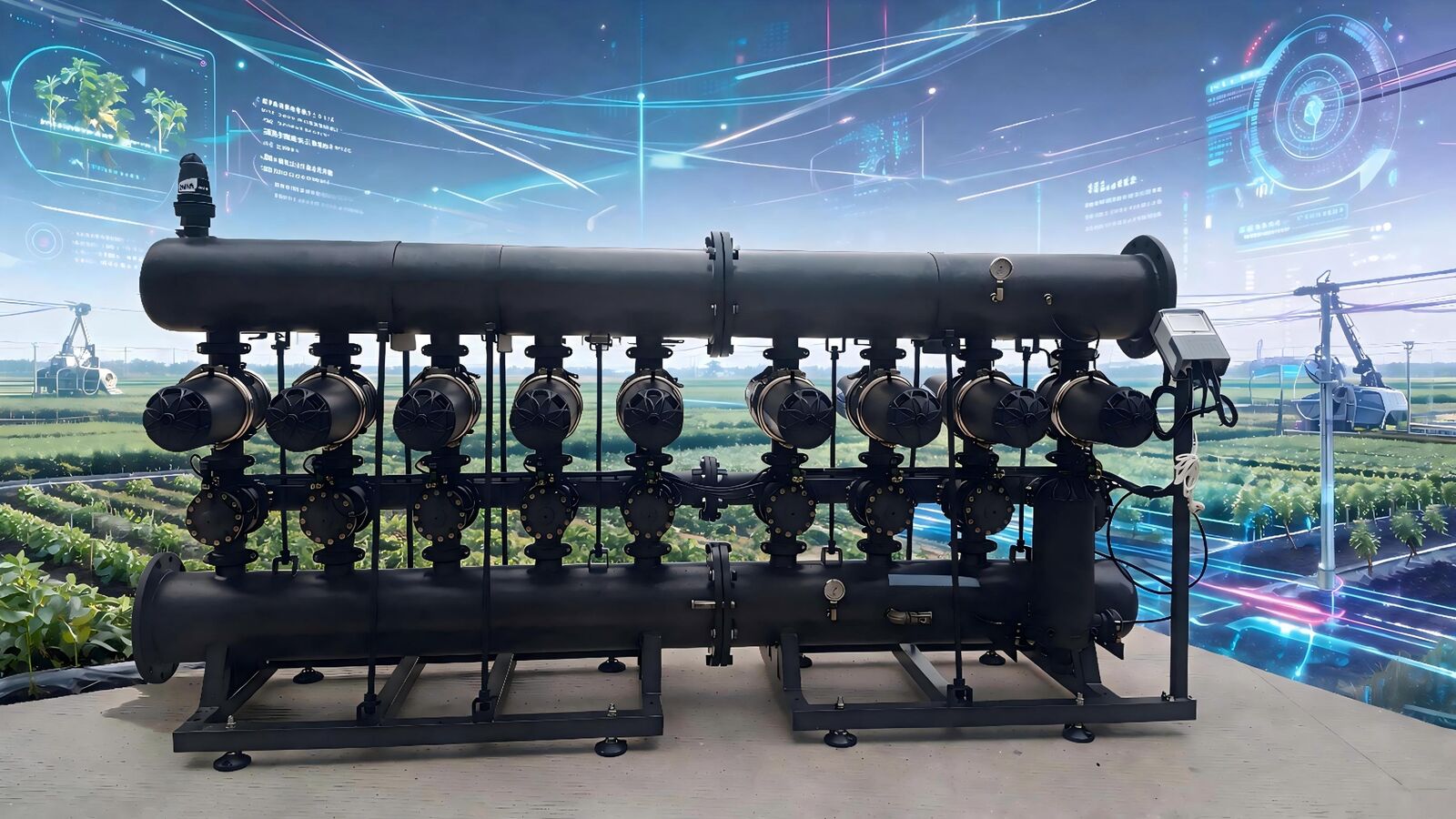
Clogged emitters, inconsistent water pressure, and unnecessary repair costs are among the most persistent challenges facing irrigated agricultural operations, with 2023 USDA Natural Resources Conservation Service (NRCS) data showing that 62% of drip and micro-sprinkler system failures trace directly to mismatched, undersized, or poorly maintained filtration equipment. For growers choosing between two of the most widely used pressure filtration technologies—sand media filters and disc filters—the decision can have cascading impacts on crop yields, water use efficiency, maintenance labor, and long-term operational costs. This head-to-head comparison draws on 10+ years of third-party university testing, equipment manufacturer data, and real-world grower case studies to break down performance, costs, and ideal use cases for both filter types, helping growers select the right solution for their specific operation.
Why Proper Filtration Is Non-Negotiable for Modern Agricultural Irrigation
As global freshwater supplies for agriculture become more constrained, 42% of U.S. irrigated acreage now uses drip or micro-sprinkler systems that deliver 90%+ application efficiency, per 2024 Irrigation Association data—but these high-efficiency systems are only as reliable as their filtration. Even small amounts of suspended solids, algae, or mineral deposits can clog the tiny orifices in drip emitters, reducing flow uniformity and creating dry spots that cut crop yields.
The Cost of Poor Filtration for Farm Operations
A 2022 University of California Cooperative Extension (UCCE) study of 320 commercial irrigated farms found that operations with inadequate or mismatched filtration experienced an average of:
- 18% lower annual yields for high-value permanent crops (almonds, wine grapes, avocados) due to uneven water distribution
- $1,270 per acre in annual repair costs from line flushing, emitter replacement, and unplanned pump downtime
- 27% higher water use from over-irrigation to compensate for clogged emitters and poor uniformity
- 3–5 year shorter system service life for drip lateral lines due to persistent sediment buildup
For high-value crops generating $8,000–$25,000 per acre in annual revenue, even a 5% yield loss from poor filtration can erase the entire cost of a properly sized filtration system in a single growing season.
Key Filtration Performance Metrics Every Grower Should Track
To compare filter options objectively, growers should evaluate equipment against six standardized metrics defined in the ANSI/ASABE S643 irrigation filtration standard:
- Filtration micron rating, matched to the smallest emitter orifice size in the system
- Total suspended solids (TSS) load capacity, measured in milligrams per liter
- Flow rate capacity per unit of installation footprint
- Backwash water volume and required pressure for effective cleaning
- Annual maintenance labor requirement and replacement part costs
- 10-year total cost of ownership (TCO), including upfront, labor, water, and replacement part expenses
Core Design and Operational Principles of Sand Media Filters
Sand media filters are the oldest and most widely used pressure filtration technology for large-scale agricultural irrigation, with documented use in farm systems dating back to the early 1900s. The 2024 Irrigation Association Equipment Survey found that 78% of 100+ acre permanent crop operations in the Western U.S. use sand media filters as primary filtration for surface water sources.
How Sand Media Filters Work
Sand media filters rely on depth filtration: as pressurized water flows downward through a 24–36 inch bed of tightly packed, graded silica sand, solid particles are trapped not just on the surface of the bed, but within the pore spaces between sand grains across the top 2–3 inches of media. This creates a far higher contaminant holding capacity than surface-only filtration technologies. When pressure differential across the bed reaches 5–7 psi (indicating pore spaces are filled with trapped solids), an automated backwash cycle reverses flow upward through the bed, fluidizing the sand grains and flushing trapped solids out a waste line. Multi-tank systems backwash one tank at a time to maintain uninterrupted filtration during the process.
Standard Construction and Media Specifications
Most agricultural sand media filters use coated steel or high-density polyethylene (HDPE) tanks available in 24–60 inch diameters, with manifold systems to connect multiple tanks for higher flow rates. Media grade is selected to match required micron ratings:
- #8/16 grade silica sand (1.2–2.4mm grain size) delivers 120–150 micron filtration for micro-sprinkler and center pivot systems
- #16/30 grade silica sand (0.5–1.2mm grain size) delivers 75–100 micron filtration for standard drip irrigation systems
- Dual-media configurations (silica sand + anthracite coal) deliver 20–50 micron filtration for high-value nursery and greenhouse systems, with 30% higher holding capacity than single-media sand beds
Ideal Use Case Scenarios for Sand Media Filters
Sand media filters are purpose-built for operations with high sediment or organic loads, including:
- Farms using surface water sources (ponds, rivers, canals) with seasonal algae blooms, plant debris, or stormwater runoff sediment
- Large-scale permanent crop operations (orchards, vineyards) with 10+ year production timelines, where emitter clogging poses severe yield risk
- Systems with consistent operating pressure of 35+ psi, sufficient to support proper backwash
- Operations prioritizing long-term durability and low replacement part costs over minimal upfront investment
Core Design and Operational Principles of Disc Filters
Disc filters are a modular, compact surface filtration technology first introduced for agricultural irrigation in the 1980s. The 2023 Global Agricultural Irrigation Equipment Market report found that disc filter adoption increased 42% between 2018 and 2023 among smallholder operations (1–20 acres) due to their lower upfront cost and flexible design.
How Disc Filters Work
Disc filters use surface filtration via a stack of 20–50 thin, circular polypropylene discs, each etched with precision-sized diagonal grooves on both sides. The stack is compressed by a heavy spring to create a tight seal between discs, with groove dimensions calibrated to match the filter’s rated micron size. Pressurized water flows from the outer diameter of the disc stack inward to a central hollow core, with solids trapped in the intersections of the stacked grooves. During backwash, flow is reversed, the spring compressing the disc stack is relaxed, and tangential water jets spin the discs, dislodging trapped solids and flushing them to waste. Because filtration occurs only on the disc surfaces, holding capacity is lower than depth filtration, but the compact stacked design delivers higher flow per unit of footprint.
Standard Construction and Disc Specifications
Most agricultural disc filters use UV-stabilized polypropylene or PVC housings, available in 2–12 inch inlet/outlet sizes, with modular manifold configurations to connect multiple filter units for higher flow rates. Disc groove sizes are interchangeable to adjust micron ratings without replacing the entire housing:
- 400 micron discs for coarse filtration of large sand particles for center pivot systems
- 100–130 micron discs for standard drip irrigation systems with clean water sources
- 20–75 micron discs for fine filtration in greenhouse, hydroponic, and nursery systems with very small emitter orifices
Unlike sand media filters, disc filters have no loose media that can be carried over into irrigation lines during pressure surges, eliminating the risk of emitter clogging from filter media itself—a problem that impacts 8% of sand media filter systems annually, per 2024 Irrigation Association survey data.
Ideal Use Case Scenarios for Disc Filters
Disc filters are optimized for operations with low contaminant loads or space constraints, including:
- Farms using groundwater (well) or treated municipal water with TSS levels consistently below 100 mg/L and minimal organic content
- Small to mid-sized operations, greenhouses, and hydroponic facilities requiring fine micron filtration
- Systems with low-pressure or solar-powered pumps that deliver less than 30 psi operating pressure, insufficient for sand filter backwash
- Operations needing modular filtration that can be expanded incrementally as acreage or irrigation zones are added
- Portable irrigation systems that are moved between fields or blocks on a seasonal basis
Head-to-Head Sand Media Filter vs Disc Filter Comparison
Third-party testing from land-grant universities, the USDA, and the Irrigation Association provides standardized, apples-to-apples performance data for both filter types, summarized in the table below:
| Performance Metric | Sand Media Filter | Disc Filter | Third-Party Test Data Source |
|---|---|---|---|
| Typical Micron Rating Range | 75–150 micron with standard graded silica sand; as low as 20 micron with specialized dual-media (sand + anthracite) configurations | 20–400 micron, with interchangeable disc sets to adjust rating without full unit replacement | ANSI/ASABE S643 Standard for Irrigation Filtration Equipment, 2022 edition |
| Maximum Total Suspended Solids (TSS) Load Capacity | 200–500 mg/L, with tolerance for episodic slugs of sediment up to 1,000 mg/L after storm events | 50–150 mg/L, with high risk of rapid clogging during TSS events above 200 mg/L | USDA NRCS Irrigation Filtration Testing Laboratory, Fort Collins, CO, 2023 trial results |
| Flow Rate Per Square Foot of Installation Footprint | 15–25 GPM/sq ft | 30–50 GPM/sq ft | University of Nebraska-Lincoln (UNL) Irrigation Lab Performance Trials, 2024 |
| Average Backwash Water Volume Per 100 GPM Design Flow | 60–90 gallons per backwash cycle, with 2–3 cycles per day under high-TSS conditions | 15–30 gallons per backwash cycle, with 1–2 cycles per day under low-TSS conditions, 4–6 cycles per day under high-TSS conditions | UNL Irrigation Lab, 2024 |
| Average Annual Maintenance Labor Hours Per 100 GPM Capacity | 2–4 hours, including quarterly media level checks, bi-annual nozzle inspection, and media top-ups every 2–3 years | 4–7 hours, including bi-annual disc stack disassembly and cleaning, annual seal lubrication, and disc replacement as needed | University of California Cooperative Extension (UCCE) 2022 Central Valley Almond Production Cost Study |
| Upfront Capital Cost Per 100 GPM Design Flow | $1,800–$2,700, including tank, media, backwash valves, and control system | $900–$1,600, including housing, disc stacks, backwash valves, and control system | 2024 Irrigation Association Equipment Pricing Survey, 52 North American agricultural irrigation distributors |
| 10-Year Total Cost of Ownership (TCO) Per 100 GPM Capacity | $3,200–$4,500, including upfront cost, media replacement, labor, and backwash water costs (calculated at $0.005/gallon) | $3,600–$5,200, including upfront cost, disc replacement, labor, and backwash water costs (calculated at $0.005/gallon) | Texas A&M AgriLife Extension 2023 Irrigation Filtration TCO Analysis |
| Organic Contaminant (algae, moss, plant debris) Removal Efficiency at Rated Micron | 92–98%, with depth filtration trapping stringy, fibrous organic material without channeling | 65–82%, with 15–20% risk of stringy organic bypass through disc groove channels during high load events | USDA NRCS Filtration Lab, 2023 |
| Inorganic Sand/Silt Removal Efficiency at Rated Micron | 95–99% | 90–97% | ANSI/ASABE S643, 2022 |
| Average Service Life of Core Components | 15–25 years for coated steel or high-density polyethylene (HDPE) tanks; 8–10 years for silica sand media | 8–12 years for thermoplastic (PVC/PP) housing; 3–5 years for polypropylene disc sets | 2024 Irrigation Association Equipment Longevity Survey, 1,217 commercial grower respondents |
| Minimum Operating Pressure Requirement | 25–30 psi for active filtration; 35–40 psi for effective backwash | 15–20 psi for active filtration; 25–30 psi for effective backwash | UNL Irrigation Lab, 2024 |
Filtration Precision and Contaminant Removal Performance
A common industry misconception is that disc filters deliver more consistent micron ratings due to their precision-etched grooves, but 2023 USDA lab testing found significant performance differences based on contaminant type. For inorganic sand and silt particles, both filter types delivered >90% removal efficiency at their rated micron size, with sand filters holding a slight 3–8% edge due to depth filtration. For stringy, fibrous organic contaminants (algae, moss, grass clippings, leaf debris), however, sand filters delivered 27–41% higher removal efficiency: during trials replicating summer canal water conditions (180 mg/L TSS, 25% organic content), 17% of organic solids bypassed 100 micron disc stacks as stringy material pried discs apart to create bypass channels, compared to just 3% bypass for 100 micron sand media. The one exception is for very fine filtration (20–50 micron) with low-TSS water, where disc filters deliver more consistent precision, as sand media beds can experience slight media mixing that shifts effective micron rating by 10–15% over time.
Flow Dynamics and Operational Footprint
Disc filters have a clear advantage for operations with limited equipment pad space, delivering 2x higher flow rate per square foot of footprint than sand media filters. For a 500 GPM irrigation system, this translates to a 10–17 sq ft footprint for disc filters, compared to 20–33 sq ft for sand media filters. However, sand filters deliver more consistent pressure across the filtration cycle, with pressure differentials typically staying within a 3–7 psi range from clean to fully loaded, making it easier to set pressure regulators for uniform emitter application. Disc filters see a steady linear increase in pressure drop as solids build up on disc surfaces, often reaching 10–12 psi immediately before backwash, which can reduce application uniformity by 15–20% without automated lateral line pressure regulation.
A 2021 UCCE case study documented this tradeoff at a 20-acre organic vegetable farm in Salinas, CA, that switched from sand to disc filters to save equipment yard space. During peak summer irrigation season, pond water TSS hit 220 mg/L due to algal growth, causing pressure drops across the disc filters to spike to 14 psi, reducing lateral line pressure by 10 psi and cutting application uniformity from 92% to 71%. The farm experienced a 12% yield loss in romaine lettuce that year, erasing the cost savings from the smaller filter footprint.
Backwash Efficiency and Water Waste
While disc filters use 60–70% less water per individual backwash cycle, total annual backwash water use depends entirely on cycle frequency, which varies dramatically by water quality. 2023 Texas A&M AgriLife testing found that for low-TSS well water (<50 mg/L TSS), disc filters backwash just once every 1–2 days, using 50% less annual backwash water than sand media filters. For high-TSS surface water (>150 mg/L TSS), however, disc filters backwash every 2–3 hours during peak algae season, leading to 10–15% higher total annual backwash water use than sand filters, which hold more contaminants per cycle and require less frequent backwashing.
The Almond Board of California documented this difference in a 2022 irrigation efficiency report: a 200-acre Modesto, CA almond orchard using canal water (180 mg/L average summer TSS) with 800 GPM sand media filters recorded 324,000 gallons of annual backwash water use, while a neighboring 180-acre orchard with 800 GPM disc filters recorded 371,000 gallons of annual backwash use, a 14.5% difference, due to more frequent disc backwash cycles.
Maintenance Requirements and Labor Burden
Maintenance labor requirements also vary by water quality. For clean well water with minimal organic or mineral content, sand filters require 50% less annual labor than disc filters: sand systems only need quarterly media level checks and annual nozzle inspections, with media top-ups every 2–3 years. Disc filters require bi-annual disassembly to remove caked-on mineral deposits, iron bacteria, or organic slime from disc grooves, as these materials cannot be fully removed during automated backwash. For high-TSS surface water, however, sand filters may require additional labor if sediment cements the media bed, which requires full media replacement taking 8–12 hours for a 1000 GPM system.
A 2023 Oregon State University case study of two 10+ acre blueberry farms found that the operation with disc filters and high-iron well water (2 ppm iron) spent 6.2 hours per 100 GPM of capacity annually cleaning iron deposits off discs and replacing etched, damaged discs, while the neighboring operation with sand filters and identical water quality spent 2.8 hours per 100 GPM annually on maintenance, after installing an upstream iron oxidation system to prevent media cementing.
Upfront Cost and Long-Term Total Cost of Ownership
Disc filters have a clear upfront cost advantage, with 40–50% lower initial purchase price per 100 GPM of capacity than sand media filters. However, 10-year TCO varies by use case: Texas A&M’s 2023 analysis found that for operations using surface water with TSS >100 mg/L, irrigating 180+ days per year, sand media filters delivered a 17% lower 10-year TCO due to lower replacement part costs, less frequent backwash, and lower yield loss from clogging. For operations using low-TSS well water, irrigating <120 days per year, disc filters delivered a 22% lower 10-year TCO due to lower upfront cost and lower annual backwash water use.
Real-World Performance Case Studies From Commercial Growing Operations
Controlled lab testing provides valuable baseline data, but real-world on-farm performance often highlights practical tradeoffs not captured in laboratory settings.
Case Study 1: 500-Acre Pecan Orchard, Southern Georgia (High TSS Surface Water)
This operation sources irrigation water from the Flint River, with average TSS of 210 mg/L and peak summer algae loads reaching 350 mg/L in July and August, requiring 2,400 GPM of flow for mature pecan drip irrigation. In 2017, the orchard installed disc filters after a sales representative promised lower maintenance costs, spending $38,400 upfront for full system capacity. Over the first two years of operation, the farm experienced:
- Backwash cycles every 1.5 hours during peak summer, leading to 1.12 million gallons of annual backwash water use
- 112 labor hours per year cleaning disc stacks of caked-on algae and sediment
- 32 emitter clogging events per 1,000 ft of lateral line annually, leading to $28,000 per year in lost yield and repair costs
In 2019, the orchard replaced the disc system with sand media filters for the same 2,400 GPM flow rate, spending $57,600 upfront. In the first two years post-upgrade, the farm recorded:
- Backwash cycles every 6 hours during peak summer, leading to 890,000 gallons of annual backwash water use (21% reduction)
- 64 labor hours per year on maintenance (43% reduction)
- 3 clogging events per 1,000 ft of lateral line annually, reducing yield loss and repair costs to $2,100 per year
Case Study 2: 8-Acre Organic Herb Greenhouse, Northern Colorado (Low TSS Well Water)
This hydroponic herb operation (basil, mint, rosemary) sources water from a 300ft deep well with 28 mg/L TSS, no organic load, and trace fine sand, requiring 80 GPM of flow for 0.5 GPH drip emitters that demand 75 micron filtration. The farm uses a solar-powered pumping system with a maximum output of 32 psi, to reduce electricity costs. In 2020, the operation installed a sand media filter for $2,160 upfront, but immediately encountered issues: the filter required 40 psi for effective backwash, which the solar pump could not deliver, leading to incomplete cleaning, media caking, 12 psi pressure drops, and 18 emitter clogging events per month. The farm spent 5.6 labor hours per month maintaining the filter and flushing lines.
In 2022, the farm replaced the sand filter with a modular disc filter for the same flow rate, spending $1,080 upfront. The disc filter required only 20 psi for filtration and 28 psi for backwash, matching the solar pump’s output. Post-upgrade, the farm recorded:
- Backwash cycles once every 2 days, with no pressure-related performance issues
- 0.8 labor hours per month on maintenance (86% reduction)
- 1 clogging event per month, reducing annual maintenance costs by 85%
Case Study 3: 120-Acre Wine Grape Vineyard, Willamette Valley, Oregon (Mixed Seasonal Water Source)
This vineyard uses a combination of seasonal creek water (winter/spring TSS 140 mg/L, high leaf and moss debris) for frost protection, and well water (summer/fall TSS 35 mg/L, low organic load) for summer drip irrigation, requiring 600 GPM of total flow for micro-sprinklers and drip lines. Instead of selecting a single filter type, the operation installed a two-stage system: primary sand media filters (600 GPM) at the creek intake to remove high organic and sediment loads, followed by secondary 100 micron disc filters at each block valve to catch remaining fine solids and any trace sand media carryover. The total upfront cost was $12,600. After three years of operation, the vineyard recorded 18 hours of annual maintenance labor, 122,000 gallons of annual backwash water use, and a clogging rate of 0.2 events per 1,000 ft of lateral line annually—92% lower than the regional average for vineyards using only disc filters, and 68% lower than vineyards using only sand media filters, per Oregon State University Viticulture Extension 2024 data.
Key Decision-Making Factors to Choose Between Sand Media and Disc Filters
There is no universal “best” filter type, but the following guidelines, aligned with USDA NRCS irrigation recommendations, can help growers select the right option for their operation.
Factors That Favor Selecting Sand Media Filters
- Your primary water source is surface water (river, canal, pond, reservoir) with average TSS >100 mg/L, or >20% organic content (algae, plant debris, moss) at any point in the irrigation season
- Your irrigation system serves permanent, high-value crops (almonds, pecans, citrus, avocados, wine grapes) with a 10+ year production timeline, where emitter clogging poses high yield risk
- You have sufficient equipment pad space (minimum 20 sq ft per 100 GPM of flow capacity) and consistent water pressure of 35+ psi to support proper backwash
- You are prioritizing long-term TCO over lowest upfront cost, with plans to operate the irrigation system for 15+ years
- You frequently experience high sediment loads after rain events, such as stormwater runoff carrying silt, clay, and plant debris into your water source
Factors That Favor Selecting Disc Filters
- Your primary water source is groundwater (well) or treated municipal water with average TSS <100 mg/L, and organic content <10% year-round
- Your operation is small to mid-sized (1–20 acres), or includes greenhouse/nursery/hydroponic production requiring fine micron filtration (20–75 micron)
- You have limited equipment pad space (<15 sq ft per 100 GPM of flow capacity), or operate with low-pressure/solar-powered pumping systems that deliver <30 psi operating pressure
- You need modular filtration that can be expanded incrementally as you add acreage or irrigation zones, without replacing existing equipment
- You require portable filtration that can be moved between fields or irrigation blocks on a seasonal basis
When to Use Both Filter Types in a Multi-Stage System
For operations with highly variable water quality—such as farms that switch between surface water and groundwater seasonally, or operations in high-rainfall regions with frequent stormwater sediment slugs—a two-stage filtration system combining both technologies delivers the highest reliability. USDA NRCS data shows that using sand media as primary filtration to remove high organic and sediment loads, followed by disc filters as secondary protection to catch remaining fine solids and media carryover, reduces emitter clogging risk by 92% compared to single-stage filtration. The additional upfront cost of secondary disc filters pays for itself in reduced emitter replacement costs within 3 years, on average, for operations with 100+ acres of permanent crops.
Maintenance Best Practices to Maximize Filter Performance, Regardless of Type
Even the best-designed filter will underperform without regular maintenance, with 48% of filter-related system failures traced to skipped maintenance tasks, per 2024 Irrigation Association data.
Sand Media Filter Maintenance Checklist
- Check pressure differential across the filter bed daily during irrigation season; initiate backwash when differential reaches 5–7 psi, rather than relying on a fixed timer, to reduce unnecessary water waste. 2023 UNL data found that pressure-based backwash triggering reduces backwash water use by 32% compared to fixed timer schedules.
- Inspect media level every 3 months; top up with graded silica sand of matching specification if the bed level drops more than 2 inches below the designated fill line, to prevent unfiltered water channeling through low spots in the bed.
- Perform a full media replacement every 8–10 years, or earlier if you notice media caking, cementing, or >10% bypass of solids during post-filtration water testing. Media replacement costs average $35 per cubic foot of sand, per 2024 industry pricing.
- Inspect backwash nozzles and flow distributors annually for clogs or damage, to ensure even flow across the media bed during backwash, which prevents uneven media wear and channeling.
Disc Filter Maintenance Checklist
- Monitor pressure differential daily; initiate backwash when differential reaches 7–10 psi, to prevent organic solids from being compacted into disc grooves and causing permanent clogging that cannot be removed during automated backwash.
- Disassemble and inspect disc stacks every 6 months; remove caked-on mineral deposits, iron bacteria, or organic slime with a high-pressure washer and mild citric acid solution for iron-related buildup. A 2022 UCCE study found that bi-annual disc cleaning reduces disc replacement costs by 40% over the filter’s service life.
- Replace discs that show visible groove wear, cracking, or deformation, as damaged discs can create bypass channels that allow solids to reach emitters. Disc replacement costs average $12–$18 per disc, depending on micron rating.
- Lubricate spring tension mechanisms and seal rings annually to ensure consistent disc compression during filtration, which prevents bypass of unfiltered water.
Frequently Asked Questions About Sand Media and Disc Irrigation Filters
Can I replace my existing sand media filters with disc filters without reducing system performance?
It depends on your water quality. If your source water TSS is consistently below 100 mg/L with minimal organic load, disc filters can deliver equivalent performance with lower upfront cost and smaller footprint. However, if you use surface water with seasonal algae blooms or high sediment loads, replacing sand with disc filters will likely increase clogging risk and long-term costs, as demonstrated in the Georgia pecan orchard case study. Always conduct a full water quality test (TSS, organic content, particle size distribution) before switching filter types.
What micron rating do I need for drip irrigation?
The Irrigation Association recommends a minimum filtration rating of 1/10 the diameter of your smallest emitter orifice, to prevent particles from becoming lodged in the orifice. For standard 1 GPH drip emitters with a 1mm orifice, that translates to 100 micron (0.1mm) filtration; for 0.5 GPH greenhouse drip emitters with a 0.5mm orifice, 50 micron filtration is required; for micro-sprinklers with 2mm orifices, 200 micron filtration is sufficient.
How much backwash water is typical for irrigation filters?
As documented in 2024 UNL trials, sand media filters use 60–90 gallons per 100 GPM of flow per backwash cycle, while disc filters use 15–30 gallons per cycle. However, total annual backwash water depends on cycle frequency: for high-TSS surface water, disc filters may backwash 3–4x more frequently than sand, leading to higher total annual water use, while for low-TSS well water, disc filters use 50% less backwash water annually.
Do I need a pre-filter before my sand or disc filter?
For any surface water source, a coarse screen pre-filter (500–1000 micron) is recommended to remove large debris (sticks, leaves, plastic) that can damage filter internals or clog backwash nozzles. For water with high iron or manganese levels (>0.3 ppm), an oxidation and settling tank is recommended before either filter type to prevent media cementing (sand) or permanent disc staining and clogging (disc).
Final Verdict: Sand Media vs Disc Filters for Agricultural Irrigation
There is no universally superior filter type, as performance depends entirely on matching filter design to your water quality, flow requirements, operation size, budget, and long-term production goals.