Key Takeaways
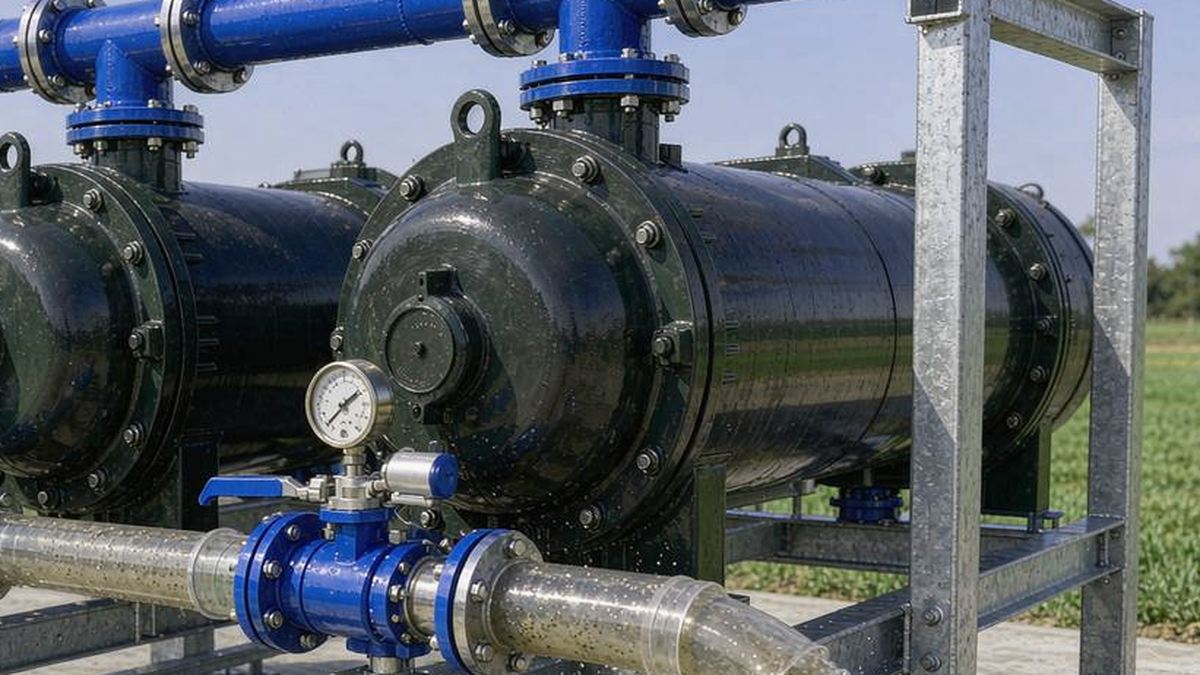
- Sand media filters remove most organic and inorganic sediment from surface and groundwater sources to prevent costly drip emitter clogging
- Proper sizing, media selection, and backwash scheduling cuts long-term maintenance costs by reducing unnecessary system flushes and emitter replacement
- Pairing sand media filters with pre-filtration and air release components extends your drip system’s usable lifespan significantly
- LZHS brings 14 years of manufacturing and export experience across 60+ countries to deliver field-tested filter designs for all farm operation sizes
Why Sand Media Filters Are Non-Negotiable for Drip Irrigation
Drip irrigation systems rely on precision emitters with narrow flow passages, most ranging between 100 and 200 microns, to deliver consistent water and nutrient distribution directly to crop root zones. Even small amounts of unfiltered sediment, silt, algae, or fine organic debris can partially or fully block these emitters, creating uneven water coverage, reduced crop yields, and hours of wasted maintenance labor. While basic screen or disc filters work for low-sediment water sources, they struggle to handle high contaminant loads common to wells, rivers, ponds, and unfiltered reservoir water. Sand media filters use a layered bed of graded granular media to trap particles far smaller than the standard 120 mesh (125 micron) threshold of most entry-level drip filters, making them the most reliable primary filtration choice for large and mid-scale commercial drip operations.
Core Selection Criteria for Your Sand Media Filter
Start your selection process by mapping the unique properties of your irrigation water source, as this will drive every other design choice. ### Water Source Compatibility If you draw water from a well with high sand content, add a pre-filtration step like LZHS Plastic Centrifugal Filter (3"/4") to remove heavy, coarse sand particles before they reach the sand media tank. This reduces backwash frequency and prevents rapid wear on your media bed. For surface water sources including rivers, ponds, and open reservoirs, prioritize a larger media volume to capture suspended algae, decaying plant matter, and fine silt that would quickly overwhelm smaller filter tanks. Next, match your filter tank size to your system’s maximum flow rate, ensuring pressure loss across the filter stays below 10 PSI during regular operation. Excess pressure drop reduces overall drip line performance and creates uneven flow across your field. Finally, select your media type: standard 20-40 grade silica sand works for most general use cases, while layered garnet media delivers finer 10+ micron filtration for high-silt water sources.
Backwashing System Design Considerations
The biggest performance variable for any sand media filter is its backwashing functionality, which flushes trapped contaminants out of the media bed to restore full filtration efficiency. For consistent results, your backwash flow rate must be high enough to lift and expand the media bed to 30-50% of its resting height, so all trapped sediment is dislodged and flushed out of the waste line. Automatic backwash valve systems are recommended for commercial operations with more than 10 acres of drip irrigation, as they eliminate the need for manual operator checks and run on pre-set pressure differential or timer schedules. To prevent trapped air from disrupting backwash flow and creating uneven pressure across your filter manifold, install LZHS Micro Air Release Valve (3/4" A12) at the highest point of your filter assembly. This small, low-cost component vents accumulated air automatically to maintain consistent filtration and backwash performance.
Common Sizing Mistakes to Avoid
Two of the most frequent errors farmers make when selecting sand media filters are undersizing and oversizing units for their operation. Undersized filters create excessive pressure loss, require far more frequent backwashing, and cannot process the full flow rate of your drip system during peak irrigation hours, leading to under-watering. Oversized filters waste unnecessary capital, and allow water to move too quickly through the media bed, reducing filtration efficiency and letting fine sediment pass through to your drip lines. To avoid these mistakes, cross-reference your total system flow rate, water source contaminant type, and required micron rating against full product specifications you can access at our site hub page. Our technical team can also help you customize a manifold setup with multiple tank units to match any flow rate requirement for large commercial farms.
Maintenance Best Practices for 2026 Operations
Modern sand media filters require very little upkeep to deliver 10+ years of reliable service when following a simple scheduled maintenance routine. Check your media bed depth every 3 to 6 months, and top up media if the bed level drops more than 2 inches from its original resting height, as media loss during backwash is normal over time. Test your backwash flow pressure quarterly to confirm you are delivering enough flow for full media bed expansion, as clogged backwash lines or faulty valves can reduce cleaning performance over time. Inspect all manifold seals and bypass lines annually to eliminate unfiltered water leaks that can carry raw sediment directly to your drip emitters. With 14 years of manufacturing and export experience serving 60+ countries, LZHS designs all our sand media filter tanks with corrosion-resistant materials that hold up to harsh agricultural water conditions and extended outdoor exposure.
FAQ
What micron rating should I choose for my sand media filter for drip irrigation?
For most standard drip systems, 20-40 grade silica sand delivers 20 to 50 micron filtration, which is sufficient to protect nearly all common drip emitter designs. If your water source has high fine silt content, opt for a layered garnet and sand media setup that captures particles down to 10 microns for extra protection.
How often do I need to backwash my sand media filter?
Backwash frequency depends entirely on your water source’s sediment load. For high-sediment pond water, you may need to backwash every 4 to 12 hours. For low-sediment well water, backwashing once every 1 to 3 days is sufficient. Always initiate backwash when the pressure differential across the filter reaches 7 to 10 PSI.
Can I use a sand media filter as the only filtration step for my drip system?
For most operations, we recommend adding a secondary 120 mesh (125 micron) screen or disc filter after the sand media filter as a final safety step. This catches any stray small media particles that may escape during backwash, preventing unexpected emitter clogging.