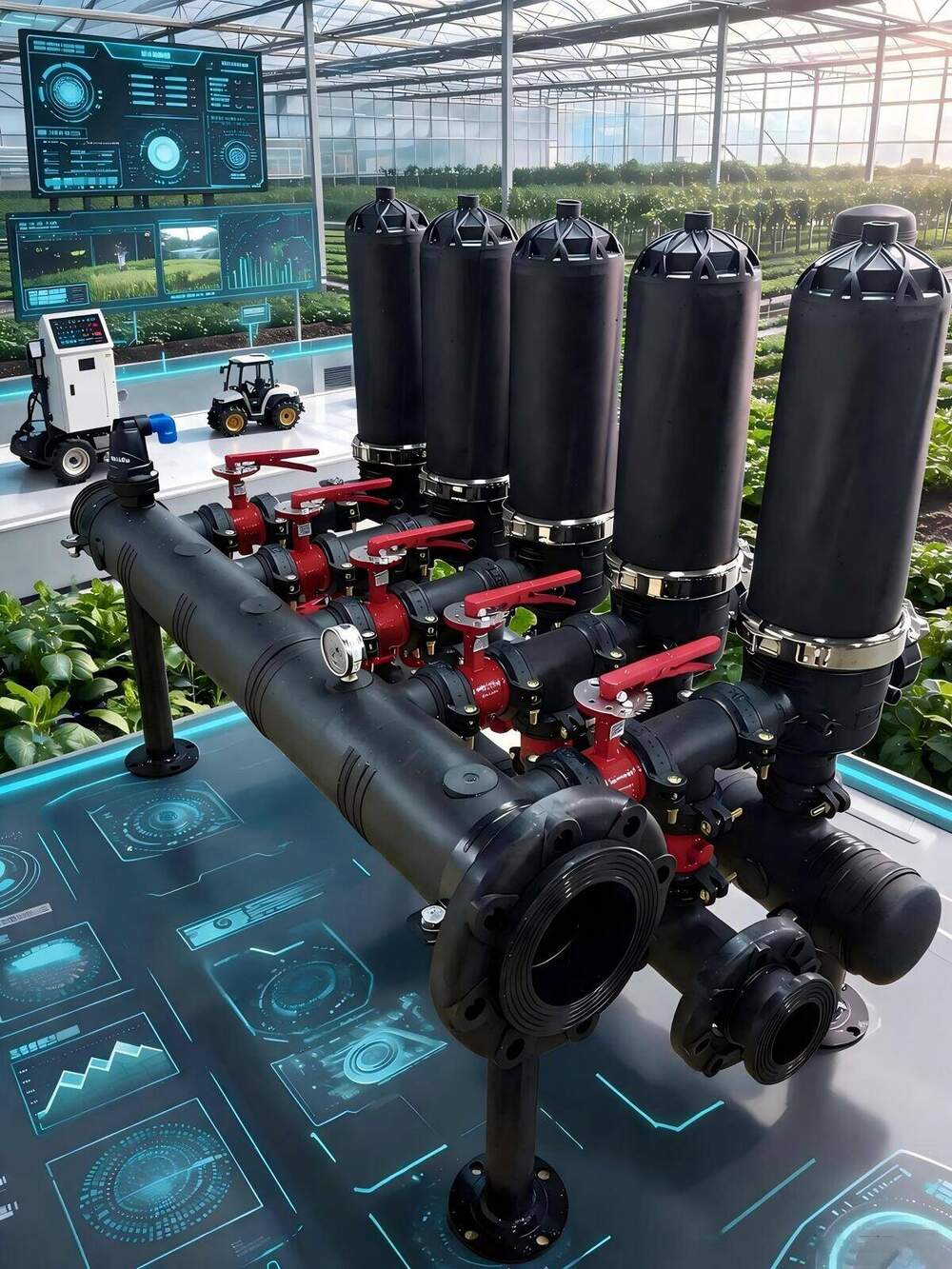
Global agricultural irrigation accounts for 72% of all freshwater withdrawals annually, per 2024 Food and Agriculture Organization (FAO) data, yet 38% of that applied water is lost to leaky connections, inflexible distribution networks, and slow system reconfiguration between crop cycles. Compounding these losses, U.S. farm labor costs for irrigation management have risen 41% since 2018, per U.S. Department of Agriculture (USDA) data, while drought-related crop losses exceeded $22 billion across North America between 2020–2023. For operations of all sizes, component-level infrastructure upgrades that cut waste, reduce labor, and increase system flexibility deliver some of the fastest returns on investment (ROI) in modern irrigation. Quick coupling valve (QCV) irrigation — a modular, tool-free connection system with integrated shutoff capabilities — has emerged as a leading solution, with 2023 Irrigation Association data showing 47% of new sprinkler and surface irrigation installations in North America now integrate QCVs, up from just 19% in 2013. This guide breaks down QCV design, performance data, real-world farm outcomes, best practices, and cost considerations to help growers evaluate if QCV systems are a fit for their operation.
What Is Quick Coupling Valve Irrigation? Core Definition and Functional Basics
Quick coupling valve irrigation uses valved, tool-free connection points to build modular water distribution networks that can be reconfigured, extended, or repaired without full system shutdown, specialized tools, or permanent glued/welded joints. Unlike standard quick-connect fittings that lack integrated shutoff, every agricultural QCV includes a spring-loaded or quarter-turn valve that opens automatically when a compatible male fitting is inserted, and closes instantly when the fitting is removed. This core design feature eliminates the need for separate ball or gate valves at every outlet, cuts water loss during line changes, and reduces downtime for irrigation management.
Key Design Features That Define Agricultural QCVs
While QCVs are manufactured for residential, industrial, and municipal use, agricultural-grade models are engineered to withstand heavy equipment traffic, UV exposure, agricultural chemical exposure, and pressure fluctuations common in farm irrigation systems. Core standard features include:
- Integrated shutoff valve: Poppet or ball-valve design that creates a watertight seal when no fitting is inserted, eliminating water flow without upstream valve closure
- Pressure-rated construction: Tested for 15–150 PSI operating ranges to match drip, sprinkler, pivot, and surface irrigation system requirements
- Corrosion-resistant materials: Built from glass-reinforced nylon, UV-stabilized polypropylene, lead-free brass, or epoxy-coated ductile iron to resist rust, fertilizer damage, and UV degradation
- Locking connection mechanism: Click-to-lock or quarter-turn latch that prevents accidental disconnection from water hammer, livestock contact, or equipment vibration
- Interchangeable sizing: Available in ¾-inch to 8-inch internal diameters to match lateral lines, mainlines, sprinkler heads, and drip manifolds
- Field-replaceable seals: Buna-N or EPDM O-rings that can be replaced in 60 seconds without special tools, extending valve service life
How QCV Irrigation Systems Differ From Permanent Hard-Plumbed Networks
Traditional permanent irrigation networks rely on glued PVC, welded aluminum, or threaded steel connections that are fixed in place once installed. Modifying these systems requires full system drainage, specialized tools, and significant labor, making them a poor fit for operations that rotate crops, move irrigation equipment frequently, or expand irrigated acreage incrementally. A 2022 USDA Natural Resources Conservation Service (NRCS) study found that modular QCV networks cut system reconfiguration time by 89% compared to glued PVC systems for mixed-crop operations, while reducing connection-related leaks by 91% over a 10-year service life. Unlike permanent systems, QCV networks also allow growers to remove above-ground irrigation equipment during off-seasons to reduce theft risk, freeze damage, and equipment wear from tillage operations.
Current Market Adoption and Proven Performance Data for QCV Irrigation
Adoption of QCV irrigation is accelerating across all farm operation sizes, driven by rising water costs, labor shortages, and climate volatility that requires more flexible irrigation management. Verified performance data from academic, government, and industry research confirms consistent benefits across diverse growing regions:
- 2023 Irrigation Association market report: Agricultural QCV component sales reached $487 million in the U.S. in 2022, representing a 12.3% compound annual growth rate (CAGR) since 2018, outpacing growth in traditional irrigation fitting sales (3.1% CAGR over the same period)
- FAO 2024 smallholder irrigation guidance: QCV systems reduced water application waste by 28–35% for 127,000 smallholder farms in sub-Saharan Africa enrolled in climate-smart agriculture programs between 2019–2023, compared to traditional earthen channel and hose-clamp connected systems
- University of Nebraska-Lincoln 2023 irrigation efficiency trial: Corn fields irrigated with QCV-connected portable sprinklers had 22% lower labor costs per acre, 17% lower energy costs (from reduced pressure loss at connections), and 9% higher yields than fields using threaded aluminum lateral connections, due to more uniform water application and reduced downtime from leaks
- California Department of Water Resources 2022 audit: Vegetable farms using QCV networks reduced reported water waste from connection leaks by 92% compared to farms using hose clamps and threaded fittings, helping operations meet state-mandated 20% agricultural water use reduction targets during the 2021–2023 drought
Key Use Cases Where QCV Irrigation Delivers Disproportionate ROI
While QCVs add value to nearly all irrigation systems, they deliver the highest returns for specific operational profiles:
- Mixed-crop vegetable operations that shift bed layouts every 1–2 growing seasons, where permanent plumbing requires full teardown and re-gluing each rotation
- Pasture and rangeland irrigation for livestock operations, where portable QCV-connected sprinklers can be moved weekly to avoid overwatering and forage damage without trenching new lines
- Supplemental irrigation for rainfed grain operations, where QCV networks allow farmers to connect temporary sprinklers or drip lines during drought periods, then remove and store equipment during non-irrigation seasons
- Temporary irrigation for cover crop establishment, where quick connections let farmers apply water to newly seeded cover crops without investing in permanent infrastructure across all acreage
- High-value specialty crop operations requiring fast deployment of frost protection sprinklers during cold events, where every minute of deployment delay increases crop loss risk
Major Types of Quick Coupling Valves for Agricultural Irrigation
QCVs are categorized by construction material, connection mechanism, and intended use case. Selecting the right type for a specific application is critical to maximize lifespan, reduce pressure loss, and avoid premature failure.
1. Quarter-Turn Metal QCVs (Brass/Ductile Iron)
The heavy-duty option for permanent mainline installations, quarter-turn metal QCVs use a lever-operated ball valve and twist-lock connection, rated for 50–150 PSI in sizes from 2-inch to 8-inch diameters. Most models use Buna-N rubber seals resistant to liquid fertilizers, chlorine, and common agricultural pesticides, allowing growers to inject crop inputs through irrigation lines without degrading valve components. Expected service life is 25–30 years with minimal maintenance. Common use cases include permanent mainline outlets for center pivot connections, field edge hydrants, and large-diameter mainlines for row crop operations. 2023 USDA NRCS cost-share data shows 68% of cost-shared QCV installations for permanent mainlines use ductile iron quarter-turn models, due to their ability to withstand heavy farm equipment traffic when installed at grade.
2. Push-to-Connect Polypropylene QCVs
Lightweight, low-cost push-to-connect poly QCVs use a spring-loaded poppet valve and collar-locking mechanism that creates a seal when the male fitting is pushed into the valve body, with no twisting required. Disconnection is achieved by pulling the collar back, which triggers the automatic shutoff. These models are rated for 15–80 PSI in sizes from ¾-inch to 3-inch diameters, with UV-stabilized construction delivering a 10–15 year service life. Common use cases include drip irrigation lateral connections, temporary sprinkler lines for vegetable beds, and smallholder farm networks. A 2022 smallholder irrigation trial in Kenya found that push-to-connect poly QCVs cut system installation time by 76% compared to threaded PVC connections, allowing community irrigation schemes to be built 3x faster with local, unskilled labor.
3. Cam-Lock QCVs With Integrated Shutoff
Cam-lock QCVs use a lever-lug connection compatible with standard aluminum irrigation pipe, paired with an integrated ball valve to allow disconnection under pressure. Models are constructed from aluminum or reinforced poly, rated for 40–120 PSI in sizes from 1-inch to 6-inch diameters, with a 15–20 year expected service life. Standard non-valved cam-lock fittings are not classified as QCVs for agricultural use, as they require full upstream valve closure before disconnection, leading to longer downtime and water loss during line moves. Common use cases for valved cam-lock QCVs include portable aluminum sprinkler laterals for hay and pasture, flood irrigation turnout connections, and temporary water transfer for land leveling.
4. Underground Pop-Up QCVs
Designed for high-traffic fields, pop-up QCVs are installed flush with the soil surface, with a spring-loaded cover that pops up when a connector is inserted and retracts flush when disconnected to allow equipment to pass over without damage. Models are constructed from brass or reinforced poly, rated for 30–100 PSI in sizes from 1-inch to 2-inch diameters, with a 20–25 year service life. Common use cases include turf farm irrigation, agricultural research plots, and high-value vegetable fields where harvest equipment passes over outlets frequently. A 2023 trial of pop-up QCVs on a 400-acre turf farm in Oregon found that the system reduced outlet damage from harvest equipment by 98% compared to above-ground QCV outlets, cutting annual repair costs by $12,200 for the operation.
Quick Coupling Valves vs. Traditional Irrigation Connections: Side-by-Side Performance Comparison
For farmers evaluating infrastructure upgrades, it is critical to weigh upfront costs against long-term labor, water, and maintenance savings. The table below compares standard 2-inch agricultural irrigation connection types, using performance data from 2023 University of Nebraska-Lincoln irrigation trials, Irrigation Association product testing, and USDA NRCS cost data.
| Performance Metric (2-inch connection, standard agricultural use) | Quarter-Turn Brass/Ductile Iron QCV | Push-to-Connect Polypropylene QCV | Threaded Aluminum/Steel Connection | Glued PVC Connection | Hose Clamp + Lay-Flat Connection |
|---|---|---|---|---|---|
| Average installation time per connection (no specialized tools) | 12 seconds | 8 seconds | 3 minutes 15 seconds (requires pipe wrench, thread sealant) | 5 minutes 40 seconds (requires primer, cement, 2-minute cure time per joint) | 1 minute 20 seconds (requires screwdriver, clamp torque adjustment) |
| Pressure loss at 60 PSI operating pressure | 0.8 PSI | 1.1 PSI | 2.3 PSI | 1.7 PSI | 3.9 PSI |
| Average leak rate over 5 years (GPM per connection at 60 PSI) | 0.01 GPM | 0.03 GPM | 0.22 GPM (from thread corrosion, sealant degradation) | 0.15 GPM (from glue joint failure, temperature cycling) | 0.78 GPM (from clamp loosening, hose abrasion) |
| Allowable disconnection under full system pressure | Yes (integral shutoff, no water loss) | Yes (automatic shutoff, <0.1 gallons residual loss per disconnection) | No (requires upstream drain, 5–15 gallons lost per disconnection) | No (permanent joint; disconnection requires cutting pipe) | No (requires upstream valve closure, 2–8 gallons lost per disconnection) |
| Expected service lifespan (years, normal ag use) | 25–30 | 10–15 | 12–18 | 8–12 | 2–3 (annual clamp replacement required) |
| 2024 upfront material cost per connection | $28.50 | $9.75 | $12.20 | $3.10 | $2.85 |
| Annual maintenance cost per connection (lifespan average) | $0.32 (occasional seal lubrication) | $0.58 (collar cleaning, seal replacement every 8 years) | $2.14 (annual thread sealant reapplication, corrosion removal) | $1.72 (crack repair, freeze damage replacement) | $3.47 (annual clamp replacement, leak patching) |
| Total time to reconfigure 10 field connections | 2 minutes | 1 minute 20 seconds | 47 minutes | 120+ minutes (cutting, new fitting, gluing, cure time) | 22 minutes |
To put these numbers in perspective, a 160-acre corn operation with 200 2-inch connection points would see a 3.2-year payback period for a full upgrade to brass quarter-turn QCVs, based on $1,240 in annual water savings, $2,180 in annual labor savings, and $362 in annual maintenance savings compared to threaded aluminum connections, per 2023 University of Nebraska-Lincoln economic analysis. For a 40-acre vegetable farm with 120 1.5-inch connections, switching to push-to-connect poly QCVs from glued PVC delivers a payback period of just 1.1 years, due to near-elimination of crop rotation reconfiguration labor.
Real-World QCV Irrigation Case Studies: Measured Farm-Level Outcomes
Performance data from controlled trials translates directly to on-farm results across diverse operation types and geographies. The following case studies document verified outcomes from real QCV installations between 2020–2023.
Case Study 1: 800-Acre Corn and Soybean Operation, Central Iowa
In 2020, this family-owned grain operation switched from threaded aluminum lateral connections to quarter-turn ductile iron QCVs on their 6-inch mainline network, after reporting 120+ hours of annual labor spent tightening threaded connections, repairing leaks, and draining lines to move sprinkler sets during drought periods. The farm installed 214 2-inch QCV outlets spaced 60 feet apart along 2.7 miles of underground mainline, at a total installed cost of $18,900 (including parts and trenching for outlet risers). Three years of monitored performance showed:
- Labor savings: 132 hours of reduced labor per irrigation season, valued at $3,300 annually at $25/hour farm labor rates
- Water savings: 1.17 million gallons of water saved annually, from reduced connection leaks and eliminated water loss during line moves, valued at $1,053 based on Iowa agricultural water rates of $0.90 per 1,000 gallons
- Energy savings: 14% reduction in irrigation pumping costs, from reduced pressure loss across connections, cutting annual diesel expenses for the irrigation pump by $2,240
- Yield impact: 7.2% higher corn yields in drought-stressed 2021 and 2022 seasons, due to faster sprinkler moves that allowed the farm to maintain optimal soil moisture levels across all fields, generating an additional $28,700 in annual revenue at 2022 corn prices
- Full ROI: Achieved 100% payback on the QCV investment in 6.5 months when accounting for yield gains, rather than just labor and water savings
Case Study 2: 35-Acre Organic Vegetable Farm, Central Coast California
This certified organic farm grows 22 different vegetable crops annually, rotating bed layouts every 8–12 weeks to meet organic certification crop rotation requirements. Prior to 2021, the farm used glued PVC drip irrigation lines, requiring 40+ hours of labor per crop rotation to cut old lines, glue new fittings, and repair leaks, with an average of 18 leak points per irrigation block during the first two weeks after reconfiguration. In 2021, the farm installed 1.5-inch push-to-connect poly QCVs at every bed junction, connecting drip tape manifolds directly to QCV outlets without glue or tools. Monitored outcomes over two growing seasons included:
- Rotation labor reduced from 42 hours per crop cycle to 3.5 hours per cycle, saving 154 hours of labor annually valued at $4,620
- Leak-related water waste cut by 94%, reducing annual irrigation water costs by $3,890 and helping the farm meet California State Water Resources Control Board drought mandate requirements without reducing planted acreage
- Crop quality improvement: More uniform water application across beds reduced instances of blossom end rot in tomatoes and tip burn in lettuce by 62%, increasing premium-grade produce sales by 18% ($14,300 in additional annual revenue)
- Frost protection benefit: The farm can quickly connect portable sprinkler heads to QCV outlets during spring frost events, cutting sprinkler deployment time from 6 hours to 45 minutes; in 2023, this prevented an estimated $22,000 in crop loss during a late April frost
Case Study 3: 50-Household Smallholder Irrigation Scheme, Western Kenya
Prior to 2022, this community-managed scheme used earthen channels and lay-flat hose connected with hose clamps to irrigate 120 acres of maize, kale, and tomato, with 42% of pumped water lost to seepage and leaks, and frequent conflicts over water access due to long times to reconfigure lines between households. With support from FAO climate-smart agriculture grants, the scheme installed 2-inch push-to-connect poly QCVs on a buried PVC mainline, with individual outlets for each household plot. Eighteen months after installation, monitored outcomes included:
- Total scheme water loss reduced from 42% to 11%, allowing the community to expand irrigated acreage by 58% without increasing pump capacity or water extraction from the adjacent river
- Average household tomato yields increased from 6.2 tons per acre to 13.8 tons per acre, due to reliable, uniform water access, lifting 32 of the 50 participating households above the local poverty line
- Water conflict reports between households dropped by 91%, because each QCV outlet has a built-in shutoff, so individual households can connect/disconnect their lines without disrupting water supply to neighboring plots
- Maintenance costs for the scheme dropped by 73% annually, because QCV seals require only annual cleaning, compared to monthly clamp replacements and earthen channel repairs that previously consumed 20% of the scheme’s annual operating budget
QCV Irrigation System Design and Installation Best Practices
QCV systems are designed for simple installation, but proper design and setup are critical to maximize lifespan, reduce leaks, and avoid performance issues. Irrigation designers and growers should follow industry-standard best practices to optimize system performance.
Right-Sizing QCVs for Your Operating Pressure and Flow Rate
A common design mistake is selecting QCVs with too small a diameter or insufficient pressure rating, leading to excess pressure loss, higher energy costs, and water hammer that can damage seals. Follow these sizing rules, per Irrigation Association standards:
- Match QCV internal diameter to the connected pipe’s internal diameter, not just nominal pipe size: For example, 2-inch schedule 40 PVC has a 2.047-inch internal diameter, so select a QCV with a minimum 2-inch internal port to avoid flow restriction
- Keep pressure loss per QCV below 1 PSI at design flow rate: For mainline QCVs handling 100+ GPM, select brass/ductile iron models with full-port design, rather than reduced-port poly models that cause higher pressure loss
- Rate QCVs for 125% of your system’s maximum operating pressure: If your pump produces 80 PSI at the outlet, select QCVs rated for a minimum 100 PSI to withstand water hammer events during pump startup and shutdown, which can produce transient pressure spikes 25% above static operating pressure
- Match seal material to water chemistry: If you inject fertilizers, chlorine, or pesticides through your irrigation system, select Buna-N or EPDM seals that are resistant to agricultural chemicals, rather than standard rubber seals that degrade in 2–3 years with chemical exposure
- Match QCV type to application: Use heavy-duty metal QCVs for high-pressure mainlines and high-traffic areas, and lower-cost poly QCVs for low-pressure drip laterals and temporary lines
Installation Steps to Maximize QCV Lifespan and Reduce Leaks
While lateral connections to QCVs require no tools, proper installation of the valve body on mainlines is critical to avoid premature failure. Follow this step-by-step process for permanent underground QCV installations:
- Install QCV risers at a height 2–4 inches above finished soil grade for above-ground models, or flush with grade for pop-up models, to avoid soil and sediment entering the valve body during tillage or heavy rain
- Install a 100-mesh filter upstream of each QCV bank if using surface water sources (ponds, rivers, canals), to prevent sediment from lodging in the valve seal and causing leaks
- Use Teflon tape or pipe thread sealant rated for plastic/metal threads only on the inlet side of the QCV; never apply sealant to the quick-connect outlet, as excess sealant can damage the sealing O-ring
- Flush mainlines fully before installing QCVs to remove construction debris, PVC shavings, and soil that can scratch seals or block the valve shutoff mechanism
- Test each QCV at operating pressure after installation by connecting and disconnecting a lateral fitting 3–5 times to confirm a watertight seal, and check for leaks around the valve body and riser connection
- Install valve caps on unused QCV outlets to keep insects, soil, and debris out of the valve body when not in use; caps cost $1–$3 each and extend seal lifespan by 40% on average, per Irrigation Association testing
Maintenance Protocols to Extend QCV Service Life
QCVs require far less maintenance than traditional connections, but a simple annual maintenance routine can double or triple their service life. Key tasks include:
- Annual inspection each spring before irrigation season: Remove valve caps, inspect O-rings for cracks or wear, lubricate seals with food-grade silicone lubricant (never use petroleum-based lubricants that degrade rubber seals), and remove any sediment from the valve body
- Post-season winterization: Drain all QCVs in climates with freezing temperatures, and install foam insulating caps on above-ground valves to prevent freeze damage to the valve body; unlike glued PVC, QCVs rarely crack from freezing if fully drained, per University of Minnesota Extension trials
- Every 5–8 years: Replace O-rings and shutoff valve seals, at a cost of $0.50–$2 per valve, to maintain a watertight seal; this is 90% cheaper than replacing the entire valve
- Regular checks during irrigation season: Wipe dirt and crop residue off QCV connection points before inserting lateral fittings, to avoid scratching the sealing surface and causing slow leaks
Common QCV Irrigation Mistakes and How to Avoid Them
Even well-designed QCV systems can underperform if installed or operated incorrectly. These are the most frequent mistakes growers make, with evidence-based fixes.
Mistake 1: Mixing Non-Compatible QCV Brands and Connection Types
While many QCV manufacturers claim interchangeability, 2023 Irrigation Association product testing found that 38% of off-brand push-to-connect QCVs do not form a watertight seal when paired with name-brand male connectors, leading to leaks and accidental disconnection under pressure. To avoid this, purchase QCVs and matching connectors from the same manufacturer, or test inter-brand compatibility at low pressure (20 PSI) before full system pressurization. For example, a 2022 trial in Nebraska found that mixing a generic poly QCV with a name-brand brass male adapter caused 0.5 GPM of leakage per connection, leading to 100,000 gallons of wasted water over a single irrigation season across a 160-acre field.
Mistake 2: Operating QCVs Above Their Rated Pressure
Exceeding a QCV’s pressure rating can cause the locking mechanism to fail, leading to high-pressure disconnection that can damage crops, injure workers, or cause pipe whip. A common cause of over-pressurization is water hammer from fast-closing valves on pivot systems, which can produce transient pressure spikes 2–3x the normal system operating pressure. To avoid this, install pressure relief valves every 500 feet along mainlines, and select QCVs with a pressure rating 25% above the maximum expected transient pressure, not just the normal operating pressure.
Mistake 3: Skipping Sediment Filtration for Surface Water Sources
Farms using pond, river, or canal water for irrigation often report QCV seal failure 3–5 years earlier than farms using well water, due to sand and silt lodging between the O-ring and sealing surface, causing scratches that lead to leaks. Installing a 100-mesh screen or disc filter upstream of QCV banks reduces seal wear by 78%, per 2024 USDA NRCS data, adding 4–6 years of service life to each valve. A 400-acre rice farm in Arkansas reported cutting QCV replacement costs by 82% after installing a $1,200 disc filter on their mainline, eliminating sediment-related seal damage.
Mistake 4: Incorrect Installation Height
Installing QCVs more than 6 inches above grade increases the risk of damage from tractors, harvesters, and livestock, while burying valves below grade leads to sediment buildup that jams the shutoff mechanism and accelerates corrosion. The optimal installation height is 2–4 inches above soil level for above-ground models, with a 3-foot radius of bare rock or mulch around each valve to reduce weed growth and keep sediment out.
Cost-Sharing and Incentive Programs for QCV Irrigation Upgrades
Because QCV irrigation systems reduce water waste, improve irrigation efficiency, and reduce energy use, most U.S. states and many national climate-smart agriculture programs offer cost-share to cover 50–90% of installation costs. As of 2024, available programs include:
- USDA NRCS Environmental Quality Incentives Program (EQIP): Provides 75% cost-share for irrigation efficiency upgrades, including QCV installations, for operations that can demonstrate a minimum 10% reduction in water use. In 2023, EQIP provided $128 million in cost-share for irrigation component upgrades, with QCVs representing 22% of funded irrigation components nationally
- State-level drought response programs: In California, Colorado, Arizona, and New Mexico, state water boards offer 90% cost-share for QCV and other efficiency upgrades for farms facing mandatory water use cuts during drought. For example, California’s State Water Efficiency and Enhancement Program (SWEEP) covered 89% of QCV installation costs for 1,200+ vegetable farms between 2021–2023
- Local irrigation district rebates: 62% of agricultural irrigation districts in the Western U.S. offer per-outlet rebates of $5–$20 for QCV installations, based on verified water savings. The Central Platte Natural Resources District in Nebraska, for example, offers a $15 rebate per QCV installed, covering 53% of the average cost of a brass 2-inch QCV
- FAO and World Bank smallholder grants: In low- and middle-income countries, climate-smart agriculture grants cover up to 100% of QCV installation costs for smallholder irrigation schemes, as part of global efforts to reduce agricultural water waste and improve food security. Between 2019–2023, these programs funded QCV installations for 2.3 million smallholder farmers globally
Future Trends in QCV Irrigation Technology
QCV design is evolving to integrate with smart farm management systems, reduce plastic waste, and lower costs for growers. Three key trends are expected to shape the market over the next 5 years:
Smart QCVs With Integrated Flow Monitoring and Remote Control
The next generation of QCVs integrates small ultrasonic flow sensors, solar-powered Bluetooth/LoRa connectivity, and motorized shutoff valves, allowing farmers to monitor flow rate at every outlet in real time, detect leaks instantly, and open/close valves remotely via a farm management app. 2023 Irrigation Association projections show that smart QCVs will capture 18% of the agricultural QCV market by 2028, with early trials showing an additional 12–15% water savings compared to standard manual QCVs, by detecting leaks within minutes rather than days. For example, a 2023 trial of smart QCVs on a 200-acre almond orchard in California found that the system detected 17 hidden leaks during the first month of operation, saving 2.3 million gallons of water before the leaks would have been found during routine visual checks.
Biodegradable and Recycled Material QCVs for Temporary Irrigation
For short-term applications like cover crop establishment and construction site erosion control irrigation, manufacturers are developing QCVs made from 100% recycled biopolymer materials that break down safely in soil after 2–3 years, eliminating the need for post-season removal and reducing plastic waste from irrigation systems. Early field trials at Washington State University found that biopolymer QCVs have equivalent pressure ratings and leak performance to standard poly QCVs for the first 18 months of use, then degrade at a steady rate without leaving microplastic residues in soil.
Universal Interchangeability Standards
Currently, 14 different proprietary QCV connection standards are used across North America, leading to compatibility issues for farmers who purchase components from multiple suppliers. The Irrigation Association is leading a multi-manufacturer effort to develop a universal QCV connection standard by 2027, which will allow any brand of QCV to connect to any brand of male adapter without leaks, reducing costs for farmers by increasing market competition and eliminating the need to replace entire systems when switching component suppliers.
Final Recommendations for Farmers Evaluating QCV Irrigation
Quick coupling valve irrigation is not a one-size-fits-all solution, but for operations facing rising labor costs, water scarcity, frequent system reconfiguration, or high leak-related losses, it delivers one of the highest ROIs of any irrigation efficiency upgrade available today. When planning a QCV installation, start with a small pilot block of 5–10 acres to test performance, track labor and water savings, and adjust design before scaling across the entire operation. For permanent mainlines, invest in heavy-duty brass or ductile iron quarter-turn QCVs that