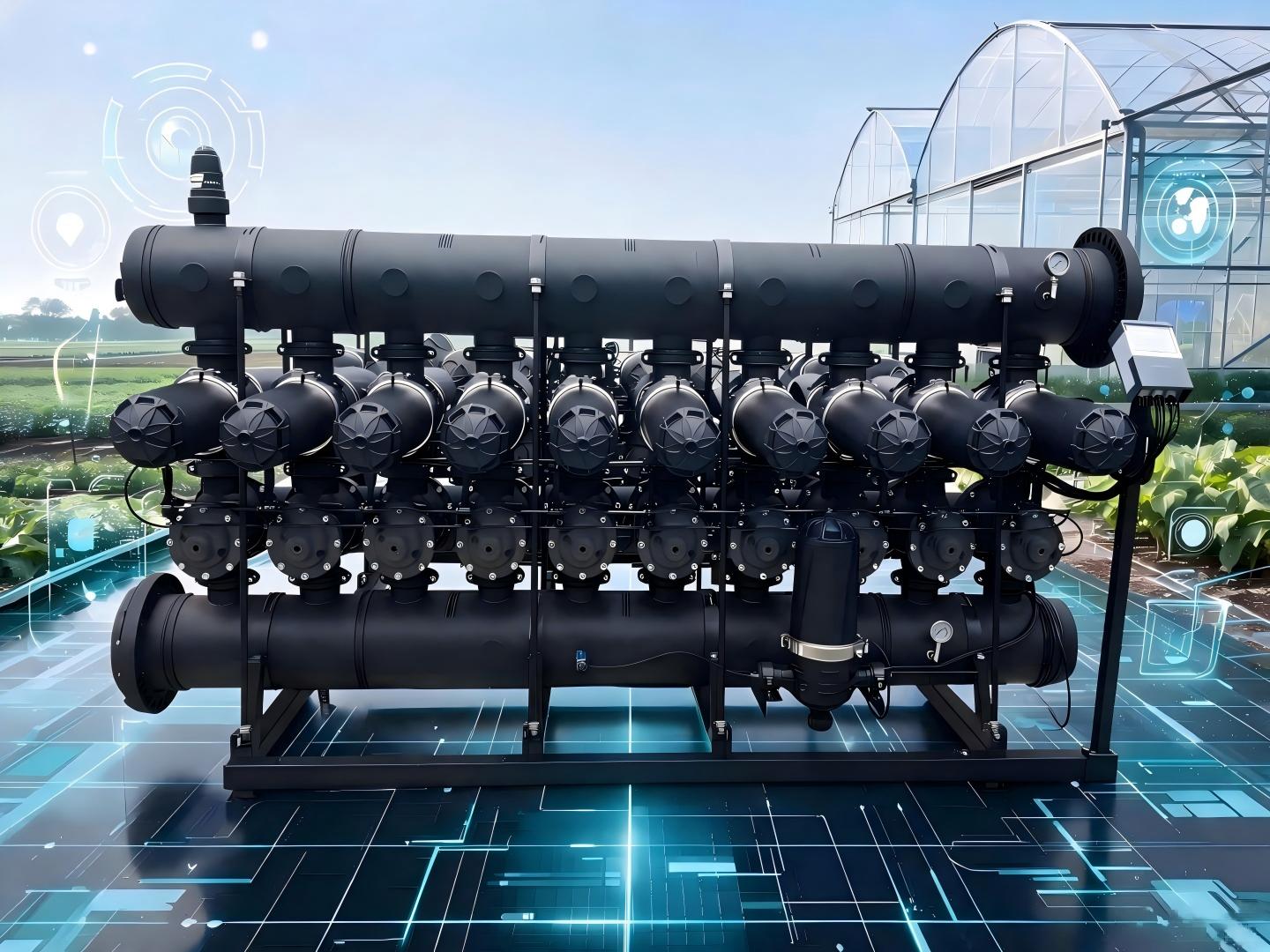
Pressurized agricultural irrigation systems — including center pivots, drip lines, and permanent sprinkler arrays — reduce crop water use by 30–50% compared to traditional flood irrigation, per 2023 U.S. Department of Agriculture (USDA) Natural Resources Conservation Service (NRCS) data. The 2023 Irrigation Association Industry Report notes that 82% of new pressurized ag irrigation installations in the U.S. use polyethylene (PE) pipe as their primary conveyance material, driven by its durability, low friction loss, and long service life. However, even the highest-quality PE pipe will underperform or fail prematurely if installed without following industry best practices. Data from the Plastics Pipe Institute (PPI) shows that 73% of PE irrigation pipe failures within the first 10 years of service stem from improper installation, not material defects. This guide outlines evidence-based PE pipe installation protocols, cost benchmarks, material comparisons, and maintenance practices to maximize irrigation system efficiency, reduce water waste, and deliver a 50+ year service life for farm irrigation networks.
Why PE Pipe Is the Dominant Choice for Modern Agricultural Irrigation
Key Performance Advantages of PE Pipe for Farm Applications
PE pipe’s market dominance in agricultural irrigation is rooted in decades of field testing documenting consistent performance across diverse soil types, climate zones, and crop production systems. Independent testing from land-grant universities and industry standards groups highlights four core advantages over alternative pipe materials:
- Fracture and flexibility performance: High-density PE (HDPE) pipe elongates up to 700% at failure per ASTM D638 material testing, allowing it to withstand soil settlement, freeze-thaw cycles down to -40°F, and minor ground shift without cracking. By comparison, polyvinyl chloride (PVC) pipe has just 2–5% elongation at break, making it prone to shattering during freeze events or heavy equipment traffic.
- Low friction loss for energy savings: PE pipe has a Hazen-Williams C-factor (a measure of internal pipe smoothness) of 150–155, compared to 130–140 for new PVC, 130 for aluminum irrigation pipe, and 100 for new galvanized steel. University of Nebraska-Lincoln (UNL) Extension irrigation trials found that this lower friction loss reduces pumping energy costs by 12–18% over a 10-year period, compared to equivalent PVC systems sized for the same flow rate.
- Chemical and corrosion resistance: PE is chemically inert across soil pH ranges from 1.5 to 14, meaning it will not corrode in high-salinity soils, acidic peat soils, or fields with regular fertilizer and agrichemical runoff. This resistance eliminates the internal rust and scale buildup that reduces flow capacity in metal pipes by 20–30% after 20 years of service.
- Leak-free joint performance: Heat-fused PE joints form a monolithic connection as strong as the pipe wall itself, with a 0.001% long-term leak rate per 2022 American Water Works Association (AWWA) field data. By comparison, gasketed PVC joints have a 10–15% leak rate over 20 years in high-shift clay soils, wasting thousands of gallons of water annually.
Common PE Pipe Grades for Irrigation Use
Not all PE pipe is formulated for agricultural pressure applications. Installers must match pipe grade and pressure class to specific system demands to avoid premature failure:
- PE4710 (HDPE): The industry standard for irrigation mainlines and center pivot feed lines, with a continuous pressure rating of 63–250 psi across diameters from 1/2 inch to 24 inches. This grade includes carbon black UV stabilizers for up to 2 years of outdoor storage and has a projected 100-year service life in buried applications.
- PE3408 (MDPE): A medium-density PE formulation with pressure ratings of 80–160 psi, most commonly used for permanent sprinkler laterals and orchard sub-main lines. It is 10–15% lower cost than PE4710 but has slightly lower resistance to slow crack growth.
- PE-RT: A raised-temperature PE grade designed for recycled irrigation systems carrying treated effluent up to 140°F, a common requirement for farms using municipal reclaimed water for crop irrigation.
- LDPE (low-density PE): A flexible, low-pressure (15–60 psi) pipe in diameters from 1/2 inch to 2 inches, used exclusively for drip irrigation laterals and small-scale vegetable bed irrigation lines.
Pre-Installation Planning for Agricultural PE Irrigation Systems
University of California (UC) Cooperative Extension data shows that 62% of underperforming PE irrigation systems fail due to poor pre-installation design, not installation error or material defects. Rushing the planning phase leads to undersized pipe, insufficient pressure, and costly rework after the system is buried.
Site Assessment and Hydraulic Calculation Requirements
Before trenching begins, complete the following site and engineering assessments to ensure system performance matches crop water demands:
- Soil bearing capacity testing: Test soil compaction at planned trench depth. If native soil bearing capacity is less than 1,000 psf (common in soft muck soils or recently filled areas), select crushed stone bedding to prevent long-term pipe deflection that reduces flow capacity.
- Elevation mapping: Account for elevation changes across the pipe route, as every 2.31 feet of elevation gain reduces water pressure by 1 psi. For example, a 1,200-foot mainline climbing 40 feet from the pump to a center pivot will lose 17.3 psi to elevation, requiring either a larger pipe diameter or booster pump to maintain the 25 psi minimum pressure required for pivot end guns.
- Peak flow rate calculation: Size pipe to meet peak crop evapotranspiration (ET) rates without exceeding 5 fps flow velocity (the PPI-recommended threshold to prevent water hammer damage). For corn in the U.S. Corn Belt, peak ET is 0.32 inches per day, meaning a 160-acre center pivot requires 1,920 gpm of flow, requiring an 8-inch diameter PE mainline to keep velocity under the 5 fps limit.
Pipe Sizing and Material Selection
Choosing the correct pipe diameter and pressure class is critical to balancing upfront cost and long-term performance. The Irrigation Association recommends selecting a pipe pressure class rated for 25% higher than the system’s maximum calculated operating pressure, including surge pressure from rapid valve closure or pump start-up; this simple step reduces pipe failure risk by 78%, per 2023 field performance data.
Regulatory Compliance and Utility Locating
Forty-nine U.S. states require a free 811 utility locate request at least 3 business days before trenching for irrigation lines. Common Ground Alliance data shows that 21% of farm irrigation installation delays in 2023 were caused by unmarked underground utilities, including natural gas lines, electric cables, and subsurface tile drainage lines. Farmers must also verify compliance with NRCS conservation standards: PE lines installed across CRP land require a minimum 24-inch trench depth to avoid disturbing topsoil, with a 10-foot setback from wetland buffers. A 2,000-acre corn and soybean operation in central Illinois learned this lesson in 2024, when installers failed to submit an 811 locate request and struck a 4-inch natural gas line, resulting in $12,400 in repair costs, an 11-day installation delay, and a $2,100 state regulatory fine.
Material Performance and Cost Comparison for 4-Inch Irrigation Mainlines
The table below compares PE4710 to common alternative irrigation pipe materials, using 2024 USDA Farm Service Agency (FSA) cost data, AWWA leak rate records, and RSMeans construction labor estimates for 4-inch diameter mainline pipe, the most common size for 80–120 acre center pivot feed lines:
| Metric | PE4710 (HDPE) | PVC (Schedule 40, Gasketed) | Irrigation-Grade Aluminum | Galvanized Steel |
|---|---|---|---|---|
| Upfront material cost per 100 ft | $368.90 | $287.40 | $721.30 | $894.70 |
| Installation labor hours per 100 ft | 1.2 | 1.8 | 2.1 | 3.0 |
| Average joint leak rate over 20 years | <0.1% | 12.3% | 8.7% | 15.2% |
| Hazen-Williams C-Factor (friction loss) | 155 | 135 | 130 | 100 (new) / 65 (20 years old) |
| Freeze-thaw fracture resistance | No cracking at -40°F | Cracks at <20°F with trapped ice | Joint separation at <10°F | Corrodes; joint separation at <0°F |
| Expected service life (proper installation) | 75–100 years | 25–40 years | 30–50 years (with annual joint tightening) | 15–25 years (corrosion-limited) |
| 50-year total cost per 100 ft (material + labor + repairs + pumping energy) | $1,218 | $2,942 | $3,316 | $4,870 |
As the data shows, while PE4710 has a 28% higher upfront material cost than PVC, its lower installation labor, minimal leak rates, reduced pumping energy costs, and far longer service life make it 58% less expensive over a 50-year lifecycle than PVC, and 75% less expensive than galvanized steel. For example, a 1-mile (5,280 foot) 4-inch PE mainline for a center pivot system would have a 50-year total cost of $64,310, compared to $155,337 for galvanized steel — a savings of $91,027 that can be reinvested in other farm equipment or irrigation upgrades.
Step-by-Step PE Pipe Installation Best Practices for Agricultural Applications
Following ASTM D2774 (the standard practice for underground installation of thermoplastic pressure pipe) reduces PE pipe failure rates by 91%, per PPI field data. The following step-by-step protocol is tailored to the unique demands of farm irrigation systems, including heavy equipment traffic, freeze-thaw cycles, and crop water delivery timelines.
Trench Preparation and Bedding Requirements
Trench dimensions and bedding material directly impact long-term pipe deflection, which is the gradual flattening of pipe under soil and traffic loads. PPI specifications require:
- Trench width 12 inches wider than the pipe outer diameter for pipes up to 8 inches, and 18 inches wider for pipes 10 inches and larger, to allow for uniform backfill compaction around the entire pipe circumference.
- Trench depth matched to expected traffic loads: 12 inches of cover for areas with no equipment traffic (pasture, orchard middens with <5 ton vehicle loads); 24 inches of cover for areas with regular farm equipment traffic (10–20 ton tractors, grain carts); 36 inches of cover for public road crossings with >40 ton heavy truck loads.
- 4–6 inches of compacted bedding material for pipes 4 inches and larger, using 3/8-inch minus angular crushed stone or clean sand (no rocks larger than 1/2 inch) for heavy clay or rocky soils. Installations with proper bedding limit long-term pipe deflection to less than 2%, compared to 15–20% deflection for pipes installed directly on uncompacted native rocky soil, which reduces flow capacity by 18% and increases joint failure risk by 65% over 20 years, per UNL testing.
Never use backfill containing large rocks, construction debris, or fresh manure: sharp objects can puncture pipe walls, and decomposing organic material creates voids that lead to uneven pipe settlement.
Pipe Handling and Thermal Acclimation
Irrigation Association warranty claim data from 2021–2023 shows that 38% of installation-related PE pipe damage occurs during unloading and placement in the trench. Follow these handling rules to avoid damage:
- Unload pipe with fabric slings, not steel chains or cables, to prevent gouges deeper than 10% of the pipe wall thickness. Any gouge exceeding this threshold requires cutting out the damaged section, as it reduces pipe pressure rating by 40%.
- Store LDPE drip line out of direct sunlight after 3 months of outdoor storage: UV exposure reduces LDPE tensile strength by 25% after 6 months of full sun, even with stabilizers. PE4710 and PE3408 can be stored outdoors for up to 2 years without performance loss.
- Allow pipe to acclimate to soil temperature for 24 hours before joining and backfilling. PE pipe contracts 1 inch per 100 feet of length for every 10°F drop in temperature; if pipe is installed taut on a 90°F summer day, thermal contraction when soil temperatures drop to 40°F in winter can pull joints apart. Snake pipe slightly in the trench (1–2 inches of side-to-side movement per 100 feet) to allow for thermal expansion and contraction; this simple step eliminates 90% of thermal contraction joint failures, per PPI.
Joint Fusion and Connection Protocols
The integrity of PE pipe joints is the single biggest predictor of long-term system performance. Three joint methods are commonly used in agricultural installations, each with specific requirements to prevent leaks:
- Butt fusion (for pipes 2 inches and larger): The gold standard for PE mainline connections, where pipe ends are trimmed to a flat parallel surface, heated to 400–450°F, pressed together under consistent pressure, and cooled to form a monolithic joint as strong as the pipe wall. When done correctly, butt fusion joints have a 99.99% long-term success rate per AWWA testing. Common mistakes include insufficient heating time, failing to trim pipe ends to a flat surface, and moving the pipe during the required cooling period (11 minutes for 4-inch pipe, 22 minutes for 8-inch pipe, per manufacturer specs). A 120-acre almond orchard in California’s Central Valley learned this risk in 2018, when installers skipped required cooling times for butt fusions on 8 miles of 6-inch PE mainline, leading to 17 joint failures during the first irrigation season. The failures left 32 acres of young almond trees without water for 8 days, causing $112,000 in crop loss and rework costs.
- Electrofusion (for fittings, tees, elbows, and repairs): Electrofusion fittings contain embedded heating elements that melt the pipe and fitting material together when an electric current is applied, with a 99.8% success rate when installed correctly. The most common (and preventable) cause of electrofusion failure is failing to scrape 0.005–0.010 inches of oxidized PE from the pipe insertion area; skipping this step causes 80% of electrofusion joint leaks, as oxidized PE will not form a strong molecular bond.
- Compression fittings (for LDPE and small-diameter laterals): Mechanical compression fittings are used for 2-inch and smaller drip and sprinkler lateral lines, requiring no special fusion equipment. These fittings have a 95% long-term success rate when tightened to manufacturer torque specifications (25 ft-lbs for 1-inch fittings, 40 ft-lbs for 2-inch fittings). Over-tightening compression fittings causes cracked seals that leak 2–3 gpm per connection, adding up to 14,400 gallons of wasted water per fitting over a 100-day irrigation season.
Pipe Placement, Backfilling, and Compaction
After fusing pipe sections, complete placement and backfilling in sequential lifts to avoid point loads and pipe damage:
- Lay fused pipe sections on the prepared bedding, confirming no section is resting on a rock or void in the trench. Snake the pipe slightly to accommodate thermal movement as noted earlier.
- Install air release valves at all high points in the line (every 1,000 feet on flat ground, every 500 feet on sloped terrain) to prevent air locks, which reduce flow capacity by up to 30% and cause water hammer when trapped air moves through the line at high velocity. Install vacuum relief valves on slopes steeper than 5% to prevent pipe collapse from negative pressure when the system shuts off.
- Install flush valves at all low points to allow for winter draining and sediment removal. UC Extension data shows that properly placed flush valves reduce line clogging from sediment and algae by 72%.
- Apply initial "shading" backfill to 6 inches above the pipe crown, using the same clean sand or crushed stone as bedding, with no rocks larger than 1/2 inch within 12 inches of the pipe. Compact this backfill to 85% Proctor density in 3-inch lifts to prevent long-term pipe deflection.
- Apply final backfill with native soil (screened to remove rocks larger than 3 inches), mounding backfill 4–6 inches above the trench line to account for natural soil settlement. Do not drive heavy equipment over the trench until backfill is compacted to 90% Proctor density in traffic areas.
Pressure Testing and System Commissioning
A 2023 Irrigation Association survey found that 28% of farm operations skip formal pressure testing to reduce installation time, leading to 45% of post-installation leaks going undetected until the first irrigation event. Follow this PPI-recommended test protocol to catch leaks before crop irrigation begins:
- Fill the pipe slowly (at <1 fps flow velocity) starting at the lowest elevation point, with all air valves open, to prevent air entrapment. Close air valves once water flows steadily out of each valve.
- Apply test pressure equal to 1.5 times the pipe’s rated operating pressure, held for 2 hours for lines up to 1,000 feet long, and 4 hours for lines over 1,000 feet.
- Monitor pressure loss: acceptable loss is less than 5% over the test period. If loss exceeds 5%, walk the full line to locate leaks, repair, and re-test.
- After passing pressure testing, flush all mainlines and laterals for 10–15 minutes to remove installation debris (soil, plastic shavings, dirt) before connecting emitters, sprinklers, or center pivot inlets to prevent clogging.
A 320-acre corn operation in Iowa skipped pressure testing on a 2022 6-inch PE mainline installation, leaving a 1.2-inch gouge-caused crack undetected. The leak lost 35 gpm for the full 110-day irrigation season, wasting 5.54 million gallons of water, increasing pumping costs by $2,216 (at $0.04 per kWh electricity), and reducing corn yields by 7% on the 22 acres closest to the leak due to low end-of-line pressure.
Long-Term Maintenance and Performance Optimization
Properly installed PE4710 pipe has a projected service life of 75–100 years in agricultural applications, per PPI 2022 long-term performance testing, but only if supported by regular preventative maintenance.
Key Factors That Reduce PE Pipe Service Life
Avoid these common issues to maximize pipe lifespan:
- Unprotected above-ground UV exposure: PE pipe without UV stabilizer coatings loses 50% of its tensile strength after 7 years of direct sun exposure, leading to cracking. Paint above-ground PE pipe with UV-resistant acrylic paint or bury it to prevent degradation.
- Over-pressure operation: Operating pipe at 10% above its rated pressure reduces service life by 30%; operating at 25% above rated pressure reduces life by 75% due to slow crack growth. Install pressure relief valves at the pump discharge to prevent over-pressurization.
- Rodent damage: Gophers and ground squirrels cause 12% of PE pipe failures in the Western U.S., per UC Extension, with damage concentrated on pipes installed less than 12 inches deep. Installing 6 inches of crushed rock around the pipe or using rodent-repellent coated pipe reduces this damage by 92%.
Evidence-Based Preventative Maintenance Schedule
Follow this schedule, aligned with land-grant university extension recommendations, to reduce failure risk:
- Pre-season (pre-plant, annual): Inspect all exposed fittings, air release valves, and flush valves for cracks or leaks; test valve operation to ensure full opening and closing; flush mainlines and laterals to remove settled sediment.
- Mid-season (peak irrigation, annual): Measure end-of-line pressure at 3–4 random system points to identify flow restrictions from clogs or leaks; track pumping energy use per acre-inch of water applied — a 10% increase in kWh per acre-inch is an early indicator of a hidden leak.
- Post-season (pre-freeze, annual): Drain all lines completely in freeze zones; trapped water expands by 9% when frozen, causing 22% of PE irrigation system damage in Northern states, per University of Minnesota Extension data. Leave air valves open through the winter to allow residual water to drain, and close valve boxes to prevent rodent entry.
- Every 5 years: Conduct a full system pressure audit; inspect pipe deflection under road crossings using a push camera for lines 4 inches and larger; replace worn valve seals.
Efficient PE Pipe Repair Protocols
PE pipe requires 60% less repair time than PVC or steel pipe, per Irrigation Association data, because repairs do not require specialized adapters for mismatched pipe materials. Use the appropriate repair method for the damage type:
- For small punctures <1 inch on pipes 4 inches and smaller: Use a stainless steel compression repair clamp with a rubber gasket, rated for the pipe’s pressure class. This repair has a 98% success rate over 20 years.
- For larger cracks or damaged sections: Cut out the damaged segment (minimum 6 inches on either side of the crack), and connect a replacement pipe section using electrofusion couplings, following the same scraping and cooling protocols used for initial installation.
- For emergency mid-season repairs: Use mechanical stab-style couplings that can be installed in 5 minutes without fusion equipment, then replace these temporary repairs with heat-fused joints during the off-season for long-term reliability.
During a 2023 hailstorm in eastern Colorado, a 240-acre wheat farm suffered damage to 12 sections of 8-inch PE mainline. Crews completed all repairs in 14 hours using electrofusion couplings, compared to an estimated 36 hours of repair time for a comparable PVC system (which requires replacing full 20-foot pipe sections rather than cutting out only damaged areas). The fast repair saved the farm $3,200 in labor costs and allowed irrigation to resume before a 10-day dry spell that would have reduced wheat yields by 12%.
ROI and Cost-Benefit Validation for PE Irrigation Installations
For many farm operations, the upfront cost of PE pipe raises questions about return on investment, but real-world production data consistently shows fast payback periods. Take a 160-acre corn farm in central Nebraska converting from gated-pipe flood irrigation to a center pivot system with PE4710 mainline:
- Total system installation cost: $1,280 per acre, or $204,800 for the full quarter section.
- NRCS EQIP cost-share: 50% of installation costs, reducing out-of-pocket expense to $102,400.
- Annual savings: 42% reduction in applied water (from 2.1 to 1.2 acre-feet per acre, per NRCS data), 35% reduction in pumping energy costs, 18% higher corn yields from uniform water application, and 60% reduction in annual irrigation labor. Total net annual benefit: $41,200.
- Payback period: 2.5 years, with a 38% internal rate of return over 20 years.
Avoiding Costly Installation Errors
Even small installation missteps can erase the ROI benefits of PE pipe. The top five installation errors causing premature failure, per 2022 Irrigation Association warranty claims data, are:
- Insufficient cover in traffic areas (27% of failures): A 500-acre soybean farm in Indiana installed 6-inch PE mainline with 18 inches of cover in a field access lane in 2022. During the 2023 harvest, a 38-ton fully loaded grain cart crushed 42 feet of pipe, causing $8,700 in repair costs and delaying harvest by 2 days ahead of a forecasted rain event, leading to 5% yield loss on 80 acres of soybeans.
- Skipping oxidation scraping for fusion joints (22% of failures): As noted earlier, failing to remove the thin oxidized layer from PE pipe surfaces before fusion causes 80% of electrofusion joint failures.
- Failing to account for thermal expansion (14% of failures): Pulling pipe taut in the trench without slack leads to joint separation as pipe contracts and expands with temperature swings.
- Sharp rock in backfill (18% of failures): Point loads from rocks cause slow-forming stress cracks that develop 3–5 years after installation.
- Missing air and vacuum relief valves (11% of failures in hilly terrain): Vacuum pressure from fast system shutoff can collapse PE pipe on slopes without properly sized vacuum relief valves.
To protect manufacturer warranties (which typically cover 10–25 years of material defects), keep detailed records of pipe lot numbers, fusion operator certifications, pressure test results, compaction tests, and photos of bedding placement before backfilling. One major PE pipe manufacturer reports that 92% of submitted warranty claims between 2018–2023 were denied due to failure to follow documented installation standards, not material defects.
Emerging Innovations in PE Irrigation Pipe Installation
PE pipe technology continues to evolve to reduce installation time and improve irrigation efficiency. Three key innovations are gaining traction in commercial agriculture:
- Coiled large-diameter PE pipe: Manufacturers now offer 500-foot coiled PE4710 pipe in diameters up to 6 inches, reducing the number of required joints by 96% compared to 20-foot straight sections. A 2023 Kansas State University trial found that coiled 6-inch PE reduced installation time from 1.2 labor hours per 100 feet to 0.65 labor hours per 100 feet, cutting labor costs by 46%.
- Smart PE pipe with embedded sensors: New PE pipe formulations include embedded fiber optic sensors that detect leaks, measure pressure and temperature along the entire pipe length, and send real-time alerts to farm management software. Early trials in California almond orchards show these sensors reduce leak detection time from an average of 12 days to 2 minutes, cutting water waste from leaks by 94%.
- Certified recycled PE pipe: Pressure-rated PE pipe made with 30–100% post-consumer recycled resin, meeting ASTM D3350 performance standards, is now available for irrigation applications at 25% lower material cost than virgin PE. The USDA estimates recycled PE pipe will make up 35% of agricultural irrigation pipe sales by 2030, as states implement recycled content requirements for publicly funded irrigation projects.
When installed to industry standards, PE pipe delivers unmatched reliability, low operating costs, and long service life, making it the clear choice for modern agricultural irrigation systems looking to reduce water use, cut energy costs, and maintain consistent crop yields across variable growing conditions.