Key Takeaways
- Manual sand media filters have lower upfront costs and work best for small, low-flow farms with consistent water quality.
- Automatic sand media filters reduce labor needs and deliver consistent performance for large-scale commercial operations with variable water sources.
- Both filter types remove 20+ micron sediment, organic debris, and algae to prevent clogging of drip and sprinkler emitters.
- Proper selection cuts long-term irrigation maintenance costs and extends the lifespan of your entire irrigation system.
What Is a Sand Media Filter, and How Does It Work for Irrigation?
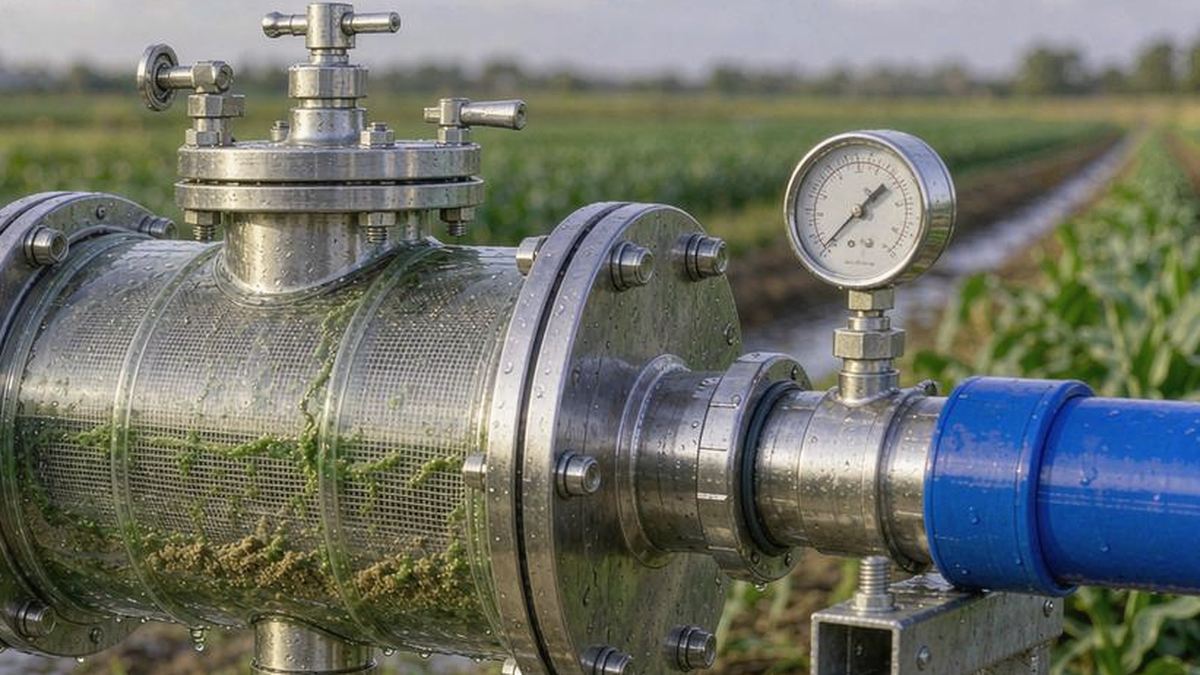
Sand media filters are a core component of modern agricultural irrigation systems, designed to trap fine particles that standard screen or disc filters cannot capture. Using layers of graded quartz or anthracite media inside a sealed tank, these filters catch sediment, algae, and organic matter as irrigation water passes through, creating a physical barrier that stops debris from moving downstream to your sprinklers or drip lines. Most agricultural emitters have openings ranging from 80 to 200 mesh (177 to 75 microns), so even tiny unfiltered particles can cause partial or full clogs that disrupt water distribution and reduce crop yields. Sand media filters are compatible with all common farm water sources, including wells, rivers, and ponds, and operate at a typical pressure loss of 5 to 15 PSI during normal use. When pressure differential across the tank rises to the manufacturer’s recommended threshold, a backwashing process flushes all trapped debris out of the filter tank to restore full flow.
Core Differences Between Manual and Automatic Sand Media Filters
The primary distinction between manual and automatic sand media filters lies in how the backwashing process is initiated and completed. On manual models, all backwash valves are operated by hand, requiring on-site farm staff to monitor pressure gauges, open and close the correct sequence of valves, and run the flush cycle for the required length of time. Automatic models use motorized, pre-programmed valves that trigger backwashing on a set timer or when a sensor detects a pre-set pressure drop, with no manual input required to complete the full cycle. Both designs use the same high-strength filter tank construction, and systems that use compatible spare parts like the LZHS 3" End Cap have long service lives even with daily, high-volume operation.
Advantages and Disadvantages of Manual Sand Media Filters
Manual sand media filters are the most accessible option for small and hobby farms, with a much lower upfront price point than equivalent automatic models. They require no electrical power to operate, making them ideal for off-grid agricultural sites or locations with unreliable power access. The simple, minimal-component design is also easy to troubleshoot and repair on site, no specialized technical training is required for basic maintenance. The key downside of manual models is the dedicated labor required for backwashing: each cycle takes 5 to 10 minutes of staff time, and human error such as forgetting to run a backwash can lead to excessive pressure loss that reduces irrigation flow. Manual sand filters are a strong fit for operations under 10 acres using low-debris well water. If you are running a small fertigation setup, pairing a manual sand filter with LZHS Venturi Fertilizer Injector (1.5") creates a low-cost, low-maintenance full irrigation treatment system.
Advantages and Disadvantages of Automatic Sand Media Filters
Automatic sand media filters are built for large, high-volume commercial farming operations that prioritize consistent performance and minimal labor input. Because backwashing runs on a pre-set schedule, there is no risk of missed cycles that could lead to emitter clogging, even during busy harvest seasons when farm staff are stretched thin. These models can handle much higher flow rates than most manual units, making them suitable for 50+ acre farms that draw water from high-debris sources like rivers or ponds with seasonal algae or silt spikes. The main drawbacks are higher upfront costs and the requirement for a stable power source to run the control valves. LZHS, with 14 years of manufacturing and export experience serving 60+ countries, designs our automatic sand filters to work reliably even in remote agricultural regions with fluctuating power supplies.
How to Select the Right Sand Media Filter for Your Farm
Your final selection should align with three core factors: your available labor, water source quality, and long-term operational budget. If you run a small operation with only 1 to 2 full-time farm staff and consistent, low-sediment well water, a manual sand media filter will deliver all the performance you need at a fraction of the upfront cost. If you manage a large commercial farm with limited dedicated irrigation maintenance staff, or use surface water from a river or pond with variable debris levels, an automatic model will pay for itself quickly by eliminating backwash labor and preventing costly emitter clogs that cause crop water stress. For more guidance on matching filtration solutions to your specific crop and region, visit our site hub page for expert tips, case studies, and product updates.
FAQ
Can I convert my existing manual sand media filter to automatic?
Yes, most manual filter tanks can be retrofitted with motorized backwash valves and a simple digital controller as your operation scales, so you do not need to replace the entire tank assembly to access automatic functionality.
What micron rating do sand media filters typically deliver for agricultural use?
Standard agricultural sand media filters trap particles as small as 20 microns, which is fine enough to protect even the smallest drip emitters from clogging when paired with a final stage screen or disc filter.
How often do I need to replace the sand filter media?
With proper, regular backwashing and routine system checks, high-quality graded filter media lasts 3 to 5 years for most farm irrigation systems, with only small top-ups required once or twice per year.