Irrigation System Winterization: The Definitive Agricultural Guide to Prevent Costly Damage, Extend Equipment Lifespan, and Ensure Spring Operational Readiness
For agricultural operations across North America, irrigation infrastructure represents a capital investment of $800–$2,500 per acre, with total system replacement costs often exceeding $1 million for 1,000+ acre row crop operations. Data from the 2023 USDA Farm and Ranch Irrigation Survey confirms that 42% of U.S. crop operations report preventable irrigation system damage each winter, leading to average repair costs of $12,400 per operation, plus 3–7 days of delayed planting or early-season irrigation during critical crop establishment windows. The Irrigation Association (IA) adds that unwinterized systems face up to 90% higher component failure rates in regions with 10+ annual freeze events, with losses compounded by yield reductions from delayed water access during spring drought periods. Irrigation system winterization is not a routine maintenance chore: it is a high-ROI risk mitigation practice that protects capital assets, reduces long-term operating costs, and ensures operational readiness when spring planting seasons begin. This guide provides evidence-based, system-specific protocols, cost comparisons, and real-world operational data to help farm teams implement winterization practices aligned with regional climate risk, equipment type, and crop production goals.
Why Irrigation System Winterization Is Non-Negotiable for Modern Agricultural Operations
Many growers underestimate the cumulative risk of skipped or incomplete winterization, focusing only on visible catastrophic failures like burst pipes while ignoring gradual component degradation that reduces equipment lifespan over time. University of Nebraska-Lincoln (UNL) 2024 extension research calculates that every $1 spent on proper winterization delivers $18 in avoided repair costs and lost yield across all U.S. agricultural climate zones, making it one of the highest-return maintenance practices for irrigated operations.
Quantified Costs of Skipping Winterization: Hard Data From 2022–2024 Farm Operations
Freeze damage costs extend far beyond simple pipe repairs. The 2023 American Backflow Prevention Association (ABPA) report found that 68% of backflow preventer failures in cold climates are tied to inadequate winter draining, with replacement costs ranging from $800 to $3,500 per unit depending on flow capacity. For operations that rely on chemigation or fertigation, a cracked backflow preventer can also lead to cross-contamination of well water supplies, triggering additional regulatory testing and remediation costs of $2,000–$10,000. Data from the USDA also shows that 18% of operations reporting winter irrigation damage lost more than 5% of expected annual yield due to delayed spring irrigation, as repairs competed with planting and early crop water demand during narrow operational windows.
Even partial winterization failures carry significant costs. For example, trapped water in a single center pivot gearbox can lead to $4,000 in parts and labor to replace, plus downtime during the critical first irrigation pass for corn or wheat, when crop water stress during emergence can reduce yields by 10–15%.
Regional Risk Variability: Freeze Exposure Thresholds Across U.S. Agricultural Zones
Winterization requirements are not one-size-fits-all, and risk is defined by local average minimum temperatures, frost depth, and frequency of unexpected freeze events. The USDA Plant Hardiness Zone framework provides a baseline for protocol development:
- Zones 3–5 (average annual minimum temp -40°F to -10°F): Mandatory full system winterization (blowout + component protection) completed by mid-October, for all above-ground and shallow-buried components.
- Zones 6–7 (average annual minimum temp -10°F to 10°F): Full winterization completed by early November, with added insulation for valves and lines buried less than 6 inches below frost line.
- Zones 8–9 (average annual minimum temp 10°F to 30°F): Targeted winterization for above-ground components by late November, with contingency plans for rapid draining during rare freeze events.
- Zones 10+ (average annual minimum temp 30°F+): No full drain required, but freeze protection protocols for backflow preventers and above-ground pumps during occasional 32°F events.
It is critical to avoid assuming winterization is only required in northern cold climates. USDA 2024 climate data shows that 22% of irrigation freeze damage occurs in Zones 8 and 9, where unexpected 24–48 hour freeze events in late December or early January can catch operators off guard after years of mild winters. For example, a December 2022 freeze event in central Texas (Zone 8b) brought 18 consecutive hours of 20°F temperatures, causing $142 million in irrigation system damage to cotton and sorghum operations, 68% of which had not completed any winterization preparations due to a decade of above-average winter temperatures.
Core Science of Freeze Damage to Irrigation Infrastructure
Freeze damage follows predictable physical principles, which is why targeted winterization focused on high-risk points delivers such high success rates. Understanding how ice formation damages components helps teams avoid missing critical steps during the winterization process.
How Water Expansion Drives Catastrophic Component Failure
When water freezes, it expands by approximately 9% in volume, generating internal pressure of up to 25,000 psi in enclosed spaces—more than enough pressure to rupture Schedule 80 PVC, galvanized steel pipe, and cast iron pump casings, regardless of material strength. University of Idaho Extension 2023 materials testing found that even 4 ounces of trapped water in a 2-inch PVC elbow is sufficient to cause a full circumferential rupture when temperatures drop to 20°F for 6 consecutive hours, as the expanding ice has no path to relieve pressure. Unlike static water in a closed container, trapped irrigation water often sits at pipe joints, valve seats, and component low points, where pressure is concentrated on the weakest structural points of the system, leading to cracks that may not be visible until the system is re-pressurized in spring.
Secondary Damage Risks Beyond Pipe Bursts
Not all freeze damage causes immediate, visible failure. Many issues develop gradually over multiple freeze-thaw cycles, leading to premature component failure months or years after a winter season:
- Accelerated corrosion: Trapped frozen water creates micro-cracks in metal components (pumps, valves, steel pipe) that expose bare metal to soil moisture and fertilizer residue, increasing annual corrosion rates by 37% per 2023 Irrigation Association materials testing.
- Emitter clogging: Freeze-thaw cycles in drip lines can dislodge biofilm and mineral deposits that shift during ice formation, leading to 22% higher emitter clog rates in unwinterized drip systems during the first spring irrigation run, per Washington State University (WSU) 2023 drip irrigation research.
- Seal and gasket degradation: Rubber and silicone seals in valves, backflow preventers, and pivot swivels become brittle when exposed to frozen water, reducing seal lifespan by 60% on average, per Nebraska Tractor Test Laboratory 2023 irrigation component durability trials.
- Electrical component damage: Trapped moisture in solenoid valves, pivot control panels, and pump pressure sensors can freeze and crack circuit boards, leading to 45% of irrigation electrical system failures in cold climates, per the 2024 National Agricultural Electrical Safety Association report.
Pre-Winterization System Audit: Step-by-Step Preparatory Assessment
Before beginning any winterization procedure, a full system audit is required to map risk points, gather equipment, and schedule work to avoid both premature winterization (which cuts off late-season crop water access) and delayed winterization (which leaves systems exposed to freeze events).
Required Pre-Winterization Inspection Checklist
The USDA NRCS recommends that all irrigation main lines be buried a minimum of 6 inches below the 100-year average local frost depth to reduce freeze risk. A 2023 Iowa State University survey of 500 corn and soybean operations found that 58% of winter pipe bursts occur on lines buried less than 2 inches below the documented local frost line, often installed during emergency repairs or system expansions when burial depth guidelines were not followed. Complete the following audit steps 2 weeks before the planned winterization date:
- Map all system components and freeze risk points: Document buried line depth relative to local frost line, flagging shallow sections as high-priority points for extra protection. Mark locations of backflow preventers, valves, pumps, and filter stations for easy access.
- Document all low points in the piping network: These are the most likely locations for trapped water, as gravity will pull residual water to these spots even after gravity draining. Common low points include dips in field main lines, end-of-line drop legs, valve boxes installed below grade, and drip lateral ends.
- Inventory above-ground components: Count backflow preventers, pump casings, filter housings, air vents, pressure regulators, solenoid valves, pivot span drains, and end guns to ensure no components are missed during the winterization process.
- Test pressure gauges and air compressor output prior to blowout operations: Faulty pressure gauges are responsible for 19% of blowout-related pipe damage, per Irrigation Association safety data, as operators may apply too much air pressure and rupture lines.
- Review prior year winterization records: Note locations of previous freeze damage, as these spots are 3x more likely to experience repeat damage if not remediated (e.g., adding a drain, increasing burial depth).
Timing Your Winterization: Avoiding the Too-Early/Too-Late Tradeoff
Winterizing too early cuts off critical irrigation capacity for late-season crop water needs: for example, late-season cotton in Zone 7 requires an additional 2–3 inches of water in early October to reach full boll maturity, per USDA NRCS, so winterizing in late September can reduce yields by 8–12%. Winterizing too late leaves systems exposed to unexpected hard freezes. The IA recommends scheduling winterization when the 10-day weather forecast shows sustained nighttime temperatures below 32°F for 4+ consecutive hours, and before the first forecasted 28°F freeze.
A 2,200 acre corn and soybean operation in central Illinois (Zone 5b) learned this risk firsthand in 2022: the farm delayed winterization by 5 days to finish a late fall fertigation application, and an unexpected 24°F freeze on October 23 caused $21,700 in damage to center pivot gearboxes and main line elbows, plus a 6-day delay in spring 2023 planting because the team had to replace 1,200 feet of 6-inch PVC main line during the narrow planting window.
Comparing Winterization Methods: Cost, Efficacy, and Use Case Fit
There are three core winterization methods used in agricultural irrigation, each with distinct cost profiles, efficacy rates, and appropriate use cases. Selecting the wrong method can lead to either unnecessary expense or preventable damage, so teams should match methods to system type, climate risk, and budget.
| Winterization Method | Upfront Equipment Cost | Labor Requirement (per 100 acres) | Efficacy Rating (% Residual Water Removed) | Recommended Use Cases | Known Risks of Improper Application |
|---|---|---|---|---|---|
| Gravity Draining | $0–$150 (replacement drain valves, if needed) | 2–3 hours | 60–75% | Sloped (≥2% grade) gravity-fed systems; Zones 8–10 with <5 annual freeze events; lines buried 12+ inches below local frost line | 25% failure rate when used as sole method in Zones 3–5 (Irrigation Association 2024); trapped water in low points causes pipe bursts |
| Compressed Air Blowout | $1,200–$3,500 (commercial rotary screw compressor, regulators, adapters); $125–$225/hour for professional service | 4–6 hours | 95–99% (when performed to manufacturer specs) | All pressurized systems (drip, center pivot, solid-set sprinkler); Zones 3–7; shallow-buried lines; above-ground components | 18% of DIY blowouts cause pipe/emitter damage from over-pressurization (UC Extension 2024); air pressure spikes can rupture PVC and poly pipe |
| Food-Grade Propylene Glycol Antifreeze | $0.85–$1.40 per linear foot of treated pipe | 3–5 hours | 100% (for treated components) | Backflow preventers, pump volutes, high-risk low points; small-diameter micro-irrigation for high-value specialty crops | Toxicity risk if non-food-grade ethylene glycol is used (EPA fines up to $37,500/day); spring flush costs of $30–$60/acre; soil/groundwater contamination risk from over-application |
Method 1: Gravity Draining – Best Practices and Limitations
Gravity draining relies on sloped piping and strategically placed drain valves to pull residual water out of the system without compressed air or antifreeze. The method is only effective on systems with a minimum 2% continuous slope, with manual drain valves installed at every low point (minimum 1 valve per 200 feet of main line, 1 per 50 feet of lateral line). A 160-acre almond orchard in central California (Zone 9b) has used gravity draining for their solid-set sprinkler system for 12 years, with lines buried 18 inches below the 12-inch average local frost line and drain valves installed at all low points. The operation opens all drain valves 48 hours before rare forecasted freezes and leaves end caps off lateral lines to allow full drainage, reporting only $120 in total freeze-related repair costs over 12 years.
Colorado State University Extension testing notes that gravity draining leaves as much as 20% of residual water in systems with less than 1% slope, making it unsuitable as a sole winterization method in Zones 3–7, where sustained sub-freezing temperatures will freeze trapped water.
Method 2: Compressed Air Blowout – Industry Standard for Pressurized Systems
Compressed air blowout is the most widely used winterization method for pressurized agricultural systems, as it removes nearly all residual water from lines when performed at correct pressures. Blowout success depends strictly on adhering to system-specific maximum pressure limits, as excessive air pressure causes more damage than freeze events for many DIY operations:
- Drip irrigation lines (½ inch to 2 inch diameter, polyethylene/drip tape): Maximum air pressure 30–35 PSI. WSU 2023 testing found that blowout pressures exceeding 40 PSI on drip tape cause 15–20% emitter loss per irrigation zone, as high pressure blows emitters off lateral walls or cracks thin-wall poly pipe.
- Solid-set sprinkler systems (PVC, 2–6 inch diameter): Maximum air pressure 50–60 PSI.
- Center pivot systems (galvanized steel, 6–10 inch diameter): Maximum air pressure 80 PSI, with drains opened at every span boot and tower box.
Follow this standardized blowout procedure to reduce damage risk:
- Isolate the water supply at the main source, and drain the pump casing and filter housing first to remove bulk water before connecting air equipment.
- Connect the air compressor to the main line blowout port, located downstream of the backflow preventer (never connect air upstream of the backflow preventer, as this can damage check valves or push contaminated water back into the domestic/well water supply).
- Install a calibrated pressure regulator on the compressor output to ensure pressure never exceeds the system-specific maximum listed above.
- Blow out zones one at a time, starting with the zones furthest from the compressor, to maintain sufficient air velocity to push residual water out. Never run the compressor at full capacity into a closed system, as this can cause rapid pressure spikes.
- Continue blowing air through each zone until only a fine mist of water exits the sprinkler heads, emitters, or drain valves, with no standing water slugs exiting the line. For center pivots, rotate the pivot 360 degrees during blowout to ensure water is removed from all span dips.
- After blowout, open all manual drain valves and leave them ¼ turn open through the winter to allow any condensation or snowmelt that enters the system to drain out, rather than being trapped.
A 450-acre vineyard in western Oregon (Zone 6b) switched from gravity draining to compressed air blowout in 2021, after a 2020 freeze caused $14,200 in damage to their drip irrigation system, including 12,000 feet of cracked drip tape and 320 damaged pressure-compensating emitters. Since switching to a 185 CFM rotary screw compressor with a 30 PSI regulator, blowing out each of their 12 irrigation zones for 8–10 minutes annually, they have reported zero freeze-related repairs over 3 growing seasons, with a total annual winterization cost of $1,100 in labor and equipment maintenance, delivering a 12:1 ROI on avoided repairs.
Method 3: Antifreeze Application – Targeted Use for High-Risk Components
Antifreeze is never used for full-system winterization due to high cost and environmental risk, but it is a valuable tool for protecting small, hard-to-drain components that are vulnerable to freeze damage. Critical safety note: never use automotive ethylene glycol antifreeze in irrigation systems, as it is toxic to plants, livestock, and soil microbes, with as little as 5 ounces fatal to a 100-pound animal. EPA records show 12 enforcement actions in 2023 against agricultural operations that used ethylene glycol in irrigation systems, with fines ranging from $12,000 to $48,000 for Clean Water Act violations. Only use NSF-certified food-grade propylene glycol, which is non-toxic at dilution rates of 30% or less, and rated for freeze protection down to -50°F at a 60% concentration.
Antifreeze is only recommended for targeted application in backflow preventer check valve chambers, pump volutes, pressure regulator diaphragms, low-point drain valves that cannot be fully blown out, and small micro-irrigation zones for high-value crops (e.g., berry operations, container nursery irrigation). All antifreeze must be fully flushed from the system during spring startup, with flush water collected and disposed of according to local environmental regulations, to prevent root zone contamination.
System-Specific Winterization Protocols for Common Agricultural Irrigation Types
General winterization methods must be adapted to the unique design of each irrigation system type, as component vulnerability varies widely between center pivots, drip systems, and pump infrastructure.
Center Pivot and Linear Move Irrigation Systems
Center pivot and linear move systems are particularly vulnerable to freeze damage due to their mix of above-ground steel pipe, moving gearboxes, and span joints that can trap water even on sloped spans. 2024 data from irrigation equipment manufacturer Valley Irrigation shows that 38% of pivot tower failures in cold climates are caused by water trapped in gearboxes that freezes and cracks cast iron housings, with replacement costs ranging from $1,800–$4,200 per gearbox, plus additional costs for realigning spans if gear failure causes structural misalignment. Complete these steps for pivot winterization:
- Drain all tower gearboxes and check for water contamination (indicative of worn seals). After draining, refill gearboxes with the manufacturer-specified cold-weather gear oil rated for -40°F operation.
- Open all span drain plugs and boot drains, as trapped water in span couplings can freeze and expand, pulling pipe joints apart and causing leaks that require full span realignment in spring.
- Blow out the main water feed line, end gun, and pressure regulator at the pivot point, then disconnect the power supply to the pivot control panel to prevent damage from winter power surges and ice buildup on electrical contacts.
- Park the pivot on a level, well-drained spot, facing away from prevailing winter winds, to reduce ice load on spans and prevent wind damage during winter storms.
A 1,800 acre corn operation in central Nebraska (Zone 5a) learned this risk in 2023, when the team failed to drain the end gun supply line on one of their 7 center pivots. The trapped water froze and cracked the end gun valve and supply line, leading to $2,100 in repair costs plus a 2-day delay in their first spring irrigation pass during a critical corn emergence drought period. The delay caused a 3% yield loss on that 160-acre pivot circle, valued at $8,900 in lost revenue at 2023 corn prices.
Drip and Micro-Irrigation Systems
Drip and micro-irrigation systems use thin-wall poly pipe and small orifice emitters that are highly vulnerable to freeze cracking and blowout from excessive air pressure. Follow these protocols:
- Start with a full system flush prior to blowout to remove sediment, biofilm, and fertilizer residue, which can trap moisture against emitter orifices and cause clogging after freeze-thaw cycles.
- Blow out laterals at 30 PSI maximum, starting from the upstream end of each zone, to avoid blowing emitters off the lateral lines. For buried drip tape, open lateral end caps after blowout to allow any residual water to drain out.
- Remove and store all above-ground pressure regulators, filters, and solenoid valves in a heated space if possible; if stored outside, fill valve bodies with a 50/50 propylene glycol and water solution to prevent cracking.
- For surface drip lines used in annual vegetable production, consider rolling up lines and storing them in a covered, temperature-controlled space if crop rotation schedules allow. 2022 University of Florida Extension data shows that stored drip lines have a 22% longer usable lifespan than lines left in the field through winter freeze events.
Solid-Set Sprinkler and Hand-Move Systems
Solid-set and hand-move systems use a mix of buried PVC main lines, aluminum laterals, and above-ground sprinkler heads that are prone to trapped water at riser points:
- Blow out main lines and lateral lines at 50–60 PSI, making sure to drain all riser pipes and sprinkler head bodies. Trapped water in sprinkler heads can crack the brass or plastic housing, leading to replacement costs of $12–$35 per head; for a 100-acre solid-set system with 1,200 sprinkler heads, that adds up to $14,400–$42,000 in replacement costs if heads freeze.
- For hand-move aluminum pipe, drain all sections and stack them on elevated racks in a covered storage area to prevent ice damage and corrosion from standing water and snow. Do not leave hand-move pipes lying on the soil surface through winter, as freeze-thaw cycles can pit aluminum surfaces and shorten pipe lifespan by 30%.
- Drain valve boxes completely, and add a 2-inch layer of straw or foam insulation over valve bodies in zones where frost depth exceeds 24 inches, to reduce freeze risk even if small amounts of residual water remain.
Pump Station and Water Source Infrastructure
Pump stations are among the most expensive irrigation components to replace, so targeted winterization of pump infrastructure delivers outsized ROI:
- For above-ground centrifugal pumps, drain the pump volute, remove drain plugs, and leave them open through the winter. Add a 50/50 propylene glycol solution to the mechanical seal chamber to prevent seal cracking from trapped moisture.
- For submersible well pumps, lower the pump below the frost line (minimum 10 feet below ground level for Zones 3–5) and blow out the above-ground discharge line. Do not drain the well casing below the pump intake level, as this can cause the pump to lose prime in spring.
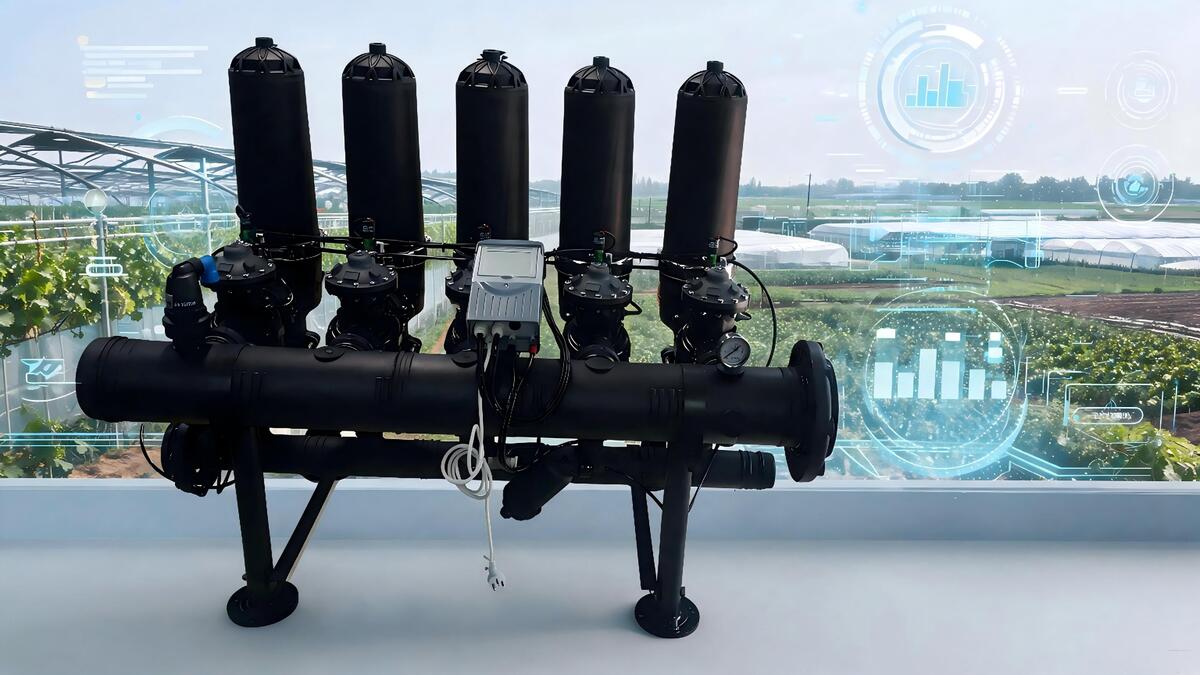
- Drain all filter housings (sand media, screen, disc filters) and backflush the media prior to winter storage; trapped water in filter tanks can freeze and crack fiberglass or steel filter housings, which cost $1,200–$5,000 to replace depending on flow capacity.
- Disconnect and store pressure sensors, flow meters, and irrigation controller units in a heated space if possible; if controllers are left mounted outside, install a weatherproof insulated cover and disconnect power to prevent surge damage.
Post-Winterization Verification and Mid-Winter Inspection Protocols
Winterization is not a set-it-and-forget-it task: post-work verification and periodic mid-winter checks catch gaps in protection before freeze events cause damage.
Post-Winterization Quality Checks
After completing all winterization steps, complete these verification checks to ensure full protection:
- Walk 100% of the system to confirm all drain valves are open (¼ turn, not fully sealed), all end caps are loosened, and no visible standing water remains in above-ground components.
- Test pressure in isolated zones with a low-pressure air gauge (10 PSI max) 24 hours after winterization to confirm no water is seeping back into lines from a leaking main valve; if pressure rises above 5 PSI without added air, it indicates a leaking supply valve that is allowing water to enter the system, which must be repaired before hard freezes.
- Document all winterization steps, including date completed, pressure used during blowout, components treated with antifreeze, and any identified repairs needed for spring, in the farm's irrigation maintenance log. Operations that keep detailed winterization logs report 32% lower annual irrigation repair costs, per 2023 Irrigation Association benchmark data, because they are able to address recurring issues proactively.
Mid-Winter Inspection Best Practices
Inspect the system at least once per month during winter, and within 24 hours of any major winter storm or extreme cold event (temperatures below 0°F for 12+ hours). Check for snow or ice buildup on center pivot spans: 2022 data from the National Weather Service shows that ice loads of ½ inch or more on pivot spans can add 3–5 pounds of weight per linear foot of pipe, leading to span collapse if not removed. Also check for flooding or standing water around valve boxes or buried main lines, which can saturate soil and increase frost penetration depth by 50% or more, leading to pipe bursts even on lines buried at the recommended depth. Finally, check for damage from wildlife or farm equipment that may have cracked lines or closed drain valves, allowing water to enter the system and freeze.
A 600-acre potato operation in northern Maine (Zone 4a) conducts monthly mid-winter inspections of their 9 center pivots and solid-set sprinkler system, and in January 2023, the team discovered that a snowplow had closed a main line drain valve while clearing a farm road, allowing meltwater to enter 800 feet of 4-inch main line. The crew was able to re-blow the line before a 3-day -15°F cold snap, preventing an estimated $7,800 in pipe replacement costs that would have delayed spring potato planting.
Common Winterization Mistakes That Lead to Costly Damage
Even well-intentioned winterization efforts can fail due to common, easily avoided errors:
- Using excessive air pressure during blowout: As noted earlier, 18% of DIY blowout jobs cause more damage than winter freezes would have, due to over-pressurization. A 2024 Ohio State University Extension survey of 220 row crop and specialty crop growers found that 31% of growers who performed their own blowout used pressures exceeding 80 PSI on thin-wall drip lines, leading to an average of $3,200 in emitter and lateral damage per operation.
- Forgetting to isolate the water supply: A leaking main shutoff valve can slowly fill lines with water over the course of the fall, even after a full blowout. 27% of winter freeze damage incidents are tied to leaking shutoff valves that reintroduce water to drained lines, per American Water Works Association data.
- Using automotive antifreeze instead of food-grade propylene glycol: Beyond toxicity and regulatory fine risks, ethylene glycol breaks down rubber seals and gaskets at a faster rate than propylene glycol, leading to premature valve failure in spring.
- Sealing drain valves and end caps tightly after winterization: Sealing the system completely traps condensation inside the pipes, which can freeze and cause damage; leaving valves ¼ turn open allows air circulation and drainage of any accumulated moisture. Operations that seal valves tight after blowout see a 21% higher rate of small pipe cracks and seal failures, per Iowa State University research.
- Neglecting electrical components: 45% of irrigation electrical failures in cold climates are caused by moisture trapped in control boxes that freezes and cracks circuit boards, leading to average repair costs of $1,900 per control panel. Many growers focus exclusively on pipes and valves, forgetting to seal control panel gaskets and add desiccant packs to absorb moisture.
Winterization Cost-Benefit Analysis: Calculating ROI for Your Operation
To quantify the value of winterization for a specific operation, calculate total annual winterization costs (labor + equipment amortization + materials like antifreeze and insulation) and compare to total avoided costs (average annual repair costs for unprotected systems in the region + avoided yield loss from delayed spring irrigation + extended equipment lifespan value). The Irrigation Association reports that properly winterized irrigation systems have a 25% longer usable lifespan than unprotected systems. For example, a center pivot system that costs $120,000 to install has a 20-year lifespan if properly winterized, compared to 16 years if unprotected, translating to $15,000 in extended value over the system's life, or $750 per year in avoided replacement costs.
For context, consider a 300-acre mixed vegetable operation in southern Iowa (Zone 5b) with a combination of drip irrigation for high-value tomatoes and peppers, and solid-set sprinklers for leafy greens. The operation’s total annual winterization costs are $1,800, including 8 hours of skilled labor at $75/hour, $300 for food-grade antifreeze and valve insulation, and $900 in annual amortized cost for a 185 CFM rotary screw air compressor. Avoided annual costs include: (1) $9,200 in average freeze repair costs for similarly sized operations in the region (USDA 2023 data); (2) $28,000 in avoided yield loss from a 4% yield reduction across 300 acres, based on $4,000 per acre average gross revenue for mixed vegetable production, during a 5-day spring irrigation delay caused by freeze damage; and (3) $620 per year in extended equipment lifespan value, as properly winterized systems last 25% longer than unprotected systems per Irrigation Association durability data. The total annual avoided value for this operation is $37,820, delivering an ROI of 2,001% on the $1,800 winterization investment.
Spring Startup Validation: Closing the Winterization Loop
Winterization success is ultimately measured by smooth, leak-free spring startup, so teams should tie winterization protocols directly to spring startup checks to identify gaps for future years. Start with a full system pressure test at 50% of operating pressure first, to identify any small cracks or leaks that developed over the winter, before bringing the system up to full operating pressure. Flush all lines thoroughly for 10–15 minutes per zone to remove any residual antifreeze, sediment, or ice particles before turning on sprinkler heads or emitters. Check for clogged emitters or sprinkler heads, which are 22% more common after winter freeze-thaw cycles, and replace damaged components before the first critical irrigation event of the growing season. Finally, update the maintenance log with any repairs made, and adjust the next year's winterization plan to address any weak points identified during startup (e.g., adding an extra drain valve to a low point that trapped residual water).
Final Recommendations for Long-Term Winterization Success
Irrigation system winterization is not a one-time checklist task, but a core component of proactive agricultural asset management. With data showing an 18:1 return on every dollar spent on proper winterization, operations that build a structured, annually reviewed winterization protocol see lower long-term equipment costs, more reliable spring irrigation access, and reduced yield risk from un