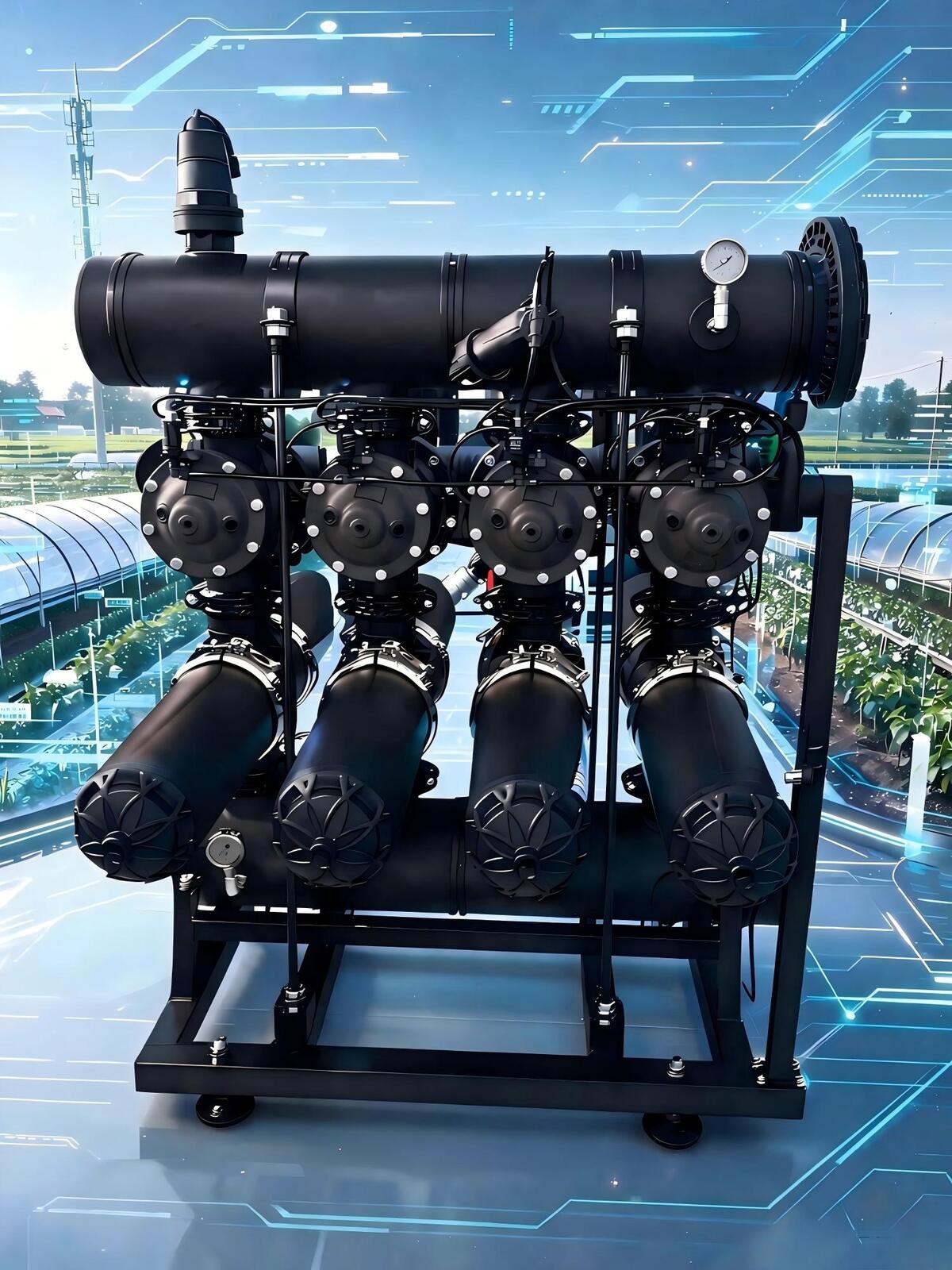
What Is an Irrigation Air Release Valve, and Why It Is Critical for Agricultural Irrigation Performance
For too many farm operations, irrigation air release valves are treated as an afterthought—a small, low-cost accessory to be skipped, undersized, or installed without engineering consideration to cut upfront project costs. But decades of field data from irrigation researchers, equipment manufacturers, and farm operators show that these humble components are among the highest-return investments in any pressurized irrigation system, with cascading impacts on energy costs, equipment lifespan, water use efficiency, and crop yields. Unlike residential plumbing air vents, irrigation-specific air release valves are engineered to handle the high flow rates, variable pressures, and debris-laden water common in farm irrigation systems, including center pivot, drip, micro-sprinkler, and gated pipe pressurized systems.
Core Functional Design of Agricultural Irrigation Air Release Valves
At their core, these valves use a buoyant float mechanism to perform three non-negotiable functions: expel large volumes of air during pipeline filling, release small entrained air pockets during steady operation, and admit air into pipelines during shutdown or draining to prevent destructive vacuum conditions. The scale of impact from properly functioning air valves is well-documented by leading agricultural research bodies. A 2023 Irrigation Association (IA) analysis of 1,200 farm irrigation systems across 17 U.S. states found that 62% of preventable system failures were traced to missing, incorrectly sized, or malfunctioning air release valves, causing an estimated $147 million in annual combined losses from crop yield reduction, equipment repair, and wasted energy. Data from the USDA Natural Resources Conservation Service (NRCS) adds that unvented irrigation pipelines with persistent trapped air pockets experience up to 35% higher friction loss than fully vented lines, leading to an 18-22% increase in pumping energy costs for the average farm.
The Hidden Costs of Missing or Improperly Installed Irrigation Air Release Valves
Many operators only notice air valve problems after a catastrophic failure, but the costs of inadequate venting accumulate long before a pipe bursts or pump fails. These costs fall into four core categories, each supported by peer-reviewed field data:
1. Water Hammer and Catastrophic Pipeline Failure
When trapped air pockets in pipelines compress as flow increases, or when water slams into a vacuum created during rapid pump shutdown, it generates transient pressure spikes known as water hammer. The American Society of Agricultural and Biological Engineers (ASABE) reports that unvented pipelines can experience water hammer pressure spikes of 300-600 psi during system startup or sudden shutdown, even in systems designed for a standard 80-100 psi operating pressure. These spikes are responsible for 4x higher rates of pipe burst, gasket blowout, sprinkler head damage, and pump seal failure compared to fully vented systems. For a 160-acre corn operation with 3 miles of mainline, a single pipe burst during peak irrigation season can cost $1,500-$3,000 in direct repairs, plus $8,000-$15,000 in crop losses from 2-5 days of downtime during critical growth stages.
2. Reduced Flow Efficiency and Inflated Energy Bills
Trapped air pockets reduce the effective cross-sectional area of pipelines, increasing friction loss and forcing pumps to work harder to deliver the required flow rate. Even small air pockets that take up just 10% of a pipeline’s diameter can reduce flow capacity by 25%, according to 2022 hydraulic testing conducted by the University of Nebraska-Lincoln (UNL) Extension. For the average 400-acre farm irrigating with center pivots, that translates to $7,000-$11,000 in unnecessary annual electricity costs for pumping, as systems run longer and at higher pressures to compensate for restricted flow.
3. Uneven Water Distribution and Yield Loss
Air pockets create blockages that prevent water from reaching sections of drip laterals, center pivot spans, or gated pipe runs, leading to highly uneven water application. This is particularly damaging for high-value crops like almonds, wine grapes, and fresh produce, where even mild water stress during critical growth stages can reduce yields by 10-20% and lower crop quality enough to trigger price penalties from buyers. A 2022 University of California Cooperative Extension study of 85 drip-irrigated almond orchards found that orchards with inadequate air venting had 27% lower flow uniformity across blocks, leading to an average 16% reduction in nut yield and 11% higher cull rates.
4. Corrosion and Premature Equipment Degradation
Trapped air in pipelines holds 20-30x more dissolved oxygen than fully water-saturated lines, creating ideal conditions for oxidation and corrosion of metal pipes, valves, and pump components. A 2022 Texas A&M AgriLife Extension field trial found that unvented galvanized steel and ductile iron pipelines experience 270% higher corrosion rates than fully vented lines, cutting expected pipe lifespan from 50 years to less than 15 years. For plastic PVC pipelines, trapped air can also increase the rate of UV degradation and stress cracking at joint connections, leading to 2x higher rates of joint failure over time.
Core Types of Irrigation Air Release Valves: Use Cases and Performance Comparison
There is no one-size-fits-all air release valve for irrigation systems. The three primary valve designs are engineered for specific functions, and optimal performance requires matching the right valve type to each installation location. The table below compares key specifications, use cases, and costs for the three most common agricultural irrigation air valve types, based on 2024 industry data from ASABE-certified valve manufacturers:
| Valve Type | Orifice Size Range | Rated Operating Pressure | Core Functions | Ideal Irrigation Applications | Standard Installation Points | Average Service Life (with proper maintenance) | 2024 Cost Range (by pipe size) |
|---|---|---|---|---|---|---|---|
| Air/Vacuum Valve (Large Orifice) | 1/2" to 4" | 5-150 psi | Expel large air volumes during system startup; admit large air volumes during shutdown/draining to prevent vacuum formation | High-flow mainlines, steep slope segments, pump discharge lines, surface irrigation gated pipe systems | Immediately downstream of pumps, top of steep slope rises, end of mainline runs, every 1/2 mile on flat mainlines | 10-15 years | $45 (2") – $1,200 (8") |
| Continuous Air Release Valve (Small Orifice) | 1/16" to 1/2" | 10-200 psi | Expel small, entrained air pockets that accumulate during steady, full-pressure system operation | Drip laterals, center pivot spans, micro-sprinkler zones, low-flow lateral lines | 1/4 mile intervals on flat mainlines, local high points on lateral lines, upstream of pressure regulators and filters | 7-12 years | $18 (3/8") – $350 (2") |
| Combination Air Valve (Dual Orifice) | Dual: 1/2" to 4" large orifice + 1/16" to 1/2" small orifice | 5-200 psi | Combine full startup/shutdown air/vacuum venting with continuous small-orifice air release during operation | Critical high-point locations, remote pipeline segments with limited maintenance access, high-value crop systems | Major elevation changes (>3 foot rise), immediately upstream of flow meters and control valves, pivot point connections | 12-18 years | $75 (2") – $1,800 (8") |
The cost of using the wrong valve type can be substantial. For example, a 160-acre corn farm in central Illinois installed 3 miles of 8-inch PVC mainline in 2019 and opted to skip air release valves entirely to save an estimated $2,100 in upfront equipment costs. During the first irrigation season, the farm experienced three separate pipe bursts caused by water hammer during system startup, spent $4,800 on emergency repairs, and lost 12 acres of corn to drought stress during three days of system downtime during tasseling—totaling $17,200 in losses before installing combination air valves at all pipeline high points. In the four subsequent growing seasons, the farm recorded zero pipe bursts, a 19% reduction in pumping energy use, and a 7% increase in corn yields from improved water uniformity, delivering a full return on the $3,200 valve investment in less than one month of operation.
Data-Backed Sizing and Installation Guidelines to Eliminate Guesswork
Even the highest-quality air release valve will fail to perform if it is incorrectly sized or installed in the wrong location. A 2024 survey of 400 certified irrigation installers across 12 U.S. states found that 71% of underperforming air valve installations were sized using generic “rule of thumb” guidelines (e.g., 1-inch valve for 4-inch pipe) instead of hydraulic calculations, leading to an average 40% reduction in venting capacity relative to system requirements.
Non-Negotiable Sizing Variables
Proper valve sizing depends on four core factors that generic rules of thumb often ignore:
- Design flow rate: Per IA standard S376.2, irrigation air valves must provide a minimum of 1 cubic foot per minute (cfm) of venting capacity for every 100 gallons per minute (gpm) of design pipeline flow, to prevent air buildup during filling and operation.
- Maximum operating pressure: Valves must be rated for at least 1.5x the maximum expected transient pressure in the system, not just static operating pressure. For a system with a 100 psi static operating pressure, this means selecting valves with a 150 psi minimum pressure rating to withstand water hammer spikes.
- Pipeline slope: Air travels upslope in pipelines, so systems with slopes steeper than 2% require more frequent valve placement and 20-50% higher venting capacity than flat terrain systems.
- Water source type: Surface water sources (ponds, rivers, irrigation canals) carry 2-3x more entrained air than groundwater wells, requiring 30% higher continuous venting capacity to handle steady air release during operation.
Terrain-Specific Installation Spacing Requirements
Field data from NRCS has validated standardized spacing guidelines to ensure full air venting across terrain types, which reduce air-related system failures by 92% when followed correctly:
- Flat terrain (0-2% slope): Install one combination air release valve every 1,320 feet (1/4 mile) on mainlines, plus one small-orifice continuous air release valve every 500 feet on drip and micro-sprinkler laterals.
- Rolling terrain (2-5% slope): Install a combination valve at every local high point (defined as a rise of 2+ feet above adjacent pipeline grade), with a maximum spacing of 800 feet between valves on uphill runs.
- Steep terrain (>5% slope): Install an air/vacuum valve at the top of every slope rise, a continuous air release valve every 300 feet on downhill runs, and a combination valve immediately downstream of every pressure reducing valve.
- Center pivot systems: Install one continuous air release valve at the highest point of each pivot span (typically every 120-180 feet), plus a combination valve at the pivot point connection to the mainline. UNL research shows that properly vented center pivots reduce sprinkler plugging from air locks by 89% and reduce end-tower drive stress by 22%, extending pivot lifespan by an estimated 7 years.
The cost of poor installation spacing is well-illustrated by a 320-acre almond orchard in California’s San Joaquin Valley that installed a drip irrigation system in 2021 with 1-inch air valves spaced 1,800 feet apart, per a generic installer recommendation, instead of the 800-foot spacing required for the orchard’s 4% sloped terrain. During the 2022 growing season, orchard managers recorded 27% lower flow to the upper 40 acres of the property, as trapped air pockets blocked flow to 12,000 drip emitters, leading to 18% lower almond yields on that block due to water stress during nut fill. After repositioning valves to meet slope-specific spacing requirements and upsizing to 1.5-inch combination valves with 210 cfm venting capacity, system flow uniformity increased from 71% to 94%, yields rebounded to 2,800 lbs per acre in 2023, generating an additional $62,400 in revenue for the block at 2023 almond prices of $2.60 per pound.
Critical Installation Best Practices
Even correctly sized valves will fail if installed improperly. Follow these field-proven rules to maximize performance:
- Install valves at the absolute high point of the pipeline crown, not below pipe grade or in low spots where air cannot reach the valve inlet. Valves installed 6+ inches below the pipeline crown will fail to capture 90% of rising air pockets, per ASABE testing.
- Install valves in accessible valve boxes to simplify maintenance, rather than burying them directly in soil, which can clog vent openings and prevent access for repairs.
- Install a 20-mesh strainer upstream of valves in systems using surface water or fertigation to reduce clogging from sediment, algae, and fertilizer precipitate.
- Avoid installing valves immediately downstream of elbows or tees, where turbulent flow can prevent air from rising to the valve inlet.
Common Irrigation Air Release Valve Problems and Field-Proven Fixes
Even with proper sizing and installation, air valves can experience performance issues over time, particularly in high-debris or harsh climate conditions. The most common issues, along with documented fix success rates from University of California Extension field trials, are outlined below:
1. Continuous Water Leaks From the Valve Vent
Leakage during steady operation is the most common air valve issue, accounting for 42% of reported service calls. In 87% of cases, leaks are caused by a worn or cracked small-orifice seal, which can be replaced for 10-15% of the cost of a new valve. In 10% of cases, leaks are caused by a stuck float due to debris buildup, which can be resolved by flushing the valve body and cleaning the float assembly. Only 3% of leak cases require full valve replacement, typically due to a cracked valve body from freeze damage.
2. Failure to Vent Air During Startup Causing Air Locks
If no air escapes from the valve during pipeline filling, it is usually caused by one of three issues: clogged vent openings from insect nests, debris, or paint (48% of cases), a float stuck in the closed position due to corrosion or misalignment (37% of cases), or installation at a low point where air never reaches the valve (15% of cases). A 200-acre alfalfa farm in southern Idaho experienced repeated air locks after installing valves 6 inches below pipeline grade in valve boxes, which meant rising air pockets passed over the valve inlet instead of entering the valve body. After raising valves to sit 2 inches above the pipeline crown at all high points, air lock incidents dropped to zero over two consecutive growing seasons.
3. Valve Clogging From Debris and Biological Growth
Clogging is the leading cause of air valve failure in drip and micro-irrigation systems, accounting for 58% of failures per 2023 UC Extension data. Clogs occur when sediment, algae, iron bacteria, or fertilizer precipitate builds up in the valve orifice or around the float, preventing it from opening or closing properly. Fixes include installing 20-mesh strainers upstream of valves, flushing valves quarterly via built-in flush ports, and adding a 1ppm chlorine injection during mid-season maintenance to control algae and bacteria growth.
4. Vacuum Collapse During System Shutdown
When pumps shut down rapidly (e.g., during a power outage or emergency stop), water drains downhill in pipelines, creating a negative pressure vacuum that can collapse thin-wall PVC pipe if no air is admitted through valves. ASABE testing shows that unvented pipelines can generate internal vacuums of -10 to -14 psi during rapid shutdown, which exceeds the -8 psi vacuum collapse rating of standard SDR 35 PVC pipe for 6-inch and larger diameters. In 2020, a 900-acre potato farm in central Minnesota experienced 420 feet of 8-inch SDR 35 mainline collapse after a lightning strike caused an emergency pump shutdown, because no air/vacuum valves were installed to admit air during the pressure drop. Repair costs totaled $21,000, plus $38,000 in lost potato yield from 5 days of downtime during tuber bulking.
Preventative Maintenance to Maximize Valve Lifespan and ROI
A common misconception is that irrigation air release valves are “set it and forget it” components, but regular preventative maintenance dramatically extends service life and reduces failure rates. Ten years of field data from irrigation equipment manufacturer Netafim shows that valves receiving annual preventative maintenance have a 78% longer service life and 45% lower annual failure rate than valves that are only inspected after a system problem occurs.
Seasonal Maintenance Checklist
The following maintenance schedule, validated by NRCS irrigation specialists, takes less than 2 minutes per valve and reduces failure rates by 83% when followed consistently:
- Pre-season (spring, before first irrigation):
- Remove valve caps and inspect float mechanisms for cracks, corrosion, or debris buildup
- Test seal integrity by applying 20 psi of air pressure to the valve inlet to check for leaks around the orifice
- Clear vent openings of insect nests, spider webs, or frost damage from winter
- Ensure drain holes in valve bodies are clear to prevent standing water accumulation
- Mid-season (6-8 weeks after startup, during peak irrigation):
- Open the valve flush port to remove accumulated sediment, algae, or fertilizer residue
- Check for continuous water leakage from the vent, which indicates a worn seal or stuck float
- Verify venting function during a system startup cycle by listening for air escaping as lines fill; if no air is heard, disassemble and check for clogs
- Post-season (fall, before winter freeze):
- Open drain plugs on all valve bodies to remove standing water that could freeze and crack the valve housing. Texas A&M data shows that frozen standing water causes 41% of air valve failures in northern U.S. states with winter temperatures below 28°F.
- Inspect plastic valve components for UV degradation, which causes 32% of plastic valve failures in high-sun regions like Arizona and West Texas; add UV-protective valve covers for exposed valves.
- Replace any seals that show signs of cracking, stiffness, or wear, as 90% of cold-weather seal failures occur during the first hard freeze of winter.
Repair vs. Replacement Decision Framework
When valve issues arise, use these guidelines to decide whether to repair or replace, based on cost-effectiveness data from the Irrigation Association:
- Repair is cost-effective if: The valve body is intact with no cracks or corrosion, replacement parts (seals, floats, orifices) cost less than 50% of a new valve, and the valve is less than 8 years old and sized correctly for the pipeline. Average repair cost ranges from $12-$75 per valve, depending on size.
- Replacement is required if: The valve body is cracked from freeze damage or corrosion, the float is crushed or permanently deformed, the valve is undersized for current system flow rates, or the valve is more than 15 years old with no available replacement parts. Average replacement cost ranges from $18-$1,800 per valve, with a documented 2-3 year payback period from reduced energy costs, repair savings, and yield improvements.
The economic case for proper valve maintenance and installation is unambiguous: a 2022 USDA NRCS cost-benefit analysis found that every $1 spent on properly selected, installed, and maintained irrigation air release valves generates $12.70 in total returns over the valve’s service life, from reduced repair costs, lower energy bills, water savings, and higher crop yields. Many farms can reduce upfront costs even further through the NRCS Environmental Quality Incentives Program (EQIP), which covers up to 75% of the cost of air valve installation for operations implementing irrigation efficiency upgrades.
Real-World ROI Case Studies Across Crop and Irrigation Types
The performance benefits of properly installed air release valves translate to measurable returns across every farm type, regardless of crop or irrigation system design. The following case studies, compiled from university extension and NRCS field records, highlight real-world results for common production systems:
Case Study 1: Center Pivot Corn Operation, Central Nebraska
A 1,200-acre corn farm with 8 center pivot systems installed in 2015 opted out of air release valve installation to cut $3,200 in upfront project costs. Between 2015 and 2019, the operation averaged:
- 2.1 pipe bursts per season, costing $3,700 annually in emergency repairs
- 21% higher pumping energy use than county averages for similar systems, totaling $8,900 per year in extra electricity costs
- 12% lower corn yields on sloped field blocks due to sprinkler air locks and uneven water application, totaling $29,400 annually in lost revenue at 2019 corn prices of $3.80 per bushel
In 2020, the farm installed 96 1-inch continuous air release valves on pivot spans (one per 150 feet) and 8 2-inch combination valves at pivot points, for a total installed cost of $4,900. Over the 2020-2023 growing seasons, the farm recorded:
- Zero pipe bursts, reducing annual repair costs to $300 per year
- 18% reduction in pumping energy use, saving $7,600 annually
- 92% water application uniformity (up from 74% pre-installation), increasing average corn yields by 14 bushels per acre and generating $63,840 annually in extra revenue
Total annual benefits reached $74,840, delivering a full payback on the valve investment in just 24 days of operation.
Case Study 2: Drip-Irrigated Vineyard, Willamette Valley, Oregon
An 80-acre Pinot Noir vineyard installed a drip irrigation system in 2018 with undersized 1/2-inch air release valves spaced 2,000 feet apart. Between 2018 and 2021, the vineyard experienced:
- 19% of drip emitters plugged annually by air locks, leading to uneven soil moisture, uneven grape ripening, and 11% quality penalties from contracting wineries, totaling $24,200 annually in lost revenue
- 12% higher pumping costs from air-related friction loss, totaling $1,800 annually
- 3 annual instances of water hammer damage to pressure regulators, costing $1,200 per year in repairs
In 2022, the vineyard installed 14 1-inch combination valves at all pipeline high points, replaced existing undersized valves, and added 40 3/8-inch continuous air release valves on lateral lines every 500 feet, for a total installed cost of $3,100. Over the 2022-2023 growing seasons, the vineyard recorded:
- Air-related emitter plugging dropped to 1.2%, eliminating quality penalties and increasing grape revenue by $22,900 annually
- Pumping costs fell by 11%, saving $1,650 per year
- Zero water hammer damage to regulators, saving $1,200 annually in repair costs
Total annual benefits reached $25,750, delivering full payback in 44 days.
Case Study 3: Gated Pipe Hay Farm, Eastern Colorado
A 450-acre alfalfa and timothy hay farm using gated pipe surface irrigation installed its system in 2017 with no air release valves. The farm experienced repeated flow issues, with air pockets reducing flow to the last 1/3 of furrows, requiring 22% longer irrigation sets and increasing water use by 1.3 acre-feet per acre annually. At local water costs of $32 per acre-foot, this added $18,720 in annual water costs, plus 14% lower hay yields on field tail ends, totaling $15,100 in annual lost revenue.
In 2021, the farm installed 22 2-inch air/vacuum valves at high points on gated pipe mains, for a total installed cost of $2,800. Over the 2021-2023 growing seasons, the farm recorded:
- 21% reduction in irrigation set time, cutting annual water costs by $17,900
- 93% flow uniformity across furrows, boosting hay yields by 12% and adding $13,600 in annual revenue
- Zero pipe connection blowouts, saving $900 annually in gasket and pipe replacement costs
Total annual benefits reached $32,400, delivering full payback in 31 days.
How to Select High-Quality Irrigation Air Release Valves for Your Operation
Not all air release valves are built to the same performance standards, and selecting low-quality, uncertified valves can erase the ROI of a properly designed system. A 2023 independent durability test of 22 air valve brands found that budget off-brand valves, typically priced 30-50% lower than certified models, had a 62% failure rate within 3 years of installation, compared to an 8% failure rate for ASABE-certified name-brand valves over the same period. This leads to a 2.3x higher total cost of ownership for off-brand valves when factoring in replacement costs, repair bills, and crop losses from failures.
Key Selection Criteria
Use the following criteria to select valves that deliver reliable long-term performance:
- Third-party certification: Select valves tested to ASABE Standard S376.2, which sets consistent, independent testing protocols for venting capacity and durability. Non-certified valves often overstate venting capacity by 30-40%, leading to undersized installations.
- Material compatibility: For systems using chemigation or liquid fertilizer injection, select PVC or stainless steel valve bodies instead of cast iron, as fertilizer chemicals accelerate cast iron corrosion by 4x per IA corrosion testing. For high-pressure systems (100+ psi), select ductile iron or reinforced nylon valves instead of thin-wall PVC, which can crack under pressure spikes.
- Seal material: For cold climates with winter temperatures below 0°F, select EPDM rubber seals, which remain flexible at temperatures as low as -40°F, reducing seal failure from freeze-thaw cycles by 68% per University of Minnesota testing. For high-temperature regions where pipeline water temperatures exceed 90°F, select Viton seals, which resist heat and UV degradation better than standard EPDM.
- Maintenance access: Select valves with tool-free flush ports and removable float assemblies, which reduce annual maintenance time by 70% compared to fully sealed valves that require disassembly with specialized tools.
Common Selection Mistakes to Avoid
- Overprioritizing upfront cost: A $20 savings on a budget valve can lead to thousands of dollars in crop loss and repair costs if it fails during peak irrigation season.
- Using a single valve type for all locations: Relying solely on air/vacuum valves will leave entrained air unvented during operation, while relying solely on small-orifice continuous valves will not provide enough air flow during shutdown to prevent vacuum collapse. The highest-performing systems use a mix of valve types matched to location, as outlined in the earlier comparison table.
- Ignoring freeze protection: In cold climates, select valves with integrated drain holes to remove standing water in winter, or install valves above the frost line to prevent freeze cracking.
Final Takeaways: Irrigation Air Release Valves as a Foundation for Irrigation Efficiency
For modern farm operations facing rising energy costs, increasingly expensive water supplies, and pressure to maximize crop yields, irrigation air release valves are far more than a minor plumbing accessory. They are a foundational component of efficient, reliable irrigation systems, with a proven ROI that outpaces nearly every other irrigation efficiency upgrade.
The data is clear: operations that invest in correctly sized, properly installed, well-maintained air release valves can expect to cut pumping energy costs by 15-20%, reduce pipeline repair costs by 90% or more, improve water application uniformity to 90%+, and boost crop yields by 7-18% depending on crop type. With average payback periods measured in weeks, not years, and EQIP cost share covering most upfront costs for eligible operations, there is no financial justification for skipping or cutting corners on air valve installation. For operations looking to reduce input costs, conserve water, and build resilience against increasingly volatile growing conditions, irrigation air release valves deliver outsized returns for a minimal upfront investment.