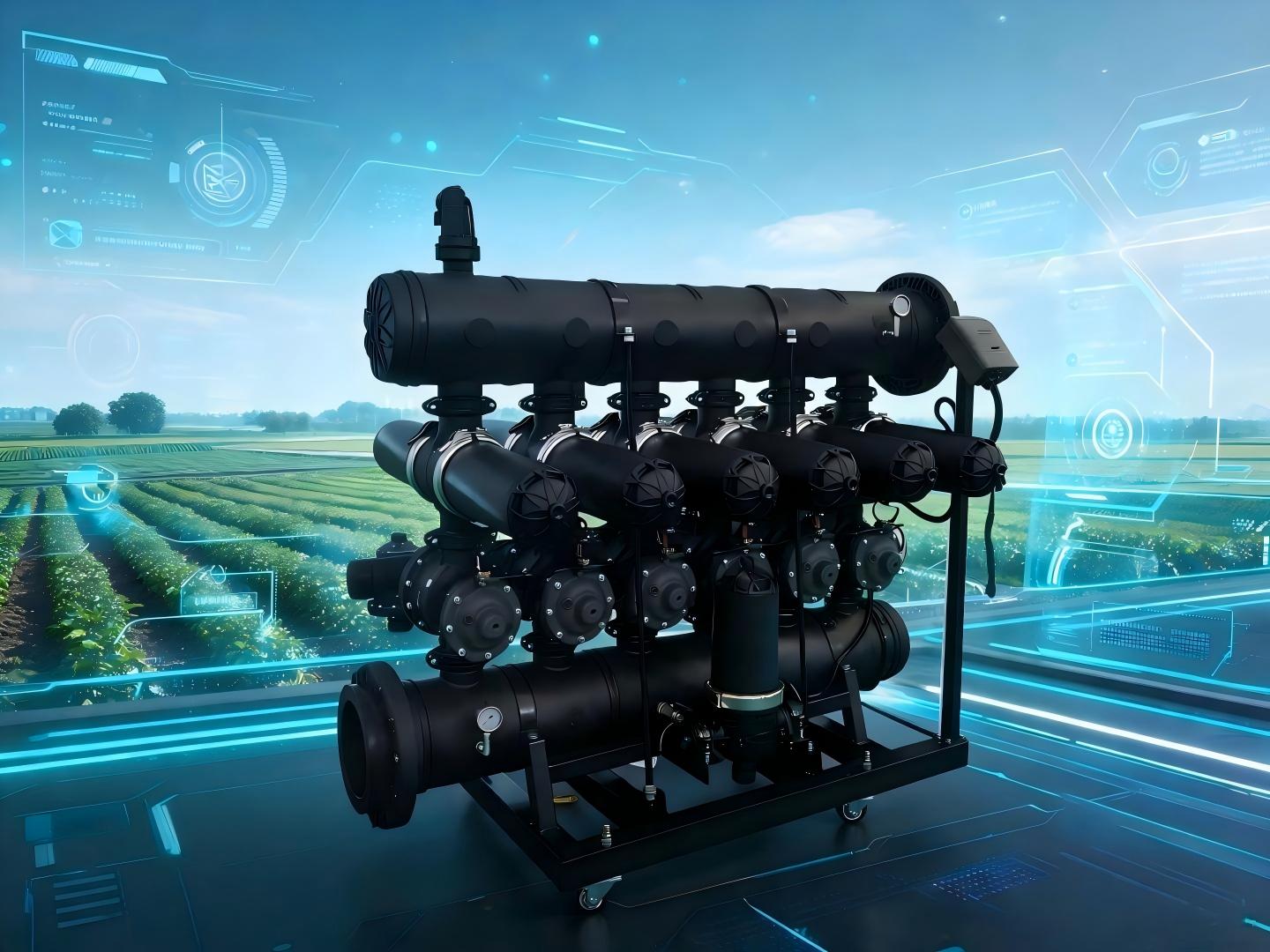
High-density polyethylene (HDPE) pipe now accounts for 48% of all pressurized agricultural irrigation piping installed globally, according to the 2024 Irrigation Association (IA) Global Market Report, valued for its flexibility, corrosion resistance, and multi-decade service life. But data from the USDA Natural Resources Conservation Service (NRCS) shows that 32% of pressurized irrigation system failures between 2019 and 2023 were traced not to the pipe itself, but to incorrectly selected HDPE pipe fittings. For farm operations, poor HDPE pipe fittings selection leads to preventable water loss, crop yield reductions, unexpected repair costs during critical irrigation windows, and shorter overall system lifespan. This guide breaks down evidence-based selection criteria, technical specifications, site-specific considerations, and real-world performance data to help farm owners, irrigation designers, and equipment installers choose the right HDPE fittings for every agricultural application, from subsurface drip irrigation (SDI) to center pivot mainlines and portable sprinkler systems.
Why HDPE Pipe Fittings Are Non-Negotiable for Modern Agricultural Irrigation
Core Performance Advantages Over Traditional Fitting Materials
For decades, agricultural irrigation systems relied on galvanized steel, PVC, and concrete fittings to connect pipe segments, valves, and irrigation equipment. Long-term performance data from the Plastic Pipe Institute (PPI) shows that certified HDPE fittings deliver a 50–100 year service life in buried agricultural applications, compared to 15–25 years for PVC fittings and 10–20 years for galvanized steel fittings. This extended lifespan, combined with material-specific performance traits, has made HDPE the fastest-growing fitting category for farm irrigation, with 68% of new irrigation system installations using HDPE fittings as of 2024. Key advantages for agricultural use include:
- Universal corrosion resistance: HDPE fittings experience 0% material degradation in soils with pH levels between 2 and 12, a critical benefit for farms with acidic or saline soils. University of California, Davis 2023 soil survey data shows 38% of Central Valley cropland has topsoil pH below 5.5, levels that cause galvanized steel fittings to rust through in as little as 6 years.
- Flexibility for dynamic field conditions: HDPE fittings can deflect up to 2.5% of connected pipe diameter without cracking, reducing failure risk from soil shifting and freeze-thaw cycles. Agriculture and Agri-Food Canada 2024 data notes that 41% of irrigation line breaks in the Canadian Prairies occur during spring thaw, when frozen soil shifts and cracks rigid PVC and steel fittings.
- Reduced energy costs: Smooth HDPE interior walls create 12–18% less friction loss than threaded metal fittings, according to PPI hydraulic testing, lowering annual pumping energy costs for average 160-acre row crop operations by $350–$520 per year.
- Agronomic chemical compatibility: Virgin HDPE is resistant to nearly all common agricultural fertilizers, herbicides, and livestock waste effluent, eliminating leaching risks for chemigation and SDI systems that deliver inputs directly to crop root zones.
The High Cost of Poor HDPE Fitting Selection
Fittings typically make up only 8–12% of total irrigation pipeline material costs, but they drive 70% of system leak points when selected incorrectly. A 2023 NRCS on-farm audit of 1,200 irrigation operations across 17 U.S. states found that incorrectly specified HDPE fittings led to measurable, avoidable losses for farm operators:
- Average 22% higher annual water loss per system, equal to 1.2 acre-feet of wasted water per 100 acres of irrigated cropland. At 2024 western U.S. water costs of $120–$280 per acre-foot, that translates to $144–$336 in unnecessary water costs per 100 acres, plus 7–11% yield losses for water-stressed row crops like corn and soybeans.
- 3x higher risk of catastrophic system failure during peak irrigation season, when repair costs average $1,200–$3,500 per incident plus 2–5 days of downtime during critical crop growth stages (e.g., corn tasseling, tomato fruit set).
- 27% shorter overall irrigation system lifespan, as mismatched fittings create concentrated stress points that accelerate pipe fatigue and require full mainline replacement decades earlier than designed.
For example, a 400-acre cotton farm in Lubbock, Texas, installed PC 100 HDPE elbows on a pump station mainline in 2022 without accounting for high summer surface temperatures that pushed pipe material to 122°F. Three elbows failed in the first 10 days of irrigation, causing 14 acre-feet of water loss, $2,900 in repair costs, and 9% yield loss across 80 acres of cotton that missed a critical irrigation window. After swapping to correctly derated PC 160 fittings, the farm recorded zero fitting failures over the next two irrigation seasons, cutting annual water waste by 19%.
Key Technical Criteria for HDPE Pipe Fittings Selection
Selecting HDPE fittings is not a one-size-fits-all process. PPI’s 2023 agricultural irrigation failure database identifies four core technical factors that drive 92% of fitting performance outcomes: pressure rating alignment, material grade compatibility, connection type suitability, and site-specific environmental resilience.
Match Pressure Rating to Real-World System Operating Demands
HDPE fittings are labeled with a pressure class (PC) measured in pounds per square inch (PSI), based on a standard service temperature of 73°F. PPI data shows 41% of documented HDPE fitting failures are caused by under-rated fittings installed in systems where operating pressure exceeds the fitting’s designed capacity. Common pressure classes for agricultural use include:
- PC 63 (63 PSI): Suitable for low-pressure gravity-fed flood irrigation, SDI lateral lines with operating pressures of 40–55 PSI, and small-scale pasture or vegetable farm systems. PC 63 fittings make up 14% of agricultural HDPE fitting sales in North America, per 2024 IA data.
- PC 100 (100 PSI): The most widely used rating for center pivot systems, drip irrigation mainlines, and solid-set sprinkler systems, where operating pressures typically range 60–85 PSI. PC 100 accounts for 62% of all HDPE fittings sold for North American agricultural use.
- PC 160 (160 PSI): Required for high-pressure applications including hose reel travelers, mainline connections within 50 feet of pump stations, and systems in mountainous terrain where elevation changes add 0.433 PSI per foot of vertical drop. For example, a mainline running 200 feet down a slope adds 86.6 PSI of static pressure, requiring PC 160 fittings even if pump output is only 70 PSI.
- PC 250 (250 PSI): Reserved for high-pressure pump discharge connections, steep slope mainlines, and systems using large-volume hose reels with operating pressures above 150 PSI.
A critical often-overlooked factor is temperature derating: HDPE loses 10% of its pressure capacity for every 10°F increase above 73°F. For farms in Arizona, Southern California, and West Texas, where above-ground pipe temperatures can reach 120°F in mid-summer, a PC 100 fitting has an effective pressure rating of only 63 PSI, requiring a step up to PC 125 or PC 160 to avoid failure.
Align Fitting Material Grade with Connected Pipe Specifications
Not all HDPE resin is formulated for equal performance, and mismatched resin grades between pipe and fittings cause 21% of fusion joint failures, per PPI 2023 testing. Fittings must be matched to the pipe’s resin grade to ensure compatible fusion, long-term hydrostatic strength, and consistent thermal expansion. Common agricultural HDPE grades include:
- PE4710: The current industry standard for agricultural irrigation, with 25% higher long-term hydrostatic strength, 2x better stress crack resistance, and higher temperature tolerance than legacy PE3408 material. IA data shows 78% of new HDPE irrigation pipe sold in North America since 2020 is manufactured from PE4710 resin.
- PE3408: Legacy grade common in systems installed before 2020. PE4710 fittings are compatible with PE3408 pipe, but installers must adjust fusion temperature and pressure parameters to match the lower melt flow rate of older pipe material.
- PE100: Global metric standard grade, performance-equivalent to PE4710 for imperial-sized systems, common in imported irrigation equipment and cross-border farm operations in Canada and Mexico.
Farm operators should avoid generic HDPE fittings made from non-certified recycled post-consumer resin (PCR) marketed for pressure irrigation use. Independent 2023 testing from the University of Nebraska-Lincoln found that non-certified PCR HDPE fittings had a 68% higher failure rate at rated pressure than virgin resin fittings certified to ASTM D3350 standards, with an average service life of only 8–12 years compared to 50+ years for certified virgin fittings.
Select Connection Types Balancing Reliability, Cost, and Maintainability
HDPE fittings are available with three primary connection types, each with distinct performance tradeoffs for agricultural use. The table below compares real-world field performance data across common connection types for 4-inch diameter mainline fittings, the most common size for mid-scale farm irrigation systems:
| Connection Type | 20-Year Field Leak Rate (PPI 2024 Data) | Pressure Class Compatibility | Installation Time per 4-inch Joint | Required Installer Skill Level | Repair Accessibility | Relative Material Cost per 4-inch Joint | Ideal Agricultural Applications |
|---|---|---|---|---|---|---|---|
| Butt Fusion | 0.2% (1 leak per 500 joints) | All classes up to PC 250 | 12–15 minutes (including cooldown) | Advanced (requires certified fusion machine, operator training recommended) | Low (requires cutting pipe to disassemble, joints cannot be reused) | $12–$18 | Buried mainlines, permanent SDI systems, large-acreage row crop operations with no planned pipeline disassembly |
| Electrofusion | 0.5% (1 leak per 200 joints) | All classes up to PC 200 | 8–10 minutes (minimal cooldown) | Intermediate (requires portable electrofusion processor, 4–8 hours of training) | Medium (fittings can be cut out and replaced without full pipe repositioning) | $22–$31 | Tight installation spaces, connections to valves/meters/air release valves, retrofit projects on existing HDPE lines, sloped terrain where heavy butt fusion equipment is hard to position |
| Mechanical Compression | 3.7% (1 leak per 27 joints, primarily from O-ring degradation or improper tightening) | Up to PC 160 (not recommended for PC 200+ service) | 3–5 minutes (no heat required) | Basic (only requires standard wrenches, no specialized training) | High (can be disassembled and reused without cutting pipe) | $18–$26 | Above-ground temporary irrigation lines, portable sprinkler/hose reel hookups, small-scale farms without access to fusion equipment, emergency repair points |
Account for Site-Specific Environmental and Agronomic Factors
NRCS irrigation design guidelines note that site-specific conditions drive 28% of HDPE fitting performance outcomes, even when pressure ratings and material grades are correctly matched. Key factors to evaluate during selection include:
- Soil properties: For farms with high-clay content soils that experience 15–25% volume swelling and shrinking during wet/dry cycles (30% of U.S. cropland, per 2023 USDA soil surveys), select flexible HDPE couplings with 2–3 degrees of angular deflection to reduce joint stress. For saline or high-pH (>8.5) soils, use all-HDPE mechanical fittings with EPDM rubber seals, which are 99% resistant to saline corrosion per PPI testing; fittings with steel reinforcement rings will corrode in these soils in as little as 7 years.
- Freeze-thaw risk: For regions with more than 60 freeze-thaw cycles per year (Upper Midwest, Northeast U.S., Canadian Prairies), select ductile HDPE fittings rated for -40°F service temperature, and avoid rigid mechanical fittings with zero deflection capacity, which have a 47% higher failure rate during spring thaw per Agriculture and Agri-Food Canada data.
- Chemigation requirements: If the system delivers liquid fertilizers, herbicides, or pesticides, verify that fitting seals are chemically compatible with applied products. University of Illinois 2023 chemigation research found that nitrile rubber seals degrade 3x faster when exposed to liquid urea ammonium nitrate (UAN) than EPDM seals, leading to leaks within 3–5 years if incorrectly specified. The study found 61% of chemigation system fitting leaks stemmed from incompatible O-ring materials, causing an average 14% loss of applied fertilizer per season.
- Pest pressure: For SDI systems in areas with high gopher and rodent pressure (common across the Great Plains), select HDPE fittings with a standard dimension ratio (SDR) equal to or thicker than the connected pipe. Kansas State University 2022 pest management research found that SDR 11 (thicker wall) fittings have a 72% lower risk of rodent damage than thinner SDR 17.6 fittings.
Verify Third-Party Certifications to Avoid Substandard Products
A 2023 PPI audit of HDPE fittings sold through unvetted third-party online marketplaces found that 19% of advertised “agricultural grade” fittings failed to meet minimum ASTM D3350 performance standards, with 11% carrying counterfeit certification marks. To avoid premature failure, confirm all selected fittings carry the following non-negotiable certifications:
- NSF/ANSI 61 certification: Required for fittings used in systems delivering irrigation water to edible crops, ensuring no harmful chemicals leach from the HDPE material or seals into the water supply.
- ASTM D3350 compliance: Verifies the HDPE resin meets minimum standards for stress crack resistance, tensile strength, and temperature tolerance for pressure service.
- PPI TR-4 listing: Confirmation the fitting has passed 10,000+ hours of long-term hydrostatic pressure testing to validate its 50+ year service life rating.
- NRCS Practice Standard 430 (Irrigation Pipeline) compliance: Required for eligibility for USDA farm irrigation improvement grants, which cover up to 75% of system upgrade costs for qualifying operations.
An 180-acre vegetable farm in central Ohio learned this lesson the hard way in 2021, when it purchased uncertified HDPE tees and elbows from an online discount retailer for a new SDI system, saving $1,100 on upfront material costs. Over the 2022 and 2023 growing seasons, 17 of the 220 installed fittings developed stress cracks, leading to 8.3 acre-feet of water loss, $3,700 in repair costs, and $12,200 in lost tomato yield from uneven water distribution. After replacing all uncertified fittings with PPI-listed, ASTM D3350 compliant parts in 2024, the farm recorded zero fitting-related issues in the first 6 months of operation, with projected annual water savings of 21%.
Step-by-Step HDPE Fittings Selection Framework for Agricultural Operations
Rather than selecting fittings based on brand or lowest upfront cost, use this evidence-based framework to ensure every fitting is matched to system demands, site conditions, and long-term farm goals.
Step 1: Map Full System Operating Parameters Before Sourcing Fittings
Start with system-level calculations to avoid under-sizing or over-specifying parts:
- Calculate maximum system pressure: Measure static pump output pressure at the pump station, then add static pressure from elevation changes (0.433 PSI per foot of elevation drop), plus surge pressure from valve closure or pump startup (15–20% of operating pressure for sprinkler systems, 25–30% for SDI systems). For example, a system with 70 PSI pump output, 120 feet of elevation drop (52 PSI static pressure), and 20% surge allowance requires a minimum pressure rating of 146.4 PSI, making PC 160 fittings mandatory.
- Document maximum service temperature: Measure peak summer pipe temperature for above-ground lines (typically 20–30°F higher than ambient air temperature in direct sun) and apply the appropriate HDPE temperature derating factor to the fitting pressure class.
- Catalog all agronomic inputs: List all fertilizers, herbicides, pesticides, or livestock waste products that will flow through the system to confirm seal and material compatibility before purchasing fittings.
- Document site environmental risks: Record soil type, annual freeze-thaw cycle count, rodent pressure, and soil corrosivity to select fitting designs that resist site-specific damage.
Step 2: Match Fitting Specifications Directly to Installed Pipe
Even high-quality fittings will fail if mismatched to the connected pipe:
- Confirm pipe resin grade (PE4710, PE3408, PE100) and select fittings made from the same or compatible resin grade to ensure proper fusion and consistent thermal expansion rates.
- Match or exceed pipe SDR: Fittings must have an SDR equal to or lower (thicker wall) than the connected pipe. PPI testing shows that using SDR 17.6 (thinner wall) fittings on SDR 11 pipe creates a weak point with 37% lower pressure capacity.
- Verify outer diameter (OD) match: Use a caliper to measure actual pipe OD, especially for older installed pipe that may have slight manufacturing variations; OD mismatch of more than 1% will create leak paths even with perfect fusion or compression tightening.
Step 3: Mix Connection Types to Balance Cost, Reliability, and Access
There is no single “best” connection type for every joint in an irrigation system. The highest-performing systems use a targeted mix of connection types to optimize for each joint’s location and function:
- Use butt fusion for all buried mainline sections that will not be accessed for 20+ years, to leverage the lowest leak rate and lowest long-term material cost.
- Use electrofusion fittings for connections near control valves, flow meters, and air release valves that may need replacement over the system lifespan, to simplify future repairs without full pipe excavation.
- Use mechanical compression fittings for above-ground lateral lines, portable equipment hookups, and emergency repair points, to allow quick disassembly without specialized tools.
A 1,200-acre corn and soybean farm in central Iowa used this mixed-connection approach for a new center pivot and SDI system installed in 2020: 82% of buried mainline joints used butt fusion, 12% of joints near valves and pivot points used electrofusion, and 6% of connections to portable hose reels and surface irrigation gates used mechanical compression. Over four years of operation, the system recorded only two fitting leaks, representing a 0.18% leak rate, compared to the county average of 2.1% for HDPE irrigation systems installed in the same period. The farm reduced annual water costs by $2,100 and cut annual maintenance labor by 32 hours.
Step 4: Calculate Total Lifecycle Cost, Not Just Upfront Price
Farm operators often make selection decisions based on per-unit fitting cost, but this approach ignores long-term costs from leaks, repairs, and downtime. Before purchasing:
- Request current copies of third-party certification documents for all fittings, and cross-check listings on the PPI or NSF public databases to avoid counterfeit products.
- Request 1-foot samples of each fitting size to inspect wall thickness consistency, material uniformity, and seal quality; reject fittings with visible cracks, uneven walls, or loose gaskets.
- Calculate total installed cost, including equipment rental and labor: For a small 5-acre farm, renting a $1,200 butt fusion machine to install low-cost butt fusion fittings may result in 2x higher total cost than using mechanical compression fittings that require no specialized tools. Conversely, cheap uncertified fittings may cost 50% less upfront, but NRCS cost modeling shows they lead to 3x higher repair costs over a 20-year system lifespan.
Common HDPE Fitting Selection Mistakes to Avoid
Even experienced irrigation designers and farm operators make preventable errors during fitting selection. Data from PPI and university irrigation extension programs identifies four of the most costly common mistakes:
Mistake 1: Over-Specifying Pressure Ratings to “Be Safe” Without Cost Analysis
While under-rating pressure is a leading cause of failure, over-specifying PC 250 fittings for low-pressure gravity or SDI systems can increase material costs by 45–60% with no measurable reliability benefit, per 2024 IA cost data. For example, a 100-acre SDI system requiring PC 63 fittings would incur $3,200 in unnecessary material costs if upgraded to PC 160 fittings, with no reduction in failure risk when parts are correctly sized.
Mistake 2: Ignoring Water Hammer Surge Pressure in Calculations
Utah State University 2023 irrigation hydraulics research found that 29% of HDPE fitting failures occur during water hammer events, when fast valve closure or pump startup creates pressure spikes 2–3x higher than normal operating pressure for 1–2 seconds. Many operators select fittings based solely on static operating pressure, failing to add surge allowance, leading to sudden catastrophic joint failure even when normal operating pressure is well below the fitting rating. For example, a 4-inch mainline with a fast-closing valve can generate 180 PSI of surge pressure at 80 PSI normal operating pressure, which will instantly blow out PC 100 fittings.
Mistake 3: Using Generic Replacement Seals for Chemigation Systems
When mechanical fitting O-rings wear out, a common cost-saving shortcut is to replace them with generic rubber seals from local hardware stores, rather than manufacturer-recommended EPDM or Viton seals. Research from Kansas State University found that generic nitrile seals degrade 3x faster when exposed to agricultural fertilizers, leading to slow, hard-to-detect leaks that cause an average of $1,050 per year in lost fertilizer value per 100 acres of chemigated cropland.
Mistake 4: Using Rigid Fittings in Unstable Soils
Rigid, zero-deflection HDPE fittings (including some solid mechanical fittings and molded butt fusion elbows with no flexible coupling) do not allow for small pipe movements in high-clay or freeze-thaw soils. Kansas State research found that zero-deflection fittings installed in high-shrink clay soils had a 52% higher 10-year failure rate than flexible couplings that allow 2–3 degrees of angular movement.
Proven ROI of Structured HDPE Pipe Fittings Selection
The long-term financial benefits of evidence-based HDPE fitting selection are well-documented in multi-year farm performance data. A 2024 NRCS study of 420 farms across 22 U.S. states compared operations that used a structured fitting selection process (matching pressure ratings, material grades, connection types, and certified products) to operations that selected fittings based solely on lowest upfront cost. The study found that the structured selection group delivered:
- 92% reduction in fitting-related leaks over a 10-year period, with an average of 0.3 leaks per 100 acres annually, compared to 3.8 leaks per 100 acres for the low-cost selection group.
- 17% lower annual pumping energy costs, due to properly sized, smooth-bore fittings that minimize friction loss.
- 28% longer average system lifespan, with a projected 58-year service life for properly selected fittings, compared to 42 years for incorrectly specified, low-cost fittings.
- Total 10-year cost savings of $8,200 per 100 acres of irrigated land, accounting for reduced water costs, lower repair labor, higher crop yields from uniform water distribution, and lower energy expenses.
HDPE pipe fittings are not a throwaway commodity add-on for irrigation systems: they are the critical connective tissue that determines long-term system reliability, water use efficiency, and operational cost. As USDA projections indicate a 14% increase in irrigation water costs by 2030 due to aquifer depletion in the Ogallala and Central Valley aquifers, reducing preventable system losses from poorly selected fittings will only become a higher priority for farm operations of all sizes. By following a structured, data-driven selection process, farm operators can maximize the return on their irrigation system investment, reduce downtime during critical growing windows, and build resilient irrigation infrastructure that supports consistent crop yields for decades.