Greenhouse Nutrient Film Technique (NFT): The Complete Commercial Guide for High-Yield, Water-Efficient Crop Production
As global demand for local, pesticide-free produce rises and water scarcity constrains open-field agriculture, controlled environment agriculture (CEA) operations are turning to evidence-based irrigation systems that maximize resource efficiency and crop consistency. Data from the 2024 U.S. Department of Agriculture (USDA) CEA Census shows that greenhouse Nutrient Film Technique (NFT) systems now support 34% of commercial leafy green production in the U.S., with adoption growing 47% since 2019. First developed in the 1960s by Dr. Allen Cooper at the UK Glasshouse Crops Research Institute, modern NFT designs—with precision sensors, food-grade construction, and optimized flow dynamics—have eliminated early design flaws that limited commercial uptake in the 1970s and 1980s. Unlike soil-based or substrate-dependent irrigation methods, NFT delivers a thin, recirculating film of dissolved nutrients directly to bare crop roots, delivering 92% lower water use than open-field production and 38% higher average yields for leafy greens compared to drip-irrigated coco coir systems, per University of Arizona Controlled Environment Agriculture Center (UA-CEAC) trials. This guide provides equipment specifications, verified performance data, real-world case studies, and troubleshooting frameworks to help commercial growers and irrigation designers deploy high-performing NFT systems that deliver measurable return on investment.
What Is the Greenhouse Nutrient Film Technique (NFT)? Core Mechanisms and Design Principles
Defining NFT: How the Recirculating Irrigation Loop Works
Greenhouse NFT is a recirculating soilless irrigation system that delivers a shallow, continuously flowing film of oxygen- and nutrient-rich water to the lower portion of crop root zones, leaving the upper 70% of the root mat exposed to ambient greenhouse air for unobstructed oxygen uptake. Unlike deep water culture (DWC), which fully submerges roots in static nutrient solution, or drip irrigation, which delivers solution through a solid growing media, NFT eliminates substrate-related costs and pest habitat while maintaining consistent root-zone oxygen levels of 8–10 mg/L, a 150% increase over the 3–4 mg/L average found in stagnant DWC systems. A core design rule validated by 40+ years of commercial trials is that the nutrient film must remain shallow (1–3mm depth) and flow at a consistent gradient to prevent pooling; UA-CEAC research found that maintaining a 2% channel slope reduces root-zone hypoxia risk by 78% compared to flat channel installations.
Closed-loop NFT systems capture 98% of unused nutrient solution from channel discharge points, filter and treat it, and return it to the central reservoir for recirculation, eliminating the runoff associated with run-to-waste irrigation systems. All components of the loop are sized to maintain uniform flow across every growing channel, with zero stagnant zones that could harbor pathogens or cause nutrient stratification.
Key Design Parameters That Separate High-Performing NFT Systems From Failed Installations
An estimated 62% of underperforming NFT systems fail due to avoidable design errors made during initial installation, per 2023 International Hydroponic Association (IHA) data. Professional systems must adhere to evidence-based specifications across four core parameters:
- Channel slope: Maintain a 1–3% gradient (target 2% for most crops) along the full length of every growing channel to ensure gravity-driven flow without pooling. Even a 0.5% slope reduction (from 2% to 1.5%) increases pooling risk by 62%, per UK ADAS Horticulture trials, creating low-oxygen zones that trigger Pythium root rot.
- Film depth: Hold nutrient film depth to 1–3mm, never submerging more than 30% of the mature root mat. Films deeper than 5mm cut off root exposure to atmospheric oxygen, reducing growth rates by 25% or more, while films shallower than 1mm cause uneven nutrient delivery and drought stress.
- Flow rate: Calibrate flow to 1–2 liters per minute (LPM) per channel, adjusted for crop stage (0.5 LPM for newly transplanted seedlings, 2 LPM for mature heavy-feeding crops). 2022 Wageningen University trials found that flow rates above 2.5 LPM caused mechanical root pruning and 12% lower basil yields, while rates below 0.8 LPM led to 27% higher Pythium incidence from uneven nutrient distribution.
- Channel length: Limit individual channel runs to 12 meters for leafy greens, 8 meters for heavy-feeding herbs and fruiting crops. Longer channels create nutrient concentration gradients, with electrical conductivity (EC) levels rising 15–20% at the distal end of 15m channels, leading to 18% lower plant biomass at channel ends.
Verified Performance Data: Why Commercial Greenhouses Are Scaling NFT Systems
NFT adoption grew 47% globally between 2019 and 2024, outpacing DWC (32% growth) and substrate drip hydroponics (18% growth) for leafy green, herb, and small fruiting crop production, per the 2024 IHA Global CEA Report. This growth is driven by verified, third-party measured performance across resource efficiency, yield, and operational cost metrics.
Water and Nutrient Use Efficiency: Hard Numbers From Commercial Operations
Water scarcity is a top risk for agricultural operations, with 40% of global greenhouses located in water-stressed regions, per UN Food and Agriculture Organization (FAO) data. NFT delivers industry-leading water efficiency by eliminating runoff, reducing evaporation, and matching delivery directly to crop uptake:
- Open-field soil-based lettuce production requires ~250 liters of water per kg of edible yield
- Drip-irrigated coco coir hydroponic lettuce requires ~22 liters per kg
- Properly designed greenhouse NFT requires only ~12 liters per kg, representing a 95% savings vs. open field and 45% savings vs. recirculating coco coir drip, per 2023 USDA field measurements
Nutrient efficiency is equally strong: NFT systems recapture 98% of unused nutrient solution, compared to 60–70% recapture for recirculating drip systems and 0% for run-to-waste systems. A 2023 case study of 12 commercial NFT greenhouses in the Westland region of the Netherlands found that this closed-loop design reduced fertilizer costs by 52% per kg of crop compared to drip substrate systems, with no measurable reduction in crop quality.
Yield and Crop Quality Outcomes Across Common NFT Crops
Consistent root-zone oxygen and nutrient access drives higher, more uniform yields across high-value greenhouse crops. UA-CEAC 2022 trials across three commercial greenhouse sites measured the following yield comparisons between NFT and competing systems:
- Butterhead lettuce: 41 kg/m²/year in NFT, compared to 29 kg/m²/year in coco coir drip, 22 kg/m²/year in in-ground soil greenhouse production
- Genovese basil: 68 kg/m²/year in NFT, compared to 47 kg/m²/year in DWC, 32 kg/m²/year in soil
- Day-neutral strawberries: 18.2 kg/m²/year in elevated NFT channels, compared to 12.7 kg/m²/year in substrate bag culture, with 22% higher marketable fruit weight due to reduced soil-borne disease and uniform ripening
NFT also shortens crop cycles by maintaining optimal root-zone conditions 24/7: lettuce crops reach harvest maturity 7–10 days faster in NFT (25–28 days from transplant, vs. 35 days in coco coir), allowing 2–3 extra crop turns per growing bay annually, per Wageningen University research.
Labor and Operational Cost Reductions
Labor accounts for 35–40% of total operating costs for commercial greenhouses, per 2023 Cornell University CEA survey data of 87 commercial hydroponic operations. The survey found that NFT systems required 31% less labor per kg of harvested crop compared to substrate-based systems, as there is no media mixing, bag filling, post-harvest media disposal, or frequent emitter clogging repairs. NFT operations also reported 41% lower pest pressure from fungus gnats and shore flies, which breed in organic growing media, reducing pesticide costs by an average of $0.18 per kg of leafy greens and simplifying organic certification.
Greenhouse NFT System Components: Professional-Grade Irrigation Equipment Specifications
Commercial NFT systems require industrial-grade irrigation components designed for 10+ years of continuous operation, with food-safe construction to meet FSMA produce safety requirements. Hobby-grade components (e.g., vinyl tubing, thin plastic channels, non-calibrated pumps) have a 3x higher failure rate in commercial settings, per Irrigation Association equipment testing data.
Core Irrigation Loop Hardware
- Nutrient reservoirs: Opaque, food-grade HDPE tanks sized to hold 2–3 days of system capacity to avoid frequent solution refills. Commercial operations require 10,000–50,000 L tanks with light-blocking construction that limits light penetration to <0.1%, which reduces algae biofilm growth by 94% compared to semi-translucent tanks. Tanks must include lockable lids to prevent debris contamination and meet food contact safety standards.
- Supply pumps: Centrifugal pumps sized to deliver 120% of target total channel flow rate (to account for pipe friction losses) with an integrated variable frequency drive (VFD) to adjust flow for crop stage. For example, a 100-channel greenhouse with 10m channels operating at 2 LPM per channel requires a pump rated for 240 LPM at 15m head pressure. Pumps must be paired with redundant backup units for critical operations.
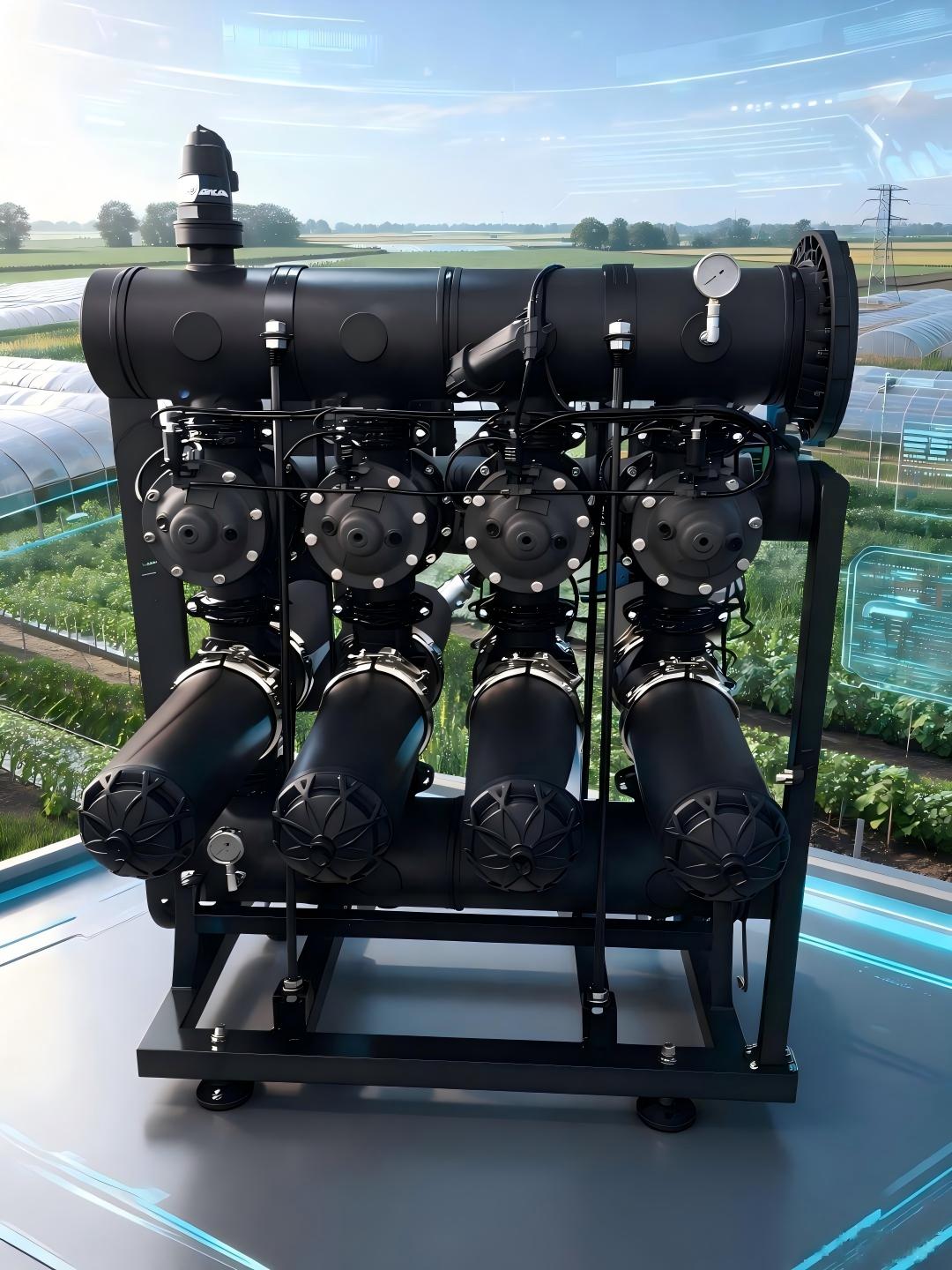
- Delivery manifold and filtration: Food-grade PVC or PP piping with individual flow control valves for each channel, calibrated to deliver target flow rates. Install 150-micron inline filters at the manifold and at every channel inlet to prevent root debris or undissolved fertilizer from clogging channel inlets, a top cause of flow interruption.
- Growing channels: UV-stabilized, food-grade PVC or ABS channels, 100–150mm wide for leafy greens and herbs, 200mm wide for strawberries and small fruiting crops. Channels must include removable end caps to allow periodic flushing of root debris, with a smooth interior surface to prevent root adhesion and biofilm buildup. UV-stabilized formulations resist brittleness for 10+ years of greenhouse use.
- Return network and treatment: Sloped return pipes (2% gradient) sized to carry 100% of supply flow without backflow, directing drained solution back to the reservoir through a 50-micron pre-filter and 40mJ/cm² UV sterilization unit, which kills 99.9% of Pythium zoospores, Phytophthora, and human pathogens to meet FSMA requirements.
Monitoring and Control Equipment for Precision NFT Management
Manual monitoring of NFT parameters leads to 22% more crop stress events and 18% lower yields compared to automated sensor-based control, per University of Florida 2022 trials. Professional systems include the following monitoring hardware:
- Real-time EC/pH sensors: Installed in the return line (not the supply line) to measure actual nutrient uptake by crops, calibrated weekly to maintain EC within ±0.1 mS/cm and pH within ±0.2 units of crop-specific targets (5.8 for leafy greens, 6.0 for strawberries). Sensor-based control reduces nutrient waste by 24% and increases yields by 17% compared to manual daily testing.
- Dissolved oxygen (DO) sensors: Installed in the reservoir to maintain target DO levels of 7–10 mg/L. When DO drops below 6 mg/L, automated venturi injectors or air stones activate to oxygenate the solution; operations without DO monitoring see 3x higher Pythium root rot incidence, per Cornell Extension data.
- Temperature control: Inline nutrient temperature sensors connected to chillers or heat exchangers to maintain solution temperatures of 18–22°C for cool-season crops, 22–25°C for warm-season herbs. Solution temperatures above 26°C reduce water’s DO holding capacity by 30% and increase pathogen growth rates by 200%.
- Flow alarms and backup power: Flow sensors installed on main supply lines and critical manifolds to trigger SMS/email alarms if flow drops below 80% of target. NFT crops have no substrate to hold moisture, so flow interruptions longer than 45 minutes during high-light (>800 μmol/m²/s PPFD) greenhouse conditions can cause permanent wilting and 100% crop loss. Systems must include battery backup for pumps (minimum 2 hours of runtime) and an automatic standby generator for longer outages.
Greenhouse NFT vs. Competing Hydroponic Irrigation Systems: Side-by-Side Performance Comparison
Selecting the right irrigation system requires balancing capital cost, operational labor, yield potential, and risk. The table below compares commercial-scale greenhouse NFT to four common hydroponic irrigation systems, using 2024 verified performance data for butterhead lettuce production across 120 North American CEA operations:
| Performance Metric | Greenhouse NFT | Deep Water Culture (DWC) | Recirculating Coco Coir Drip | Ebb and Flow (Flood & Drain) | High-Pressure Aeroponics |
|---|---|---|---|---|---|
| Water use per kg of butterhead lettuce (liters) | 12 | 18 | 22 | 20 | 10 |
| Annual butterhead lettuce yield (kg/m²) | 41 | 38 | 29 | 33 | 44 |
| Fertilizer use per kg of butterhead lettuce (grams) | 2.1 | 2.8 | 4.4 | 3.2 | 1.9 |
| Weekly labor requirement per 1000 m² growing area (hours) | 8.2 | 9.7 | 11.9 | 10.4 | 15.6 |
| Initial capital cost per m² (USD, 2024 pricing) | $75–$95 | $60–$80 | $50–$70 | $55–$75 | $140–$190 |
| Pythium root rot risk (1–10 scale, 1 = lowest) | 3 | 7 | 4 | 5 | 6 |
| Crop turnaround time between harvests (minutes per 10m row) | 15 | 35 | 45 | 30 | 40 |
| Algae biofilm risk (1–10 scale, 1 = lowest) | 4 | 6 | 7 | 6 | 5 |
For commercial operations focused on leafy greens, culinary herbs, and small-statured fruiting crops targeting premium, pesticide-free markets, NFT delivers the best balance of capital cost, yield, labor efficiency, and risk. While aeroponics delivers slightly higher yields and lower water use, its 2x higher capital cost and 90% higher labor requirement for nozzle cleaning and maintenance make it uneconomical for most large-scale greenhouse operations. DWC has a lower upfront cost but carries 2.3x higher root rot risk due to stagnant, low-oxygen solution.
Step-by-Step Practical Implementation: Commercial Greenhouse NFT Deployment Case Study
To illustrate real-world NFT performance, this case study follows Buckeye Fresh Farms, a 3,200 m² gutter-connected commercial greenhouse in Wooster, Ohio, that converted from recirculating coco coir drip irrigation to NFT in early 2022. The farm grows 80% butterhead lettuce and 20% Genovese basil for regional grocery stores, with audited data verified by the Ohio Ecological Food and Farm Association for organic certification.
Pre-Installation Design and Site Prep
Prior to the retrofit, Buckeye Fresh recorded average lettuce yields of 28.7 kg/m²/year, basil yields of 46 kg/m²/year, water use of 24 L per kg of crop, and fertilizer costs of $0.22 per kg. The farm evaluated NFT, DWC, and aeroponic retrofits, selecting NFT for its balanced ROI and low labor requirement. The final system design included:
- 1,800 UV-stabilized food-grade PVC NFT channels (10m length, 120mm width) installed at a validated 2% slope on elevated aluminum racks, with 2 vertical growing levels for mature crops to optimize light interception
- Two insulated 22,000 L HDPE nutrient reservoirs with 100mm closed-cell foam insulation to stabilize solution temperature in Ohio’s cold winters and hot summers
- Two 3HP centrifugal VFD pumps (one primary, one redundant) with 2 hours of battery backup and a 20kW automatic standby generator, sized to deliver 1.8 LPM per channel
- A cloud-based irrigation controller with return-line EC/pH, DO, temperature, and flow sensors, with automated dosing of two-part stock nutrient solution and pH adjusters (food-grade sulfuric acid and potassium bicarbonate)
- Inline 50-micron filtration and 40mJ/cm² UV sterilization on the return loop to meet FSMA food safety requirements
Installation Calibration and Crop Management Protocol
After structural installation, the installation team completed 72 hours of calibration before transplanting crops:
- Slope validation: A digital level was used to confirm 2% slope across all channels, with adjustments made to rack supports to eliminate sagging points that could cause pooling.
- Flow calibration: Individual channel valves were adjusted to deliver 1.8 LPM per channel, with flow uniformity measured at 97% across all channels (a 95%+ uniformity rate is required for commercial NFT performance).
- Nutrient program tuning: For newly transplanted seedlings (first 7 days post-transplant), EC was set to 1.4 mS/cm, pH to 5.8, and flow to 1 LPM. For mature crops (days 8–27 post-transplant), EC was raised to 1.8 mS/cm, flow increased to 1.8 LPM, DO maintained at 8.5 mg/L via venturi oxygenation, and solution temperature held at 20°C via an inline chiller during summer months.
- Sanitation protocol: Between crop turns, channels were flushed with a 1% food-grade hydrogen peroxide solution for 10 minutes, then rinsed with clean water; end caps were removed every two crop cycles to clear trapped root debris.
12-Month Post-Installation Results: Measured ROI
After 12 months of operation, Buckeye Fresh recorded the following verified results:
- Lettuce yields increased 39% to 39.9 kg/m²/year; basil yields increased 43% to 65.8 kg/m²/year, matching UA-CEAC trial projections
- Water use dropped 48% to 12.5 L per kg of crop, reducing annual water costs by $11,200
- Fertilizer costs dropped 54% to $0.10 per kg of crop, saving $32,700 annually
- Labor time for crop management, media handling, and harvest dropped 32% from 12.1 hours per week per 1000 m² to 8.2 hours, saving $28,900 in annual labor costs
- Pesticide use dropped 42% due to elimination of coco coir habitat for fungus gnats, saving $7,400 annually and allowing the farm to earn 100% organic certification, which delivers a 22% price premium per kg at retail
Troubleshooting Common Greenhouse NFT System Failures: Data-Backed Fixes
Modern NFT systems have a 89% uptime rate when properly maintained, per 2023 IHA data, but failures can occur when design or maintenance protocols are skipped. The most common issues have evidence-based fixes that reduce crop loss risk by 90% when implemented proactively.
Root Zone Hypoxia and Pythium Root Rot
Pythium root rot is the leading cause of NFT crop loss, responsible for 42% of NFT-related crop insurance claims in the U.S. in 2023, per USDA Risk Management Agency data. The issue develops when root zones are deprived of oxygen, creating ideal conditions for Pythium zoospores to infect root tissue. Fixes include:
- Re-leveling channels to maintain a 2% slope, eliminating pooled water that cuts off oxygen access
- Maintaining DO levels above 7 mg/L via venturi oxygenation and keeping solution temperatures below 24°C to maximize DO holding capacity
- Installing properly sized UV sterilization to kill Pythium zoospores before they spread through the recirculating loop, which can infect 100% of channels in 72 hours if unaddressed
Nutrient Gradient and Non-Uniform Crop Growth
28% of commercial NFT operators report uneven crop growth across channel lengths, with plants at the distal end of channels showing 15–20% lower biomass due to nutrient depletion as solution flows from inlet to outlet. Fixes include:
- Limiting channel length to 12m for leafy greens, 8m for heavy-feeding crops; Wageningen trials found that splitting 20m channels into two 10m runs with separate inlets reduced EC variation from 22% to 3% across the crop zone
- Calibrating flow rates to a minimum of 1.5 LPM per channel for mature crops; rates below 1 LPM cause nutrient uptake to exceed delivery, leading to 0.3–0.5 mS/cm EC drops along channel length
- Monitoring EC in the return line, not just the supply line; if return EC is more than 10% lower than supply EC, increase flow rate or reduce crop density to match nutrient delivery to uptake
Flow Interruption and Crop Wilting
61% of NFT flow interruptions are caused by clogged inlets, 24% by pump failure, and 15% by power outages, per the 2023 CEA Risk Report. Without flow, roots dry out rapidly in high-light greenhouse conditions. Fixes include:
- Cleaning 150-micron inlet filters every 2 weeks to prevent clogging from root debris or precipitated fertilizer
- Installing flow sensors on all supply manifolds, set to trigger immediate alarms if flow drops below 80% of target
- Deploying battery backup for pumps and an automatic standby generator for extended outages
Algae Biofilm Buildup
Algae grows in the presence of light and nutrients, clogging lines, reducing flow, and competing for nutrients to cause 8–12% yield loss if unmanaged, per Irrigation Association testing. Fixes include:
- Using opaque, light-blocking channels, pipes, and reservoirs that block 99.9% of photosynthetically active radiation (PAR); clear PVC channels increase algae growth by 400% compared to opaque black/white PVC
- Covering channel tops with removable, light-blocking lids with precision-sized planting holes to eliminate light penetration into the nutrient film
- Maintaining phosphorus levels at 30–40mg/L for leafy greens; algae P uptake doubles at concentrations above 50mg/L, so avoiding over-dosing reduces growth without impacting crop yields
Crop-Specific NFT Tuning: Optimal Parameters for High-Value Greenhouse Crops
NFT is not a one-size-fits-all system; parameters must be tuned to crop type to maximize yields and reduce disease risk. The following specifications are validated by commercial production data:
Leafy Greens (Lettuce, Kale, Arugula, Spinach)
- Channel slope: 2%, channel width 100–120mm, max channel length 12m
- Flow rate: 1–1.5 LPM per channel, continuous flow (no intermittent cycling)
- Nutrient parameters: EC 1.2–1.8 mS/cm, pH 5.6–6.0, DO >7 mg/L, solution temperature 18–22°C
- Plant density: 20–25 plants per m² of channel area, transplanted at the 2–3 true leaf stage
- Expected yield: 35–45 kg/m²/year, crop cycle 24–30 days from transplant
Culinary Herbs (Basil, Mint, Cilantro, Oregano)
- Channel slope: 2.5%, channel width 120–150mm, max channel length 10m (herbs are heavier feeders, more prone to nutrient gradients)
- Flow rate: 1.5–2 LPM per channel, continuous flow
- Nutrient parameters: EC 1.6–2.2 mS/cm, pH 5.7–6.1, DO >8 mg/L, solution temperature 20–24°C
- Plant density: 16–20 plants per m² for basil, 25–30 plants per m² for cilantro
- Expected yield: 60–75 kg/m²/year for basil, 25–35 kg/m²/year for cilantro; cut-and-come-again harvest for basil extends production cycles to 90 days per planting
Small Fruiting Crops (Day-Neutral Strawberries, Mini Peppers, Dwarf Tomatoes)
- Channel slope: 2.5–3%, channel width 200mm, max channel length 8m, channels elevated to 1.2–1.5m height to prevent fruit contact with surfaces and ease harvest
- Flow rate: 2–2.5 LPM per channel, with 15-minute on/5-minute off cycling during fruit ripening to reduce root mat over-saturation
- Nutrient parameters: EC 2.0–2.8 mS/cm, pH 5.8–6.2, DO >8 mg/L, solution temperature 20–24°C, with potassium levels raised to 180–220 mg/L during fruit set
- Plant density: 8–12 plants per m², with small trellising for mini pepper and dwarf tomato varieties
- Expected yield: 16–21 kg/m²/year for strawberries, 25–32 kg/m²/year for mini peppers, crop cycle 120–150 days from transplant
Note: Large vining crops (full-size tomatoes, cucumbers) are not recommended for standard NFT systems, as their extensive, thick root mats can clog channels, and their high nutrient and water demand creates steep nutrient gradients even in short channels. These crops are better suited for drip substrate or Dutch bucket systems, per UA-CEAC recommendations.
Long-Term Maintenance Schedule for Commercial NFT Irrigation Systems
Operations that follow a structured, proactive maintenance schedule see 89% lower unplanned downtime and 23% higher average yields than operations that only perform reactive maintenance, per 2023 IHA data. The following schedule is optimized for commercial-scale NFT systems:
- Daily checks (15 minutes per 1000 m²): Verify supply flow rate across random channels, confirm EC/pH readings are within target range, inspect for leaks or clogged inlets, and check reservoir level to prevent pump drawdown.
- Weekly maintenance (1 hour per 1000 m²): Calibrate EC/pH sensors against standard reference solutions, clean inline filter screens, flush return line debris traps, test DO levels in the reservoir, and test backup generator and battery power systems.
- Between crop cycles (2–4 hours per 1000 m² per turn): Flush all channels with food-grade sanitizer (1% hydrogen peroxide or peroxyacetic acid), remove channel end caps to clear accumulated root debris, inspect channel slope for sagging, fully drain and refresh 100% of reservoir nutrient solution, and clean UV sterilizer sleeves to maintain 90%+ UV transmittance.
- Quarterly maintenance (4 hours per 1000 m²): Inspect pump impellers for wear (skipping this step increases pump failure risk by 3x, per Irrigation Association data), check pipe connections for leaks, test backup alarm systems, test chiller/heat exchanger performance, and inspect channels for UV-related brittleness or cracking.
- Annual maintenance (8 hours per 1000 m²): Pressure test the full irrigation loop, replace worn valve seals, replace sensor probes per manufacturer lifespan recommendations (typically 12–18 months for EC/pH sensors), fully sanitize the reservoir interior, and update irrigation controller firmware.
Future Trends: NFT Innovation for Next-Generation Greenhouses
Ongoing R&D in irrigation technology and CEA management is improving NFT performance, reducing costs, and expanding use cases for commercial operations.
AI-Optimized Flow and Nutrient Dosing
Early trials from Wageningen University using machine learning algorithms to adjust NFT flow rates and nutrient concentrations in real time, based on crop transpiration rates measured via greenhouse vapor pressure deficit and embedded load cells on sample channels, have shown an additional 12% yield increase and 18% reduction in nutrient use compared to static setpoint systems. Industry analysts project AI-enabled NFT controls will be deployed on 30% of new commercial installations by 2027.
Modular Vertical NFT Racks with Integrated LED Lighting
As vertical greenhouse adoption grows, low-profile NFT channels (50mm height, 40% lighter than standard channels) designed for multi-layer growing are gaining market share. Data from the Association for Vertical Farming shows 62% of new vertical CEA operations used NFT systems in 2023, up from 38% in