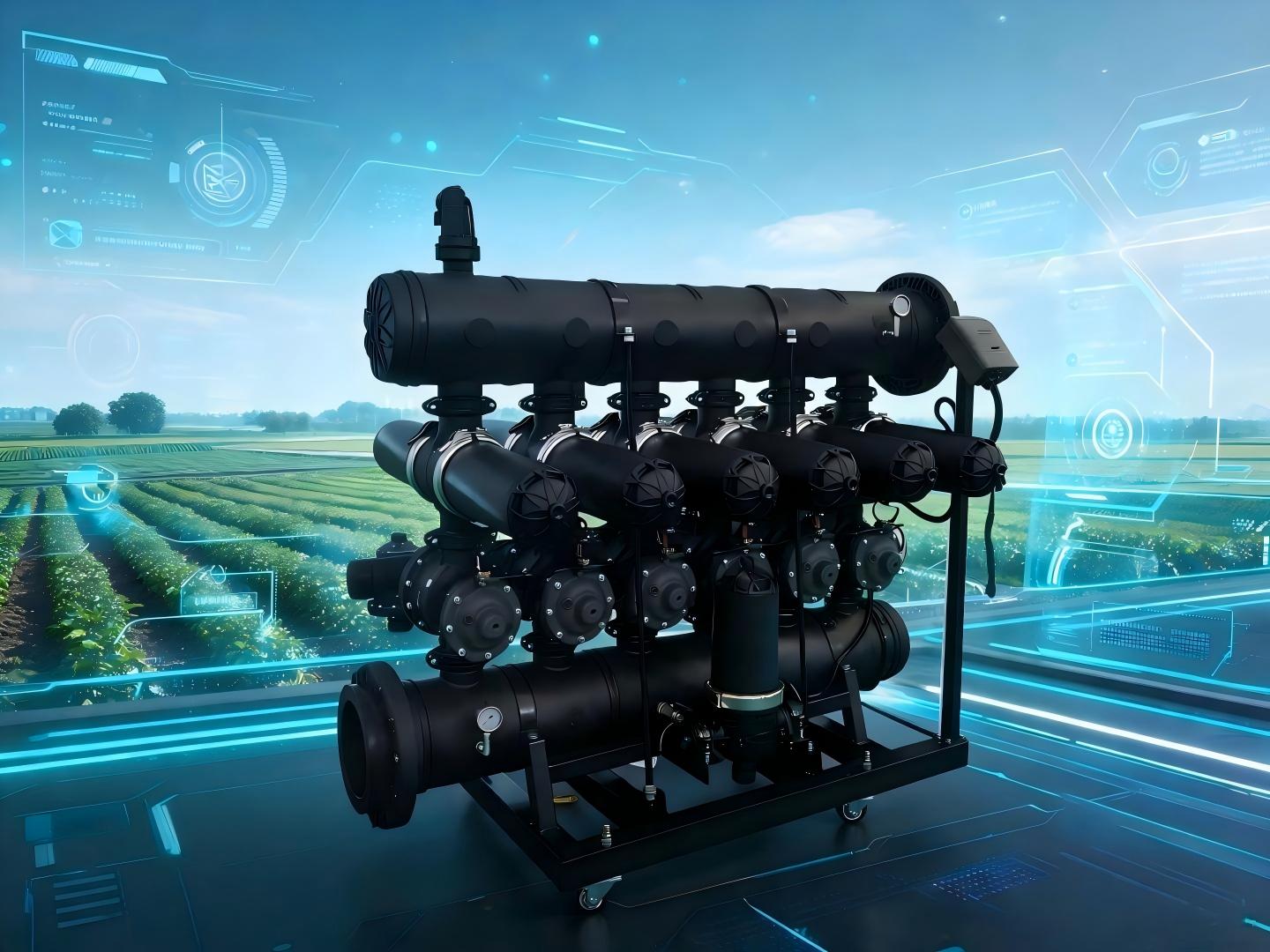
Greenhouse irrigation system design is the foundational production infrastructure that determines 60% or more of commercial controlled environment agriculture (CEA) crop yields, input costs, and long-term profitability, per 2024 data from the Irrigation Association. Unlike open-field irrigation, greenhouse systems operate in a closed, climate-controlled environment where even minor design flaws—from mismatched emitter flow rates to insufficient filtration—can cause widespread crop loss, wasted water and nutrients, and 20-30% higher annual labor costs. This guide outlines evidence-based design principles, real-world performance data, component specifications, and cost benchmarks to help growers, irrigation designers, and farm operators build reliable, high-efficiency systems tailored to specific crops, climates, and production goals.
Why Precision Greenhouse Irrigation System Design Is Non-Negotiable for Commercial Operations
Hard Data on Irrigation Design ROI and Industry Efficiency Gaps
The 2023 USDA Natural Resources Conservation Service (NRCS) Greenhouse Best Practices Report estimates that poorly designed greenhouse irrigation systems waste 35-45% of applied water through runoff, evaporation, leaks, and overwatering, while contributing to 62% of preventable crop loss events from root rot, nutrient deficiency, and foliar disease. For context, commercial greenhouse operations in the U.S. use an average of 0.8 gallons of water per square foot per day during peak summer growing season, meaning a 30,000 square foot operation with a subpar design can waste more than 3.7 million gallons of water annually, alongside $12,000-$18,000 in wasted water and fertilizer costs.
Peer-reviewed research from the University of Arizona Controlled Environment Agriculture Center (CEAC) 2024 field trials confirms that optimized, crop-aligned irrigation design delivers measurable, consistent returns:
- 22-34% higher marketable crop yields across leafy greens, vine crops, and ornamentals compared to outdated hand-watering or fixed-schedule sprinkler systems
- 58% reduction in total irrigation water use via targeted root-zone delivery and sensor-based scheduling
- 40-70% reduction in irrigation-related labor costs by eliminating daily hand-watering tasks
- 45-65% reduction in fungicide applications by reducing unnecessary leaf wetness and overwatering that drives pathogen growth
Data from the 2023 National Greenhouse Growers Association (NGGA) member survey underscores the cost of poor design: 68% of small to mid-scale greenhouse operators identified irrigation system flaws as their top cause of annual crop loss, with an average financial hit of $27,000 per event for operations under 50,000 square feet. Unlike temporary production fixes, a properly designed irrigation system has a 15-20 year service life, delivering consistent cost savings and yield gains for decades when properly maintained.
Core Site Assessment Variables Before Greenhouse Irrigation Design
Effective irrigation design cannot follow a one-size-fits-all template. Designers must complete a full site and crop audit before selecting components or sizing pipes to avoid costly mismatches between system performance and production needs.
Crop-Specific Water and Nutrient Requirements
The first step in any design is mapping crop water needs, preferred delivery method, and target root-zone moisture levels across all growing zones. The following benchmark values, adapted from Cornell Cooperative Extension greenhouse production guides, provide a starting point for zone partitioning:
- Leafy greens (lettuce, kale, basil): 0.25-0.4 gallons per square foot per day, 60-70% substrate moisture target, low-pressure delivery to avoid leaf tissue damage
- Vine crops (tomatoes, peppers, cucumbers): 0.5-0.9 gallons per square foot per day, 55-65% substrate moisture target, direct root-zone drip delivery to support high nutrient uptake during fruiting
- Ornamental bedding plants: 0.3-0.6 gallons per square foot per day, 50-70% substrate moisture target, variable delivery schedules to avoid overwatering slow-rooting species like geraniums and succulents
- Propagation cuttings and seedlings: 0.1-0.2 gallons per square foot per day, 80-90% relative humidity at leaf level, intermittent mist delivery to prevent tender tissue desiccation without saturating germination media
Crop rotation schedules must also be factored into design: zones planned for multi-crop rotation require adjustable flow rates and modular emitter connections to adapt to changing water needs without full system overhauls.
Greenhouse Structural and Infrastructure Variables
Greenhouse layout and existing infrastructure directly impact material costs and system performance:
- Bench and bed layout: Gutter-connected greenhouses with rolling benches reduce irrigation pipe material costs by 27% compared to fixed-bench or freestanding greenhouse layouts, per 2024 Irrigation Association cost benchmarks, because they minimize the length of lateral lines needed to reach growing areas.
- Water source quality: Testing source water for pH, total dissolved solids (TDS), pathogen load, and sediment is non-negotiable. UA CEAC data shows 41% of irrigation system failures trace back to unfiltered source water with >200 ppm TDS, which causes mineral scaling and emitter clogging within 1-2 growing seasons.
- Floor and bench slope: Systems installed in greenhouses with >2% floor slope require pressure-compensating emitters to prevent flow variance greater than 10% between high and low elevation points. Benches used for ebb and flow systems require a precise 0.25% slope to ensure uniform flood depth and complete drainage.
- Utility and code compliance: Designers must verify available electrical capacity for pumps, sensors, and controllers, plus local plumbing code requirements for backflow prevention, which is mandatory in 47 U.S. states for agricultural irrigation systems connected to potable water supplies.
Climate and Evapotranspiration Baseline Calculations
Evapotranspiration (ET)—the total water lost to plant transpiration and evaporation from growing media—is the gold standard for sizing irrigation system capacity and setting scheduling baselines. Peak ET rates vary dramatically by climate and greenhouse glazing type: for a double-layer polyethylene-covered greenhouse, peak summer ET is 0.18 inches per day in the humid Southeast U.S., 0.29 inches per day in the arid Southwest, and just 0.06 inches per day in the Pacific Northwest during winter low-light months. Cornell Extension 2023 trials found that designs integrating real-time ET sensors reduce overwatering events by 47% compared to fixed timer schedules, which apply the same water volume regardless of light, temperature, or humidity.
Primary Greenhouse Irrigation System Types: Design Specifications and Use Cases
Designers can select from five core irrigation system types, each optimized for specific crops, production models, and budget levels. The table below compares key performance metrics, cost points, and ideal use cases to inform system selection:
| System Type | Ideal Crop Use Cases | Design Operating Pressure | Water Use Efficiency (WUE) | Installed Cost per Sq Ft | Post-Install Labor Requirement | Most Common Design Flaws |
|---|---|---|---|---|---|---|
| Pressure-Compensating Drip | Vine crops, potted ornamentals, cut flowers, in-bed berry production | 15-25 PSI | 90-95% | $0.75-$1.25 | Low | Clogged emitters from insufficient filtration, mismatched emitter spacing for container size |
| Ebb and Flow (Flood Bench/Floor) | Potted bedding plants, nursery stock, container-grown leafy greens | 5-10 PSI | 80-88% | $2.50-$4.00 | Very Low | Uneven flood depth from misaligned bench slope, pathogen spread across unsterilized recirculating water |
| Overhead Misting/Sprinkler | Propagation cuttings, seedling germination, temporary crop cooling | 30-50 PSI | 50-65% | $0.30-$0.60 | Moderate | Foliar disease from extended leaf wetness, high evaporative loss from oversized droplets |
| Nutrient Film Technique (NFT) Hydroponic | Leafy greens, culinary herbs, small-stature fruiting crops | 2-8 PSI | 92-98% | $3.00-$5.50 | Moderate | Crop loss from interrupted flow during power outages, channel clogging from root mats |
| Deep Water Culture (DWC) Hydroponic | Large leafy greens, specialty crops, high-value medicinal herbs | 1-5 PSI (aeration only) | 95-99% | $4.00-$7.00 | Low | Root rot from low dissolved oxygen, crop stress from unregulated water temperature |
Drip Irrigation Design for Container and Bed-Grown Greenhouse Crops
Drip is the most widely used irrigation system for soil and substrate-grown greenhouse crops, delivering water and nutrients directly to the root zone via small emitters to minimize evaporation and foliar wetness. Core design rules for high-performance drip systems include: matching emitter flow rate to container size (1 gph emitter per 6-inch pot, 2 gph emitters per 12-inch pot, 12-inch emitter spacing for in-ground beds); using pressure-compensating emitters for lateral lines longer than 100 feet to keep flow variance below 5%; and installing 150-mesh disc filtration to reduce emitter clogging by 89%, per Irrigation Association 2024 testing data.
Practical Example: A 30,000 square foot commercial tomato greenhouse in rural North Carolina completed an irrigation retrofit from hand-watering to pressure-compensating drip in early 2023. Pre-retrofit, the operation used 2.1 gallons of water per square foot per day, spent 38% of total labor hours on irrigation, and lost 12% of its annual crop to uneven watering and root rot. The new system used inline 1 gph emitters spaced 12 inches apart, paired with 12 substrate moisture sensors placed across 6 growing zones. In the first growing season post-install, water use dropped to 0.62 gallons per square foot per day (70% reduction), irrigation labor fell to 4% of total labor hours, crop loss from over/under watering dropped to 1.8%, and the full $28,700 system investment was paid back in 11 months via input savings and higher yields.
Ebb and Flow (Flood Bench/Floor) Design Considerations
Ebb and flow systems work by temporarily flooding growing benches or concrete floors with 1-2 inches of nutrient solution, held for 10-15 minutes until growing media reaches field capacity, then draining fully back to a storage tank for recirculation. Key design specifications include: a 0.25% slope across all benches and floors to ensure even flood depth and full drainage in <30 minutes (to prevent root hypoxia); UV sterilization for recirculating water to reduce Pythium and Phytophthora spread by 92%, per Michigan State University floriculture trials; and overflow drains set to 2 inches to prevent overflooding during valve malfunctions.
A common design pitfall is under-sizing drain lines, which leads to slow drainage and extended root saturation. For reference, ebb and flow systems require 2-inch diameter drains per 100 square feet of bench area to achieve target drainage speeds. Practical Example: A 12,000 square foot ornamental bedding plant operation in Ohio switched from overhead sprinklers to rolling-bench ebb and flow in 2022. During initial installation, crews set bench slopes to only 0.1%, leading to 3-inch deep pools at the low end of benches and 8% root rot loss in the first 2 months of operation. After adjusting bench legs to hit the 0.25% slope target and installing a UV sterilizer for recirculating water, the operation reported 41% lower water use, 62% less fungicide applied for foliar blight, and a 19% increase in saleable plants due to reduced leaf damage and even moisture delivery.
Overhead Misting and Sprinkler Design for Propagation and Cooling
Overhead systems deliver water through elevated nozzles, and are only recommended for greenhouse propagation and temporary evaporative cooling, not full-season crop irrigation, because leaf wetness duration over 4 hours increases Botrytis risk by 75%, per Cornell Plant Pathology 2023 data. For propagation applications, design specifications include: nozzles spaced 2-3 feet apart, delivering 50-70 micron droplet size (fine enough to remain on leaf surfaces without damaging tender cuttings); pressure regulators to maintain consistent nozzle pressure (30-40 PSI) to prevent oversized droplets that dislodge seed or cuttings; and intermittent run cycles (10 seconds on, 5 minutes off in peak summer heat) triggered by leaf wetness sensors to maintain constant leaf moisture without saturating media.
Practical Example: A 5,000 square foot perennial propagation greenhouse in Oregon replaced its fixed-timer overhead mist system with a sensor-integrated design using 60-micron nozzles in 2024. Prior to the redesign, the operation lost 22% of cuttings annually to either desiccation (from insufficient mist) or rot (from over-saturation), and used 35% more water than required for propagation. After installing leaf wetness sensors to trigger mist cycles only when leaf surfaces dried below a 90% moisture threshold, cutting success rates jumped from 78% to 96%, water use for propagation dropped by 42%, and Botrytis-related fungicide applications fell by 58%.
Hydroponic Irrigation Design (NFT and DWC)
Recirculating hydroponic systems deliver the highest water use efficiency of any greenhouse irrigation design, but require extremely precise engineering to avoid catastrophic crop loss. For NFT systems, core design rules include: a 1-3% slope across growing channels to maintain a 1-2 mm thin film of nutrient solution flowing over root mats; a flow rate of 1-2 liters per minute per channel to avoid oxygen deprivation; and redundant backup pumps and battery power, as root death can occur in as little as 2 hours if flow stops during peak summer light conditions. For DWC systems, designs must maintain 8-12 inch water depth, dissolved oxygen levels of 5-8 ppm via air stones or Venturi injectors, and consistent water temperatures of 65-72°F to prevent root rot. The 2023 Hydroponic Association of North America report found that 32% of commercial hydroponic greenhouse failures in the first two years of operation trace back to lack of backup irrigation pump capacity.
Non-Negotiable Design Components for Long-Term System Reliability
Even the best-matched system type will fail prematurely if core supporting components are undersized or omitted to cut upfront costs. The following components are required for all commercial greenhouse irrigation designs to deliver long-term performance:
Layered Water Treatment and Filtration Stack
Filtration is the most commonly underdesigned component of greenhouse irrigation systems, and the leading cause of premature emitter and nozzle failure. Designers must implement a layered filtration stack installed in sequence from the water source to the emitters:
- Primary screen filtration (80-mesh): Installed directly at the water source to remove large debris including leaves, sediment, and string algae, extending secondary filter life by 60%.
- Secondary disc filtration: Sized to match the smallest emitter orifice: 150-mesh for drip emitters, 200-mesh for mist nozzles, to remove particles as small as 100 microns that cause clogging. Automatic backflush filters are recommended for operations over 10,000 square feet to reduce labor for filter cleaning.
- Targeted water treatment: Selected based on source water test results: UV sterilization (30 mJ/cm² dose) for surface water sources to kill waterborne pathogens; reverse osmosis for sources with >500 ppm TDS to prevent mineral scaling; acid injection for sources with pH >7.5 to reduce calcium carbonate buildup, which clogs emitters 2-3x faster than neutral pH water.
- Reduced pressure zone (RPZ) backflow preventer: Installed between the irrigation system and potable water supply to meet state plumbing codes and prevent nutrient solution from backflowing into drinking water sources.
Pressure Regulation and Zone Partitioning
Irrigation zones must be partitioned to group crops with identical water requirements, identical elevation, and total flow rates matched to pump capacity. Design best practices call for pressure regulators installed at every zone inlet to maintain the manufacturer-rated PSI for emitters and nozzles: PSI that is 10% too high reduces emitter lifespan by 30% due to material fatigue, while PSI that is 10% too low reduces flow by 15% leading to under-watering. USDA NRCS 2023 data shows that greenhouses partitioning irrigation zones by crop water requirement see an average 24% increase in water use efficiency compared to single-zone designs that water all crops on the same schedule.
Automation, Sensor Integration, and Control Logic
Modern greenhouse irrigation designs rely on sensor-driven automation to eliminate human error and adjust application rates in real time. Core sensor and control components include:
- Substrate moisture sensors: Placed at 4-inch depth in the active root zone, with one sensor per 500 square feet of growing area, to trigger irrigation only when moisture drops below crop-specific set points. Trials show these sensors reduce unnecessary irrigation events by 39% compared to fixed timer schedules.
- Inline EC and pH sensors: Installed in main irrigation lines to monitor nutrient concentration and pH, maintaining levels within 5% of crop targets to prevent nutrient burn or deficiency.
- Zone flow meters: Calibrated to detect flow rate deviations of >10% from baseline, which signal leaks, clogged emitters, or valve malfunctions. Irrigation Association data shows these meters reduce water loss from hidden leaks by an average of 82%.
- Cloud-based control platforms: Integrated with on-site weather stations to pull real-time ET, light, temperature, and humidity data, adjusting irrigation schedules daily to match crop demand. These platforms also send instant alerts to operators for pressure drops, flow anomalies, or sensor failures.
Practical Example: A 45,000 square foot seedless cucumber greenhouse in Yuma, Arizona upgraded from fixed-timer drip irrigation to a sensor-integrated automated design in 2022. The system uses 18 substrate moisture sensors, inline EC/pH monitors, an on-site weather station, and zone flow meters. In the first year of operation, the operation recorded a 31% increase in cucumber yield (from 18 lbs per plant to 23.6 lbs per plant), 49% reduction in fertilizer use due to precise nutrient delivery, 28% reduction in pumping energy costs, and 3 early leak detections that prevented an estimated 120,000 gallons of water loss over the growing season.
Winterization and Drainage Design
Cold-climate greenhouse operations often overlook drainage for irrigation lines, leading to costly freeze damage. All above-ground irrigation lines must be sloped at 0.5% per linear foot to drain completely when the system is shut down, with drain valves installed at all low points. University of Minnesota Extension 2023 data shows that failure to properly drain lines causes 60% of irrigation pipe damage in cold-climate greenhouses, as frozen water expands and cracks PVC and polyethylene pipes. For year-round operation, buried main lines should be placed 6-12 inches below local frost depth, with self-regulating heat tape installed on exposed lines near exterior greenhouse walls.
Common Greenhouse Irrigation Design Mistakes and Costly Fixes
Even experienced designers can make costly errors when rushing the design process or cutting upfront costs. The most common mistakes, with associated costs and remediation steps, include:
Mismatched Emitter Flow Rates and Crop Water Needs
Over-sizing emitters is a frequent error, as designers often overestimate crop water needs to avoid underwatering. Example: A 10,000 square foot culinary herb greenhouse in Colorado installed 2 gph drip emitters for 6-inch basil pots in 2021, delivering twice the required water volume. The mistake caused 29% crop loss from Pythium root rot in the first 3 months, leading to $18,000 in lost revenue. The fix cost $3,200 to swap emitters to 0.5 gph pressure-compensating models, which reduced flow to target levels and cut root rot loss to <2% within one growing cycle.
Ignoring Pressure Variance Across Zones
Many designers undersize main distribution lines to cut material costs, leading to friction loss and pressure drops of 10+ PSI at the far end of long lateral lines. For non-pressure-compensating emitters, this causes flow rates 30-40% lower at the end of the line, leading to uneven crop growth and 17% lower saleable yields on average, per 2023 NGGA data. The fix requires upsizing main lines to keep water velocity below 5 feet per second, or retrofitting with pressure-compensating emitters, which costs 2-3x more than sizing lines correctly during initial installation.
Skimping on Filtration for Recirculating Systems
Recirculating systems (ebb and flow, NFT, DWC) are particularly vulnerable to clogging from root fragments, algae, and organic debris, making sufficient filtration non-negotiable. Example: A 20,000 square foot leafy green NFT operation in central Florida skipped secondary disc filtration in 2020, relying only on a 40-mesh primary screen to save $2,100 in upfront costs. Within 6 months, 38% of NFT channels were clogged with root fragments and algae, leading to uneven flow and 24% crop loss. The fix cost $7,800 to install 200-mesh automatic backflush disc filters and UV sterilization, reducing annual clogging events to <1%.
Lack of Redundancy for Hydroponic Systems
For NFT and DWC systems, a 4-hour power outage during peak summer light can cause 100% crop loss as roots dry out or oxygen levels drop. A 2023 survey of hydroponic operators found that 41% had experienced a crop loss event from pump failure or power outage, with an average loss of $42,000 per event. Installing a backup generator sized to run irrigation pumps and aeration systems costs an average of 8-12% of total irrigation system installation cost, but pays for itself with a single avoided loss event.
Step-by-Step Greenhouse Irrigation Design Framework for Commercial Operations
Following a structured, audit-first design process eliminates most common errors and ensures systems match production goals. The seven-step framework below is adapted from the Irrigation Association’s Commercial Greenhouse Irrigation Design Standard:
- Complete a baseline site and crop audit: Map all growing zones, crop rotation schedules, calculate peak ET for the local climate, test source water for pH, TDS, pathogens, and sediment, and document target moisture levels for each crop to define zone requirements.
- Match system type to crop and production goals: Use the comparison table earlier in this guide to select system types for each zone: for example, propagation zones get overhead mist, vine crop zones get pressure-compensating drip, high-value leafy green zones get NFT or DWC, and potted ornamental zones get ebb and flow.
- Size pipes, pumps, and zones for uniform pressure: Calculate total flow per zone as the number of emitters multiplied by individual emitter flow rate; size main lines to keep water velocity under 5 feet per second to minimize friction loss; select a pump that delivers required total flow at the highest system PSI requirement; install pressure regulators at each zone inlet to maintain target operating pressure. Note that main line velocity over 7 fps causes water hammer, which reduces pipe lifespan by 50%.
- Install layered filtration and treatment: Match filter mesh size to the smallest emitter or nozzle orifice, install required backflow prevention, and select water treatment components to address identified source water issues (scaling, pathogens, high TDS).
- Integrate sensors and automation hardware: Place substrate moisture, EC, and pH sensors in representative locations across each zone, install flow meters on every zone, connect controllers to cloud-based platforms with alert functionality for leaks, pressure drops, or out-of-range nutrient levels.
- Conduct a pre-plant system audit: Run each zone for 30 minutes, measure flow across 10% of emitters in each zone to ensure flow variance is <10%, check for leaks, calibrate sensors to crop-specific set points, and verify drainage on all lines, beds, and benches.
- Develop a seasonal maintenance schedule: Flush lines quarterly, replace filter elements per manufacturer guidelines, inspect emitters for clogging every 2 weeks during peak growing season, test backup power and pumps monthly, and calibrate sensors every 3 months to maintain accuracy.
Real-World Application: A 25,000 square foot mixed-production greenhouse in western Michigan (60% vine tomatoes, 25% leafy greens in NFT, 15% perennial propagation) was designed using this framework in 2022. Total irrigation system installation cost was $89,500, including a $10,200 backup generator and battery backup system. In its first year of operation, the system delivered 94% average water use efficiency across all zones, 29% higher total crop yield than the regional average for mixed greenhouses, 3.2% total crop loss (vs. a regional average of 11.7%), and 71% lower irrigation labor costs compared to the operation’s previous hand-water/sprinkler system, putting the operation on track for full ROI in 16 months. The backup generator activated during a 6-hour winter power outage in January 2023, preventing an estimated $68,000 in crop loss from frozen lines and interrupted hydroponic flow.
Emerging Trends Shaping Greenhouse Irrigation Design
As CEA production expands and input costs rise, new design innovations are delivering even higher efficiency and lower operational risk:
AI-Powered Predictive Irrigation Control
2024 field trials from the University of California Davis found that AI-powered irrigation controllers, which use historical crop data, real-time sensor readings, and hyper-local weather forecasts to predict crop water needs 24-48 hours in advance, reduce water use by an additional 18% on top of standard sensor-based systems, while increasing yields by 9% by avoiding even minor moisture stress during critical growth stages.
Closed-Loop Nutrient Recovery Systems
New closed-loop designs capture 100% of irrigation runoff, filter and treat it to remove pathogens and adjust nutrient levels, and recirculate it back to crops, achieving near-zero nutrient discharge. These systems cut fertilizer costs by 40-60% and help operations meet increasingly strict agricultural runoff regulations. A 10-acre commercial tomato greenhouse in the Netherlands installed a closed-loop design in 2023, achieving 99% water recirculation, zero nutrient discharge, and a 52% reduction in annual fertilizer costs.
Low-Energy Precision Application Components
New generations of pressure-compensating emitters operate at 10 PSI instead of the traditional 25 PSI, reducing pumping energy use by 40-50% while maintaining identical flow uniformity. Solar-powered pump and controller systems are also being adopted by off-grid greenhouse operations, cutting irrigation-related energy costs to near zero for remote sites.
Final Design Priorities for Long-Term Greenhouse Profitability
Greenhouse irrigation system design is not a commodity purchase, but a core production investment that directly impacts every metric of operational success: yield, crop quality, input costs, labor requirements, and long-term resilience. Industry data confirms that well-designed, sensor-integrated systems deliver an average ROI of 12-24 months for commercial operations, with annual cost savings of 30-60% on water, fertilizer, and labor compared to outdated hand-watering or sprinkler systems. The costliest design choices are rarely high-end components or redundant systems, but short-sighted cuts to filtration, pressure regulation, sensor integration, and backup capacity that lead to preventable crop loss and premature system failure. By starting with a thorough site and crop audit, matching system types to specific production goals, and designing for long-term reliability rather than lowest upfront cost, growers can build irrigation systems that support consistent, profitable production for 15-20 years or more.