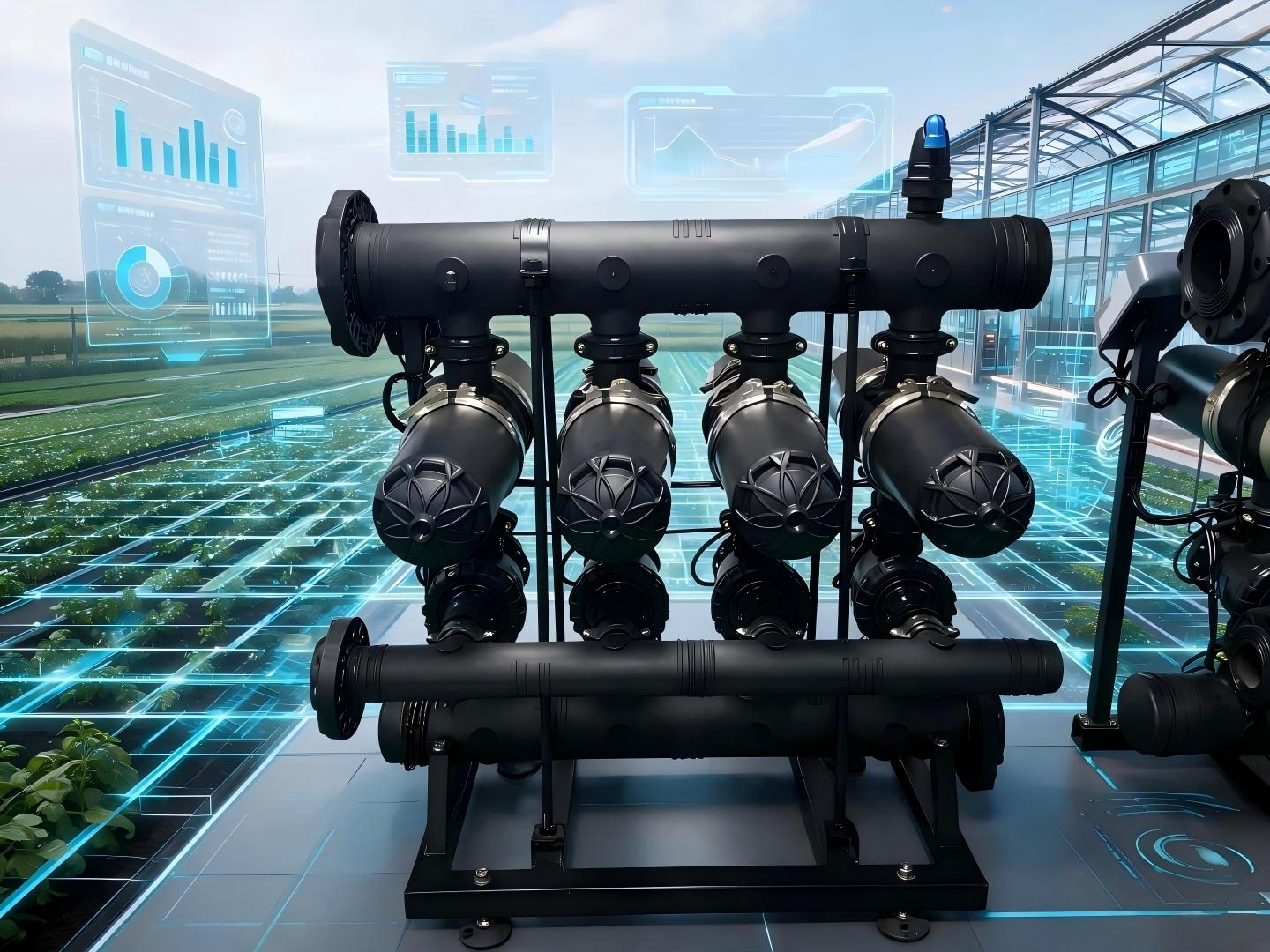
Filtration for Drip Irrigation: The Complete Guide to Protecting System Longevity, Crop Yields, and Irrigation ROI
Drip irrigation is the gold standard for water-efficient agricultural production, delivering 90–95% application efficiency compared to 60–70% for flood irrigation and 75–85% for overhead sprinkler systems, per 2024 data from the Irrigation Association. But for all its precision and water savings, drip irrigation has a critical vulnerability: its small-diameter emitter orifices (typically 0.5–1.5 mm wide) are easily clogged by even tiny concentrations of sediment, organic matter, or mineral precipitates. Filtration for drip irrigation is not an optional accessory—it is the foundational component that prevents clogging, maintains uniform water distribution, and protects the return on investment (ROI) of what is often a $1,500–$3,000 per acre capital investment for commercial permanent crop and subsurface drip (SDI) systems.
Why Drip Irrigation Filtration Is Non-Negotiable (Not an Optional Add-On)
Data from the University of California, Davis (UC Davis) Department of Land, Air and Water Resources confirms that 78% of premature drip irrigation system failures are directly attributable to inadequate or poorly maintained filtration. When clogging affects more than 15% of emitters in a system, average crop yield losses reach 22% for high-value vegetable and fruit crops, due to uneven soil moisture, dry crop zones, and uneven nutrient distribution during fertigation. Even low levels of clogging (5% of emitters) can reduce irrigation uniformity by 27%, according to USDA Natural Resources Conservation Service (NRCS) data, leading to 10–12% overapplication of water in unclogged zones, increased nutrient leaching, and elevated disease pressure from excess soil moisture.
The Economic Cost of Inadequate Drip Filtration: Hard Data from Commercial Operations
The cost of skipping or undersizing filtration far exceeds the upfront cost of a properly designed system. A 2023 study of 420 commercial almond orchards in California’s Central Valley found that operations with no or undersized filters spent an average of $1,280 per acre annually on emitter replacement, line flushing, and crop losses linked to uneven watering. By comparison, operations with properly sized, multi-stage filtration spent an average of $172 per acre annually on filtration-related maintenance, representing an 87% reduction in annual system costs. For small-scale diversified vegetable farms, a 2022 University of Arizona survey found that operations without functional drip filters lost an average of $4,200 per year to crop stress and drip line replacement, a cost equal to 12% of gross annual revenue for farms under 10 acres.
Proper filtration also drastically extends drip system lifespan. The Irrigation Association reports that systems with correctly sized and maintained filtration have an average service life of 18–22 years, compared to 7–9 years for systems with inadequate filtration. For a 100-acre SDI system installed at $2,500 per acre, that lifespan difference translates to $2.2–$2.7 million in avoided capital replacement costs over a 20-year period.
Primary Contaminants That Clog Drip Emitters
Data from the International Commission on Irrigation and Drainage (ICID) categorizes drip emitter clogging agents into three core groups, each requiring targeted filtration and pre-treatment:
- Physical contaminants (60% of clogging events): Sand, silt, clay, plastic debris from degraded piping, algae fragments, and insect or plant matter. These contaminants enter systems via surface water sources (canals, ponds, rivers), high-sand wells, or pipe degradation over time. Particles as small as 1/10 the diameter of an emitter orifice can accumulate and block flow over time.
- Biological contaminants (25% of clogging events): Bacterial slime (most often iron bacteria or sulfur bacteria), filamentous algae, protozoa, root fragments, and aquatic invasive species such as zebra mussel veligers. These contaminants are most prevalent in systems using surface water or reclaimed wastewater, and can multiply inside drip lines to form persistent biofilms even if incoming particle loads are low.
- Chemical contaminants (15% of clogging events): Precipitated calcium carbonate (lime), iron oxide, manganese deposits, and insoluble fertilizer salts formed when incompatible fertilizers are mixed or injected into high-pH water. These precipitates form directly inside tubing and emitters, even when incoming water has no measurable suspended solids.
Core Drip Irrigation Filter Types: Design, Use Cases, and Performance Metrics
There is no universal filter suitable for every drip irrigation application. Filter selection depends on water source, total suspended solids (TSS) load, emitter orifice size, system flow rate, available labor for maintenance, and crop value. The table below compares the most common drip filtration options using industry-tested performance metrics and 2024 commercial equipment pricing:
| Filter Type | Micron Rating Range | Ideal Water Source | Clogging Resistance | Required Maintenance Frequency | Upfront Cost (Per 100 GPM Flow Capacity) | Typical Service Life | Best Suited Applications |
|---|---|---|---|---|---|---|---|
| Manual Screen Filters | 75–200 micron (200–70 mesh) | Low-sediment well water (TSS <10 ppm), municipal water | Moderate | Manual flush every 2–4 weeks | $350–$600 | 8–12 years | Small-acreage high-value crops, greenhouses, small-scale farms |
| Manual Disc Filters | 40–400 micron (400–40 mesh) | Well water with moderate sediment/organic load, lightly treated effluent | High | Manual flush every 4–8 weeks | $550–$900 | 12–15 years | Commercial vegetable row crops, vineyards, small to mid-sized orchards |
| Sand Media Filters | 20–100 micron (635–150 mesh) | Surface water (ponds, canals, rivers), high-sediment water, reclaimed wastewater | Very High | Backwash every 1–4 weeks (based on TSS load) | $1,200–$2,200 | 20–25 years (media replacement every 3–5 years) | Large-scale commercial operations, surface water sources, SDI systems |
| Centrifugal Sand Separators | >74 micron (200 mesh, high-specific-gravity particles only) | High-sand borehole/well water | N/A (pre-filter only, does not remove light particles) | Sediment chamber purge daily to weekly | $400–$750 | 15–20 years | Primary pre-filtration ahead of secondary filters for high-sand wells |
| Automatic Self-Cleaning Screen/Disc Filters | 10–200 micron (1,250–70 mesh) | All water sources, high-flow systems | Very High | Auto-flush triggered by pressure differential; annual inspection | $1,800–$3,500 | 18–22 years | Large operations with limited labor, remote sites, high-value permanent crops |
| Specialty Filters (iron removal, activated carbon) | 5–50 micron (2,500–300 mesh) | High-iron well water, water with high dissolved organic load | Low to Moderate | Media replacement every 1–2 years | $2,500–$4,000 | 10–12 years (tank housing) | Secondary treatment for high-risk water sources, chemigation systems |
Screen Filters: The Entry-Level Workhorse for Low-Sediment Water
Screen filters are the most common and lowest-cost filter option for low-sediment water sources, using a woven mesh of stainless steel, nylon, or polyester stretched across a rigid frame to trap particles. Filter mesh size is inversely related to opening size: a 200-mesh screen has 200 openings per linear inch, equal to 74 micron openings, which is the minimum rating recommended by the Irrigation Association for most standard drip emitters. A 2022 University of Arizona survey of 1,200 small farm operations found that 87% of growers using 150-mesh (105 micron) or coarser screen filters experienced emitter clogging within 3 years of installation, compared to just 4% of growers using 200-mesh or finer screens.
Screen filters work best for water with minimal organic load, as fibrous algae and plant material can weave through screen openings and become trapped, causing rapid pressure loss and reduced flow. For example, a 5-acre organic herb farm in southern Arizona using well water with <10 ppm TSS installed 200-mesh manual screen filters at a cost of $480 per 50 GPM unit, and reported zero emitter clogging over 6 years of operation, with only 15 minutes of monthly manual flushing required during irrigation season.
Disc Filters: The Versatile Mid-Tier Option for Mixed Contaminant Loads
Disc filters use a compressed stack of grooved polypropylene discs to trap particles both on the disc surfaces and within the grooved channels, providing 3x the filtration surface area of equivalent-sized screen filters, according to independent testing from drip equipment manufacturers Netafim and Jain Irrigation. The stacked disc design is far more resistant to clogging from fibrous organic material than flat screens, making it ideal for water sources with mixed sediment and light organic loads. Filter micron rating can be adjusted by increasing or decreasing compression on the disc stack, adding operational flexibility.
2024 field trials from Washington State University on wine grape vineyards found that for operations using surface water with 10–50 ppm TSS, disc filters reduce required maintenance frequency by 47% compared to equivalent screen filters. A 40-acre Pinot Noir vineyard in Oregon’s Willamette Valley initially installed 150-mesh screen filters to filter pond water with 32 ppm average TSS and 8 ppm algal load, requiring filter flushing every 3 days at a labor cost of $90 per week. Even with frequent flushing, the vineyard saw 12% emitter clogging after one growing season. After switching to 120-mesh disc filters, flushing frequency dropped to once every 6 weeks, cutting annual labor costs by $3,800 and reducing annual clog rates to <1% over 3 growing seasons.
Sand Media Filters: Industrial-Grade Protection for High-Sediment Surface Water
Sand media filters use a 24–36 inch deep bed of graded crushed silica sand (0.6–1.2 mm grain size for drip applications) to trap particles as water percolates through the bed. Unlike surface filters (screens and discs) that trap all debris on a single plane, media filters capture particles throughout the depth of the sand bed, allowing them to handle far higher sediment and organic loads without rapid clogging. When properly graded and maintained, sand media filters can remove 98% of suspended solids >20 micron, making them the only filter type recommended by the USDA NRCS for drip systems using unlined canal water or untreated pond water with >50 ppm TSS.
Media filters require backwashing when pressure differential across the bed reaches 5–7 psi: clean water is pumped backward through the sand bed at a flow rate high enough to expand the bed by 30–50%, lifting trapped debris off the sand grains and flushing it out of the system. A 600-acre processing tomato operation in California’s San Joaquin Valley initially used a bank of disc filters to treat unlined canal water with an average TSS of 85 ppm (including 20 ppm fine silt and 15 ppm algal material during summer months). The disc filters required backwashing every 4 hours during peak irrigation, leading to 12% water loss from backwash and 8% emitter clogging annually. After installing a 3-tank sand media filter system with 24-inch sand depth, backwash intervals extended to every 36 hours, backwash water loss dropped to 2% of total pumped volume, and annual emitter replacement costs fell by 92% (from $19,200 per year to $1,530 per year) over a 5-year period.
Centrifugal Sand Separators: Critical Pre-Filtration for High-Sand Well Water
Centrifugal sand separators are not true filters—they use inertial force to remove heavy, high-specific-gravity particles (primarily sand and grit) from water before it reaches downstream filtration equipment. Water enters the conical separator chamber at high velocity (20–30 feet per second), creating a centrifugal vortex that throws sand particles against the chamber wall, where they slide down into a sediment collection sump at the base of the unit. Separators do not remove light organic matter, silt, or clay, as these particles are too low in density to be ejected from the flow stream, so they must always be paired with a secondary screen or disc filter.
Testing from the University of Nebraska Extension Institute for Agriculture and Natural Resources shows that properly sized centrifugal separators remove 92–98% of sand particles >74 micron (200 mesh) when flow rate matches design specifications. A 120-acre pecan orchard in southern Georgia installed a new well producing 600 GPM with 35 ppm sand content (well above the 5 ppm threshold for safe drip irrigation without pre-filtration). Within 6 months, abrading sand had worn emitter orifices to 2x their designed size in 28% of the system, leading to uneven water distribution and 11% yield loss in young trees. The farm installed two 300 GPM centrifugal separators ahead of its existing disc filters, removing 97% of incoming sand before it reached downstream components. After installation, sand-related emitter abrasion dropped to <0.5% annually, and filter maintenance intervals doubled.
Automatic Self-Cleaning Filters: Low-Labor Solutions for Large or Remote Operations
Automatic self-cleaning filters are available in both screen and disc configurations, and use precision pressure differential sensors to trigger a self-flushing cycle when pressure drop across the filter reaches a pre-set threshold (typically 5 psi). During flushing, a series of suction nozzles scans the screen or disc stack to vacuum trapped debris, without requiring system shutdown or manual labor. Many models include remote monitoring capabilities that send alerts to farm managers if flush cycles become too frequent (indicating elevated sediment loads) or if system pressure drops outside of optimal ranges.
A 2023 Irrigation Association cost analysis found that for operations larger than 200 acres, automatic self-cleaning filters reduce filtration-related labor costs by 91% compared to manual-flush filters, with an average payback period of 2–3 years from reduced labor, yield loss, and maintenance costs.
Specialty Filters for Chemical and Biological Contaminants
For water sources with high dissolved mineral or organic loads, specialty filters are required as part of a multi-stage treatment train. Iron removal filters use manganese greensand media to oxidize and trap dissolved iron (which otherwise precipitates as rust-colored iron oxide inside emitters); University of Florida Extension data shows that wells with dissolved iron levels >0.3 ppm require iron filtration, as iron precipitates can clog 40% of emitters within 12 months if left untreated. Activated carbon filters adsorb dissolved organic compounds that feed bacterial slime growth, and are often used for systems using high-organic surface water or reclaimed wastewater. These filters are not designed to handle high sediment loads, so they must always be installed downstream of primary filtration.
How to Size and Design a Drip Irrigation Filtration System: Step-by-Step
Proper sizing is critical to filtration performance: a 2022 survey of 350 professional irrigation installers conducted by Irrigation & Green Industry magazine found that 62% of filtration system failures stem from sizing errors made during design, rather than equipment defects. The following step-by-step framework aligns with industry standards from the Irrigation Association and USDA NRCS:
Step 1: Conduct a Full Water Quality Test Before Selecting Equipment
Filtration design cannot be completed without baseline data on water quality. Before purchasing any equipment, collect a representative water sample and test for the following parameters, with thresholds to inform filter selection:
- Total Suspended Solids (TSS): Measured in parts per million (ppm). TSS <10 ppm = low sediment, suitable for screen/disc filters; TSS 10–50 ppm = moderate sediment, suitable for disc filters; TSS >50 ppm = high sediment, requiring sand media filtration.
- Particle size distribution: Measures the percentage of particles by size, to match filter micron rating. If more than 20% of particles are smaller than 100 micron, a 74 micron (200 mesh) secondary filter is required.
- Biological load: Measures algal cell count, iron bacteria presence, and total organic carbon. Algal counts >1,000 cells per mL require sand media filtration, as screens and discs will rapidly clog with fibrous algal material.
- Chemical parameters: Test pH, water hardness, dissolved iron, and dissolved manganese. Iron >0.3 ppm, manganese >0.1 ppm, or pH >7.8 with high bicarbonate levels require secondary chemical treatment alongside filtration to prevent mineral precipitation.
Step 2: Match Filter Micron Rating to Emitter Specifications
The universal industry rule for drip filtration is that filter openings must be smaller than 1/10 the diameter of the emitter orifice, to prevent particles from becoming lodged in the flow path. Use these standard guidelines for common drip products:
- Pressure-compensating drip emitters (0.7–1.0 mm orifice diameter): Require 70–100 micron (200–150 mesh) filtration, minimum.
- Thin-wall drip tape with turbulent-flow emitters (1.2–1.5 mm orifice diameter): Require 120 micron (120 mesh) filtration, minimum.
- Subsurface drip irrigation (SDI) lines (buried 8–18 inches deep, with limited access for repair): Require 75 micron (200 mesh) minimum filtration, as clogging often goes undetected until crop stress appears.
UC Davis research shows that systems where filter micron rating is mismatched to emitter orifice size experience 3.7x higher clog rates over a 5-year period, compared to systems with correctly sized ratings.
Step 3: Size Filters for Maximum Flow and Acceptable Pressure Drop
Filters must be sized to handle 110% of the system’s maximum peak flow rate (including 10% overdesign for future expansion) without exceeding a clean filter pressure drop of 3 psi. A common, costly mistake is sizing filters based on nominal flow ratings instead of maximum flow: a filter rated for 100 GPM at 2 psi clean pressure drop will experience a 10 psi pressure drop if operated at 150 GPM, reducing system operating pressure, increasing energy use, and forcing debris through filter media to cause downstream clogging.
Step 4: Design a Multi-Stage Filtration Train for High-Risk Water Sources
Single-stage filtration is only sufficient for low-sediment, low-contaminant municipal or well water. For higher-risk sources, design a sequential filtration train that removes larger particles first, reducing load on finer secondary filters to extend maintenance intervals. The following configurations are industry standard:
- Low-sediment well water (TSS <10 ppm, <0.3 ppm iron): Single-stage 200-mesh disc or screen filter.
- High-sand well water (TSS 10–30 ppm, sand >5 ppm): Two-stage train: 1) Centrifugal sand separator to remove heavy grit, 2) 150-mesh disc filter as secondary protection.
- Surface water (pond/canal/river, TSS 30–100 ppm, moderate organic load): Three-stage train: 1) Coarse 1/4-inch intake screen to block leaves, sticks, and large debris; 2) Sand media filter to remove fine sediment and organic matter; 3) 120-mesh disc/screen backup filter to catch any sand carryover during media backwash.
- Reclaimed wastewater (TSS 10–50 ppm, high biological load): Four-stage train: 1) Coarse intake screen, 2) Sand media filter with 30-inch media depth, 3) 200-mesh automatic disc filter, 4) Low-dose chlorination injection to control bacterial slime growth.
For example, a 200-acre citrus grove in Florida using reclaimed municipal wastewater initially installed only a single-stage disc filter, leading to 40% emitter clogging within 18 months from bacterial slime and fine suspended solids. After redesigning to a three-stage filtration train (coarse intake, sand media, automatic disc filter) paired with 2 ppm residual chlorination during the final 30 minutes of irrigation runs, clog rates dropped to 1.2% annually, and irrigation uniformity increased from 0.58 (poor) to 0.92 (excellent), leading to a 17% increase in marketable citrus yield over 3 years.
Filtration System Maintenance Best Practices to Reduce Clog Risk and Extend Equipment Life
Even the most well-designed filtration system will fail without regular maintenance. The 2023 ICID Global Drip Irrigation Performance Report found that 45% of filter-related clogging events are caused by poor maintenance, not incorrect initial sizing. Follow these evidence-based practices to maintain consistent filtration performance:
Establish a Pressure Differential Monitoring Schedule
All filters accumulate debris over time, which increases pressure drop between the filter inlet and outlet. The standard threshold for flushing or backwashing is 5–7 psi differential; waiting until pressure differential reaches 10 psi or higher causes debris to be pushed through filter media or screen mesh, leading to downstream emitter clogging and permanent damage to filter components. Follow these monitoring protocols:
- Install calibrated, liquid-filled pressure gauges on both the inlet and outlet of every filter unit (not just the main system supply line) to measure differential pressure accurately.
- For manual filter systems, check differential pressure at least twice per week during peak irrigation season, and after every storm or runoff event that may increase incoming sediment loads.
- For automatic self-cleaning filters, calibrate pressure sensors quarterly, and set flush triggers to activate at 5 psi differential to prevent overloading.
- Maintain a written log of pressure readings, flush dates, and volume of debris removed to identify gradual changes in water quality (e.g., seasonal algal blooms, sediment buildup in wells) that require adjustment of maintenance schedules.
Follow Standardized Flushing and Backwashing Protocols
Improper flushing is a leading cause of reduced filter efficiency. Use these step-by-step protocols for each filter type:
- Screen and disc filters: Open the flush valve fully at operating pressure for 30–60 seconds, until discharge water runs completely clear. For disc filters, disassemble the disc stack once per growing season and power-wash discs to remove embedded organic material that does not dislodge during routine surface flushing.
- Sand media filters: Backwash at a flow rate of 15–20 GPM per square foot of filter area, sufficient to expand the sand bed by 30–50% without washing sand out of the tank. Backwash each tank for 3–5 minutes, until discharge water is clear. Backwashing at too low a flow rate leaves debris trapped deep in the media bed, leading to permanent media fouling and channeling, which allows unfiltered water to bypass the sand.
- Centrifugal separators: Purge the sediment collection chamber daily when irrigating from high-sand wells, or weekly for low-sand applications. Never allow the sediment chamber to fill more than 50% of its volume, as accumulated sand will be re-entrained into the flow stream and delivered to downstream filters and emitters.
Conduct Annual Component and Media Inspections
At the end of each irrigation season, conduct a full inspection of all filter components to catch wear and damage before the next growing season:
- For screen filters: Inspect mesh for tears, corrosion, or stretched openings. Manufacturer testing from Rain Bird shows that even a 1 mm tear in a stainless steel screen can allow enough debris through to clog 10–15% of emitters over a single irrigation season.
- For disc filters: Inspect discs for cracking, worn grooves, or permanent debris embedding. Replace disc stacks if grooves are worn smooth, as this reduces filtration efficiency by 40% or more.
- For sand media filters: Measure sand bed depth annually. If sand depth is more than 2 inches below design specifications, add graded silica sand to restore depth. Every 3–5 years, remove and replace all sand media: Colorado State University Extension testing found that sand filters that are not recharged every 3–5 years have filtration efficiency as low as 62%, compared to 98% for fresh, properly graded media.
Pair Filtration with Targeted Pre-Treatment for Persistent Contaminants
Filtration alone cannot address all clogging risks. Pair mechanical filtration with these pre-treatment steps for high-risk water sources:
- For biological clogging (algae, bacterial slime): Inject 1–3 ppm free chlorine at the filter inlet during the final 30 minutes of irrigation runs to kill biofilm-forming organisms, preventing slime growth on filters and inside drip lines.
- For mineral precipitation (calcium carbonate, iron oxide): Adjust water pH to 6.5–7.0 using food-grade sulfuric or phosphoric acid to keep minerals dissolved, preventing precipitates from clogging emitters and cementing filter media together.
- For surface water sources: Install a floating intake with a 1/4-inch coarse screen, positioned 2–3 feet below the water surface, to avoid drawing in bottom sediment and floating surface debris. USDA NRCS data shows that floating intakes reduce TSS load on downstream filters by 40–50%, extending maintenance intervals significantly.
Real-World Drip Filtration ROI Case Studies
The performance and financial benefits of properly designed filtration are well-documented across farm scales and crop types. The following case studies use verified grower data to demonstrate real-world returns:
Case Study 1: Small-Scale Vegetable Farm Reduces Annual Irrigation Costs by 71%
An 8-acre organic mixed vegetable farm in central Ohio used a 1-acre farm pond for drip irrigation, initially relying only on a 1/4-inch mesh screen at the pump intake for filtration. After the first growing season, 38% of drip tape emitters were clogged with algae and silt, leading to $2,100 in drip tape replacement costs, $1,800 in labor to flush lines and replace clogged sections, and $3,200 in crop loss from uneven watering (total first-year cost: $7,100). In year two, the farm invested $1,250 in a two-unit 120-mesh disc filter system with a floating pond intake screen. Over the following 3 years, average annual irrigation-related costs fell to $2,050 (including $220 in filter maintenance, $1,830 in routine drip tape replacement for normal wear), representing a 71% reduction in annual costs. Average vegetable yields increased by 24% due to improved irrigation uniformity, delivering full payback on the filter investment in 2.1 months.
Case Study 2: Large-Scale Almond Orchard Extends SDI System Life by 14 Years
A 450-acre almond orchard in Kern County, California, installed a subsurface drip irrigation (SDI) system in 2008, initially using only manual screen filters to treat well water with 12 ppm sand and 2 ppm dissolved iron. By 2010, 22% of emitters were clogged, irrigation uniformity dropped to 0.61, and orchard managers projected the SDI system would require full replacement in 6 years at a cost of $2,800 per acre (total $1.26 million). In 2011, the orchard invested $148,000 in a multi-stage filtration system: centrifugal sand separators, iron removal media filters, and automatic backwashing 150-mesh disc filters. As of 2024, the system maintains an irrigation uniformity of 0.91, annual clog rates are <1%, and the SDI system has a projected service life of 20 years—14 years longer than initial projections. The total ROI on the filtration upgrade is 750% over 13 years, from avoided replacement costs, reduced labor, and increased nut yields.
Case Study 3: Remote Vineyard Cuts Maintenance Visits by 83%
A 70-acre wine grape vineyard in eastern Washington is located 45 minutes from the farm’s main operation, and uses Columbia River water for drip irrigation. Initially, the vineyard used manual screen filters, which required a crew to drive to the site twice per week to flush filters during the 18-week irrigation season, at a labor and travel cost of $135 per visit ($7,020 per season). During spring high-sediment runoff events, filter clogging occasionally caused system pressure loss for 2–3 days at a time, leading to vine water stress and reduced fruit quality. In 2020, the vineyard invested $18,700 in automatic self-cleaning 120-mesh disc filters with remote pressure monitoring. After installation, required maintenance visits dropped to once per month, reducing annual labor and travel costs to $1,170 (an 83% reduction). Remote alerting eliminated unplanned pressure loss events, improving fruit quality scores by 12% and increasing grape sale value by $9,400 per year. The system delivered full payback in 2.8 years.
Common Drip Filtration Mistakes to Avoid
Even experienced growers often make preventable filtration design and maintenance errors that reduce performance and increase costs. Avoid these common pitfalls:
- Undersizing filters to reduce upfront costs: Irrigation Association data shows 38% of drip filtration systems are undersized by 30% or more to cut initial costs, leading to 60% higher long-term maintenance costs and shorter system life. Saving $200–$300 on a smaller filter for a 50 GPM system typically leads to $2,000+ in extra maintenance and yield loss over 5 years.
- Using incorrect micron ratings: Installing 100-mesh (150 micron) filters for SDI systems with 0.8 mm emitter orifices allows fine silt to pass through, causing gradual, hard-to-detect clogging that only becomes visible when crop stress appears.
- Skipping backup filters for media systems: Sand media filters occasionally carry over small amounts of sand during backwash, which can clog emitters if a secondary disc or screen backup filter is not installed. Data shows media systems without backup filters have 12% higher clog rates than those with downstream protection.
- Neglecting filters during chemigation: When injecting liquid fertilizers or pesticides, always run fresh water through filters for 10 minutes after injection to flush corrosive or precipitate-forming chemicals out of filter housings and media. Chemical residue can degrade plastic components and cement media particles together, reducing filter life by 50% or more.
- Using static maintenance schedules year-round: Spring runoff, heavy rain events, and late-summer algal blooms can increase TSS and organic loads by 10x or more. Relying on a fixed monthly flushing schedule, rather than pressure differential monitoring, makes operations 3x more likely to experience filter failure during high-load periods.
Key Takeaways for Maximizing Drip Filtration Performance
Drip irrigation delivers unmatched water efficiency and yield benefits, but its performance is entirely dependent on reliable, properly designed filtration. USDA NRCS data shows that every $1 invested in correctly sized and maintained drip filtration returns $18–$24 in avoided maintenance, crop loss, and extended system life over the lifespan of an irrigation system. To maximize returns, follow these core principles:
- Start with a comprehensive water quality test before selecting filter equipment, to identify physical, biological, and chemical contaminants that require treatment.
- Match filter type, micron rating, and flow capacity to your water source and emitter specifications, building in 10% overdesign to accommodate future system expansion.
- Use multi-stage filtration trains for high-risk water sources, including