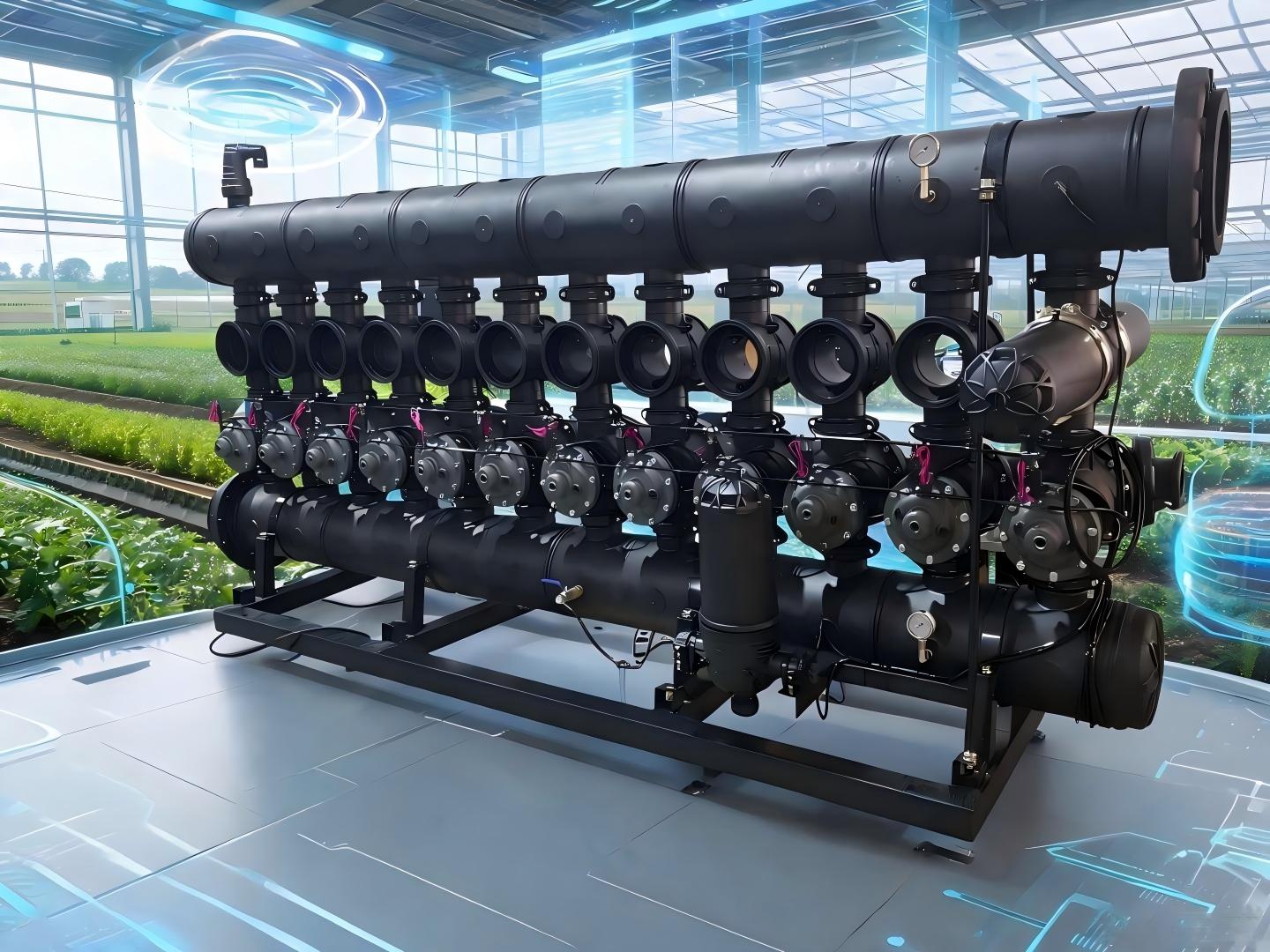
Why a Structured Filter Element Replacement Schedule Is Non-Negotiable for Agricultural Irrigation
For agricultural irrigation systems, filter elements are the critical first line of defense against emitter clogging, nozzle wear, pathogen spread, and costly system downtime. Yet a 2023 Irrigation Association industry survey found that 68% of U.S. row crop and specialty crop growers rely on ad-hoc, visual-only assessments to determine when to replace filter elements, rather than following an evidence-based filter element replacement schedule tailored to their water source, filter type, and operating conditions. This gap in structured maintenance costs the U.S. agricultural sector an estimated $437 million annually in lost yield, elevated energy costs, and premature equipment failure, per USDA Natural Resources Conservation Service (NRCS) calculations. A data-driven filter element replacement schedule eliminates guesswork, ensures consistent filtration performance, and delivers measurable returns on investment across all operation sizes, from 10-acre organic vegetable farms to 1,000+ acre row crop operations.
The Measurable Cost of Delayed Filter Element Replacement
Clogged or degraded filter elements do not fail overnight; performance declines gradually, creating hidden costs that often go unnoticed until a critical failure occurs. Peer-reviewed field data from USDA, university extension programs, and irrigation industry testing quantifies these impacts:
- Yield loss: USDA 2023 Irrigation Efficiency Report data shows that out-of-spec filter elements cause 18–32% reduction in system flow rate, leading to 12–22% lower crop yield for high-value row crops and specialty produce due to uneven water application. A 2024 University of California Davis study found that drip irrigation systems with neglected filter elements experience 47% higher emitter clogging rates within 3 years, increasing annual maintenance costs by $127 per acre compared to systems on a formal replacement schedule.
- Energy waste: Clogged elements increase pump head pressure by 10–25 PSI, raising energy consumption by 15–28% per irrigation event, per University of Nebraska-Lincoln Extension 2022 testing. For a 160-acre center pivot operation running a 50 HP pump, this translates to $1,120–$2,080 in excess electricity costs per growing season.
- Premature equipment failure: The Irrigation Association reports that 62% of preventable irrigation system failures are traced to out-of-schedule filter element changes, leading to average downtime of 19 hours per event during peak growing season. For corn and soybean operations, this downtime can translate to $420 per hour in lost water application windows and crop heat stress.
- Food safety and pathogen risk: A 2022 American Phytopathological Society study found that 38% of irrigation-related root disease outbreaks (Phytophthora, Pythium) were linked to degraded filter elements that allowed organic debris and pathogen propagules to pass into distribution lines. For edible crop operations, degraded elements also increase risk of E. coli and Salmonella contamination, leading to potential FSMA (Food Safety Modernization Act) non-compliance penalties of up to $250,000 per violation.
Core Variables That Dictate Filter Element Replacement Timelines
There is no universal replacement interval that works for every operation. Baseline schedules must be adjusted for four core variables that directly impact element wear and performance:
1. Source Water Quality (The Single Biggest Predictor)
Suspended solids, organic matter, mineral content, and microbial load determine how quickly elements become clogged or abraded. USDA NRCS data shows that source water is responsible for 60% of variation in filter element service life across operations:
- Surface water (rivers, ponds, canals): High loads of silt, algae, aquatic invertebrates, and plant debris reduce element service life by 62% compared to filtered municipal supply. Spring runoff events can increase total suspended solids (TSS) by 300–500% relative to mid-summer flows, cutting element life in half during these periods.
- Groundwater (wells): Typically lower in organic matter, but often contains high levels of sand, iron bacteria, and mineral scale (calcium, manganese) that can permanently embed in filter elements. Iron bacteria alone can reduce screen and disc element life by 35% by creating sticky biofilm traps for sediment.
- Recycled effluent/runoff capture: High organic loads, potting media residue, and microbial content reduce element service life by 48% relative to clean groundwater. Post-wildfire runoff in Western U.S. regions can increase TSS by 1200%, requiring emergency element inspections within 72 hours of the event.
- Municipal water: Lowest sediment load, but occasional pipe scale and chlorine residual can degrade polypropylene elements over time.
2. Filter Type and Element Material
Element construction directly determines durability, resistance to abrasion, and ability to be cleaned and reused. For example, 316 stainless steel screen elements are 2–3 times more abrasion-resistant than polypropylene disc elements, but are more prone to tearing if impacted by large debris like sticks or rocks. University of Nebraska-Lincoln Extension testing found that graded silica sand media elements have the longest service life of all common irrigation filter types, as backwashing can remove loose debris without damaging the media structure, while spun polypropylene sediment cartridges have the shortest lifespan due to their depth-filtration design that traps particles within the material matrix.
3. System Operating Pressure and Filtration Rating Requirements
2023 Irrigation Association field trials found that systems operating consistently above 45 PSI with high sediment loads see 27% faster element wear, as high flow velocity increases particle impaction on element surfaces, accelerating abrasion and permanent clogging. Finer filtration ratings required for drip and micro-sprinkler systems (120+ mesh) also reduce element life by 31% compared to 80 mesh filters used for sprinkler and center pivot systems, as finer mesh traps smaller particles that build up more quickly.
4. Seasonal Operating Conditions
Seasonal shifts in water quality, chemigation practices, and crop stage require flexible scheduling. For example, late-summer algae blooms in surface water sources can coat elements in sticky organic slime that backwashing cannot remove, while frequent chemigation with liquid fertilizers can lead to salt crystal buildup on element surfaces, reducing effective open area by 20% within 3 months of application. Cold winter temperatures can also cause trapped water in elements to freeze, cracking polypropylene discs or stretching stainless steel mesh even when the system is not in use.
Evidence-Based Baseline Filter Element Replacement Schedules by Filter Type and Water Source
The table below outlines peer-validated baseline replacement intervals for the most common agricultural irrigation filter types, adjusted for source water TSS levels. These intervals represent the point at which 90% of elements will no longer meet rated filtration performance, even with regular backwashing, per 2024 Center for Irrigation Technology (CIT) at California State University, Fresno testing.
| Filter Category | Core Element Material | Baseline Replacement Interval (Groundwater, <20 ppm TSS) | Baseline Replacement Interval (Surface Water, 50–100 ppm TSS) | Baseline Replacement Interval (Recycled Effluent, >100 ppm TSS) | Average Per-Element Replacement Cost (2024 Pricing) | Objective Replacement Threshold |
|---|---|---|---|---|---|---|
| Woven Stainless Steel Screen Filter (80–200 mesh) | 316 food-grade stainless steel woven mesh | 24–36 months | 6–12 months | 8–14 months | $45–$120 (for 2”–6” filter assemblies) | ≥10 PSI post-backwash differential pressure; visible mesh tears/abrasion; ≥10% reduction in rated flow |
| Polypropylene Disc Filter (120–200 mesh) | Injection-molded polypropylene copolymer with precision-etched flow grooves | 18–30 months | 4–9 months | 5–10 months | $28–$85 per full disc stack | ≥12 PSI post-backwash differential pressure; warped/groove-worn discs; non-rinsable organic/scale buildup |
| Pressurized Sand Media Filter | Graded #20 silica sand (0.45–0.55mm diameter) with supporting gravel underbed | 60–84 months (5–7 years) | 24–36 months (2–3 years) | 18–28 months | $144–$264 per 36” diameter tank (12 bags of sand at $12–$22 per 50lb bag) | Sand migration into downstream lines; ≥15 PSI post-backwash differential; cemented/muck-bound media layers; ≥25% reduction in backwash flow |
| Granular Activated Carbon (GAC) Filter (chemigation/chlorine removal) | Bituminous coal or coconut shell activated carbon | 10–14 months | 4–6 months | 3–5 months | $38–$95 per 10” x 30” cartridge | Detection of target chemical (chlorine, pesticide residual) in outlet water; ≥10 PSI differential; organic odor in outlet flow |
| Melt-Blown Spun Polypropylene Sediment Filter (pre-filter/nursery use) | Food-grade spun polypropylene (1–50 micron rating) | 3–6 months | 1–2 months | 2–4 weeks | $6–$18 per 10” cartridge | ≥15 PSI post-rinse differential; visible discoloration through clear housing; ≥15% flow reduction |
Targeted Adjustments to Baseline Schedules for High-Stress Conditions
Adjust baseline intervals using the following evidence-based modifiers to account for site-specific conditions:
- Reduce replacement intervals by 40% if source water consistently exceeds 100 ppm TSS: USDA NRCS field data shows TSS levels above 100 ppm cause 2x faster abrasion and clogging across all filter types.
- Reduce intervals by 20% if system operating pressure consistently exceeds 50 PSI, due to accelerated particle impaction and element wear.
- Reduce intervals by 15% for edible specialty crop (leafy greens, berries, tree fruit) operations to eliminate risk of pathogen passage through degraded elements, per FSMA Produce Safety Rule recommendations.
- Reduce disc and screen element intervals by 10% if applying liquid fertilizers or crop protection products via chemigation, as fertilizer salts can crystalize on element surfaces to create permanent clogs that backwashing cannot remove.
- Extend intervals by up to 10% if pre-filtration (e.g., a settling pond, centrifugal sand separator) is installed upstream of primary filters, as pre-filtration reduces TSS loads reaching primary elements by 30–50%.
Step-by-Step Validation Protocols to Confirm Element Wear Between Scheduled Replacements
Calendar-based schedules are a starting point, not a replacement for regular performance testing. Objective testing ensures elements are not replaced too early (wasting money) or too late (causing crop and equipment damage).
The Pressure Differential Test (Gold Standard for Replacement Timing)
All new filter elements have a clean pressure differential of 2–5 PSI when operating at rated flow. As elements clog, the difference between inlet and outlet pressure rises. Replacement is required when, after a full backwash cycle, differential pressure remains 10–15 PSI above the clean baseline. Follow this standardized test protocol for accurate results:
- Install calibrated pressure gauges on both the inlet and outlet side of each filter housing, mounted at the same elevation, to eliminate reading errors.
- Run the irrigation system at full design flow rate (no partial zones, no closed downstream valves) for a minimum of 10 minutes to stabilize pressure.
- Initiate a full manufacturer-specified backwash cycle, running until backwash effluent runs completely clear of sediment.
- Return the filter to normal operating mode, wait 5 minutes for pressure to stabilize, then record inlet and outlet PSI readings.
- Calculate differential pressure as inlet PSI minus outlet PSI.
- Compare the reading to the clean baseline recorded at element installation: if differential is 10+ PSI above baseline, replacement is required regardless of calendar schedule.
For context, a 120-acre central Illinois corn operation running 4” disc filters from a local reservoir recorded a clean differential of 3 PSI at April 2023 startup. After backwashing in mid-June, staff measured a stable 12 PSI differential, triggering replacement two weeks ahead of the scheduled 3-month interval. Post-replacement flow testing showed a 22% increase in system flow, eliminating dry spots in the farm’s west 40 acres that had reduced yield by 18% in 2022, when staff waited until August to replace elements based on visual inspection alone.
Visual and Physical Inspection Checklists
Complement pressure testing with regular visual inspections to catch damage that pressure readings may miss:
- Monthly (screen/disc elements): Isolate the filter, relieve pressure, and remove the element. Inspect for tears, warping, rust, or embedded organic matter/mineral scale that cannot be rinsed off with a 40 PSI high-pressure hose. For disc elements, check that grooves are free of deep scratches that would allow particle passage.
- Quarterly (sand media filters): Insert a 4’ long probe into the media bed down to the gravel underlayer, pull a core sample, and inspect for muck, biofilm, or cemented sand layers. If more than 10% of the core is bound organic matter, media replacement is required regardless of pressure readings.
- Post-extreme event (all filter types): Inspect elements within 72 hours of heavy rain, runoff events, wildfire ash deposition, or algae blooms. A 60-acre Oregon blueberry farm used this protocol after a 3-inch May 2022 rain event that raised TSS levels by 800%; inspectors found 2mm of silt embedded in disc filter elements, requiring immediate replacement 6 weeks ahead of schedule and preventing a projected 32% emitter clogging event that would have cost $11,400 in emitter replacement and crop loss.
Water Quality Testing to Refine Proactive Scheduling
Test source water for TSS, iron content, organic load, and pathogen levels every 90 days during the growing season to adjust intervals before performance declines. 2024 Irrigation Association benchmark data shows operations that test water quality quarterly and adjust replacement schedules accordingly see 39% fewer unplanned filter failures, reducing annual maintenance costs by an average of $82 per acre.
Costly Filter Element Replacement Schedule Mistakes to Avoid
Even growers who follow nominal replacement intervals often make avoidable errors that erode ROI and increase failure risk.
Mistake 1: Over-Reliance on Backwashing to Extend Element Life
Backwashing only removes loose surface debris; it cannot dislodge embedded mineral scale, biofilm, or abraded material trapped in element pores. A 2023 UC Davis drip irrigation trial found that 71% of growers who reported extending disc and screen element life to 2x the recommended interval by increasing backwash frequency experienced 29% higher emitter clogging rates than growers on standard schedules. For example, a 200-acre Central Valley almond operation attempted to extend disc filter element life from 6 months to 12 months by increasing backwash cycles from every 2 hours to every 30 minutes. The increased backwashing used 1.2 million extra gallons of water over the growing season (worth $1,680 at local rates of $1.40 per 1,000 gallons), and still experienced 23% emitter clogging in the 80 acres closest to the filter station, leading to a 5% yield reduction (115 pounds per acre) and $27,600 in lost almond revenue (at $3 per pound, average 2023 Central Valley nonpareil pricing).
Mistake 2: Applying a Uniform Schedule Across All Filter Stations
Operations with multiple water sources, crop types, or irrigation zones often make the error of using a single replacement interval for every filter, leading to premature failure in high-stress zones and wasted money on over-replacement in low-stress zones. A 300-acre central Florida mixed vegetable operation learned this lesson in 2021, when it used a 12-month screen filter replacement schedule across the entire farm, even though 120 acres were irrigated from a turbid farm pond and 180 acres from deep groundwater. The pond-served filters reached a 22 PSI differential by month 7, leading to 41% clogging of drip tape on tomato blocks and $39,200 in lost crop revenue. After adjusting schedules to 6-month replacement for pond-fed filters and 30-month replacement for groundwater-fed filters, the operation reported zero filter-related clogging events in 2022 and 2023, with a 14% increase in tomato yield.
Mistake 3: Forgetting Off-Season Element Degradation
Many growers assume elements remain intact during winter shutdown, but trapped moisture can support biofilm growth, mineral scale hardening, and freeze damage that degrades elements before the next growing season. The Irrigation Association reports that 24% of early-season filter failures are caused by off-season element degradation, leading to average planting-season downtime of 11 hours. Best practice is to remove elements at the end of the growing season, pressure-wash them, and store them in a dry, temperature-controlled space, or plan for replacement during pre-season startup rather than mid-growing season.
Mistake 4: Choosing Low-Cost Aftermarket Elements Without Performance Validation
Non-OEM replacement elements often cost 30–40% less upfront, but 2023 CIT testing found that 62% of aftermarket filter elements had inconsistent mesh/groove sizing, leading to 17% more particle passage and 35% shorter service life than OEM elements, even when marketed as identical. Across 5 years of use, these cheap elements increase total annual maintenance costs by 28% due to more frequent replacement and higher downstream clogging.
Custom Filter Element Replacement Schedule Examples for Real-World Operations
The below sample schedules are tailored to common U.S. growing operations, incorporating baseline intervals, site-specific adjustments, and measurable ROI outcomes.
Example 1: 160-Acre Corn/Soy Rotation (Central Illinois, Surface Water, Center Pivot)
System details: 6” 100-mesh stainless steel screen filter serving a 1/4-mile center pivot, drawing from a local creek with average TSS of 85 ppm, elevated silt loads during spring runoff, no chemigation. Baseline surface water screen interval is 6–12 months; adjusted to 10 months due to TSS >50 ppm.
- Mid-April (pre-season): Inspect stored screen element for tears or corrosion; install if in good condition, or replace new; record clean baseline pressure differential of 3 PSI.
- Late May (6 weeks post-startup): Inspect element for spring runoff silt buildup; perform pressure differential test, replace if post-backwash differential exceeds 13 PSI.
- Mid-July (3 months post-startup): Repeat pressure test, clean element as needed.
- Mid-February (10 months post-installation, pre-plant for soybeans): Replace screen element on a fixed schedule, regardless of pressure reading.
- Mid-November (post-harvest): Remove element, pressure wash, store in dry shop to prevent freeze damage.
Outcome: After adopting this schedule, the operation reduced annual center pivot nozzle clogging by 89%, saving $1,870 per year in nozzle cleaning and replacement, and increasing corn yield by 7.2 bushels per acre (worth $9,216 at $8 per bushel) compared to its previous practice of replacing the element every 2 years.
Example 2: 45-Acre Organic Blueberry Farm (Willamette Valley, OR, Mixed Water Source, Drip Irrigation)
System details: Two 3” 155-mesh disc filter banks plus 24” sand media filters serving 0.5 GPH drip emitters; water source is 60% groundwater, 40% irrigation district surface water with average TSS of 45 ppm, late-summer algae blooms, biweekly chemigation with fish emulsion fertilizer; certified organic, subject to FSMA produce safety rules. Baseline mixed-source disc interval is 8 months; adjusted down to 6 months (10% reduction for chemigation, 15% reduction for food safety). Baseline mixed-source sand media interval is 30 months; adjusted to 27 months (10% reduction for chemigation).
- March (pre-season): Replace disc elements, top off sand media as needed; record baseline differential of 4 PSI for disc filters, 3 PSI for media filters.
- July (4 months post-startup): Inspect disc elements for fertilizer crystal buildup and algae, perform pressure differential test; replace early if post-backwash differential exceeds 14 PSI.
- September (6 months post-startup): Replace disc elements regardless of pressure reading to prevent fish emulsion residue and algae buildup from harboring pathogens that risk FSMA non-compliance.
- Every 27 months (every third growing season): Fully replace sand media, inspect gravel underbed for clogging.
Outcome: After implementing this schedule, the farm passed all 2022 and 2023 FSMA irrigation water tests with zero positive pathogen samples, reduced emitter clogging from 18% annually to 2%, saving $3,100 per year in drip line flushing and emitter replacement, and increased blueberry yield by 12% (1,200 pounds per acre, worth $21,600 at the $4 per pound organic premium).
Example 3: 12-Acre Commercial Container Nursery (Central Florida, Recycled Effluent, Micro-Sprinklers)
System details: 5-micron spun polypropylene pre-filters, 2” 120-mesh disc filters, and GAC filters to remove residual chlorine from recycled irrigation runoff; TSS averages 140 ppm from pine bark and potting media residue; irrigates sensitive nursery stock (azaleas, camellias) that show leaf burn at >0.5 ppm chlorine. Baseline effluent intervals are adjusted down 40% due to TSS >100 ppm: 2 weeks for spun PP filters, 4 months for disc filters, 3 months for GAC filters.
- Every 2 weeks: Replace spun PP sediment cartridges, check pressure differential across disc filters.
- Every 3 months: Replace GAC elements, test outlet water for chlorine residual to confirm performance.
- Every 4 months: Replace disc filter stacks, inspect O-rings for leaks.
- Annually (January): Flush all filter housings, calibrate pressure gauges.
Outcome: After switching from a 2-month PP replacement, 12-month disc replacement schedule, the nursery reduced micro-sprinkler clogging from 31% to 4%, cut plant loss from chlorine burn by 92%, saving $14,800 per year in plant replacement and labor for unclogging sprinklers.
How to Track and Optimize Your Replacement Schedule Long-Term
Filter element replacement schedules should be refined over time as conditions change, rather than remaining static year over year.
Manual and Digital Logging Best Practices
Maintain a centralized log (digital spreadsheet, farm management software, or paper logbook) of all filter maintenance activities to identify trends and optimize intervals. Track the following data points for every filter station:
- Date of element installation, brand, OEM part number, mesh size/grade
- Clean pressure differential recorded at installation
- Post-backwash differential pressure, recorded weekly during the growing season
- Monthly source water TSS readings, plus notes on extreme events (rain, algae blooms, chemigation applications)
- Date of element replacement, reason for replacement (scheduled, pressure threshold met, visible damage, emergency event)
2024 Irrigation Association benchmark data shows operations that maintain consistent filter maintenance logs reduce filter-related costs by 26% on average, as they can extend intervals when water quality is better and shorten them during high-stress periods, rather than replacing too early (wasting money on elements) or too late (causing crop damage).
Leveraging IoT Sensors to Eliminate Guesswork
Low-cost IoT pressure sensors installed across filter banks can send real-time differential pressure alerts to a grower’s phone, eliminating the need for manual weekly pressure checks. 2023 CIT field trials found that operations using connected pressure sensors reduced unnecessary filter element replacements by 19% (saving $24 per acre annually on elements) while reducing unplanned clogging events by 43%, as they replaced elements exactly when the pressure threshold was met, rather than on a fixed calendar.
Cost-Reduction Strategies Without Sacrificing Performance
- Bulk purchase OEM elements during the winter off-season to take advantage of 10–15% supplier discounts, reducing upfront replacement costs.
- For stainless steel screen elements with no tears or permanent damage, clean with a high-pressure wash and citric acid soak to remove mineral scale, and reuse for low-demand applications (perimeter road dust control, pasture irrigation) to reduce waste. Polypropylene discs with no warping or groove wear can be cleaned and reused once, though testing shows repeated cleaning reduces filtration accuracy by 12–18%.
- Schedule filter replacements immediately after annual distribution line flushing to prevent dislodged sediment from damaging new elements.
Frequently Asked Questions About Filter Element Replacement Schedules
How do I know if I’m replacing filter elements too frequently?
If post-backwash pressure differential is less than 5 PSI above the clean baseline when you replace elements, and you see no visible damage, embedded debris, or wear during inspection, you are likely replacing elements 15–30% too often, wasting money on unnecessary parts. A 2022 Irrigation Association grower survey found that 34% of growers replace elements 20% more frequently than needed, leading to an average of $19 per acre in unnecessary annual costs.
Can I clean and reuse filter elements instead of replacing them?
Stainless steel screen elements can be cleaned and reused up to 2 times if there are no tears, rust spots, or permanently embedded debris, using a high-pressure wash and 24-hour soak in a mild citric acid solution to dissolve mineral scale. Polypropylene disc elements can be cleaned and reused once if there is no warping or groove wear, but CIT testing shows repeated cleaning reduces groove depth and filtration accuracy. Spun polypropylene and GAC elements cannot be effectively cleaned, as particles and chemicals are trapped within the material matrix, and must be replaced when worn.
Do unused filter elements expire if kept in storage?
Most polypropylene and stainless steel elements have a 5-year shelf life if stored in a cool, dry location out of direct sunlight, as UV exposure can make polypropylene brittle and cause corrosion on stainless steel. GAC elements have a 3-year shelf life, as the carbon can adsorb moisture and volatile compounds from the air, reducing its chemical adsorption capacity. Graded silica sand media has an unlimited shelf life as long as it is kept dry and free of contamination.
A tailored, data-backed filter element replacement schedule is one of the lowest-effort, highest-return maintenance practices for any agricultural irrigation system. Unlike complex irrigation upgrades that require tens of thousands of dollars in capital investment, refining replacement schedules requires only baseline pressure testing, regular water quality monitoring, and consistent record-keeping. Industry data shows that operations that move from reactive, visual-only element replacement to a structured schedule see an average payback of $12 in reduced costs and increased yield for every $1 spent on filter elements and monitoring, making this practice a core component of efficient, profitable irrigated agriculture.