As global freshwater supplies for agriculture decline by an estimated 1.2% annually due to aquifer depletion and drought, per 2024 Food and Agriculture Organization (FAO) data, precision irrigation technologies have moved from optional efficiency upgrades to non-negotiable tools for profitable, resilient crop production. Drip irrigation, the most efficient commercial irrigation method available today, is at the center of this shift: 2023 Irrigation Association data shows U.S. drip-irrigated acreage grew 42% between 2013 and 2023 to cover 12.7 million acres, with adoption accelerating among row crop, orchard, vineyard, and vegetable operations of all sizes. This complete guide breaks down system types, component selection, installation, cost, maintenance, return on investment, and real-world use cases to help growers design, deploy, and operate drip systems that deliver maximum yield and resource savings.
Core Definition and Operating Principles of Drip Irrigation Systems
Drip irrigation (also called trickle irrigation) is a low-pressure, low-volume irrigation method that delivers filtered, calibrated amounts of water directly to the crop root zone through precision-engineered emitters, rather than spraying water over the crop canopy or flooding entire field rows. Unlike conventional irrigation methods that lose large volumes of water to evaporation, wind drift, runoff, and deep percolation, well-designed drip systems keep soil moisture consistently within the optimal range for crop uptake without water waste. FAO field trials measure 90–95% water application efficiency for properly installed and maintained drip systems, compared to 60–70% for center pivot sprinklers and 40–60% for traditional furrow/flood irrigation. University of California Division of Agriculture and Natural Resources (UC ANR) research adds that drip reduces evaporative water loss by 75% compared to overhead sprinklers, as water is never aerosolized or exposed to wind and sun above the crop canopy.
Non-Negotiable Core Components of Any Commercial Drip System
Drip system performance depends on matched, high-quality components sized to site-specific flow, pressure, water quality, and crop requirements. All functional commercial drip systems include the following parts, aligned with USDA Natural Resources Conservation Service (NRCS) Conservation Practice Standard Code 441 for drip irrigation:
- Water source connection and backflow prevention: Compatible with well, surface water, municipal supply, or recycled water, with approved backflow preventers to meet state and federal irrigation safety codes and eliminate cross-contamination of potable water supplies.
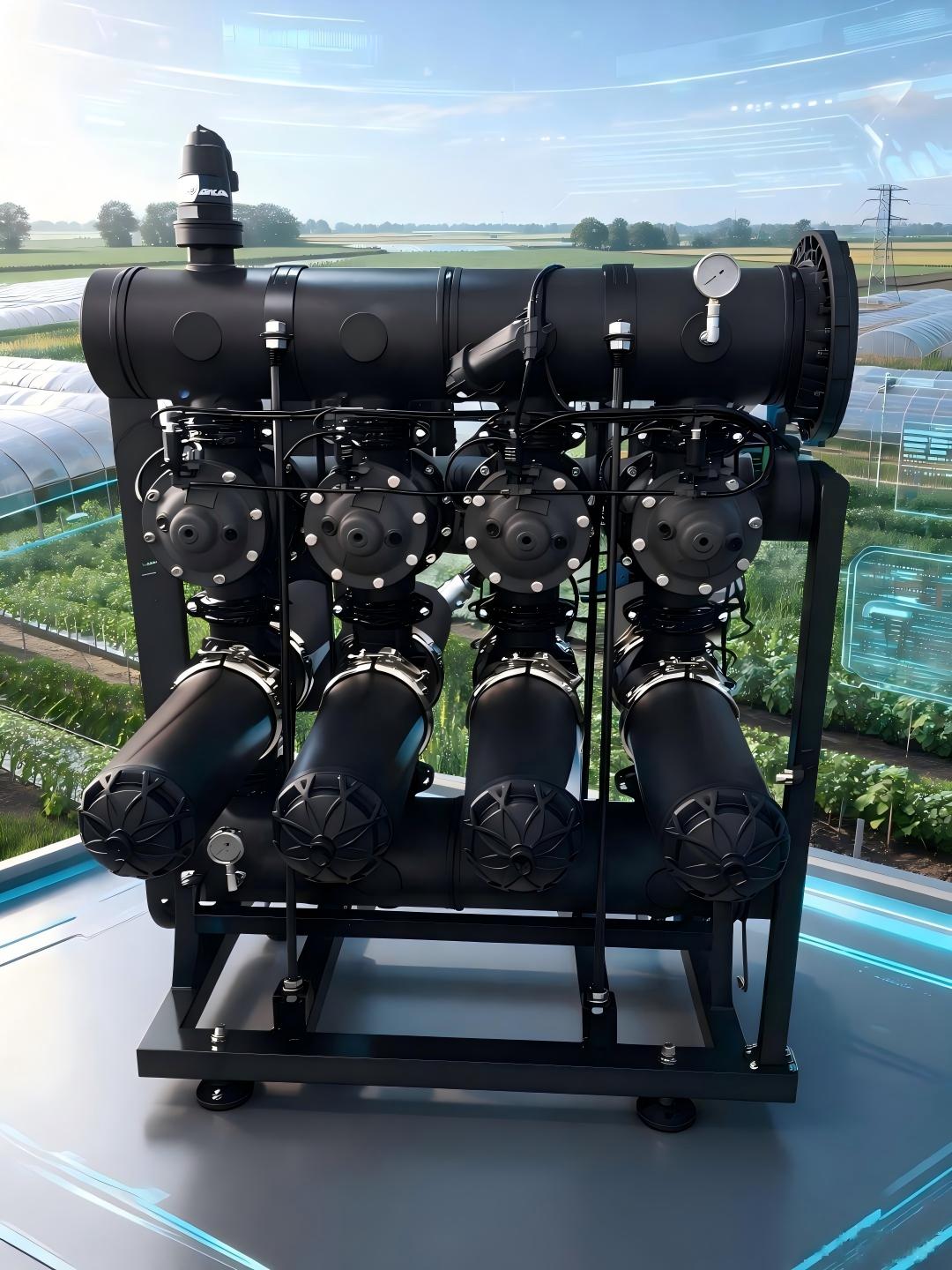
- Multi-stage filtration suite: The number one cause of drip system failure is emitter clogging, so systems require layered filtration: sand separators for high-sediment well water, 120–150 mesh disc/screen filters for organic matter removal, and secondary in-line filters at each zone valve. USDA NRCS data shows proper filtration reduces emitter clogging rates by 89% over a 10-year system lifespan.
- Pressure regulation: Drip systems operate at 10–30 PSI, compared to 40–80 PSI for sprinkler systems. Inline pressure regulators installed at the system header and zone valves reduce incoming pressure to avoid emitter blowout and ensure uniform flow across the entire field.
- Mainline and submain tubing: UV-stabilized polyethylene (PE) or PVC pipe (1.5–4 inch diameter for commercial operations, 0.5–1 inch for small farms) that moves water from the source to field zones, sized to maintain pressure consistency with no more than 5% pressure loss across each zone.
- Drip laterals: ½–1 inch PE tubing laid along crop rows, with emitter spacing matched to crop root spread: 12–24 inch spacing for shallow-rooted row crops, 3–4 foot spacing for deep-rooted orchard and vine crops.
- Emitters/drippers: Calibrated components that release water at a fixed flow rate (typically 0.5–2 gallons per hour [GPH] per emitter). Pressure-compensating (PC) emitters deliver consistent flow even on sloped terrain (up to 8% grade) with pressure variations of +/- 10 PSI, making them suitable for 92% of non-flat commercial farm sites per Irrigation Association design standards.
- Optional integrated components: Fertigation injectors for soluble fertilizer and soil amendment delivery, granular soil moisture sensors, automated zone valves, and remote telemetry controls for data-driven irrigation scheduling.
Key Drip Irrigation System Types, Matched to Crop and Terrain
Drip systems are not one-size-fits-all: manufacturers design specialized configurations to match crop type, terrain, tillage practices, and operational budget. Growers can select from four primary commercial drip system types:
Surface Drip Irrigation
Surface drip systems, the most widely adopted drip type, are used on 68% of U.S. drip-irrigated acres per 2023 Irrigation Association data, with laterals laid directly on the soil surface along crop rows. This configuration is ideal for annual vegetable crops, vineyards, orchards, and high-value specialty crops where seasonal removal for tillage or harvest is required. Surface drip requires 10–15% less installation labor than subsurface drip, but is vulnerable to rodent damage, UV degradation if not covered with mulch, and damage from cultivation equipment. For context, a 40-acre organic tomato operation in California’s Central Valley uses surface drip with 1 GPH emitters spaced 18 inches apart, delivering 0.25 inches of water per day during peak fruiting; 2023 UC Davis on-farm trial data from the site recorded a 38% reduction in foliar disease incidence compared to the farm’s previous sprinkler system, as foliage never came into contact with irrigation water.
Subsurface Drip Irrigation (SDI)
Subsurface drip systems feature laterals installed 6–18 inches below the soil surface, directly in the crop root zone, and account for 32% of U.S. drip acres, with fastest adoption among commodity row crop operations (corn, cotton, soybeans) where permanent installation eliminates annual setup and removal. USDA NRCS trials on SDI for corn in Nebraska found 22% higher yields than furrow irrigation, 12% higher yields than center pivot, and 45% lower water use over a 5-year study period. Subsurface drip reduces evaporative loss by an additional 10% compared to surface drip, as water never reaches the soil surface, and eliminates rodent and UV damage for a 15–20 year system lifespan, compared to 7–10 years for exposed surface drip. A real-world example: a 1,200-acre cotton farm in West Texas installed subsurface drip on 800 acres in 2018, replacing furrow irrigation. Between 2019 and 2023, the farm reduced total irrigation pumping by 52%, cut fertilizer application rates by 38% through root-zone fertigation, and saw average yield increases of 29% (from 1.2 bales/acre to 1.55 bales/acre), even during the 2022 extreme drought year when regional furrow-irrigated cotton yields dropped 22%.
Drip Tape Systems
Drip tape is a low-cost, thin-walled (4–15 mil) flexible PE tubing with pre-installed emitters, designed for seasonal use on annual crop operations, small farms, and high-density vegetable production. Drip tape costs 60–70% less than rigid drip lateral tubing, with a 1–5 year lifespan depending on wall thickness, making it ideal for operations that rotate crops or till annually. A 2024 National Young Farmers Coalition survey found 78% of small-scale vegetable farms (under 40 acres) in the U.S. use drip tape for irrigation due to its low upfront cost and easy, tool-free installation. Note: Most low-cost drip tape uses non-pressure-compensating emitters, so it is not suitable for sloped terrain over 3% grade, where elevation differences cause uneven water distribution between high and low points in rows.
Container/Nursery Drip Systems
High-density, low-flow (0.5–1 GPH) emitter systems designed for potted nursery stock, greenhouse crops, and high tunnel production, with individual emitters sized to deliver targeted water to each container without wetting foliage or walkways. 2023 AmericanHort research found greenhouse and nursery operations using container drip reduce water use by 70% compared to overhead sprinkler irrigation, and reduce nursery crop loss from root rot and foliar fungal disease by 45% by eliminating constant canopy wetness.
Drip Irrigation vs. Other Common Irrigation Methods: Data-Driven Comparison
Growers evaluating irrigation upgrades often compare drip to sprinkler, furrow, and center pivot systems, weighing upfront cost, efficiency, labor requirements, crop suitability, and long-term ROI. The table below compares key performance metrics across all major irrigation methods, using 2024 USDA NRCS, Irrigation Association, and FAO field trial data for 10-acre and larger commercial operations:
| Performance Metric | Drip Irrigation (Surface/Subsurface) | Center Pivot Sprinkler (LEPA Nozzles) | Furrow/Flood Irrigation | Solid Set Sprinkler |
|---|---|---|---|---|
| Water Application Efficiency (FAO 2024) | 90–95% | 75–85% | 40–60% | 60–70% |
| Typical Yield Increase Over Furrow Baseline | 20–50% | 10–25% | 0% (baseline) | 5–15% |
| 2024 Installed Cost Per Acre (Commercial Scale) | $1,200–$2,800 (surface); $1,800–$3,500 (subsurface) | $1,000–$2,200 | $300–$800 | $800–$1,800 |
| Annual Labor Requirement Per Acre (Hours) | 0.5–2 (automated); 2–4 (manual) | 1–3 | 6–12 | 3–7 |
| Fertilizer Use Reduction vs. Furrow | 30–50% (with integrated fertigation) | 15–25% | 0% | 10–20% |
| Foliar Disease Risk (1 = Low, 10 = High) | 2 (no canopy wetting) | 6 | 5 | 8 |
| Maximum Suitable Field Slope | 0–8% (with pressure-compensating emitters) | 0–15% | 0–2% | 0–10% |
| Average Functional System Lifespan | 7–10 years (surface); 15–20 years (subsurface) | 20–25 years | 30+ years (with regular land grading) | 15–20 years |
It is critical to note that while drip systems carry a higher upfront cost than furrow and a comparable cost to center pivot for most operations, 2023 University of Nebraska agricultural economics research found that drip systems deliver a 2–4 year payback period for high-value crops (fruits, nuts, vegetables) and a 4–7 year payback period for commodity row crops, due to combined savings in water, fertilizer, labor, and increased yield revenue. For comparison, center pivot systems deliver an average 5–9 year payback period, while furrow systems deliver no net savings after accounting for water waste, labor, and yield losses during drought years.
Step-by-Step Drip Irrigation System Design and Installation Process
Proper design and installation are the foundation of long-term drip system performance. Poorly designed systems can have 20–30% higher water waste and 40% higher clogging rates, even with high-quality components. Follow this standardized, NRCS-aligned process for commercial installations:
Step 1: Conduct Site and Crop Water Requirement Audit
Before selecting components, collect baseline site data to size the system correctly for peak crop demand:
- Calculate crop evapotranspiration (ETc) rates for the specific crop and growth stage using local cooperative extension data. For example, mature almond trees in California require 40–42 inches of water per growing season, while processing tomatoes require 24–28 inches; drip systems must be sized to deliver peak ETc rates during the hottest growing weeks, typically 0.25–0.35 inches per day for most row and orchard crops.
- Map field slope and soil type: Sandy soils require higher emitter density (12 inch spacing, 0.5 GPH emitters) to prevent deep percolation, while clay soils require wider spacing (24 inch spacing, 1 GPH emitters) to avoid surface runoff. Slopes over 3% require pressure-compensating emitters to maintain uniform flow.
- Test water source quality: Test for pH (ideal range 5.5–7.5 for drip systems), total dissolved solids (TDS <500 ppm is optimal; >2000 ppm requires specialized acid injection to prevent mineral clogging), sediment load, and bacterial content (iron bacteria >0.3 ppm requires chlorine injection to prevent biofilm buildup).
- Map available water flow rate and pressure at the source: For example, a well delivering 100 GPM at 50 PSI can support 20 acres of drip irrigation requiring 5 GPM per acre (0.3 inches per day application rate), per NRCS design calculations.
Step 2: Select Components Matched to Site Specifications
Use audit data to select filters, tubing, emitters, and controls. Follow the core design rule: maintain a maximum 10% flow variation across all emitters in a zone to ensure uniform water application, which requires sizing mainlines and laterals to keep pressure loss below 5% across each zone. For example, per Toro Ag commercial drip design guidelines, ½ inch drip lateral with 1 GPH emitters spaced 12 inches apart should not exceed 200 feet in length to avoid pressure drop that reduces flow to emitters at the end of the row.
Step 3: Install System Infrastructure in Compliance with Irrigation Standards
Follow a standardized installation sequence to reduce post-install repairs and ensure uniform performance:
- Install the backflow preventer at the water source first to meet local code requirements, followed by the primary filtration system and master pressure regulator.
- Lay mainline and submain tubing along field edges, burying lines 12–18 inches deep in areas with heavy equipment traffic to prevent crushing.
- Install zone control valves, with secondary 150-mesh filters at each valve, connected to automated controllers if using sensor-based scheduling.
- Lay drip laterals along crop rows: for surface systems, secure tubing with ground staples every 10 feet to prevent movement from wind or water flow; for subsurface systems, use a specialized drip tape plow to install laterals at the correct depth for the crop root zone (8–12 inches for row crops, 12–18 inches for orchards).
- Flush all lines thoroughly for 5 minutes per zone before capping lateral ends to remove installation debris that can clog emitters, then test pressure at the farthest emitter in each zone to confirm it falls within the 10–30 PSI operating range.
Step 4: Calibrate Emitters and Establish Initial Irrigation Schedule
After installation, conduct a catch can test: place graduated containers under 10% of emitters across each zone, run the system for 30 minutes, and measure output to confirm emitters are delivering the calibrated flow rate (within 5% of the rated GPH). For example, a 1 GPH emitter should deliver 0.5 gallons in 30 minutes; if output is more than 10% below rated flow, check for clogs or pressure deficits. Establish initial irrigation schedules based on real-time soil moisture data, rather than fixed calendar schedules, to reduce overwatering. A 2022 study in Agricultural Water Management found that soil moisture sensor-connected drip systems reduce water use by an additional 20% compared to calendar-scheduled drip, while maintaining equal or higher yields.
For a practical small-farm installation example: a 10-acre organic mixed vegetable farm in western North Carolina growing tomatoes, peppers, and squash on 4% sloped sandy loam soil installed a drip system in 2022. The farm’s well delivers 30 GPM at 45 PSI, with low sediment and TDS of 180 ppm. The system design uses 15 mil drip tape with 1 GPH pressure-compensating emitters spaced 18 inches apart, a 120-mesh disc filter, 25 PSI pressure regulator, and 8 zones sized to deliver 0.25 inches per day during peak July/August ET. The system cost $1,450 per acre installed, for a total investment of $14,500. In the first year, the farm reduced water use by 58% compared to its old sprinkler system, cut foliar fungicide applications by 42%, saw a 27% increase in tomato yield, and achieved full payback on the system in 2.8 years, per audited farm financial records.
Drip Irrigation Maintenance Protocols to Maximize Lifespan and Performance
The Irrigation Association reports that 70% of drip system failures in the first 5 years are preventable with regular, scheduled maintenance. Without routine care, emitter clogging, pressure regulator failure, and freeze damage can reduce system efficiency by 30–50% within three years of installation.
Weekly and Monthly Routine Checks
- Weekly: Check system pressure at the source and at the end of 2–3 laterals per zone to confirm pressure stays within the recommended 10–30 PSI range; pressure spikes over 30 PSI indicate regulator failure, which can cause emitter blowout leading to 20–30% water waste in affected zones. Visually inspect 10% of emitters per zone for visible clogging, leaks, or damage from wildlife/equipment.
- Monthly: Flush lateral lines for 2–3 minutes per zone to remove accumulated sediment; for systems using recycled water or high-iron well water, test chlorine residual levels at the end of laterals to ensure biofilm control (target 1–2 PPM free chlorine at the lateral end during treatment). Check filter pressure gauges: a 5 PSI pressure drop across the filter indicates it requires cleaning to reduce flow restriction.
Seasonal Start-Up and Shut-Down Procedures
For regions with freezing winter temperatures, improper winterization is the leading cause of drip system damage, responsible for 45% of non-clog related repairs per 2023 irrigation equipment insurer claim data. Follow these standardized steps:
- Shut off water supply to the system in late fall, before the first hard freeze (32°F for 4+ consecutive hours).
- Open all zone valves and drain plugs on mainlines, submains, and filters to remove standing water; for permanent subsurface systems, use a low-pressure air compressor (30 PSI maximum, to avoid blowing emitters out of tubing) to blow residual water from lines.
- Remove pressure regulators, filters, and fertigation injectors, and store in a temperature-controlled space over winter.
- For surface drip tape, drain lines fully and either plow under for decomposition (for thin 4–6 mil seasonal tape) or roll and store for reuse the following season.
Spring start-up procedures include reinstalling removed components, checking for rodent damage or freeze cracks in lines, flushing all zones for 5 minutes, testing emitter output with catch cans, and calibrating soil moisture sensors before the first irrigation of the season.
Long-Term Clog Prevention Treatments
Clogging from mineral deposits, organic matter, or biofilm reduces emitter flow uniformity over time, leading to uneven crop growth and yield loss. Targeted, scheduled treatments reduce long-term clogging risk by 92% per USDA NRCS data:
- For high-calcium hard water (TDS >1500 ppm), inject food-grade phosphoric or sulfuric acid to lower water pH to 6.0–6.5 for 30 minutes per zone, once per month during the growing season, to dissolve mineral scale.
- For high-iron water or water with high bacterial content, inject chlorine (liquid bleach or calcium hypochlorite) at a rate of 5–10 PPM at the source for 30 minutes per zone, once per month, to kill iron bacteria and break down biofilm. Always flush lines for 10 minutes after chlorine treatment to avoid crop root damage.
- For systems using surface water with algae or organic sediment, install a UV sterilizer upstream of the primary filter to kill algae before it enters lines, reducing organic clogging by 80%.
Proven Best Practices to Maximize Drip Irrigation ROI
Even well-installed systems can underperform without operational adjustments tailored to crop needs and site conditions. These evidence-based practices boost yield, reduce input costs, and shorten payback periods:
Integrate Fertigation for Precision Nutrient Delivery
Drip systems allow growers to inject soluble fertilizers, soil amendments, and even approved crop protection products directly into the irrigation water, delivering nutrients directly to the root zone in small, frequent doses matched to crop nutrient uptake rates. 2023 University of Florida research on drip-irrigated strawberries found that weekly fertigation reduced total nitrogen fertilizer use by 47% compared to broadcast fertilizer application, increased fruit yield by 32%, and reduced nitrogen leaching into groundwater by 83%. Follow the core fertigation rule: always inject fertilizers after the primary filter, and flush lines for 10 minutes after fertigation to prevent fertilizer residue from clogging emitters.
Pair Drip with Soil Moisture Sensors and Automated Controls
USDA data shows manual irrigation scheduling based on grower intuition or calendar dates leads to overwatering 60% of the time, wasting water and leaching nutrients below the root zone. Automated drip systems connected to granular soil moisture sensors (installed at 6, 12, and 18 inch depths in the root zone) trigger irrigation only when soil moisture drops below a crop-specific threshold, eliminating overwatering and underwatering. A 2024 case study of a 200-acre almond orchard in California’s Central Valley found that sensor-controlled drip reduced annual water use by 1.2 acre-feet per acre, reduced energy costs for pumping by $112 per acre, and increased nut yield by 11% compared to manually scheduled drip.
Match Emitter Spacing and Flow Rate to Crop Root Zones
A common design mistake is selecting emitters spaced too far apart, leading to dry zones in the root zone, or emitters with too high a flow rate, leading to runoff and deep percolation. For example, shallow-rooted crops like lettuce (root depth 12–18 inches) require 12 inch spaced emitters with 0.5 GPH flow, while deep-rooted orchards (root depth 3–5 feet) require 24–36 inch spaced emitters with 1–2 GPH flow, to ensure water spreads evenly through the entire root zone without waste. UC ANR trials found that correctly matched emitter spacing improves water application uniformity by 22%, leading to 14% higher crop yields compared to poorly designed systems with mismatched emitters.
Use Mulch with Surface Drip to Maximize Efficiency
For vegetable production and high-tunnel operations, laying plastic or organic mulch over surface drip lines reduces evaporative loss by an additional 15–20%, suppresses weeds, and protects drip tubing from UV damage, extending surface drip lifespan by 3–5 years. A 2022 study on organic tomato production in Ohio found that black plastic mulch paired with surface drip increased yield by 35% compared to bare-ground drip, reduced weed control labor by 78%, and cut total irrigation water use by 21%.
Common Drip Irrigation Mistakes to Avoid
Data from 200+ drip system audits conducted by the Irrigation Association between 2021 and 2023 found that 62% of operational drip systems had at least one major defect reducing efficiency by 20% or more. The most costly, frequently observed mistakes include:
- Skipping proper filtration: 38% of audited systems had undersized or missing filters, leading to 40–60% emitter clogging within 3 years of installation. For example, a 20-acre vineyard in Oregon installed surface drip without a disc filter in 2019, using creek water with high organic sediment; by 2021, 52% of emitters were fully clogged, leading to 28% yield loss in affected rows, and requiring $18,000 in emitter replacement and filter installation.
- Incorrect pressure regulation: 27% of audited systems operated at pressures above 35 PSI, leading to emitter blowout, uneven flow, and 25–30% excess water use. Conversely, 19% of systems operated at pressures below 10 PSI, leading to insufficient flow to the end of laterals, leaving 15–20% of crop rows under-watered.
- Overwatering during early crop growth: Many growers apply the same irrigation rate to young transplants as mature crops, leading to root rot, nutrient leaching, and 20–30% wasted water. For example, young tomato transplants require only 0.1 inches of water per day for the first 2 weeks after transplanting, compared to 0.3 inches per day during peak fruiting.
- Neglecting regular line flushing: 41% of audited systems had not been flushed in over a year, leading to sediment buildup in lateral lines that clogs emitters at the end of rows first, causing uneven crop maturity across fields.
- Using non-pressure-compensating emitters on sloped ground: On slopes over 3%, non-PC emitters can deliver 3–4 times more water at the low end of the row than the high end, leading to waterlogging at the bottom and drought stress at the top, reducing total field yield by 15–25%.
Cost, Incentives, and Long-Term ROI Calculations
Drip irrigation systems deliver strong long-term returns, but growers must accurately calculate upfront costs, available incentives, and operational savings to evaluate investment value.
Upfront and Annual Operating Costs (2024 Data)
Installed costs for drip systems vary by system type, field size, terrain, and component quality, per the 2024 Irrigation Association cost survey of commercial irrigation installers:
- Drip tape (seasonal, vegetable production): $500–$1,000 per acre installed, with $200–$400 per acre annual replacement cost for tape.
- Rigid surface drip (orchards, vineyards, permanent crops): $1,200–$2,200 per acre installed, with $50–$100 per acre annual maintenance cost.
- Subsurface drip (row crops, permanent installation): $1,800–$3,500 per acre installed, with $30–$70 per acre annual maintenance cost.
- Automated control and sensor package add-on: $200–$400 per acre, with annual data/software costs of $10–$20 per acre.
Operating costs are significantly lower for drip than other systems due to reduced water, energy, labor, and fertilizer costs: for example, a 100-acre subsurface drip cotton operation in West Texas has annual operating costs of $125 per acre, compared to $310 per acre for furrow irrigation, when accounting for water pumping costs, labor, and fertilizer.
Available Financial Incentives for Drip Installation
Federal, state, and local conservation programs cover 50–75% of drip system installation costs for eligible growers, per 2024 USDA NRCS Environmental Quality Incentives Program (EQIP) data. In 2023, NRCS provided $287 million in cost-share funding for drip irrigation upgrades across the U.S., with average payments of $1,100 per acre for subsurface drip installations. Many state water districts also offer additional rebates: for example, the California Department of Water Resources offers $800–$1,200 per acre rebates for drip systems that reduce agricultural water use by 25% or more, reducing net grower investment to $300–$1,500 per acre in many cases.
Real-World ROI Example
The following calculation reflects actual returns for a 60-acre commercial apple orchard in Michigan that converted from solid set sprinkler irrigation to permanent surface drip with pressure-compensating emitters, soil moisture sensors, and fertigation capability in 2021:
- Total upfront installed cost: $1,800 per acre, total $108,000.
- EQIP cost-share: 60% of total cost, reducing grower out-of-pocket investment to $43,200.
- Annual ongoing savings and revenue gains: $142 per acre in water and pumping costs (40% reduction), $95 per acre in fertilizer savings (35% reduction via fertigation), $68 per acre in labor savings (50% reduction), $270 per acre in increased yield revenue (22% higher apple yield, 10% higher fruit grade due to reduced foliar disease).
- Total annual net gains: $575 per acre, total $34,500 per year, minus $70 per acre in annual maintenance costs for a net annual gain of $30,300.
- Payback period: $43,200 / $30,300 = 1.4 years, with a 10-year net return of $259,800.
Future of Drip Irrigation: Emerging Commercial Technologies
Drip irrigation technology continues to evolve, with new innovations improving efficiency and reducing labor requirements. As of 2024, three key technologies are seeing rapid commercial adoption across farm sizes:
- Self-flushing emitters: New emitter designs use pressure differentials to automatically flush sediment during system start-up and shut-down, reducing clogging rates by 70% and cutting annual maintenance time by 50%, according to 2023 field trials by drip manufacturer Netafim.
- Solar-powered drip systems: Off-grid solar pumps paired with drip systems allow growers in remote areas without grid power to deploy precision irrigation, with 30% lower operating costs than diesel-pumped systems. 2023 FAO data shows 1.2 million smallholder farmers globally are now using solar drip systems, a 220% increase since 2018.
- AI-powered irrigation scheduling: Machine learning algorithms that combine soil moisture data, hyper-local weather forecasts, crop growth stage data, and real-time flow sensors to automatically adjust irrigation schedules, reducing water use by an additional 15–20% compared to standard sensor-controlled systems. A 2023 trial of AI-controlled drip on wine grapes in Washington State found 18% lower water use, 12% higher grape quality scores, and 9% higher yield than manually scheduled drip.
Drip irrigation is the most efficient, flexible, and high-ROI irrigation method available for agricultural operations of all sizes, from small organic vegetable farms to large commodity row crop operations. Success with drip requires careful site assessment, correct component selection, proper installation, consistent maintenance, and integration with precision tools like soil moisture sensors and fertigation to deliver maximum value. With global water supplies for agriculture becoming increasingly constrained, drip systems are no longer a niche technology for high-value crops: they are a core tool for building