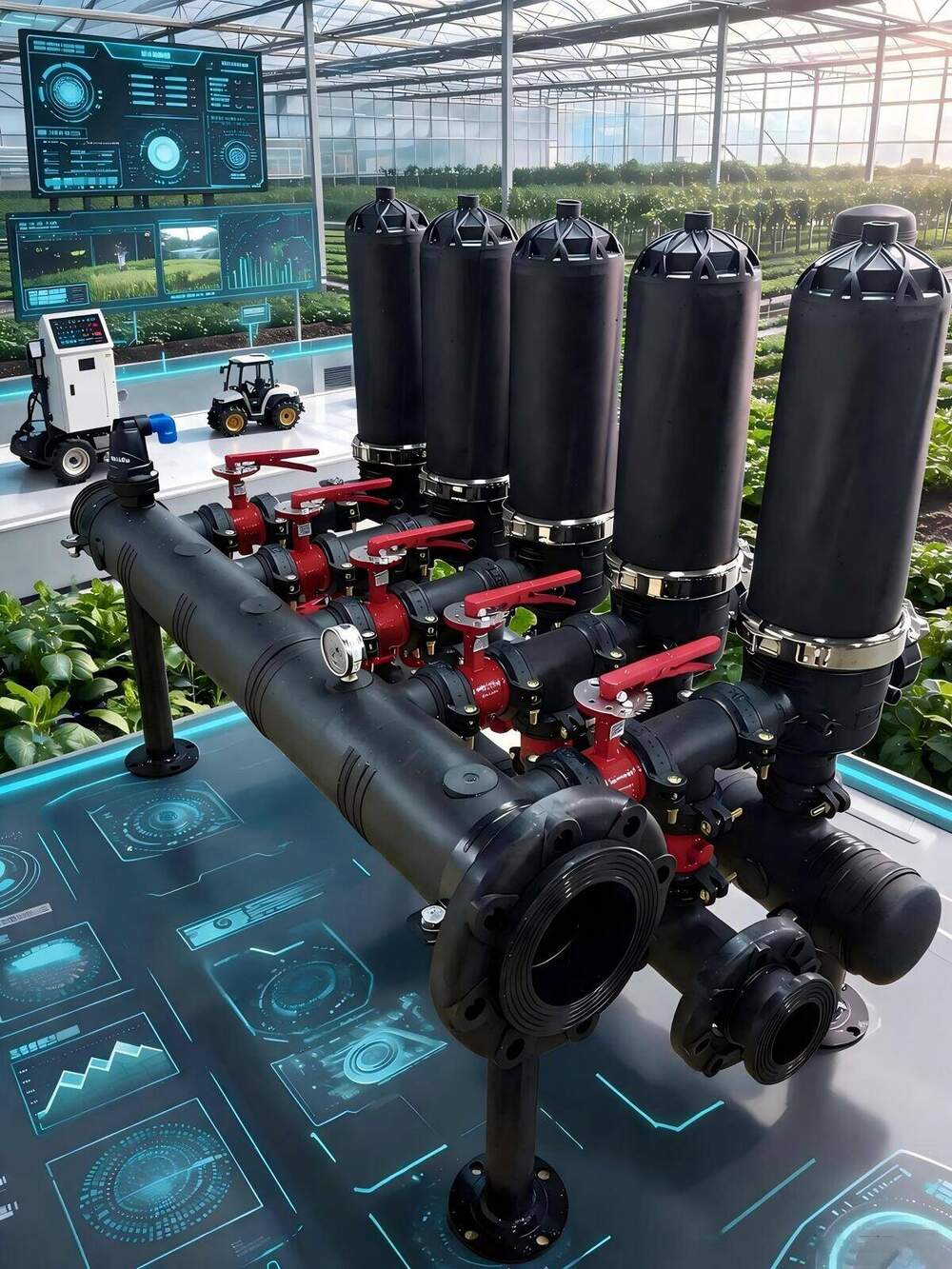
As of 2024, USDA data shows irrigated agriculture accounts for 60% of total U.S. freshwater withdrawals, with modern high-efficiency systems like subsurface drip irrigation (SDI), micro-sprinklers, and low-energy precision application (LEPA) center pivots cutting water use by 40–60% compared to traditional flood irrigation. But these precision systems have a critical vulnerability: emitter and nozzle clogging, which the Irrigation Association (IA) estimates causes 30–50% of high-efficiency irrigation system performance failures within the first three years of operation when filtration is inadequate. Independent field trials from the University of California Cooperative Extension (UCCE) confirm that properly selected disc filters reduce clogging-related maintenance costs by 72% and extend irrigation system lifespan by 12+ years, making them the most versatile filtration solution for 21st-century farm operations. This guide provides data-backed, practical guidance for disc filter selection for modern irrigation, including real-world performance data, head-to-head technology comparisons, site-specific sizing frameworks, and case studies from commercial farms across the U.S.
Why Disc Filters Are Non-Negotiable for 21st-Century Irrigation Systems
The High Cost of Inadequate Filtration
Unlike early 20th-century flood irrigation systems that could tolerate high loads of sediment and debris, modern precision irrigation systems rely on small orifices (0.7–2.5 mm for most drip emitters and LEPA nozzles) to deliver uniform water and nutrient applications. Even partial clogging of 10% of emitters can reduce distribution uniformity by 20% or more, leading to uneven crop growth, reduced yields, and excess fertilizer leaching. The UN Food and Agriculture Organization (FAO) 2023 report on global irrigation efficiency found that 25% of smallholder drip systems in arid regions fail within two years of installation, with 80% of those failures traced to incorrect filtration selection rather than manufacturing defects.
For commercial operations, the costs of poor filtration are substantial. IA 2024 field data collected from 1,200 commercial farms in the U.S. Southwest found that operations with undersized or incorrectly rated disc filters experienced an average of 18.7 hours of unplanned downtime per irrigation season, equating to $1,240 per acre in lost yield for high-value crops (almonds, wine grapes, leafy greens) due to uneven water distribution during critical growth stages. In Mediterranean citrus operations, FAO data shows unfiltered or poorly filtered irrigation leads to 22% higher emitter clogging rates, reducing water application uniformity by 35% and increasing nitrate leaching by 28%.
Core Performance Advantages of Disc Filters
Disc filters operate by stacking grooved, thermoplastic discs (typically polypropylene or thermoplastic elastomer) on a central spine, creating a 3D filtration matrix that traps debris both on the surface of the stack and within the intersecting grooves of adjacent discs. This design differs fundamentally from 2D screen filters, which only trap debris on a single woven mesh surface. UCCE 2022 field trials tested filtration performance across common technologies using surface water with mixed organic (algae, weed seeds, crop residue) and inorganic (sand, silt, precipitated iron) debris, finding that premium ISO 9905-certified disc filters captured 94% of particulates at their rated micron size, compared to 71% for standard woven screen filters of the same micron rating. Additional performance benefits include:
- Lower pressure loss during high-debris loading: Disc filters maintain consistent flow even when 30% of the filtration matrix is filled with debris, compared to screen filters that experience rapid pressure rise once 15% of the mesh is covered
- Resistance to damage from hard particulates: Unlike screen mesh, which can tear when hit by sand grains carried at high flow velocity, rigid disc stacks resist punctures, eliminating bypass of unfiltered water during operation
- Effective capture of both organic and inorganic debris: The 3D groove structure traps stringy algae and organic residue that would pass through or wrap around screen mesh, reducing the need for frequent manual cleaning
- Flexible micron rating configuration: Most disc filter models allow users to swap disc sets to adjust micron ratings as water source conditions change, without replacing the entire filter housing
7 Non-Negotiable Factors for Data-Backed Disc Filter Selection
Disc filter selection is not a one-size-fits-all process; a filter that performs well for a small vegetable farm using clean well water will fail catastrophically for a 1,000-acre SDI almond orchard drawing from a sediment-laden canal. The following seven factors, validated by 10+ years of USDA and university field trial data, should guide every selection decision.
1. Micron Rating Matched to Water Source and Irrigation Type
Micron rating, which describes the smallest particle size the filter will reliably capture, is the single most impactful selection variable. The IA recommends selecting a micron rating equal to 1/10 the diameter of the smallest emitter or nozzle in the system to prevent particles from lodging in orifice openings. For context, a human hair is approximately 70 microns in diameter, while fine silt particles are 20–50 microns, and fine sand particles are 50–200 microns. General micron rating guidelines by system type include:
- Subsurface drip irrigation (SDI) with <1 mm emitter orifices: 120–130 micron
- Surface drip irrigation with 1–1.5 mm emitters: 130–150 micron
- Micro-sprinklers for permanent crops/frost protection: 150–200 micron
- LEPA center pivot nozzles: 200–250 micron
- Large-orifice impact sprinklers: 250–400 micron
These base ratings should be adjusted based on water source characteristics: for surface water (canal, pond, river) with high algae or organic load, reduce micron rating by 20–30 microns to capture small organic cells; for recycled effluent water, use a 50–100 micron rating to capture biological solids; for clean deep well water with <2 ppm sand content, increase micron rating by 20–30 microns to reduce pressure loss. It is critical to distinguish between nominal and absolute micron ratings: premium disc filters certified to ISO 9905 standards achieve 98% capture efficiency at their rated micron size, while budget economy models often advertise nominal ratings with only 70% capture efficiency, leading to unexpected clogging.
Both under-specifying and over-specifying micron ratings carry measurable costs. UCCE 2023 trials on California almond SDI systems found that using a 200-micron disc filter instead of the recommended 120-micron unit led to 41% higher clogging rates after two growing seasons, requiring 3x more frequent flushing and $620 per acre in emitter replacement costs over five years. Conversely, USDA Agricultural Research Service (ARS) data shows over-specifying to a 50-micron filter when 130 microns is sufficient increases clean pressure loss by 37% and raises annual pump energy costs by 22%.
2. Flow Rate Sizing With Appropriate Safety Factors
Disc filter pressure drop increases as flow rate rises and debris accumulates on the disc stack. IA standards require that clean filter pressure drop never exceed 5 psi (0.34 bar), with automatic flushing triggered when pressure drop reaches 7–10 psi. A common and costly mistake is sizing filters to match average system flow without accounting for peak flow (when all irrigation zones run simultaneously), debris loading, or future system expansion.
Best practice is to size filters to handle 120% of peak system flow for low-debris well water, and 140% of peak flow for high-debris surface or effluent water, to ensure pressure drop remains below the 5 psi threshold even during high debris loads. Flow capacity is directly tied to filter size and disc stack count, with typical performance for premium disc filters as follows:
- 2-inch filter with 20-disc stack: 25–50 gpm capacity, suitable for 5–10 acre small farms
- 3-inch filter with 40-disc stack: 80–150 gpm capacity, suitable for 15–40 acre operations
- 4-inch filter with 80-disc stack: 200–400 gpm capacity, suitable for 50–120 acre operations
- 6-inch modular filter bank (3+ individual filter units): 600–2,400 gpm capacity, suitable for 150+ acre commercial operations
A 2024 case study from a 240-acre leafy green operation in Yuma, AZ illustrates the cost of undersizing: the farm initially installed disc filters sized exactly to their 1,200 gpm peak SDI flow with no safety factor, leading to 12 psi pressure drop at peak operation, a 21% reduction in distribution uniformity, and $14,200 in excess annual energy costs for pump operation. After upgrading to filters sized for 1,500 gpm (25% safety factor), clean pressure drop fell to 3.8 psi, distribution uniformity rose to 94%, and annual energy costs fell by 19% in the first growing season.
3. Housing and Disc Material Durability for Site Conditions
Disc filter housings are available in a range of materials, each suited to specific operating pressures, water chemistry, and chemigation practices. Material selection directly impacts service life and maintenance costs:
- Polypropylene (PP) and glass-reinforced nylon (GRN): Low-cost, corrosion-resistant, lightweight, rated for 100 psi working pressure, ideal for low-pressure gravity-fed or solar-powered irrigation systems. Food-grade PP models meet NSF/ANSI 61 standards for edible crop production.
- Epoxy-coated carbon steel and aluminum: Mid-cost, durable, rated for 125–150 psi working pressure, suitable for standard pressurized row crop and permanent crop systems. Uncoated aluminum is not recommended for saltwater coastal areas or low-pH chemigation, as USDA ARS trials found uncoated aluminum housings have a 3.2-year service life in 3–5 ppm salinity water, compared to 12 years for epoxy-coated steel.
- 304/316 stainless steel: High-cost, corrosion-resistant, rated for 150–225 psi working pressure, ideal for high-pressure hilly terrain, coastal saltwater exposure, or operations using strong acid/chlorine chemigation. Service life exceeds 18 years in most conditions.
Disc material should also be matched to site chemistry: standard PP discs perform well with neutral pH (6–8) water and light chemigation, but degrade 3x faster when exposed to continuous pH <3 from acid injection for mineral precipitate control. For operations with aggressive chemigation programs, thermoplastic elastomer (TPE) discs, which resist pH levels from 2–11, are recommended to avoid premature disc failure.
4. Flushing Mechanism Matched to Labor Availability and Debris Load
All disc filters require periodic flushing to dislodge debris trapped in disc grooves, and the choice of flushing mechanism directly impacts maintenance labor costs and system reliability. Three primary flushing configurations are available:
- Manual flushing: Requires an operator to open a drain valve and reverse flow across the disc stack to clean debris. Manual units have 60% lower capital cost than automatic models, but increase maintenance labor by 2.1 hours per week per 100 gpm of system flow for high-debris water sources. Best for small operations <10 acres with <50 gpm flow and low debris loads.
- Semi-automatic flushing: Uses pressure differential sensors to detect when flushing is needed and sends an alert to an operator, who initiates the flush cycle remotely or manually. Capital cost is 30% lower than fully automatic units, with 65% less labor required than manual models. Best for 10–50 acre operations with moderate debris loads.
- Fully automatic flushing: Uses pressure differential sensors or timed controls to initiate reverse-flow flushing without human intervention, with flush cycles typically lasting 15–30 seconds. California Almond Board 2023 data shows fully automatic disc filters reduce maintenance labor costs by 88% compared to manual units, and reduce clogging-related yield loss by 14% because flushing occurs at the optimal 7 psi pressure differential, rather than on a fixed schedule or when flow is severely restricted. Best for operations >50 acres, high-debris water sources, or high-value crops where downtime causes major yield loss.
Regardless of flushing type, ensure the system can deliver 1.5x the minimum required flush flow rate (typically 20–30 gpm per filter bank) to fully spin discs and dislodge trapped debris. IA testing shows insufficient flush flow leads to 47% shorter disc service life, as debris remains packed in grooves and reduces effective filtration area over time.
5. Modularity and Scalability for Long-Term System Expansion
USDA 2022 data shows 68% of U.S. irrigated farms expand irrigation acreage by an average of 47% within 15 years of initial system installation. Modular disc filter systems, which allow operators to add individual filter banks to increase total flow capacity, reduce long-term capital costs significantly compared to fixed-size, non-modular units. For example, a 3-bank modular filter handling 600 gpm can be expanded to 6 banks to handle 1,200 gpm for 30% of the cost of purchasing an entirely new fixed-size filter. A 2022 survey of 400 U.S. row crop farms found operations with modular disc filters had 42% lower 15-year filtration capital costs than operations with non-modular units.
6. Compatibility With Adjacent Irrigation Components
Disc filters do not operate in isolation, and poor compatibility with upstream and downstream system components can reduce performance and increase costs. Before purchase, verify the following compatibility points:
- Chemigation port integration: Seals and gaskets must be chemical-resistant to match injected fertilizers, acids, or chlorine treatments to prevent leaks and premature degradation
- Pipe and valve connection match: Inlet/outlet flange sizes must match adjacent backflow preventers, valves, and pipe diameters to avoid excess pressure loss from ill-fitting adapters, which can add 2–3 psi of unnecessary pressure drop
- Pre-filtration synergy: Disc filters should be paired with a centrifugal sand separator for well water with >10 ppm sand, or a 500-micron coarse screen pre-filter for surface water with large debris (leaves, twigs, fibrous weeds) to reduce disc loading. Texas A&M AgriLife Extension 2023 trials found farms pairing disc filters with appropriate pre-filtration saw a 62% reduction in flushing frequency and 2x longer disc service life.
- Smart controller integration: Automatic flushing units should include dry contact inputs to connect to soil moisture sensors, weather stations, or pump control systems to pause flushing during critical irrigation events (e.g., frost protection, chemigation applications)
7. Total Cost of Ownership, Not Just Upfront Price
Upfront purchase price typically accounts for only 20–30% of total disc filter costs over a 15-year service life, with the remainder coming from maintenance labor, replacement parts, energy costs from pressure loss, and yield loss from clogging. The 2024 IA TCO analysis found budget, non-certified disc filters priced 30–40% lower than premium certified units had a 47% higher 15-year TCO, due to shorter disc service life (3 years vs 10 years for premium), 12% higher clean pressure loss leading to elevated energy costs, and 2x higher clogging-related yield loss. When evaluating options, prioritize filters with third-party certifications: ISO 9905 for filtration performance accuracy, NSF/ANSI 61 for food-safe materials, and ASAE S581 for pressure rating accuracy.
Disc Filters vs. Competing Irrigation Filtration Technologies: Head-to-Head Comparison
While disc filters are the most versatile filtration option for most modern irrigation systems, other technologies are better suited for specific use cases, often paired with disc filters as part of a multi-stage filtration system. The table below compares performance, cost, and ideal use cases for common irrigation filtration technologies, using data from 2022–2024 university and IA field trials:
| Filtration Technology | 3D Particulate Capture Rate (Rated Micron Size) | Available Micron Range | Annual Maintenance (Hours per 100 gpm Flow) | Clean Pressure Drop (psi) | Capital Cost (Per 100 gpm Capacity) | Best Use Cases |
|---|---|---|---|---|---|---|
| Premium ISO-Certified Disc Filter | 94% | 20–400 | 1.2 (automatic flush) | 2–5 | $280–$350 | Drip/SDI, micro-sprinklers; surface, well, or recycled water with mixed organic/inorganic debris |
| Economy Non-Certified Disc Filter | 70% | 100–400 | 3.8 (manual/semi-auto flush) | 5–9 | $160–$220 | Low-value row crops; low-debris well water; temporary irrigation systems |
| Woven Screen Filter | 71% | 50–1000 | 6.4 (screen cleaning/replacement) | 3–7 | $190–$270 | Clean well water with low organic load; large-orifice sprinkler systems |
| Sand Media Filter | 98% | 5–100 | 8.1 (media replacement, backwash) | 7–15 | $600–$850 | Recycled effluent with high biological load; primary filtration for high-value permanent crop SDI (paired with disc filters for secondary polishing) |
| Centrifugal Sand Separator | 65% (only dense sand >75 micron; 0% organic capture) | N/A | 0.5 (flush drain valve) | 5–12 | $220–$320 | Pre-filtration for high-sand well water, installed upstream of disc or screen filters |
When Disc Filters Are the Clear Choice (and When They Aren’t)
Disc filters are the optimal standalone filtration solution for 75% of modern irrigation applications, including all drip and SDI systems using surface or well water, micro-sprinkler systems, and low-pressure/solar-powered systems where minimal pressure drop is critical. However, disc filters are not designed to be standalone solutions in three scenarios:
- Well water with >10 ppm sand content: Centrifugal separators are required to remove large, dense sand particles before water reaches disc filters, to prevent rapid disc abrasion and loading
- Recycled effluent with >20 ppm total suspended solids (TSS): Sand media filters are required for primary filtration to remove high loads of biological solids, with disc filters installed downstream as polishing filters to capture remaining fine particulates
- Water sources with heavy loads of fibrous aquatic weeds (e.g., elodea, duckweed): A 10mm coarse screen pre-filter is required to capture long fibers that can wrap around disc stacks and prevent proper sealing, which causes unfiltered water bypass
Real-World Disc Filter Selection Case Studies
The following case studies from commercial and small-scale U.S. farms illustrate how data-backed disc filter selection delivers measurable return on investment across different operation sizes, crop types, and water sources.
Case Study 1: 80-Acre Wine Grape Vineyard, Willamette Valley, OR
Background: The vineyard used a combination of surface drip irrigation for in-season water needs and micro-sprinklers for spring frost protection, drawing water from a 5-acre farm pond with average TSS of 42 ppm, with seasonal late-summer algae blooms that raised TSS to 110 ppm. In 2018, the vineyard installed 200-micron economy screen filters sized exactly to their 220 gpm peak flow rate. By 2021, 38% of drip emitters were partially clogged, distribution uniformity dropped to 68%, and micro-sprinkler flow rates fell 27% below required levels due to clogging. The vineyard incurred $112,000 in lost crop value from 2020 spring frost damage when sprinklers failed to deliver adequate coverage, plus $8,200 in annual maintenance labor to clean clogged screens.
Selection Process: Working with a certified irrigation designer, the vineyard selected a fully automatic disc filter system based on the following criteria:
- 130-micron premium TPE discs, with 98% capture efficiency to remove small algae cells, matched to their 0.8mm drip emitters and 1.5mm micro-sprinkler orifices
- 3-bank modular system sized for 275 gpm (25% safety factor above peak flow), delivering 3.2 psi clean pressure drop
- Glass-reinforced nylon housing, rated for 100 psi, resistant to copper sulfate used for pond algae control
- Fully automatic flushing triggered at 7 psi pressure drop, integrated with the vineyard’s smart irrigation controller to pause flushing during frost protection events
Results (2021–2024): After three growing seasons, emitter/sprinkler clogging rates dropped to 2.1%, distribution uniformity rose to 96%, and annual maintenance labor fell from 48 hours per year to 2.1 hours per year. Frost protection performance was fully restored, with zero frost-related yield loss in 2022 and 2023. The 15-year TCO of the disc filter system was calculated at $19,800, compared to a projected $47,200 TCO for continuing to operate the old screen filter system (including yield loss, labor, and replacement parts).
Case Study 2: 640-Acre Corn/Soybean Rotation, Central Illinois
Background: The farm used LEPA center pivot irrigation across all acres, drawing water from deep wells with 12 ppm average sand content and no organic debris. In 2015, the farm installed centrifugal sand separators as standalone filtration. By 2022, LEPA nozzle clogging reached 22% per season, as centrifugal separators only removed 62% of sand particles <100 micron. Clogging caused 12% yield variation across field zones, leading to $42,000 in lost annual corn/soybean revenue, plus $13,500 per year in nozzle replacement costs.
Selection Process: The farm selected a semi-automatic modular disc filter system:
- 200-micron polypropylene discs, matched to 2.1mm LEPA nozzle orifices, to capture fine sand passing through the centrifugal separators
- 6-bank modular system sized for 2,400 gpm total peak flow (20% safety factor), delivering 4.1 psi clean pressure drop
- Epoxy-coated carbon steel housing, rated for 125 psi, compatible with the farm’s 70 psi average operating pressure
- Semi-automatic flushing with pressure differential alerts sent to the farm manager’s mobile device, eliminating weekly manual filter checks
- Flange connections matched to existing pipe sizes downstream of the centrifugal separators, eliminating adapter-related pressure loss
Results (2022–2024): After two growing seasons, LEPA nozzle clogging dropped to 1.8% per season, yield variation across fields fell from 12% to 2.3%, and annual nozzle replacement costs fell 92% to $1,080. Water application efficiency rose 11%, reducing annual pumping costs by $9,700. The system’s modular design allows the farm to add two additional filter banks when irrigation is expanded to 210 additional acres by 2027, avoiding an estimated $28,000 in new filtration equipment costs.
Case Study 3: 12-Acre Organic Vegetable Farm, Western North Carolina
Background: The small-scale farm operated a gravity-fed drip irrigation system drawing water from a mountain creek, with high loads of leaf litter, silt, and occasional iron bacteria (average TSS 68 ppm, peaking at 140 ppm during spring runoff). The system operated at 18 psi, with no electric pump other than a small solar-powered backup. In 2020, the farm installed 100-micron manual screen filters sized to 40 gpm peak flow. By 2022, clogging rates reached 48% during high-flow runoff events, requiring daily screen cleaning (30–45 minutes per day) during irrigation season. Pressure drop peaked at 14 psi, reducing flow to upper field zones and causing 18% tomato crop loss to drought stress in 2022.
Selection Process: With a limited budget and low-pressure system, the farm selected a manual disc filter setup:
- 120-micron food-grade polypropylene discs, NSF/ANSI 61 certified for edible crop production, with 3D capture for both leaf fragments and silt at low operating pressure
- 2-inch manual disc filter sized for 55 gpm (37% safety factor for high runoff debris loads), with only 1.8 psi clean pressure drop ideal for gravity flow
- Manual flush mechanism requiring only 30 seconds per flush (opening a drain valve to spin discs and dislodge debris)
- 400-micron coarse mesh pre-filter installed upstream to capture large leaf litter and reduce disc loading
Results (2023–2024): After two growing seasons, clogging rates fell to 3.4% even during peak runoff events, and pressure drop never exceeded 4 psi, ensuring full flow to all field zones. Weekly maintenance time dropped from 4.2 hours to 12 minutes, and drought-related yield loss fell to <1% in 2023, with a 22% increase in tomato and pepper yield from consistent water application. Total upfront cost for the disc filter and pre-filter was $385, with full payback achieved in the first three weeks of harvest from reduced crop loss.
Costly Disc Filter Selection Mistakes to Avoid
IA 2024 data shows 58% of disc filter installations include at least one critical selection error that increases long-term costs by 30% or more. The five most common mistakes include:
- Selecting micron rating based on price rather than site conditions: A 2023 Texas A&M survey of 200 smallholder farms found 61% purchased the largest micron (lowest cost) disc filter available, leading to 3x higher clogging rates and an average of $2,100 per year in lost yield and maintenance costs for 10-acre vegetable operations. Conversely, 18% of farms over-specified to 50-micron filters when 150-micron units were sufficient, leading to 25% higher energy costs and 2x more frequent flushing.
- Sizing to average flow without a safety factor: USDA reports 42% of installed disc filters are undersized by 20% or more, leading to excess pressure loss, higher energy costs, and premature disc wear. For a 1,000-acre corn operation, this translates to an average of $21,000 per year in excess energy and yield losses.
- Ignoring material compatibility with chemigation and water chemistry: Farms that installed standard PP disc filters for continuous acid injection (pH <2.5) for mineral precipitate control reported disc failure within 18 months, compared to a 10-year service life for TPE discs rated for low-pH exposure. The average cost of premature disc replacement for a 200-acre SDI almond orchard is $3,400 per failure event.
- Choosing manual flushing for high-debris sources or large operations: For a 200-acre SDI operation using surface water, manual flushing requires 11+ hours of labor per week during peak irrigation season, costing an average of $7,800 per year in labor – nearly 3x the $2,700 upfront cost premium for an automatic flushing system.
- Skipping required pre-filtration: Using disc filters as standalone filtration for high-sand well water or debris-heavy surface water reduces disc service life by 65% and increases flushing frequency by 300%, per University of Nebraska-Lincoln Extension data. For a 300-acre farm, this leads to $2,900 per year in unnecessary disc replacement and labor costs.
Step-by-Step Disc Filter Selection Workflow
Irrigation designers and farm operators can avoid costly mistakes by following this standardized, data-backed selection workflow, validated by the IA and university extension programs:
- Conduct a full water source audit: Collect water samples during peak debris load (spring runoff, late-summer algae blooms) to test for TSS, sand content, organic load, pH, and mineral content (iron, calcium, manganese). Size filters for 90th percentile TSS levels, not average levels, to account for worst-case conditions.
- Document full system specifications: Record the smallest emitter/nozzle orifice size, total peak flow rate (all zones running simultaneously), average and maximum operating pressure, chemigation program (chemical types, solution pH), and planned acreage/flow expansion over the next 10 years.
- Select the appropriate micron rating: Use the 1/10 orifice diameter guideline as a baseline, adjusting down 20–30 microns for high-organic surface/effluent water, and up 20–30 microns for low-debris well water. Only select filters with ISO 9905 certification to ensure advertised capture efficiency is accurate.
- Calculate required flow capacity with a safety factor: Multiply peak flow by 1.2 for low-debris well water, or 1.4 for high-debris surface/effluent water, to determine required filter capacity. Verify that clean pressure drop at this flow rate is <5 psi to minimize energy costs. Select modular systems if future expansion is planned.
- Match housing and disc material to site conditions: Choose PP/GRN housings for low-pressure, low-corrosion sites; epoxy-coated steel for standard-pressure, moderate-corrosion sites; and 316 stainless steel for high-pressure, high-salinity, or extreme pH sites. Select TPE discs for aggressive chemigation programs, and food-grade PP for edible crop operations.
- Select a flushing mechanism: Choose manual flushing for <10 acre operations with low debris loads; semi-automatic for 10–50 acre operations with moderate debris; and fully automatic for >50 acre operations, high-debris water sources, or high-value crops. Ensure the system can deliver sufficient flush flow (25 gpm per disc stack) to fully clean grooves.
- Design for pre-filtration and compatibility: Add centrifugal pre-filters for sand content >5 ppm, coarse screen pre-filters for large/fibrous debris, and verify all connection sizes match adjacent components to avoid pressure loss. For smart systems, select filters with controller integration capabilities.
- Compare options on 15-year TCO: Evaluate at least three filter options across upfront cost, maintenance parts, labor, energy costs, and projected yield loss, rather than selecting the lowest upfront price.
Maintenance Best Practices to Maximize Disc Filter ROI
Even the best-selected disc filter will underperform without routine maintenance. IA 2024 data shows properly maintained disc filters retain 97% of their original filtration efficiency after 10 years of operation, compared to 42% efficiency for poorly maintained units. Core maintenance tasks vary by flushing type:
- Manual disc filters: Flush when pressure drop reaches 7 psi, or at minimum once per week during