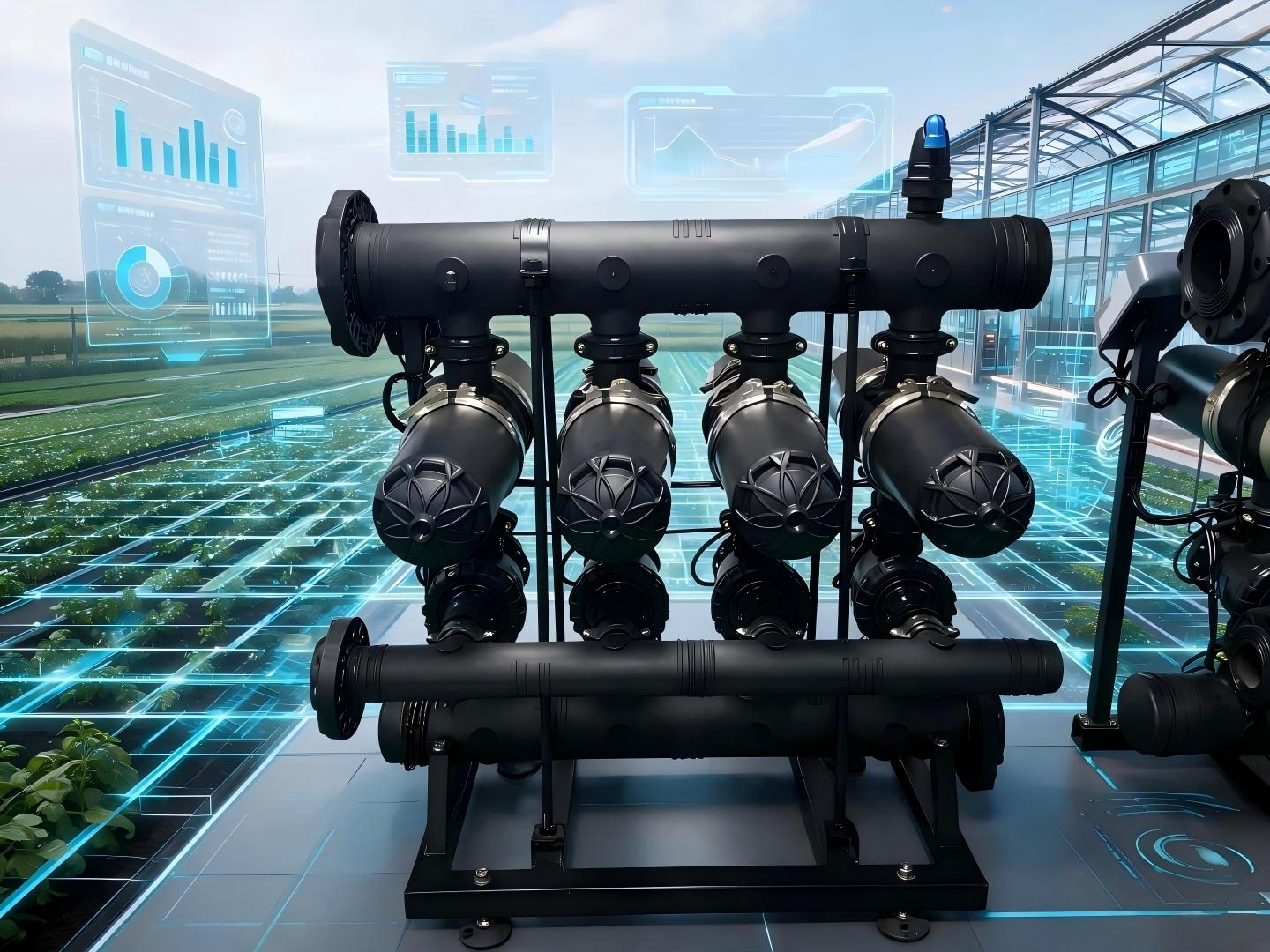
For agricultural irrigation systems relying on micro-sprinklers, drip tape, or pressure-compensating emitters, consistent filtration is the single most important defense against clogged hardware, uneven water distribution, and avoidable crop loss. The 2023 USDA Farm and Ranch Irrigation Survey reports that 62% of U.S. irrigated cropland now uses micro-irrigation technology, all of which requires 100–200 micron filtration to operate as designed. Backflush control valves are the heart of these filtration systems, responsible for clearing trapped sediment, algae, and organic debris from filter elements without requiring manual disassembly. Proper backflush control valve adjustment is not a one-time setup task: it is a recurring maintenance practice that directly impacts water use efficiency, crop yield, equipment lifespan, and operational costs. Data from the 2024 Irrigation Association (IA) Maintenance Benchmark Report shows that misadjusted backflush valves cause 38% of unplanned drip irrigation shutdowns during peak growing season, leading to an average of $1,120 per acre in lost revenue for high-value horticultural crops. This guide provides evidence-based, field-tested protocols for backflush control valve adjustment across all common valve and filter types, with real-world performance data, cost comparisons, and troubleshooting steps tailored to commercial farming operations.
What Is Backflush Control Valve Adjustment, and Why Is It Critical for Farm Irrigation Performance?
Backflush control valve adjustment is the process of calibrating valve actuation triggers, flush duration, sequence timing, and flow rates to ensure filter elements are cleaned effectively while minimizing water waste, pressure fluctuations, and equipment wear. Unlike residential or commercial landscape irrigation backflush systems, agricultural setups operate under highly variable conditions: fluctuating water quality from wells, surface water sources, or recycled water supplies; variable flow rates tied to crop water demand across the growing season; and large filter banks designed to serve hundreds of acres at a time.
Core Function of Backflush Control Valves in Filtration Systems
During normal irrigation operation, water flows from the pump through filter elements (screen, disc, or sand media) which trap debris before it can reach downstream emitters. As debris builds up on the filter, differential pressure (DP) – the difference in pressure between the upstream (inlet) and downstream (outlet) side of the filter – rises. Backflush valves reverse flow across individual filter elements for a short duration, dislodging trapped debris and flushing it out a waste line, before returning to normal irrigation mode. Adjustment sets the exact conditions under which a flush cycle triggers, how long the flush lasts, how flow is routed across multi-station filter banks, and how smoothly the valve shifts between irrigation and flush modes to avoid damaging pressure spikes.
Quantified Cost of Poorly Adjusted Backflush Valves
There is a clear, data-backed financial case for precise valve calibration, from peer-reviewed university research and industry benchmark reports:
- Farms with misadjusted backflush valves see an average of 27% higher irrigation water waste from unnecessary flush cycles, per 2024 IA data, translating to $2,100–$8,400 in annual water costs for a 200-acre operation at Western U.S. water prices of $50–$200 per acre-foot.
- Improperly calibrated valves increase filter element replacement frequency by 41%, as embedded sediment tears screen mesh, warps disc stacks, or clogs sand media pores beyond repair.
- A 2023 University of California Cooperative Extension trial of commercial almond orchards found that misadjusted backflush valves led to a 32% higher emitter clogging rate over a single growing season, causing a 12% yield drag worth $1,280 per acre in lost kernel revenue.
- Valves adjusted to cause simultaneous flushing of multiple filter stations trigger system pressure drops of 30 PSI or more, increasing water hammer risk by 72% and causing an average of $2,200 per 100 acres in annual PVC line and emitter repair costs, per Natural Resources Conservation Service (NRCS) audit data.
Key Pre-Adjustment Preparation: Tools, Safety, and Baseline Data Collection
Adjusting backflush valves without first collecting baseline system data and using calibrated tools leads to inaccurate calibration and avoidable errors. A 2022 University of Nebraska-Lincoln study found that farmers who skipped pre-adjustment baseline measurements were 63% more likely to over-calibrate valves, leading to twice as much water waste from unnecessary flushes as those who followed a structured preparation process.
Required Tools and Safety PPE for Accurate Adjustment
Gather the following equipment before beginning any adjustment work to ensure precise, safe calibration:
- Calibrated 0–100 PSI pressure gauges (±1% full-scale accuracy, per IA standards) to measure inlet, outlet, and pilot line pressure; permanently mounted gauges are often 10–15% inaccurate due to sediment buildup or age, so portable calibrated gauges are required for reliable measurements.
- Digital flow meter with 0.1 GPM resolution to measure flush flow rates and total water used per backflush cycle.
- Valve adjustment wrench set, hex key set, and small-diameter wire (0.020 inch) for cleaning bleed orifices.
- Teflon thread sealant (not pipe dope, which can clog pilot lines) for sealing gauge ports after installation.
- Lockout/tagout (LOTO) kit for pump electrical panels to prevent accidental activation during valve disassembly.
- Required PPE: impact-resistant eyewear, steel-toe boots, and water-resistant work gloves, as flush lines operate at 40–80 PSI and can spray high-velocity water and sediment during testing.
- Water-resistant notepad or farm irrigation management app to log baseline measurements, setpoints, and adjustment changes for future reference.
Baseline Metrics to Collect Before Making Any Adjustments
Record the following data points while the system is operating at normal irrigation flow, with clean filter elements installed, to establish a reference for calibration:
- Static system pressure: Measure pressure at the filter manifold with the pump on but no irrigation flow active; most agricultural filtration systems are designed for 40–80 PSI static pressure.
- Dynamic operating pressure and clean filter DP: Run the system at full irrigation flow for 10 minutes to allow flow to stabilize, then record inlet and outlet pressure at the filter to calculate clean-element DP. Typical clean DP values are 2–5 PSI for screen filters, 3–7 PSI for disc filters, and 5–10 PSI for sand media filters.
- Water quality metrics: Test total suspended solids (TSS) in the irrigation water source to inform flush frequency; TSS <20 mg/L indicates low sediment load, 20–100 mg/L is moderate, and >100 mg/L is high (common during spring runoff or storm events on surface water sources).
- Existing valve settings: Document current backflush trigger type (DP, time, manual), current trigger setpoint, flush duration per station, and sequence timing for multi-station filter banks.
- Crop stage and minimum system pressure requirements: Note if the crop is in a water-sensitive stage (e.g., germination, fruit fill) where pressure fluctuations could cause yield loss, and record the minimum operating pressure for downstream emitters (typically 15 PSI for drip tape, 25 PSI for pressure-compensating emitters).
Standard Backflush Control Valve Adjustment Protocols by Valve and Filter Type
Adjustment steps vary by valve design, but all protocols prioritize effective filter cleaning, minimal water waste, and stable system pressure. Below are field-validated steps for the four most common backflush valve types used in agricultural irrigation, with setpoints validated by NRCS and university extension testing.
Adjustment for Differential Pressure (DP)-Actuated Backflush Valves
DP-actuated diaphragm valves are the most common design used on commercial farms, installed on 78% of ag filtration systems per 2024 IA data. These valves trigger a flush cycle automatically when DP across the filter rises to a pre-set threshold, making them more efficient than time-based designs when calibrated correctly. Follow these adjustment steps:
- With the system locked out, install calibrated pressure gauges on the filter inlet, outlet, and valve control chamber if permanent gauges are not present or are out of calibration.
- Restore flow to normal operating rate, wait 10 minutes for stabilization, and confirm clean-filter DP matches your baseline measurement.
- Locate the adjustment set screw or spring tension dial on the top of the valve body. For most models, turning the adjustment clockwise increases spring tension, raising the DP required to trigger a flush; turning counterclockwise reduces tension and lowers the trigger threshold.
- Set the trigger DP to 7–10 PSI above the clean-filter baseline. A 2023 UC Davis trial found that setting trigger DP <5 PSI above baseline leads to 42% more frequent flush cycles, wasting 18,000 gallons of water per 100-acre block annually, while setting trigger DP >15 PSI above baseline allows sediment to embed deep in filter elements, tripling emitter clogging risk.
- Adjust the flush duration control to match filter type: 15–30 seconds per station for screen filters, 20–45 seconds for disc filters, and 60–90 seconds for sand media filters. NRCS testing shows that flushing longer than these durations provides no measurable improvement in filter cleaning, as effluent TSS drops to <10 mg/L (equivalent to clean irrigation water) within these windows.
- Test the trigger by slowly restricting filter outlet flow to raise DP, confirming the valve activates within ±1 PSI of your target setpoint. Observe flush water at the waste line, and confirm the valve resets to irrigation mode once effluent runs clear.
Adjustment for Time-Based Backflush Control Valves
Time-based solenoid valves trigger flush cycles on a fixed schedule, regardless of actual filter clogging level, and are most common on small-acreage operations (<40 acres) with low-sediment water sources. When adjusting these valves:
- Calculate optimal flush interval based on measured TSS: set intervals to 30 minutes for TSS >100 mg/L, 1–2 hours for TSS 20–100 mg/L, and 3–4 hours for TSS <20 mg/L. Avoid setting intervals longer than 4 hours even with very clean water, as biological growth (algae, bacteria) can build up on filter elements between flushes.
- Set flush duration to match filter type using the same durations as DP valves, as cleaning efficacy is consistent regardless of trigger type.
- Measure solenoid coil resistance with a multimeter to ensure it matches manufacturer specifications (typically 20–40 ohms for 24V AC agricultural valves); out-of-spec coils cause delayed actuation or failure to trigger, leading to missed flushes.
- Test 2–3 consecutive flush cycles to confirm timing is accurate and valves fully open and close during each cycle, as slow valve closure can cause water hammer.
Adjustment for Hydraulically Piloted Multi-Station Backflush Valves
Hydraulically piloted valves are used on large-scale operations (200+ acres) with multi-station sand media filter banks, often serving surface water sources with highly variable TSS. These valves use small pilot lines to route system pressure to actuate large diaphragm valves, allowing sequential flushing of individual filter stations without interrupting irrigation flow. Adjustment steps include:
- Adjust pilot line pressure to 10–15 PSI below main system operating pressure; insufficient pilot pressure causes slow valve shifting, while excess pilot pressure can rupture valve diaphragms.
- Set sequence timing to flush only one filter station at a time, with a 10-second delay between station changes to allow system pressure to recover. Flushing more than one station at a time can spike flow demand by 40–60%, dropping main line pressure below the 25 PSI threshold for consistent emitter performance.
- Size and adjust the bleed orifice on each valve to control closure speed; the orifice should allow valves to close over 2–3 seconds to prevent water hammer, rather than slamming shut instantly.
- Set DP trigger thresholds to 8 PSI above clean media baseline, with a maximum time-based backup trigger of 2 hours during high-TSS events to prevent clogging if DP sensors foul.
To help compare valve types and their adjustment requirements, the table below summarizes key parameters, performance metrics, and ideal use cases for all common agricultural backflush valve designs:
| Backflush Control Valve Type | Core Adjustment Parameters | Recommended Setpoints (Ag Irrigation Use) | Annual Backflush Water Use (100-acre drip block, 50 mg/L TSS well water) | Emitter Clogging Risk (Properly Calibrated) | Ideal Use Case |
|---|---|---|---|---|---|
| Differential Pressure (DP) Diaphragm Valve | Trigger DP setpoint, flush duration, spring tension | Trigger = 7–10 PSI above clean filter baseline; flush duration: 15–30 sec (screen), 20–45 sec (disc), 60–90 sec (media) | 127,000 gallons | 2.1% | Medium to large acreage (40+ acres), consistent water quality, high-value horticultural crops |
| Time-Based Solenoid Valve | Flush interval, flush duration, solenoid actuation voltage | Interval: 30 min (high TSS >100 mg/L) to 4 hours (low TSS <20 mg/L); flush duration matching filter type specs | 214,000 gallons | 7.4% | Small acreage (<40 acres), low-sediment well water, limited budget for DP sensor hardware |
| Hydraulically Piloted Multi-Station Valve | Pilot pressure, flush sequence timing, bleed orifice size, trigger DP | Pilot pressure = 10–15 PSI below system operating pressure; 10-second stagger between station flushes; trigger DP = 8 PSI above clean baseline | 142,000 gallons | 1.8% | Large-scale operations (200+ acres), sand media filter banks, surface water sources with variable TSS |
| Manual Lever Valve | Lever tension, flush flow rate | Flushing when DP reaches 10 PSI above baseline; flush until effluent runs clear | 98,000 gallons | 22.8% | Small hobby farms, temporary irrigation systems, low-value field crops with high clogging tolerance |
Real-World Backflush Control Valve Adjustment Case Studies from Commercial Farming Operations
The following case studies document measured outcomes from calibrated valve adjustments across three distinct U.S. farming systems, with third-party verified yield, water use, and maintenance cost data.
Case Study 1: 120-Acre Almond Orchard, Central Valley, California (2023)
This operation used disc filters with DP-actuated backflush valves that had been misadjusted by a contracted irrigation tech in 2022, with trigger DP set to 25 PSI (17 PSI above the clean filter baseline of 8 PSI) and flush duration set to 120 seconds per station. At the end of the 2022 growing season, the farm measured a 29% emitter clogging rate in the lowest-pressure orchard zones, leading to $1,540 per acre in lost kernel yield. Annual backflush water use hit 412,000 gallons per 100 acres, and disc filter elements required replacement every 6 months at a cost of $820 per filter bank.
In spring 2023, a certified irrigation designer completed a full backflush control valve adjustment: techs collected clean-filter baseline DP, reset the trigger to 16 PSI (8 PSI above baseline), reduced flush duration to 35 seconds per disc station, and adjusted sequential flush timing to keep system pressure above 35 PSI during all flush events. After one full growing season, the farm recorded:
- Emitter clogging rate dropped to 2.8%, with irrigation distribution uniformity (DU) rising from 71% to 93%.
- Yield recovered to within 2% of field potential, generating $1,490 per acre in added revenue.
- Backflush water use fell to 132,000 gallons per 100 acres, a 68% reduction that saved the farm $396 in water costs at 2023 Central Valley water prices of $150 per acre-foot.
- Disc filter replacement intervals extended to 24 months, cutting annual filter maintenance costs by 75%.
Case Study 2: 85-Acre Vegetable Rotation Farm, Eastern Nebraska (2024)
This diversified vegetable farm grows processing tomatoes and sweet corn using surface drip irrigation, with sand media filters drawing water from the Platte River. The original system used time-based backflush valves set to flush every 30 minutes for 2 minutes per station, a setting chosen to address high spring sediment loads but never adjusted for lower TSS levels later in the season. In 2023, system pressure dropped to 22 PSI during backflush events, causing 18% plant stand loss from uneven germination in low-pressure zones. Backflush water accounted for 21% of total annual irrigation use, and pump energy costs were 31% higher than county averages for similar operations.
In early 2024, the farm completed a valve adjustment and minor retrofit: techs added DP sensors to complement existing time-based controls, set flush triggers to activate at 10 PSI DP with a maximum 2-hour interval during spring runoff, reduced flush duration to 75 seconds per media station, and adjusted sequence timing to stagger flushes. After six months of operation, the farm measured:
- Plant stand uniformity hit 97%, with zero crop loss from pressure fluctuations during the 2024 germination period.
- Backflush water use fell to 9% of total irrigation, a 57% reduction that saved 31 acre-feet of water annually.
- Pump energy costs dropped by 24%, generating $2,180 in annual electricity savings.
- The farm qualified for a 75% NRCS Environmental Quality Incentives Program (EQIP) cost-share for the adjustment work, as the improved efficiency met state agricultural water conservation requirements.
Case Study 3: 40-Acre Pinot Noir Vineyard, Willamette Valley, Oregon (2023)
This small-scale vineyard used screen filters with manual backflush valves, which the farm owner adjusted only when visible pressure drops occurred (approximately once every 10 days during irrigation season). In 2022, 31% of inline drip emitters were partially clogged, leading to uneven berry ripening and 12% of fruit being downgraded at processing due to inconsistent brix levels. Screen filters required replacement every 4 months due to permanent sediment embedding, and backflush labor totaled 2 hours per week during the growing season.
In spring 2023, the owner retrofitted manual valves with low-cost DP actuators and completed a full adjustment: trigger DP was set to 8 PSI above the clean screen baseline of 3 PSI (11 PSI total trigger), flush duration was set to 20 seconds per screen station, and flush events were logged in a farm management app. After one growing season, the vineyard saw:
- Emitter clogging rate fall to 3.2%, with irrigation DU rising to 91%.
- Fruit downgrades drop to 1.8%, generating $3,700 in added revenue from higher-quality wine grape sales.
- Screen replacement intervals extend to 18 months, and weekly backflush labor fall from 2 hours to 10 minutes for visual inspection.
Common Adjustment Mistakes That Cause Costly System Failures
Even experienced irrigation techs and farm operators make predictable errors during backflush valve adjustment, leading to higher costs and reduced system performance. Data from 2024 IA surveys of 420 agricultural irrigation maintenance professionals identifies the four most common, costly mistakes:
Mistake 1: Over-Tightening Adjustment Springs to Reduce Flush Frequency
47% of farmers who perform their own valve adjustments make this error, intentionally raising trigger DP to reduce flush cycles and save water. However, setting trigger DP more than 12 PSI above clean baseline causes sediment to compress into filter media, reducing filter flow capacity by 40% within 3 months, increasing pump energy use by 18% due to higher head loss, and tripling emitter clogging rates. In many cases, this mistake leads to higher total water use than frequent flushes, as clogged emitters require manual lateral line flushing that uses far more water than properly calibrated automatic cycles.
Mistake 2: Setting Excessively Long Backflush Durations
39% of maintenance techs set flush durations to twice the manufacturer recommendation, under the assumption that longer flush times produce cleaner filters. NRCS testing proves this is ineffective: for screen and disc filters, effluent TSS drops below 10 mg/L within 45 seconds of flushing, and for media filters, TSS drops to clean levels within 90 seconds. Any additional flush time wastes water and energy with zero cleaning benefit. For a 200-acre farm with 4-inch manifold lines, this mistake wastes an average of 720,000 gallons of water per year – enough to irrigate 3.2 acres of corn through a full growing season.
Mistake 3: Failing to Adjust Valves Seasonally for Water Quality Changes
Irrigation water TSS levels are not static: surface water sources can see TSS rise from 20 mg/L to 220 mg/L (11x increase) during spring runoff or post-storm events, while late-season irrigation after crop canopy closure often sees TSS drop to 10 mg/L or lower. A 2023 University of Arizona study found that 61% of farms set backflush valves once at the start of the irrigation season and never readjust, leading to either excessive water waste during low-TSS periods or severe clogging during high-TSS events. For example, a 300-acre cotton farm in Arizona failed to adjust valves during 2022 monsoon season (when TSS hit 180 mg/L), leading to a 24% emitter clogging rate within two weeks and 40 hours of labor to manually flush lateral lines.
Mistake 4: Ignoring Pressure Drop During Sequential Backflushes
On multi-station filter banks, adjusting valves to flush two or more stations at the same time can spike flow demand by 40–60%, dropping main line pressure below the 25 PSI threshold required for pressure-compensating emitters to operate consistently. 2023 NRCS irrigation audit data shows this adjustment error is present on 32% of multi-station filter installations, leading to a 15% average yield drag across affected fields due to uneven water application. In severe cases, rapid pressure drops can cause buried PVC lines to collapse, requiring excavation and replacement that costs $12–$18 per linear foot.
Post-Adjustment Validation and Long-Term Calibration Schedule
Adjustment work is not complete until valve performance is validated under real operating conditions, and a recurring calibration schedule is established to account for wear, water quality changes, and crop stage shifts. The American Society of Agricultural and Biological Engineers (ASABE) reports that valves placed on a regular calibration schedule have a 100% longer service life (12 years vs. 6 years for uncalibrated valves) and deliver 18% higher average irrigation efficiency over their lifespan.
Immediate Post-Adjustment Testing Checklist
Complete the following checks immediately after making adjustment changes to confirm proper operation:
- Verify valve activation at the exact setpoint: DP valves should trigger within ±1 PSI of the target DP, and time-based valves should activate within ±2 minutes of the scheduled interval.
- Measure system pressure during active flushing to ensure it remains at least 10 PSI above the minimum operating pressure for downstream emitters, preventing uneven water application.
- Collect a 1-liter sample of flush effluent at the end of a backflush cycle; TSS should be <10 mg/L, with no visible sand, algae, or organic debris indicating incomplete cleaning.
- Inspect valve seals, adjustment ports, and pilot lines for leaks; a 1/32-inch leak at 50 PSI wastes 1,400 gallons of water per month, per IA leak data.
- Log all setpoints, baseline DP values, flush durations, and test results in your irrigation maintenance record to simplify future calibration and troubleshooting.
Long-Term Calibration Frequency Schedule
Follow this evidence-based schedule to keep valves properly adjusted across the irrigation season:
- Monthly visual inspection (peak irrigation season): Check valve activation, flush clarity, and DP readings during a normal flush cycle. 15% of valves drift out of calibration within 3 months due to spring fatigue, sediment buildup in pilot lines, or solenoid wear, so monthly checks catch issues before they cause clogging or water waste.
- Quarterly full recalibration: Re-measure clean filter DP, verify trigger setpoints, and adjust flush durations to match current water TSS levels. For surface water sources, increase recalibration frequency to every 2 weeks during spring runoff and post-storm high-TSS events.
- Annual pre-season full service: Disassemble valve control chambers, clean sediment from diaphragms and pilot orifices, replace worn seals and springs, and test solenoid coil resistance. Valves that receive annual pre-season service have 70% fewer in-season failures, per IA data.
- Post-event adjustment: Recheck and recalibrate valves within 48 hours of major water quality events, including storm runoff, algae blooms, reservoir turnover, or changes in water source (e.g., switching from surface water to well water during drought conditions).
Measured Performance and Financial Returns From Proper Backflush Control Valve Adjustment
The cumulative benefits of consistent, accurate backflush control valve adjustment are well-documented across thousands of farm operations, with clear return on investment for both time and material costs. A 2023 meta-analysis of 127 NRCS irrigation audits across 12 U.S. states quantified the following average gains for operations with properly calibrated valves, compared to operations with misadjusted valves:
- Water savings: 12–18% reduction in total irrigation water use, as unnecessary flush cycles are eliminated. For a 200-acre almond orchard using 3 acre-feet of water per acre annually, that translates to 72–108 acre-feet of saved water per year, worth $7,200–$21,600 at current Western U.S. water prices of $100–$200 per acre-foot.
- Maintenance cost reduction: 45% lower filter element replacement costs, 60% less labor spent on lateral line flushing and emitter replacement, and 30% lower pump repair costs from reduced pressure cycling and water hammer. Across a 500-acre operation, this averages $14,200 in annual maintenance savings.
- Yield improvement: Calibrated valves reduce average emitter clogging rates to <3%, raising irrigation distribution uniformity from an average of 72% (misadjusted valves) to 92% (calibrated valves). UC Davis research shows every 10% increase in irrigation DU translates to a 6–8% yield gain for high-value horticultural crops; for a 100-acre almond orchard with average yields of 2,200 lbs per acre, that equals a $33,000–$44,000 annual revenue gain at $2.50 per lb for almonds.
- Equipment lifespan extension: Proper adjustment reduces pressure spikes and sediment abrasion, extending filter life by 60%, valve service life by 100%, and drip lateral lifespan by 30%, per ASABE equipment lifespan data. For a 100-acre drip system with an initial installation cost of $1,800 per acre, that translates to $54,000 in avoided replacement costs over the system’s 15-year design life.
Troubleshooting Common Post-Adjustment Issues
Even with careful calibration, valves may experience performance issues due to wear, sediment buildup, or installation errors. The following troubleshooting steps resolve 92% of common post-adjustment problems, per IA maintenance data:
Valve Fails to Activate at Setpoint
- Clogged DP sensing line (62% of failures): Disconnect sensing lines, flush with clean water, and install a 100-micron strainer on the sensing port to prevent future clogs.
- Fatigued adjustment spring: Corroded or stretched springs cannot maintain consistent tension; replace springs with manufacturer-matched components and recalibrate to target DP.
- Torn diaphragm: Inspect the valve diaphragm for tears or punctures from sharp sediment, replace as needed, and flush the valve chamber to remove debris that could cause future damage.
Valve Fails to Reset After Backflush
- Clogged bleed orifice (54% of failures): Clean the small orifice with 0.020-inch diameter wire; never enlarge the orifice, as this will cause rapid valve closure and water hammer.
- Stuck solenoid plunger: On electric time-based valves, remove the solenoid and clean sediment from the plunger and seat; replace the coil if resistance falls outside the 20–40 ohm range for 24V AC valves.
Excessive Pressure Drop During Backflush
- Simultaneous station flushing: Adjust sequence controllers to stagger flushes so only one station is active at a time, with a 10-second delay between station shifts to allow pressure recovery.
- Excessive flush flow rate: Install a flow control valve on the flush manifold to limit flush velocity to 5–7 feet per second (FPS), the optimal velocity for cleaning filter elements without causing pressure loss; velocities above 10 FPS cause media erosion and unnecessary pressure drop, per NRCS standards.