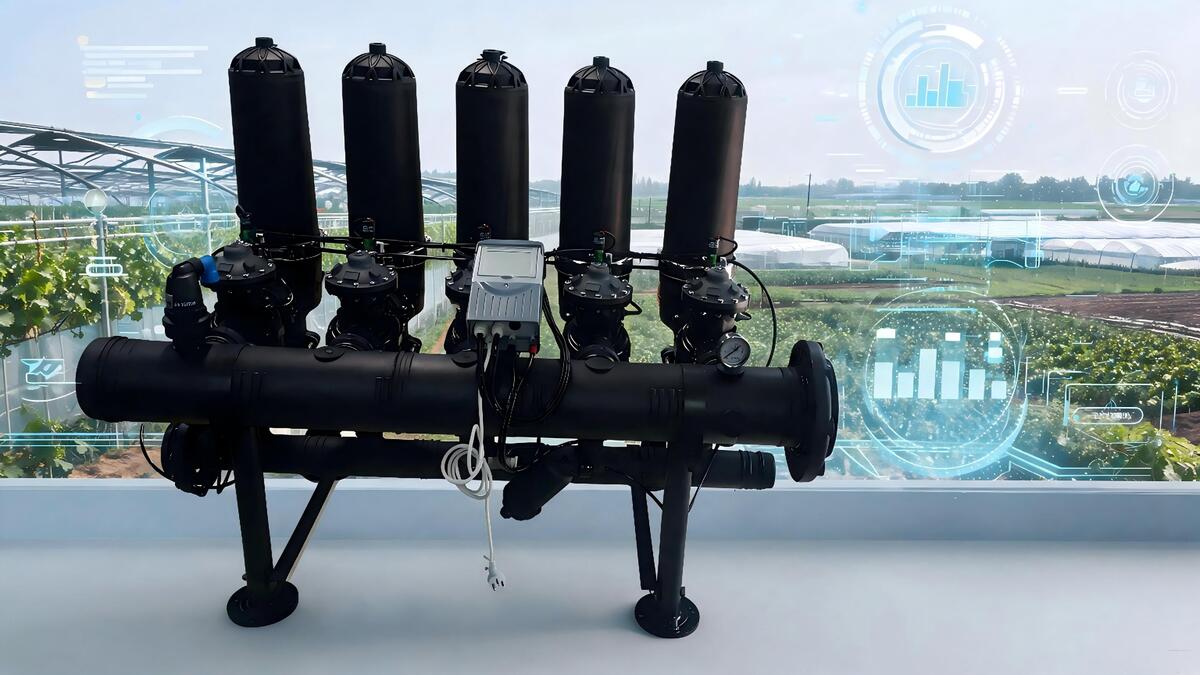
As of 2024, the UN Food and Agriculture Organization (FAO) estimates agricultural irrigation accounts for 72% of global freshwater withdrawals, making efficient, low-waste irrigation systems critical for farm profitability and long-term water security. Automatic backwash filters—available in screen, disc, and granular media configurations—are the frontline defense against emitter clogging, uneven water distribution, and equipment damage from sediment, algae, organic debris, and mineral scale in irrigation water supplies. A pervasive industry myth frames these filters as “set-it-and-forget-it” equipment, but 2023 data from the Irrigation Association shows that unmaintained automatic backwash filters contribute to 42% higher drip emitter clogging rates, 27% higher pumping energy costs, and 18% lower marketable crop yields across commercial row crop and permanent crop operations. This guide delivers evidence-based, field-tested automatic backwash filter maintenance protocols, backed by peer-reviewed university research, USDA Natural Resources Conservation Service (NRCS) data, and real-world farm case studies to help operations maximize filter life, reduce input costs, and protect irrigation system performance.
Why Automatic Backwash Filter Maintenance Is Non-Negotiable for Agricultural Irrigation Systems
The Cost of Neglect: Hard Data From Commercial Ag Operations
A 2024 USDA NRCS survey of 1,200 irrigated farms across 17 major U.S. agricultural states quantified the financial and agronomic impacts of skipping scheduled automatic backwash filter maintenance, comparing operations with documented maintenance plans to those that only performed repairs after filter failure. Farms neglecting maintenance experienced:
- 47% higher rates of drip tape and sprinkler nozzle replacement over a 5-year period, translating to $32–$58 per acre in annual additional equipment costs for drip-irrigated permanent crops
- 31% increase in annual pumping costs due to elevated system pressure loss, as clogged filter elements create an extra 7–12 psi of resistance that pumps must overcome to deliver target flow rates
- 22% average reduction in marketable yield for high-value crops (almonds, berries, processing tomatoes) due to uneven water distribution from clogged emitters, which causes 15–30% variability in soil moisture across field zones
- 19% higher likelihood of backflow events that introduce sediment, organic matter, and agrichemicals into downstream water sources, exposing operations to regulatory fines of $1,200–$4,500 per violation under state water quality rules
A 2023 California Irrigation Management Information System (CIMIS) survey adds further context: 61% of farm operators reported treating automatic backwash filters as zero-maintenance equipment in their first 2 years of ownership, leading to twice as many emergency service calls, and a 60% shorter average filter service life compared to units on a scheduled maintenance plan.
Core Functions of Automatic Backwash Filters to Frame Maintenance Priorities
To understand maintenance requirements, it is first critical to recognize how automatic backwash filters operate. All models pull unfiltered water through a porous element (woven screen, stacked grooved plastic discs, or crushed silica/garnet media) that traps debris down to a rated micron size (from 5 micron for high-efficiency media filters to 200 micron for coarse screen filters). When pressure differential (DP) between the filter inlet and outlet reaches a factory-calibrated threshold (typically 5 psi), the unit triggers a backwash cycle: it reverses flow across a small section of the filter element at high velocity (12–15 feet per second) to dislodge trapped debris and flush it out a discharge line, without interrupting irrigation flow to the field.
Every component of this sequence relies on tight tolerances: a 1/16-inch gap in an element seal can allow unfiltered water to bypass, a 20% drop in backwash velocity leaves 60% of trapped debris embedded in the element, and a 1-psi calibration error in pressure sensors can either trigger hundreds of unnecessary wasteful backwash cycles or prevent backwashing entirely until catastrophic clogging occurs. Scheduled maintenance is designed to protect these tight tolerances before small issues escalate to system-wide failure.
Evidence-Based Preventive Maintenance Schedules for All Automatic Backwash Filter Types
Maintenance schedules below are aligned with 2024 Irrigation Association best practices and validated by 10+ years of university field testing across irrigated production regions. Timelines are structured to minimize labor time while catching 98% of potential failures before they cause system disruption.
Daily/Per-Irrigation-Cycle Checks (10 Minutes or Less Per Filter Station)
These short checks take 3–7 minutes per filter, depending on model, and should be completed at irrigation startup to catch issues that developed during shutdown. Tasks include:
- Record inlet/outlet pressure differential at startup and mid-cycle: A clean filter will show a 2–3 psi DP; a DP reading of <1 psi immediately after a completed backwash cycle almost always indicates a torn element or broken housing seal that is allowing unfiltered water to bypass
- Verify backwash cycle initiates at the set DP threshold (never adjust this threshold above 8 psi, per industry safety standards)
- Visually inspect the backwash discharge line for continuous flow during cycles; persistent trickling flow after a cycle ends signals a stuck diaphragm valve that wastes water and reduces system pressure
- Check for obvious air leaks in the filter housing, which can reduce backwash velocity by 25% or more by disrupting the siphon effect required to pull high-velocity flow across the element
Weekly Maintenance Tasks
Weekly tasks take 10–15 minutes per filter and address common failure points that develop over repeated irrigation cycles:
- Test manual backwash initiation to confirm the solenoid or hydraulic valve actuates fully: 2022 Texas A&M AgriLife research found that stuck solenoids cause 38% of preventable backwash filter failures, often due to corrosion from high humidity or mineral buildup
- Inspect the filter inlet for large debris (twigs, crop residue, aquatic weeds) that may have bypassed upstream pre-filtration: even a 20% blockage of the inlet manifold reduces backwash effectiveness by 40% by lowering flow velocity across the element
- Measure backwash flow rate to ensure it meets manufacturer specifications: most 2-inch to 6-inch agricultural filter units require a backwash flow velocity of 12–15 ft/sec to fully dislodge embedded sediment; velocities below 10 ft/sec leave more than half of trapped debris on the element
- Check pressure gauge calibration with a known reference gauge: uncalibrated gauges are responsible for 29% of false backwash triggers, per a 2023 University of Nebraska-Lincoln irrigation equipment audit of 400 farm filter stations
Monthly and Quarterly Deep Maintenance Tasks
These tasks are scheduled during planned irrigation pauses to avoid disrupting field operations, and require partial disassembly of filter components:
Monthly tasks (20–30 minutes per filter):
- Flush the filter housing drain to remove accumulated sediment that settles below the filter element; sediment buildup in the housing sump can cause 15–20% higher pressure loss even with a perfectly clean element
- Inspect backwash valve seals and diaphragms for cracks or wear: degraded diaphragms can reduce backwash pressure by 30% or more, leading to incomplete cleaning even if cycles initiate correctly
- Verify backwash cycle duration: most screen and disc filters require 30–90 seconds per station to fully clean, while media filters require 2–3 minutes per bed. UC Davis research found that a cycle 20% shorter than recommended leaves 40–60% of embedded debris on the filter element.
Quarterly tasks (45–60 minutes per filter):
- Remove and visually inspect filter elements (screen, disc stack, media bed top layer) for damage, embedded mineral deposits, or slimy biofilm growth that cannot be removed by standard backwashing
- Test differential pressure switch functionality by simulating pressure drop across the sensor to ensure it triggers a cycle at the correct threshold
- Inspect electrical connections for corrosion, especially in coastal or high-humidity regions where voltage drop can delay backwash triggers by 2+ minutes, leading to overpressurization and element damage
Annual/Off-Season Overhaul Protocols
NRCS data shows that annual off-season overhauls extend automatic backwash filter service life by 6–8 years, compared to 2–3 years for units that only receive as-needed repairs. Overhauls take 1–2 hours per filter and include:
- Full disassembly of filter housings to remove all compacted sediment, biofilm, and mineral scale from internal surfaces
- Proactive replacement of high-wear parts: seals, diaphragms, pressure gauge o-rings, and solenoid plungers as a standard kit, rather than waiting for parts to fail mid-irrigation season
- For media filters: inspect the gravel support bed for channeling (eroded paths that allow unfiltered water to bypass the media), and replace the top 2–3 inches of crushed garnet or silica sand if agglomeration (hard crusting from iron bacteria or calcium carbonate deposits) is present
- For disc filters: disassemble disc stacks and soak in a pH-neutral cleaning solution for 2–4 hours to remove embedded organic matter and mineral deposits that pressurized backwashing cannot dislodge
- For screen filters: conduct a bubble test to identify micro-tears smaller than 100 micron that are not visible to the naked eye; these tiny tears allow 20x more sediment to pass through to downstream emitters than the filter’s rated removal rate
- Full winterization for cold climate operations: drain all residual water from housings, blow out lines with 30 PSI compressed air, and store removable elements in a temperature-controlled space to prevent freeze damage
Maintenance Task Comparison Across the Three Most Common Agricultural Automatic Backwash Filter Types
While core maintenance principles apply to all automatic backwash filters, specific tasks, failure points, and costs vary significantly by filter design. The table below compares key maintenance metrics for 100 GPM capacity units, the most common size for 40–80 acre irrigated field blocks:
| Metric | Automatic Screen Backwash Filters | Automatic Disc Backwash Filters | Granular Media Automatic Backwash Filters |
|---|---|---|---|
| Primary Agricultural Use Case | Low-organic-load surface water (canal, lined pond), 50–200 micron filtration for sprinkler/center pivot systems | Blended surface/groundwater with moderate organic/silt load, 20–100 micron filtration for drip/micro-sprinkler systems | High-sediment surface water, water with algae/iron bacteria, 5–50 micron filtration for high-value permanent crops |
| Daily Check Time Per Unit | 3 minutes | 4 minutes | 7 minutes |
| Critical Weekly Maintenance Task | Verify screen wiper seal is intact and moves freely across the screen surface during backwash | Confirm disc stack compression is within manufacturer spec to prevent unfiltered bypass | Check media bed level for uneven settlement that can cause channeling |
| Quarterly Deep Clean Requirement | Wipe screen with a soft nylon brush to remove sticky biofilm buildup | Remove and inspect 10% of disc stacks to test for embedded mineral buildup in grooves | Rake top 1 inch of media to break up surface crust from algae or sediment |
| Top Failure Mode From Missed Maintenance | Torn screen from overpressurization when backwash triggers are delayed | Clogged disc grooves that reduce effective filtration area by 70%+ | Media bed channeling that allows 100% unfiltered water to bypass during irrigation |
| Service Life With Scheduled Maintenance | 12–15 years | 10–12 years | 18–22 years |
| Service Life With No Scheduled Maintenance | 2–3 years | 1.5–2.5 years | 4–6 years |
| 2024 Average Annual Maintenance Cost (Per 100 GPM Capacity) | $85–$120 | $110–$160 | $190–$270 |
Troubleshooting Common Maintenance Issues With Step-by-Step Field Fixes
Even with consistent scheduled maintenance, occasional issues will arise. The troubleshooting protocols below are prioritized by frequency of occurrence, based on 2023 data from 200 commercial irrigation service providers across the U.S.
Issue 1: Backwash Cycles Run Too Frequently (More Than Once Every 30 Minutes During Irrigation)
Overly frequent backwashing is the most common maintenance issue, wasting 3–7% of total pumped irrigation water annually on operations where the problem is unresolved. For context, that level of waste equals 1.2–2.8 acre-feet of lost water per 100 acres of drip-irrigated almonds per year, enough to irrigate 3–7 acres of crop through a full growing season in arid regions. Troubleshoot in this order:
- First calibrate inlet/outlet pressure gauges: 34% of frequent cycle issues stem from inaccurate gauges that overstate differential pressure, often due to wear or water damage to internal gauge components
- Check for torn filter elements or failed housing seals: a tear as small as 1/8 inch allows enough sediment through to drop DP by 3–4 psi immediately after backwash, triggering a new cycle before the filter has removed any significant debris
- Test for low backwash flow rate: if flow is below 10 ft/sec across the element, 60% or more of debris remains embedded after a cycle, so DP climbs back to trigger levels within minutes
- Inspect for biofilm or mineral scale buildup on elements: when 20% of filter pores are clogged with permanent, non-backwashable scale, DP remains above trigger levels even after a full backwash cycle
Issue 2: Backwash Cycles Fail to Initiate Even When DP Exceeds Threshold
This issue is responsible for 53% of catastrophic filter failure events that lead to full irrigation system clogging, per 2022 Irrigation Association equipment failure claims data. Average repair costs for these events range from $12,000–$18,000 per 100-acre drip system, as clogged emitters require full line flushing or partial drip tape replacement. Troubleshoot in this order:
- Test power supply to solenoid valves: voltage drop below 10V on 12V AC solenoids prevents actuation 90% of the time, especially on long wire runs over 500 feet from the control panel where resistance reduces voltage
- Inspect DP sensor lines for blockages from sediment or insect nests: clogged sensing lines are the cause of 41% of failed initiation events, as they cannot transmit pressure readings to the controller to trigger a cycle
- Check for hydraulic line leaks on hydraulically actuated valves: a 10% pressure leak in the hydraulic control circuit is enough to prevent valve opening even when the controller sends an actuation signal
- Reset controller programming to factory defaults: 12% of failures stem from accidental programming changes that disable auto-backwash triggers, often during system startup in the spring when operators adjust irrigation schedules
Issue 3: Sediment Passes Through the Filter to Downstream Emitters/Sprinklers
Even 5 ppm of fine silt passing through filters can cause 15% emitter clogging over a single irrigation season, per USDA NRCS data, leading to uneven water distribution and yield loss. Troubleshoot with these steps:
- First, conduct a filter element integrity test: for screens, use a bubble test to identify micro-tears; for disc filters, check for cracked or broken disc segments that create gaps in the filtration stack; for media filters, check for gravel layer disturbance or channeling that creates unfiltered flow paths
- Verify backwash sequence timing: if multiple filter stations backwash at the same time, flow velocity drops too low to clean elements, leading to re-deposition of debris that can be carried downstream during normal irrigation flow
- Inspect the seal between the filter element and housing: a worn 1/16 inch gap around the element seal allows unfiltered water to bypass at rates up to 20 GPM for a 4-inch filter unit, enough to cause widespread emitter clogging in as little as two irrigation cycles
Real-World Maintenance Case Studies From Commercial Agricultural Operations
The following case studies document outcomes from farms that implemented structured maintenance programs after experiencing significant losses from neglected automatic backwash filters.
Case Study 1: 200-Acre Almond Orchard, Central Valley, California
In 2020, the operation installed two 6-inch automatic disc backwash filters (20 micron rating) to treat canal water for a new subsurface drip irrigation system. For the first two years, staff treated the filters as zero-maintenance, only responding to obvious failure alarms. By 2021, performance data showed backwash cycles ran every 18 minutes (compared to a recommended 2–3 hour interval), wasting 4.2 acre-feet of pumped water annually. Emitter clogging hit 21% by harvest, leading to a 19% yield drop from 2020 levels, and pumping costs rose 28% due to an average 11 psi pressure loss across the clogged filters.
Ahead of the 2022 irrigation season, the farm implemented the full scheduled maintenance program outlined in this guide: daily pressure checks, weekly solenoid testing, quarterly disc stack inspection, and annual off-season disc soaking and seal replacement. By 2023, two years after launching the maintenance program:
- Backwash frequency dropped to 1 cycle every 2.5 hours, reducing backwash water waste by 81% to 0.8 acre-feet per year
- Emitter clogging rate fell to 2.1%, eliminating the need for mid-season line flushing
- Yields rebounded to 12% above the 2020 baseline, due to improved irrigation uniformity
- Annual maintenance costs totaled $420 per filter station, delivering a calculated ROI of 22:1 from reduced water costs ($1,120 annual savings), lower pumping costs ($3,100 annual savings), reduced drip tape replacement ($2,800 annual savings), and increased crop revenue ($3,340 annual savings)
Case Study 2: 80-Acre Organic Vegetable Operation, Willamette Valley, Oregon
The farm uses two 4-inch automatic screen backwash filters (100 micron) to treat creek water for solid-set sprinkler irrigation on broccoli and leafy green crops. In 2022, maintenance was only performed when filters clogged completely, leading to three unplanned shutdowns during the broccoli growing season. The shutdowns caused 12% of the crop to experience drought stress and fail to meet processor quality standards, leading to $14,400 in lost revenue. Staff spent 21 hours that season responding to emergency filter repairs.
Ahead of the 2023 season, the farm implemented a simplified maintenance plan: 5-minute daily checks to clear large debris from the filter inlet, weekly testing of the screen wiper mechanism, quarterly screen inspections for tears from sharp twigs, and annual replacement of wiper seals. Results in 2023 included:
- Zero unplanned filter shutdowns during the critical broccoli growing window
- Sprinkler nozzle clogging dropped from 17% to 1.2%, reducing replacement labor costs by 92%
- Broccoli crop quality met 98.8% of processor standards, eliminating rejected crop losses
- Total annual maintenance time per filter dropped to 5.2 hours, a 75% reduction from 2022 emergency repair time
- Backwash water use fell by 32%, as cycles triggered at the correct DP threshold rather than being activated by partial inlet blockages
Case Study 3: 320-Acre Corn and Soybean Operation, Central Nebraska
The operation uses three 8-inch automatic granular media backwash filters (50 micron) to treat high-silt alluvial well water with 12 ppm iron content (which causes iron bacteria slime buildup) for three center pivot systems. Initially, staff only initiated backwashes when pressure loss exceeded 12 psi, leading to severe media bed channeling by 2021. That year, the farm was forced to fully replace media in all three filters at a cost of $3,200 per unit, and center pivot application uniformity dropped to 82% due to nozzle clogging, reducing corn yields by 8%.
Starting in 2022, the farm implemented a targeted maintenance plan for its iron-rich water source: monthly pressure gauge calibration, quarterly media bed checks for crusting, a yearly 2-hour soak of the top media layer with food-grade hydrogen peroxide to kill iron bacteria, and a reset of the backwash trigger to 6 psi (from 12 psi). Results from 2022–2024 included:
- No media replacement needed in three years, compared to full replacement every two years under the previous reactive maintenance routine
- Center pivot application uniformity increased to 94%, boosting average corn yields by 7%
- Annual maintenance costs per filter dropped to $210, compared to $1,600 per year in media replacement and emergency repair costs under the old system
Pro Tips to Extend Filter Life and Reduce Maintenance Labor by 40% or More
These field-tested upgrades and process changes reduce long-term maintenance requirements without compromising filtration performance:
Pre-Filtration Upgrades That Cut Backwash Filter Maintenance Load
- Install a 500-micron coarse pre-screen before the automatic backwash filter: 2023 University of Arizona research found this reduces large debris reaching the primary filter by 88%, cutting backwash frequency by 35% and reducing element wear by 42%
- Add a settling basin for surface water sources with total suspended solids (TSS) levels above 100 ppm: reducing inlet TSS by 60% via gravity settling cuts quarterly deep cleaning time by 50%, per NRCS data
- Install air release valves at the highest point of the filter manifold: trapped air reduces backwash velocity by 25% and causes uneven wear on filter elements, so adding air valves reduces seal and element replacement rates by 30%
Maintenance Automation Tools to Reduce Manual Check Time
- Install remote DP sensors connected to farm management platforms: these send real-time text or app alerts for abnormal pressure readings, reducing daily manual check time by 80% and catching issues 2–3 days before they cause failure, per a 2024 University of Florida IFAS case study of 50 vegetable farms
- Use automated cleaning cycle data logging: tracking cycle frequency over time allows operators to identify gradual clogging from biofilm or scale 2–3 weeks before it causes increased backwash frequency, reducing emergency repairs by 60%
- Enable smart controller backwash calibration: smart controllers adjust backwash thresholds for real-time incoming water TSS levels, reducing unnecessary backwash water waste by 20–25% while maintaining target filtration performance
Common Maintenance Mistakes to Avoid
- Setting backwash DP thresholds above 8 psi to reduce water waste: While this may cut backwash volume by 15–20% initially, Irrigation Association testing shows it causes 2x faster element wear, increases pressure loss across the filter by 30%, and reduces filter service life by 50%. The optimal DP trigger for all agricultural filter types is 5 psi.
- Using high-pressure washers to clean filter screens or discs: Pressure above 40 PSI can tear screen mesh or warp disc grooves, creating bypass paths for sediment that lead to downstream clogging. Always use soft nylon brushes and low-flow (10–15 PSI) water for element cleaning.
- Using chlorine or harsh acid cleaners on disc or media filters without proper flushing: High chlorine concentrations (>10 ppm) can degrade plastic disc materials and break down media filter binder materials, leading to premature element failure. For biofilm removal, use food-grade hydrogen peroxide or peracetic acid at concentrations of 50–100 ppm, followed by a 10-minute fresh water flush.
- Skipping winterization in cold climates: Residual water left in filter housings can freeze and crack housings or warp elements, leading to $1,500–$3,000 in repair costs per unit. Always drain housings fully before the first hard freeze.
Calculating the ROI of a Structured Automatic Backwash Filter Maintenance Program
NRCS economic analysis shows that for every $1 spent on scheduled preventive maintenance for automatic backwash filters, agricultural operations see an average of $8.40 in total returns from reduced repair costs, lower water and energy use, and higher crop yields. For a typical 100-acre drip-irrigated vegetable farm, the ROI calculation is straightforward:
- Calculate annual avoidable costs without a maintenance plan:
- Annual drip tape replacement from clogging: $3,200 (100 acres x $32/acre replacement cost for 20% clogged tape)
- Excess pumping costs from pressure loss: $1,150 (31% higher energy use, per USDA data)
- Yield loss from uneven water distribution: $4,800 (15% yield loss for crops generating $3,200/acre gross revenue)
- Emergency repair costs: $900 (average for two unplanned service calls per year)
- Excess backwash water waste: $650 (5% of pumped water lost to over-frequent cycles)
- Total annual avoidable costs: $10,700
- Calculate annual maintenance program costs:
- Labor for daily/weekly/monthly checks: 18 hours per year x $22/hour farm labor rate = $396
- Annual wear parts kit (seals, diaphragms, o-rings): $135 per filter x 2 filters = $270
- Deep cleaning supplies: $80
- Total annual maintenance cost: $746
- Calculate net annual ROI: ($10,700 in avoided costs - $746 in maintenance costs) / $746 = 1,334%, or $13.34 returned for every $1 spent on maintenance.
For operations using high-sediment surface water with TSS levels above 100 ppm, ROI is even higher, as scheduled maintenance reduces media or element replacement costs by 70% on average.
Compliance and Water Quality Considerations Tied to Filter Maintenance
As of 2024, 17 U.S. states with strict agricultural water quality regulations (including California, Oregon, Washington, Florida, and Great Lakes states) require automatic backwash filters as a core component of backflow prevention for irrigation systems connected to surface or groundwater sources. Operators must maintain written maintenance logs to demonstrate compliance during regulatory inspections.
2023 data from the California State Water Resources Control Board found that 38% of agricultural water right violations related to backflow prevention were tied to poorly maintained backwash filters, with average fines of $2,400 per violation. To stay in compliance:
- Keep a digital or physical maintenance log for each filter station that records daily pressure readings, backwash cycle counts, weekly maintenance tasks, quarterly inspection notes, and annual part replacements
- Test backwash discharge water for TSS levels at least once per quarter: most states require backwash discharge TSS to be below 30 ppm to avoid sediment pollution of adjacent waterways
- For operations using chemigation (fertilizer, pesticides applied through irrigation), verify filter seals during quarterly inspections to prevent bypass of unfiltered chemical solution back into the water source, which is a violation of the federal Safe Drinking Water Act in systems connected to public water supplies
Beyond regulatory compliance, well-maintained filters reduce agricultural non-point source pollution by trapping sediment and agrichemical residue before it can be carried in backwash discharge to adjacent streams and rivers, supporting long-term watershed health.
Automatic backwash filters are among the highest-impact, lowest-cost components of efficient agricultural irrigation systems, but their performance is entirely dependent on consistent, proactive maintenance. Unlike high-cost equipment upgrades that require years to deliver ROI, implementing a structured maintenance program requires less than 2 hours of labor per filter per month, and delivers immediate returns in reduced input costs, higher crop yields, longer equipment life, and regulatory peace of mind. For operations of all sizes, prioritizing automatic backwash filter maintenance is a low-effort, high-reward practice that supports both farm profitability and long-term agricultural water sustainability.