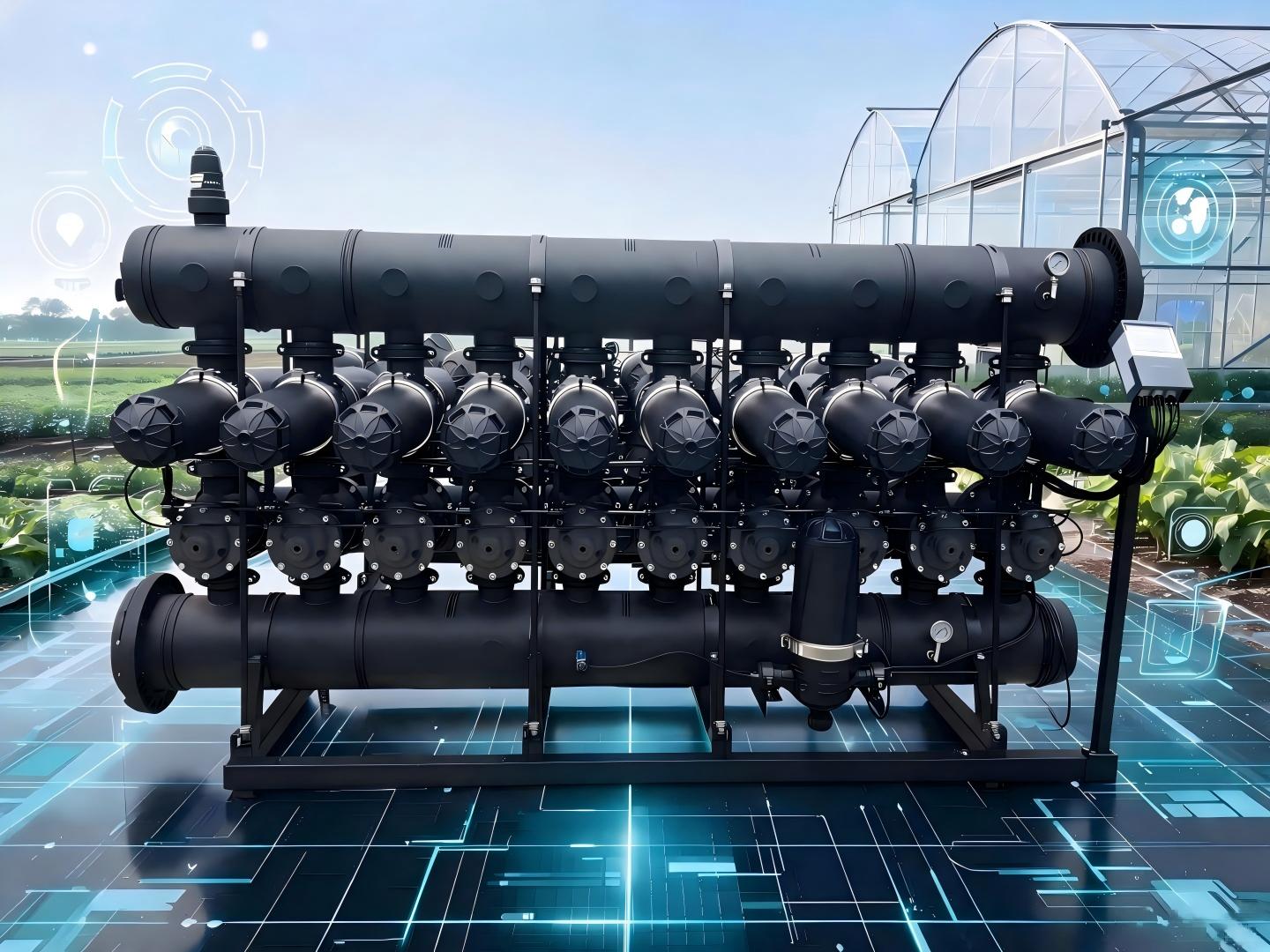
Agricultural Irrigation Equipment Buying Guide: 2024 Framework for Yield, Efficiency, and ROI
For row crop producers, specialty crop growers, and small-scale farm operators, selecting the right agricultural irrigation equipment is no longer a secondary operational decision—it directly impacts yield outcomes, input costs, regulatory compliance, and long-term farm profitability. 2023 data from the Food and Agriculture Organization (FAO) shows that irrigated farms produce 44% of the global food supply on just 20% of cultivated land, but mismatched, outdated, or poorly sized irrigation systems reduce average water use efficiency by 35% and cut net farm returns by 18-27% for operations relying on unimproved flood or inefficient sprinkler setups. A 2024 Irrigation Association industry survey found that 62% of U.S. farmers who upgraded their irrigation equipment in the last five years recouped their full investment within 3-7 years, with 31% reporting payback in under three years due to reduced water, labor, and fertilizer costs. This guide breaks down every category of agricultural irrigation equipment, sizing frameworks, cost comparisons, real-world use cases, and post-purchase considerations to eliminate guesswork from your next equipment investment.
Core Pre-Purchase Assessment Factors to Narrow Your Equipment Shortlist
Before comparing specific equipment models or brands, growers must first audit site-specific operational constraints to avoid purchasing systems that cannot meet field requirements or deliver projected returns. Skipping this baseline assessment is the leading cause of irrigation system underperformance, per 2023 USDA Natural Resources Conservation Service (NRCS) data, which links 41% of irrigation-related crop losses to mismatched equipment relative to site conditions.
1. Site-Specific Crop and Soil Profile Requirements
Crop water requirements, soil infiltration rates, and field topography are non-negotiable constraints that dictate viable equipment types. For context, alfalfa requires 28-36 inches of water per growing season in the U.S. Great Plains, processing tomatoes in California require 24-30 inches, and drought-tolerant sorghum only needs 18-22 inches. Soil type further shapes application requirements: sandy soils have infiltration rates of 0.5-1.0 inches per hour, requiring frequent, low-volume irrigation to avoid runoff, while clay soils have infiltration rates of 0.1-0.2 inches per hour, requiring slow, intermittent application to prevent waterlogging. Before evaluating equipment, collect the following field data points:
- Field slope percentage: Slopes over 3% make gravity-fed flood irrigation functionally unviable without expensive land leveling, while slopes over 7% require pressure-regulated drip or low-pressure sprinkler systems to avoid uneven distribution and runoff.
- Soil water holding capacity (WHC): Sandy loam holds 1.2-1.8 inches of available water per foot of soil depth, silty loam holds 2.0-2.8 inches per foot, and heavy clay holds 1.8-2.2 inches per foot; this directly dictates irrigation run time and emitter/sprinkler flow rate requirements to avoid overwatering or underwatering.
- Crop root depth: Shallow-rooted crops (leafy greens, onions) root to 12-18 inches, requiring frequent, shallow watering; deep-rooted crops (almonds, alfalfa, vineyards) root to 48+ inches, requiring infrequent, deep watering to avoid shallow root development and reduced drought resilience.
- Frost risk and heat stress exposure: Operations in high-frost zones (e.g., Pacific Northwest fruit orchards, Upper Midwest berry farms) may need irrigation equipment capable of overhead frost protection, which delivers 0.1-0.2 inches of water per hour during freeze events to maintain crop temperature at 32°F and prevent tissue damage.
2. Water Source and Infrastructure Baseline
Your water source (well, surface water from a river/pond, municipal reclaimed water, irrigation district delivery) dictates flow rate, pressure, filtration requirements, and permitted water withdrawal limits. The 2023 NRCS assessment found that 41% of U.S. irrigation equipment failures in the last three years stemmed from mismatched pump and system pressure relative to available water supply, leading to $1.2 billion in cumulative crop loss from under-watering during critical growth stages. Before purchasing equipment, calculate the following source metrics:
- Available flow rate: Measure flow from your source in gallons per minute (gpm) by timing how long it takes to fill a 55-gallon drum, or referencing your well pump’s published output; for reference, a 50-acre corn field requiring 1 inch of water per week needs a minimum continuous flow rate of 225 gpm to meet demand without irrigation delays during peak evapotranspiration (ET) periods.
- Static and dynamic water pressure: Test pressure at the source and at the farthest point of your planned field layout; most drip systems require 15-30 psi, center pivots require 40-80 psi, and solid-set sprinklers require 30-50 psi. Pressure variances over 10% across a field lead to 25%+ uneven water distribution, creating zones of overwatering and underwatering that reduce yields.
- Water quality metrics: Test for total suspended solids (TSS), pH, iron, manganese, and microbial content; surface water with TSS over 50 ppm requires 120-mesh filtration for drip systems, while well water with iron levels over 0.3 ppm requires dedicated iron removal filters to prevent emitter clogging, which can reduce system efficiency by 40% in a single growing season.
- Permitted withdrawal limits: As of 2024, 28 U.S. states have mandatory agricultural water metering requirements for operations withdrawing over 100,000 gallons per day; selecting equipment with integrated flow meters and precision application can cut the risk of over-withdrawal fines by 90%, per NRCS compliance data.
3. Operational Budget and Long-Term ROI Targets
Agricultural irrigation equipment costs range from $800 per acre for portable drip tape for small vegetable operations to $3,500 per acre for high-efficiency center pivot systems with remote monitoring for large row crop farms. Upfront cost is only one component of total cost of ownership (TCO): growers need to factor in annual maintenance, labor, energy, water, and replacement part costs over a 10-20 year equipment lifespan. A 2022 University of Nebraska-Lincoln extension study found that while high-efficiency subsurface drip irrigation (SDI) systems have 30-40% higher upfront costs than mid-efficiency center pivots, they deliver 12-18% higher long-term ROI for high-value specialty crop operations due to 25% lower water use and 15% lower energy costs. As a baseline, aim for equipment that delivers a minimum 15% annual return on investment through cost savings and yield gains to justify the capital outlay.
Major Categories of Agricultural Irrigation Equipment: Use Cases, Performance, and Costs
Growers can choose from four core irrigation equipment categories, each optimized for specific operation sizes, crop types, and site constraints. The table later in this section compares standardized performance metrics across all system types, while the breakdown below details real-world use cases and performance outcomes.
Gravity-Fed Flood and Furrow Irrigation Systems
The oldest form of irrigation, gravity systems use field slope to move water from open ditches or gated pipes across crop rows. 2023 USDA data shows that flood/furrow systems still account for 39% of irrigated acreage in the U.S., primarily in the Lower Mississippi Delta and Great Plains for commodity crops like cotton, rice, and corn. Core components include gated pipe, ditch gates, siphon tubes, land leveling attachments, and surge valves.
Practical example: A 1,200-acre cotton farm in the Mississippi Delta invested $420 per acre in laser-leveled furrows and automated surge valves in 2021, cutting their water use by 22% and reducing labor requirements for irrigation set-up by 60% compared to traditional unleveled flood irrigation. The farm recouped the $504,000 total investment in 3.8 years due to reduced diesel costs for pumping and higher water application uniformity, which increased cotton yields by 9% (102 pounds of lint per acre) in the first two years after installation.
Unimproved flood systems are best suited for flat fields (slope <1%), low-cost commodity crops, and operations with unlimited low-cost surface water access. Critical upgrades for traditional flood systems include surge valves (which reduce runoff by 30% by alternating water flow between furrows) and electronic ditch gates (which cut labor by 70% by automating water turn-ons/turn-offs).
Sprinkler Irrigation Systems (Center Pivot, Linear Move, Solid Set, Portable Hand-Move)
Sprinkler systems distribute water through pressurized nozzles, mimicking rainfall, and account for 45% of U.S. irrigated acreage per 2023 Irrigation Association data. There are four primary sub-types of sprinkler equipment, each with distinct use cases:
- Center pivot systems: The most common large-scale sprinkler type, consisting of a rotating pipe structure mounted on wheeled towers that irrigates a circular 120-600 acre field per unit. Modern low-energy precision application (LEPA) center pivots operate at 10-20 psi, 40% lower pressure than older high-pressure impact sprinkler pivots, cutting energy costs by 35-45%. Practical example: A 2,400-acre corn and soybean farm in central Nebraska replaced 1980s-vintage high-pressure center pivots with LEPA pivots with variable rate irrigation (VRI) capability in 2020, investing $2,700 per acre. The system reduced water use by 28%, cut natural gas costs for pumping by 41%, and allowed the farm to apply variable water rates to low-yielding sandy knolls, increasing average corn yields by 14 bushels per acre; total payback was 4.2 years, with the farm earning an additional $102 per acre annually in cost savings and higher yields.
- Linear move (lateral move) systems: Similar to center pivots but move in a straight line across rectangular fields, achieving 98% field coverage compared to 78-85% coverage for center pivots on square fields. They are ideal for rectangular, long fields common in the Pacific Northwest and Midwest, but cost 15-25% more than comparable center pivots and require a water supply that moves with the system.
- Solid set sprinkler systems: Permanently installed buried or above-ground sprinkler lines with fixed risers, most commonly used for high-value orchards, vineyards, and vegetable operations that require frost protection. They have a 20+ year lifespan but cost $1,800-$2,800 per acre to install.
- Hand-move/portable sprinkler systems: Temporary aluminum pipe lines with impact sprinklers that are moved manually between sets, typically used for small farms (<40 acres), hay fields, or supplemental irrigation for pasture. They are the lowest-cost sprinkler option ($300-$600 per acre) but require 5-10 hours of labor per acre per irrigation event to move lines.
Drip Irrigation Systems (Surface Drip, Subsurface Drip, Drip Tape)
Drip systems deliver water directly to the crop root zone at low pressure (10-25 psi) through emitters spaced along flexible tubing, achieving 90-95% application efficiency compared to 60-70% for flood irrigation and 75-85% for standard sprinkler systems, per 2024 FAO data. There are three primary drip equipment categories:
- Surface drip irrigation: Tubing laid on the soil surface, commonly used for vineyards, orchards, and high-value vegetable row crops, with a 10-15 year lifespan when maintained properly.
- Subsurface drip irrigation (SDI): Drip tubing buried 8-18 inches below the soil surface, eliminating evaporative losses and interference with tillage operations; used for row crops, alfalfa, and permanent crops, with a 15-25 year lifespan.
- Drip tape: Thin-walled, disposable flexible tubing with pre-installed emitters, used for annual vegetable crops, with a 1-5 year lifespan depending on wall thickness, costing $200-$500 per acre. Practical example: A 40-acre organic vegetable farm in central California switched from hand-move sprinklers to 8-mil drip tape with integrated nutrient injection in 2022, investing $380 per acre. The farm reduced water use by 42%, cut weed pressure by 65% (since water was only applied to crop rows, not furrows), reduced labor for irrigation by 75%, and saw a 21% increase in tomato and pepper yields due to consistent soil moisture; total investment payback was 1.8 years, with the farm saving $212 per acre annually on water, labor, and weed control costs.
Critical complementary equipment for all drip systems includes filtration systems (screen, disc, or media filters), pressure regulators, and fertilizer injection pumps (fertigation) which can increase fertilizer use efficiency by 30-40% by delivering nutrients directly to the root zone.
Micro-Irrigation and Specialty Application Equipment
This category includes micro-sprinklers, bubblers, and misting systems designed for high-value, high-sensitivity crops like berries, citrus, nursery stock, and greenhouse production. Micro-sprinklers operate at 15-30 psi, delivering 5-20 gallons per hour per emitter, and are often used for citrus orchards in Florida and Arizona because they can deliver freeze protection with 60% lower water volumes than solid-set sprinklers.
Practical example: A 60-acre citrus grove in central Florida installed micro-sprinklers with freeze protection capability in 2022, investing $1,600 per acre; during the 2023 January freeze event that saw 8 hours of 27°F temperatures, the system reduced crop loss to 7% compared to a neighboring grove with flood irrigation that saw 48% crop loss, representing $1.2 million in avoided revenue loss for the operation.
The table below compares all major agricultural irrigation equipment types across standardized 2024 cost and performance metrics to simplify side-by-side evaluation:
| Irrigation Equipment Type | Upfront Installed Cost Per Acre (2024 USD) | Water Application Efficiency | Typical Functional Lifespan | Average Annual Labor Hours Per Acre | Best Suited Operations | Minimum Required Flow Rate Per Acre (gpm) |
|---|---|---|---|---|---|---|
| Traditional Unleveled Flood/Furrow | $150 – $350 | 50 – 65% | 10 – 15 years (gated pipe, ditch infrastructure) | 12 – 18 | Flat (<1% slope) commodity crop farms with low-cost, abundant surface water (rice, cotton, corn) | 8 – 12 |
| Leveled Furrow with Surge Valves | $350 – $650 | 65 – 75% | 15 – 20 years | 4 – 7 | Flat commodity crop operations, flood-irrigated hay/pasture | 6 – 10 |
| Portable Hand-Move Sprinkler | $300 – $600 | 70 – 78% | 10 – 20 years (aluminum pipe) | 20 – 30 | Small farms (<40 acres), hay/pasture, supplemental irrigation | 4 – 6 |
| Solid-Set Sprinkler | $1,800 – $2,800 | 75 – 82% | 20 – 30 years | 1 – 3 | Orchards, vineyards, berry farms requiring frost protection | 4 – 7 |
| Conventional High-Pressure Center Pivot | $1,500 – $2,400 | 72 – 80% | 20 – 25 years | 0.5 – 2 | Mid-to-large scale row crop farms (100+ acres), corn/soybean/wheat | 5 – 8 |
| LEPA Center Pivot with VRI | $2,400 – $3,500 | 85 – 92% | 20 – 25 years | 0.3 – 1.5 | Large row crop operations in water-scarce regions, high-value commodity crops | 3 – 5 |
| Linear Move Sprinkler | $2,800 – $4,200 | 88 – 93% | 15 – 20 years | 0.5 – 2 | Rectangular fields, small grain/vegetable operations requiring high coverage | 3 – 5 |
| Disposable Drip Tape (Annual Vegetables) | $200 – $500 (annual replacement cost) | 88 – 92% | 1 – 5 years (depending on wall thickness) | 2 – 4 | Small-to-mid scale vegetable farms, organic production | 0.5 – 2 |
| Surface Drip Irrigation (Permanent Crops) | $1,200 – $2,200 | 90 – 95% | 10 – 15 years | 1 – 3 | Vineyards, orchards, high-value row crops | 0.5 – 1.5 |
| Subsurface Drip Irrigation (SDI) | $1,800 – $3,200 | 92 – 97% | 15 – 25 years | 0.5 – 2 | Large row crop and permanent crop operations in water-limited regions | 0.4 – 1.2 |
| Micro-Sprinkler/Micro-Irrigation | $1,200 – $1,900 | 87 – 93% | 10 – 20 years | 1 – 3 | Citrus, berry, nursery, greenhouse production | 0.8 – 2 |
Non-Negotiable Complementary Equipment to Factor Into Your Budget
The core irrigation delivery system (pipes, emitters, sprinklers, towers) typically accounts for 60-70% of total project costs, but supporting infrastructure is critical to reliable, efficient performance. Failing to budget for these components can lead to 20-40% lower system efficiency and premature failure, per 2024 Irrigation Association data.
Pump and Pressure Regulation Infrastructure
A 2023 University of California Agriculture and Natural Resources (UC ANR) study found that 38% of drip and sprinkler system underperformance stems from incorrectly sized pumps that deliver too much or too little pressure, leading to uneven water distribution and 20-30% higher energy costs. Key components to evaluate include:
- Pump type selection: Centrifugal pumps are ideal for surface water sources with lift requirements under 25 feet, delivering 100-2,000 gpm at 40-80 psi for $1,500-$12,000 depending on flow rate. Submersible turbine pumps are required for wells with static water levels over 25 feet, costing $3,000-$25,000 for irrigation-scale units.
- Variable frequency drives (VFDs): VFDs adjust pump motor speed to match real-time system pressure requirements, cutting energy costs by 20-35% and extending pump lifespan by 15-20% by reducing wear from pressure surges. A 2022 Iowa State University extension trial found that VFDs installed on irrigation pumps for 160-acre corn farms delivered average annual savings of $1,900 per unit, with payback in 2-3 years.
- Pressure regulators and pressure relief valves: Required for all pressurized systems to maintain consistent pressure across the entire field, preventing emitter blowout, sprinkler misalignment, and uneven distribution; pressure regulators cost $12-$35 per unit, with a typical 160-acre center pivot requiring 10-15 regulators along its span.
Filtration and Water Treatment Systems
Clogged emitters and sprinkler nozzles are the leading cause of drip and micro-irrigation system failure, with 54% of SDI system failures within the first 5 years traced back to inadequate filtration, per 2024 Irrigation Association data. Filtration requirements are directly tied to water source quality:
- Screen filters (100-200 mesh): For clean well water with low TSS (<20 ppm), costing $200-$1,200 per unit depending on flow rate.
- Disc filters: For surface water with moderate TSS (20-100 ppm), providing finer filtration than screen filters with easier cleaning, costing $500-$2,500 per unit.
- Media (sand) filters: For high-TSS surface water (>100 ppm) or reclaimed water, providing the highest level of particulate removal, costing $1,500-$8,000 per unit for irrigation-scale systems.
- Chemical injection systems: For water with high iron, manganese, or microbial growth (e.g., algae in pond water), inject chlorine, acid, or algaecide at low concentrations to prevent clogging; automated injection systems cost $800-$3,500 and reduce clogging-related maintenance by 70%.
Practical example: A 120-acre almond orchard in the San Joaquin Valley installed disc filters and automated chlorine injection for their surface drip system in 2019, investing $14,000 in filtration upgrades. Prior to the upgrade, the farm spent $22,000 per year flushing lines and replacing clogged emitters, and saw 12% yield loss in tree rows with reduced flow due to clogs. After the upgrade, annual maintenance costs dropped to $3,500 per year, and clog-related yield loss was eliminated, delivering full payback on the filtration investment in 7 months.
Precision Monitoring and Control Technology
Modern agricultural irrigation equipment increasingly integrates smart technology to reduce labor and improve efficiency, with 47% of U.S. farms with over 100 irrigated acres now using some form of remote irrigation monitoring per 2024 USDA data. Key technologies to consider include:
- Soil moisture sensors: Installed at 2-3 depths across representative field zones, measuring real-time soil water content to trigger irrigation only when needed; sensors cost $150-$400 per unit, with 1 sensor per 10-20 acres recommended. A 2023 USDA trial across 82 corn and soybean farms in the Midwest found that farms using soil moisture sensors reduced irrigation water use by 21% and increased yields by 8% by eliminating over-watering and under-watering events.
- Remote telemetry and control systems: Allow operators to turn irrigation systems on/off, adjust pressure, and monitor flow rates from a smartphone or computer, eliminating the need for daily field checks; systems cost $800-$2,500 per irrigation unit plus $150-$300 in annual cellular service fees, reducing irrigation labor by 50-70%.
- Flow meters and leak detection sensors: Mandatory in 28 U.S. states for compliance reporting, and can identify leaks, line breaks, and pressure anomalies in real time; the EPA estimates that irrigation systems lose an average of 15% of pumped water to undetected leaks, meaning flow meters with leak detection can save 10-15% on annual water and energy costs.
- Variable Rate Irrigation (VRI) controllers: Integrated with center pivots and linear move systems to apply different water rates across different field zones based on soil type, slope, and crop yield potential; VRI upgrades cost $300-$600 per acre, but deliver $75-$150 per acre in annual savings by eliminating over-watering in low-lying high-WHC areas and under-watering in sandy low-WHC zones.
Step-by-Step Equipment Selection Framework to Avoid Costly Mistakes
Use this actionable, field-tested framework to select equipment that matches your operational constraints and delivers projected ROI, rather than overpaying for unnecessary features or purchasing under-sized systems that fail during peak demand:
- Calculate your total peak irrigation water requirement first. Use the FAO Penman-Monteith equation to calculate crop evapotranspiration (ET) for your region, adjusted for your local rainfall, soil WHC, and crop growth stage. For example, a 100-acre corn field in central Kansas with average ET of 0.25 inches per day during peak tasseling stage, and 2 inches of available soil water, will need to apply 1.5 inches of water every 6 days, requiring a minimum flow rate of 225 gpm to avoid crop stress. Failing to calculate this baseline first is the top mistake for new irrigation buyers, leading to systems that cannot keep up with peak water demand during heat waves.
- Match system capacity to your water source, not the other way around. If your well delivers a maximum of 200 gpm, you cannot support a 100-acre center pivot that requires 5 gpm per acre (500 gpm total) without adding additional well capacity, which can cost $20,000-$50,000 per new well. For operations with limited flow capacity, low-flow systems like SDI or drip tape are the only viable option, as they require 70-80% lower flow rates per acre than sprinkler or flood systems.
- Prioritize equipment compatibility with existing farm infrastructure. For example, if you already own tractors with 100+ PTO horsepower to power portable pumps, hand-move or wheel-line sprinklers may be a lower-cost option, but if you have limited labor availability, automated center pivots or drip systems with remote control are a better fit. A common costly mistake is purchasing equipment that requires expensive upgrades to electrical service, pump capacity, or tractor horsepower to operate, adding 20-30% to total project costs.
- Vet equipment suppliers and warranty terms before purchasing. Look for suppliers with local service technicians within a 50-mile radius, as downtime during a heat wave can lead to 1-2% yield loss per day for heat-sensitive crops. Compare warranty terms: reputable center pivot manufacturers offer 10-year warranties on tower structure and 5-year warranties on drive motors, while drip tubing manufacturers offer 5-10 year warranties against clogging and UV degradation when installed with recommended filtration. A 2023 Farm Journal survey found that 29% of farmers who purchased off-brand, no-warranty irrigation equipment from online marketplaces experienced major component failures within the first 2 years, with no local service support to make repairs.
- Factor in available cost-share and rebate programs. As of 2024, the USDA NRCS Environmental Quality Incentives Program (EQIP) offers cost-share covering 50-75% of the cost of high-efficiency agricultural irrigation equipment for eligible farms, with additional state-level rebates available in water-scarce states like California, Arizona, Colorado, and Nebraska covering up to 100% of the cost of soil moisture sensors and VRI upgrades. For example, a 200-acre wheat farm in eastern Colorado received a 75% EQIP cost-share for a $520,000 SDI installation in 2023, reducing the farm’s out-of-pocket cost to $130,000 and cutting payback time from 6.8 years to 1.7 years.
- Test a small-scale pilot before full-field deployment. For operations transitioning from flood to drip or SDI, install the system on a 5-10 acre test block for one full growing season to measure yield response, water savings, and maintenance requirements before investing in a full-field installation. A 2022 study of 120 farms transitioning to SDI across the Great Plains found that farms that ran a pilot first were 32% more likely to achieve projected ROI targets, as they were able to adjust filtration, emitter spacing, and irrigation scheduling to match local conditions before full deployment.
Common Costly Mistakes to Avoid When Buying Agricultural Irrigation Equipment
Even experienced growers can make expensive missteps when investing in new irrigation equipment, with the Irrigation Association estimating that preventable purchasing mistakes cost U.S. farmers $450 million annually in wasted inputs, crop loss, and premature equipment replacement.
Mistake 1: Overprioritizing Upfront Cost Over Total Cost of Ownership
It can be tempting to select the lowest-priced equipment option, but cheap components often lead to far higher long-term costs. For example, 6-mil drip tape costs 20% less upfront than 15-mil drip tape, but only lasts 1-2 seasons compared to 4-5 seasons for 15-mil tape, leading to 60% higher long-term replacement costs. Similarly, generic center pivot drive motors cost 30% less than name-brand motors, but have a 3-5 year lifespan compared to 15-20 years for OEM motors, and have 25% higher failure rates during peak irrigation season.
Practical example: An 80-acre vegetable farm in southern Georgia purchased thin-walled 4-mil drip tape from an online supplier in 2022 to save $42 per acre compared to 12-mil name-brand tape. Midway through the growing season, 35% of the tape split under pressure during a 3-day heat wave, leading to $68,000 in crop loss from water stress and requiring emergency replacement of the damaged lines, costing the farm an additional $190 per acre, for a total loss of $25,760 compared to purchasing the higher-quality tape initially.
Mistake 2: Under-Sizing Filtration or Pressure Regulation
As noted earlier, inadequate filtration is the leading cause of drip system failure, but many growers skip higher-capacity filters to save $1,000-$3,000 upfront, leading to $10,000-$30,000 in annual maintenance and crop loss costs from clogged emitters. Similarly, under-sizing a pump by 20% to save $2,000-$4,000 can reduce system operating pressure below manufacturer specifications, leading to 30%+ uneven water distribution and reduced yields across the field.
Mistake 3: Failing to Plan for Future Expansion
When purchasing irrigation equipment, size pumps, mainlines, and control systems to accommodate potential future acreage expansion rather than only matching current acreage. For example, installing a mainline with enough capacity to add 40 additional acres of drip irrigation at a later date adds 5-10% to upfront installation costs, but avoids the need to replace the entire mainline when expanding, which can cost 2-3 times more than upgrading during initial installation.
Mistake 4: Ignoring Local Climate and Extreme Weather Risks
Operations in regions with high wind speeds (over 10 mph during peak irrigation) should avoid high-pressure sprinkler systems, as wind drift can reduce application uniformity by 30-40% and lead to evaporative losses of 20% or more, making low-pressure LEPA pivots or drip systems a more reliable choice. Operations in freeze-prone regions should ensure all above-ground piping is rated for cold temperatures and installed with drain valves to prevent pipe burst from frozen water, which can cause $5,000-$20,000 in damage per system during a hard freeze.
Post-Purchase Maintenance to Maximize Equipment Lifespan and ROI
Even the highest-quality agricultural irrigation equipment will underperform or fail prematurely without regular maintenance, with UC ANR data showing that properly maintained irrigation systems have a 30-50% longer functional lifespan and 15-20% higher application efficiency than neglected systems