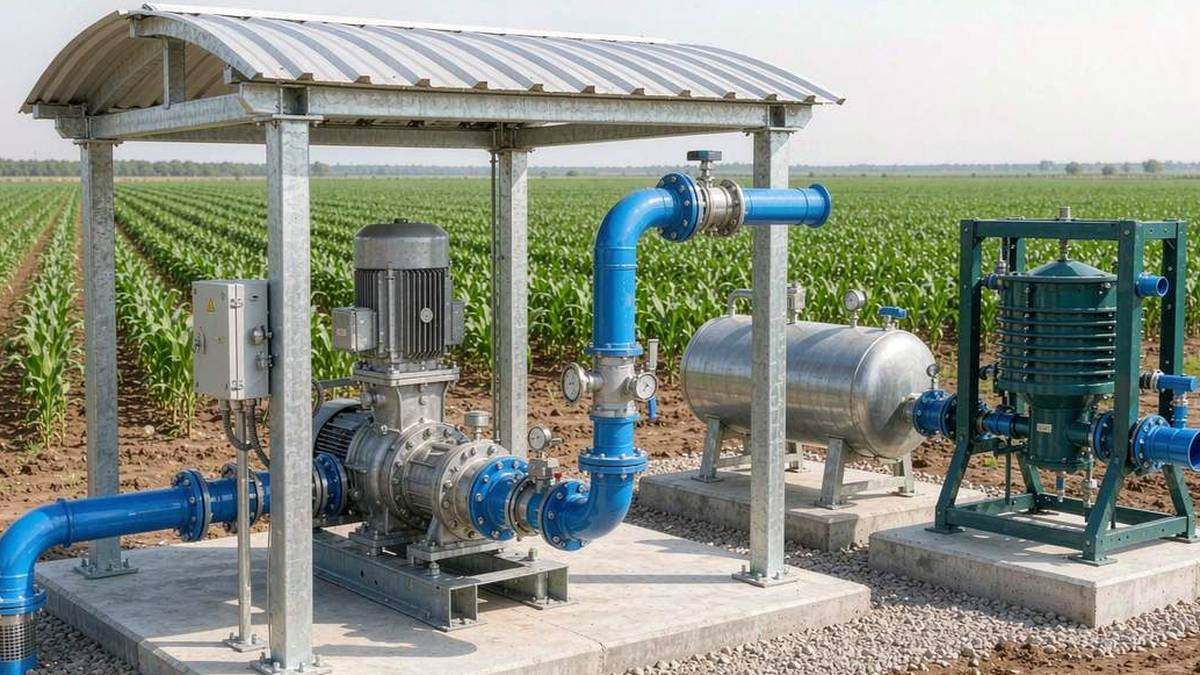
Key Takeaways
- Routine 2 to 4 week inspections of sand media filters reduce unplanned downtime by preventing nearly all common performance issues before they cause system failure
- Proper backwash pressure and duration eliminates most clogging risks for systems drawing from well, river, or pond water sources
- Timely media top-ups or replacement ensures consistent micron-rated filtration to protect delicate drip and micro-sprinkler emitters from premature clogging
- Partnering with a 14-year experienced irrigation filter manufacturer simplifies long-term parts sourcing and custom maintenance support for global operations
1. Persistent High Pressure Loss Across Filter Tank
When the pressure difference between your filter’s inlet and outlet exceeds 10 psi even immediately after a full backwash, you are dealing with compacted or caked filter media, or a damaged underdrain assembly. This issue is extremely common for systems that pull water from unfiltered pond or river sources with high organic debris loads. To fix it fast, shut down the system, drain the tank, and inspect the underdrain laterals for cracks or blockages. Remove the top 10% of caked sand media, top up with fresh properly graded silica sand, and reset your baseline operating pressure reading. Adding a pre-filter upstream to catch large sediment before it reaches the sand tank will prevent this issue from recurring regularly.
2. Failed Backwashing That Doesn’t Clear Clogs
If your backwash cycle runs for the standard 2 to 3 minute window but does not reduce the pressure differential across the tank, the most likely cause is insufficient backwash flow rate or trapped air pockets that disrupt media bed expansion. For standard sand media filters, you need a backwash flow rate of 10 to 12 gallons per minute per square foot of tank surface area to lift and agitate the sand bed fully. For reliable air release during backwash cycles, install LZHS C-Type Combined Air Valve (2") on the top of your filter tank to eliminate trapped air that prevents full media agitation and effective sediment flushing.
3. Sand Media Leaking Into Outlet Lines
Finding fine sand particles in your downstream irrigation lines is a sign of torn underdrain screens, incorrectly graded overly fine media, or backwash pressure set far higher than manufacturer specifications. Left unaddressed, this stray sand will quickly clog small flow path emitters and reduce your irrigation uniformity. To fix this, isolate the affected tank, drain all water, and fully inspect the underdrain screen assembly for tears or loose fittings. Replace any damaged screens, adjust your backwash pressure to the rated level for your tank size, and confirm your sand media is graded to 0.5 to 1mm diameter for standard irrigation use.
4. Uneven Filtration Performance Across Multi-Tank Systems
For installations with two or more sand media filter tanks plumbed in parallel, uneven flow distribution can cause some tanks to clog far faster than others, leading to inconsistent micron filtration performance across your entire system. This often happens after years of use, when mineral scale from hard well water builds up in shared manifold lines and restricts flow to some tanks. If you run a fertigation system paired with your filtration setup, ensure your LZHS Venturi Fertilizer Injector (1") is calibrated to avoid sending undissolved fertilizer particles that can cause uneven media clogging across separate tanks. You can resolve existing uneven performance by balancing inlet flow rates across all tanks and flushing manifold lines to remove built up mineral scale.
5. Frequent Media Hardening and Caking
If your sand media forms a solid, impermeable hard layer that cannot be broken apart by standard backwash cycles, it is almost always bound together by iron bacteria, heavy organic sediment, or high calcium deposits from your source water. This caked layer blocks all effective filtration, and can cause sudden pressure spikes that damage your filter tank. To resolve this, drain the tank and perform a food grade chlorine or weak phosphoric acid soak to dissolve the binding materials, then agitate the media bed manually to break apart remaining caked clumps. Replace 20 to 30% of the oldest media every 12 months to prevent full hardening from developing.
6. Excessive Water Loss During Backwash Cycles
Unnecessarily high water waste during backwash cycles drives up operational costs and reduces the total volume of water available for your crops. This issue is most often caused by worn seals on automatic backwash control valves, or incorrectly programmed timers that run backwash far longer than required. To fix this, inspect all backwash valve seals for wear and replace any cracked or degraded parts, then adjust your backwash timer to run for only 2 to 3 minutes per cycle, adjusted based on the sediment load of your specific source water. For low sediment well water, you can reduce backwash duration to 1.5 minutes to cut water waste even further.
7. Persistent Emitter Clogging Even With Sand Filters Installed
If you are running a properly sized sand media filter but still see frequent emitter clogging across your irrigation lines, your media is likely overused and no longer meeting its rated micron filtration level, or your system flow rate has increased beyond the filter’s maximum designed capacity. Sand media breaks down into fine silt particles after 3 years of continuous use, which no longer filter out fine sediment effectively. To resolve this, replace all of the old degraded sand media with new properly graded silica, and confirm your system’s total flow rate does not exceed the maximum rated flow for your filter tank.
Preventative Maintenance Best Practices for Long Term Performance
Most sand media filter issues are fully avoidable with a simple scheduled maintenance routine that tracks pressure differentials, backwash cycle duration, and media condition every month. LZHS is a professional irrigation filter manufacturer with 14 years of manufacturing and export experience serving 60+ countries, offering a full range of complementary filtration solutions including disc filters, screen filters, hydrocyclone sand separators, Y-strainers and T-type filters to pair with your sand media setup for full system protection. Browse our full product catalog for compatible filtration solutions for any agricultural or horticultural application on the LZHS official products hub.
FAQ
How often should I replace the sand media in my irrigation filter?
For systems using low-sediment well water, sand media lasts 2 to 3 years. Systems drawing from pond or river water with high organic content require partial or full media replacement every 12 to 18 months to maintain consistent performance.
Can a sand media filter be used as the only filtration step for drip irrigation systems?
Most drip emitter protection applications require a secondary 120 mesh (125 micron) screen or disc filter installed after the sand media filter to catch any stray fine sand particles that may escape during backwash cycles.
What is the ideal pressure differential to trigger an automatic backwash cycle?
Most standard sand media filters are designed to start automatic backwash when the pressure difference between the inlet and outlet reaches 8 to 10 psi, to prevent excess pressure loss that reduces overall irrigation efficiency.